China’s 1‑GW Hybrid Solar Plant Uses Molten Salt to Deliver Power Up to 8 Hours After Sunset
China’s Xinjiang hybrid solar plant begins commercial trials, merging PV, CSP and molten‑salt storage to generate power after sunset.
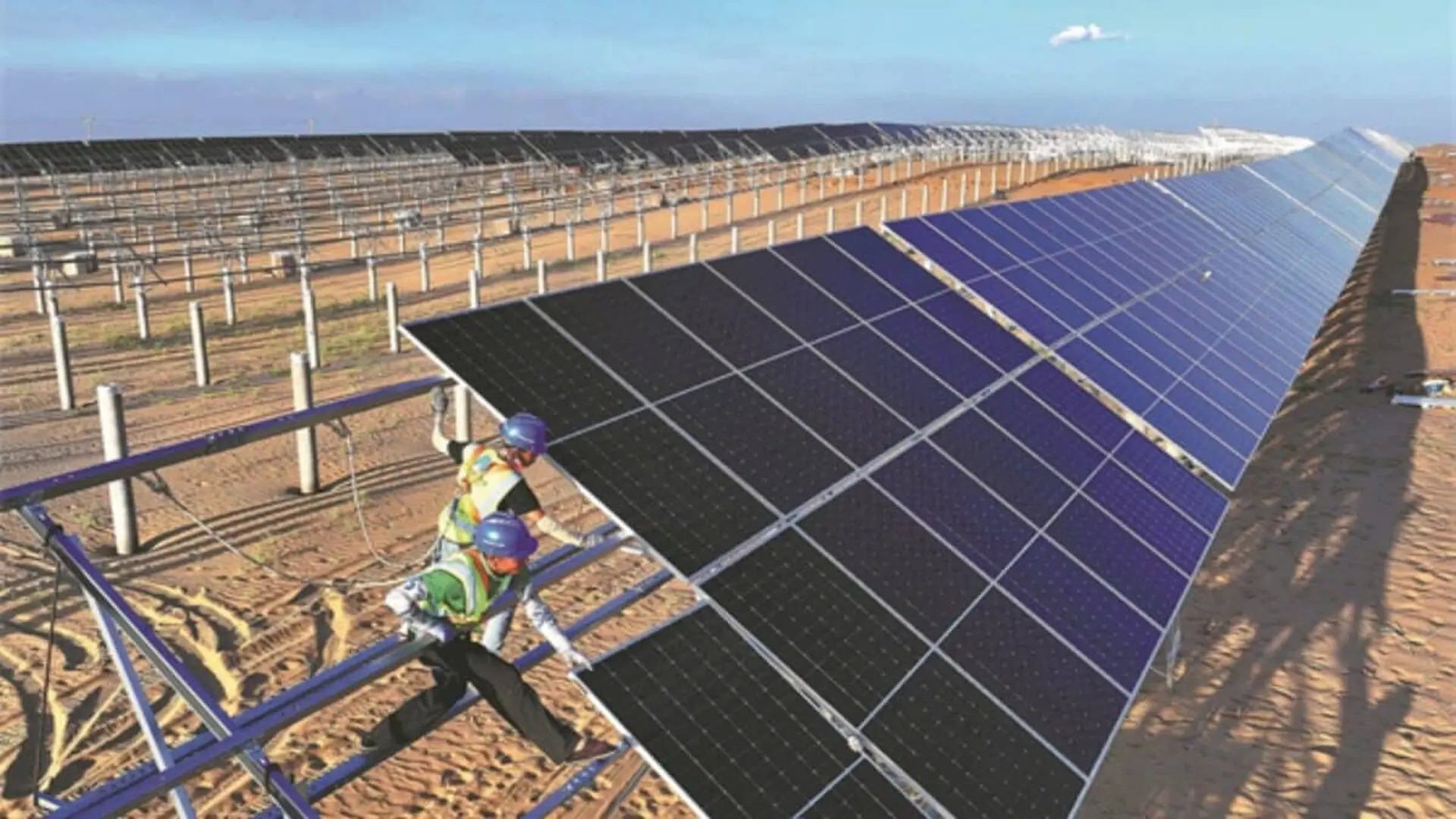
China’s push to harness its sun‑rich deserts continues with the commissioning of a hybrid solar installation near Hami in Xinjiang. The plant joins a series of massive projects, including the expansive “Great Solar Wall” in Inner Mongolia, aimed at boosting renewable electricity output while tackling the intermittency that plagues conventional photovoltaics.
Typical solar farms only produce power while the sun shines, creating gaps in supply that strain grids that must operate around the clock. The Hami complex, built by China Three Gorges Corporation, addresses this gap by capturing solar heat in molten salt and releasing it to generate electricity after sunset.
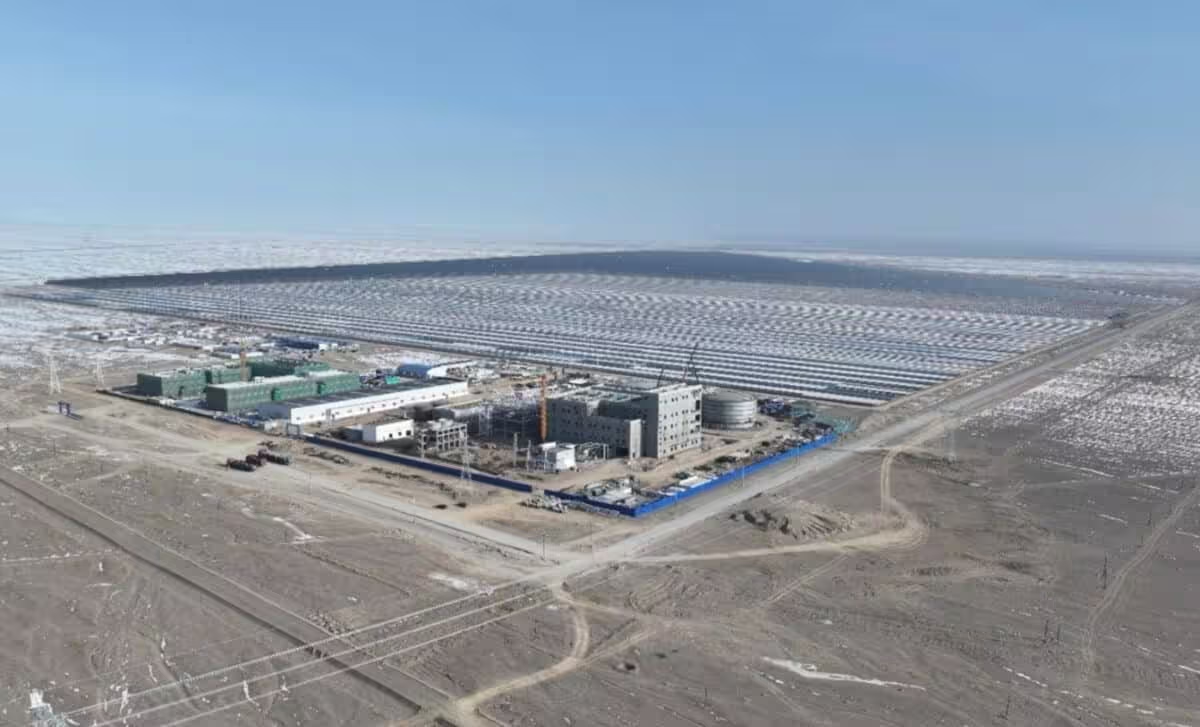
Set on the Gobi plateau, the installation pairs 900 MW of flat‑panel photovoltaics with a 100 MW concentrated solar‑thermal (CST) unit. PV Tech describes it as the nation’s largest linear Fresnel‑type CST demonstration, now cleared for commercial‑scale testing.
Integrated Solar Hub Marries Photovoltaics with Molten‑Salt Heat Storage
The one‑gigawatt Hami facility blends two distinct solar technologies. Conventional PV arrays convert sunlight directly into electricity, while the CST section uses a field of mirrors to focus solar radiation onto absorber tubes.
According to China Three Gorges, the CST unit features 260,000 individually tracked reflectors that together span roughly 800,000 m². The concentrated light raises molten salt to about 550 °C, storing thermal energy for later use.
When the sun sets, the hot salt releases its stored heat to produce steam, which drives conventional turbines and supplies power to the grid. Project leader Niu Jianle notes that the storage system can deliver stable electricity for up to eight continuous hours, enhancing grid reliability during dark periods. He also emphasizes that molten‑salt storage differs from lithium‑ion batteries by offering larger capacity, longer discharge cycles and zero operational emissions.
China Three Gorges estimates the plant will generate roughly 2.067 billion kWh annually, cutting carbon dioxide emissions by about 1.63 million tonnes each year.
PV Tech adds that the project showcases the commercial feasibility of utility‑scale CST, suggesting that broader deployment could drive down the levelised cost of electricity for this technology.
Hami Complex Bolsters Northern China’s Renewable Ambitions
The Hami plant is part of a broader rollout of desert‑based solar farms across Inner Mongolia and Xinjiang, regions blessed with high solar irradiance and vast open land.
China Daily reports that the “Great Solar Wall” in Inner Mongolia stretches roughly 400 km in length and 5 km in width, targeting a combined capacity of 100 GW when fully built.
The initiative aims to produce about 180 billion kWh of electricity each year by 2030, with 48 billion kWh earmarked for delivery to the Beijing‑Tianjin‑Hebei region via ultra‑high‑voltage lines.
Beyond power generation, the solar corridor is intended to combat desertification. Panels act as windbreaks and sand stabilizers, while their shade helps preserve soil moisture. Authorities also plan to grow commercial crops beneath selected array sections.
Xinjiang hosts additional megaprojects, including a solar farm described as the world’s largest, spanning 13,333 hectares and slated to generate roughly 6.09 billion kWh annually.
Although China leads global solar capacity, its overall emissions remain high due to continued reliance on coal, oil and natural gas. The emergence of hybrid facilities like Hami and sprawling ventures such as the Great Solar Wall highlights the nation’s dual strategy of expanding renewable generation while still grappling with a fossil‑fuel‑heavy energy mix.
This article has been fact checked for accuracy, with information verified against reputable sources. Learn more about us and our editorial process.
Last reviewed on .
Article history
- Latest version
Reference(s)
- “A Gobi miracle powered by 260,000 mirrors.” <https://www.ctg.com.cn/ctgenglish/news_media/news37/2026061014544983551/index.html>.
- “Ir Professor Niu Jianlei | Academic Staff | People | Department of Building Environment and Energy Engineering.” Department of Building Environment and Energy Engineering <https://www.polyu.edu.hk/beee/people/academic-staff/ir-professor-niu-jianlei/>.
Cite this page:
- Posted by Zara Tariq