8.7-Million-Year-Old Turkish Ape Skull Revives Debate Over Hominine Birthplace
An 8.7-million-year-old Turkish ape skull challenges the timeline of human evolution, prompting fresh debates on our origins.
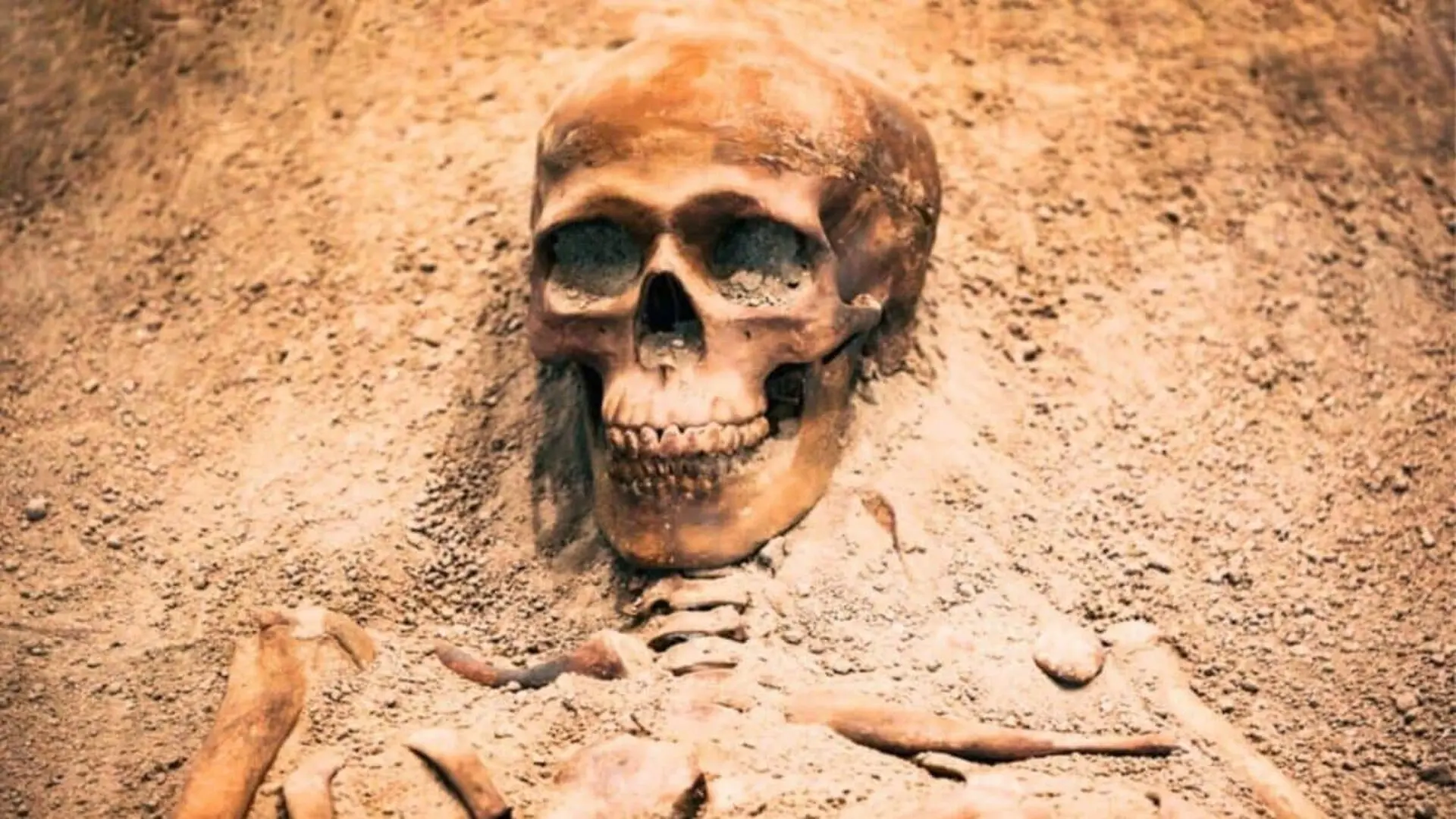
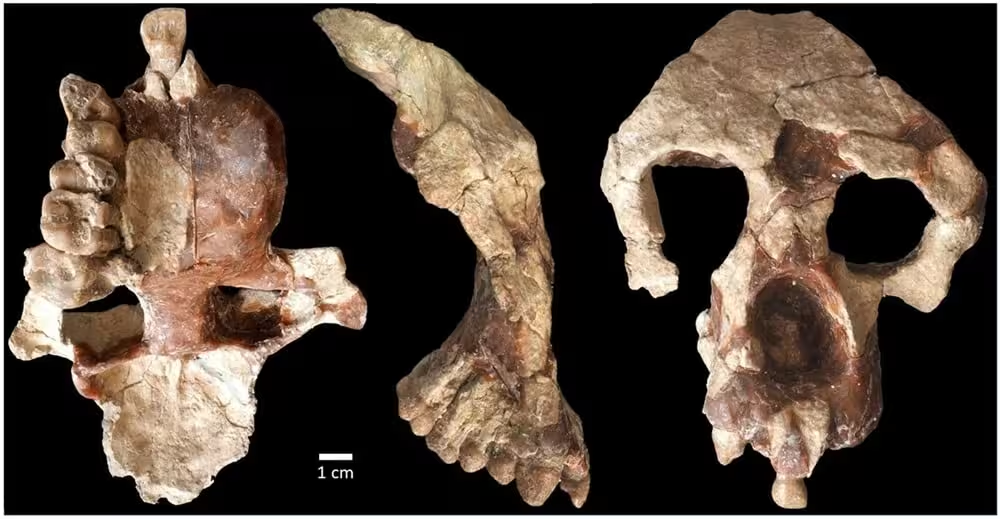
A recently uncovered partial cranium from central Turkey adds a fresh data point to the long‑standing discussion about where the hominine branch of the ape family first emerged. Dated to roughly 8.7 million years ago, the fossil includes much of the facial skeleton, upper dentition and braincase, offering an unusually complete glimpse of a late‑Miocene ape.
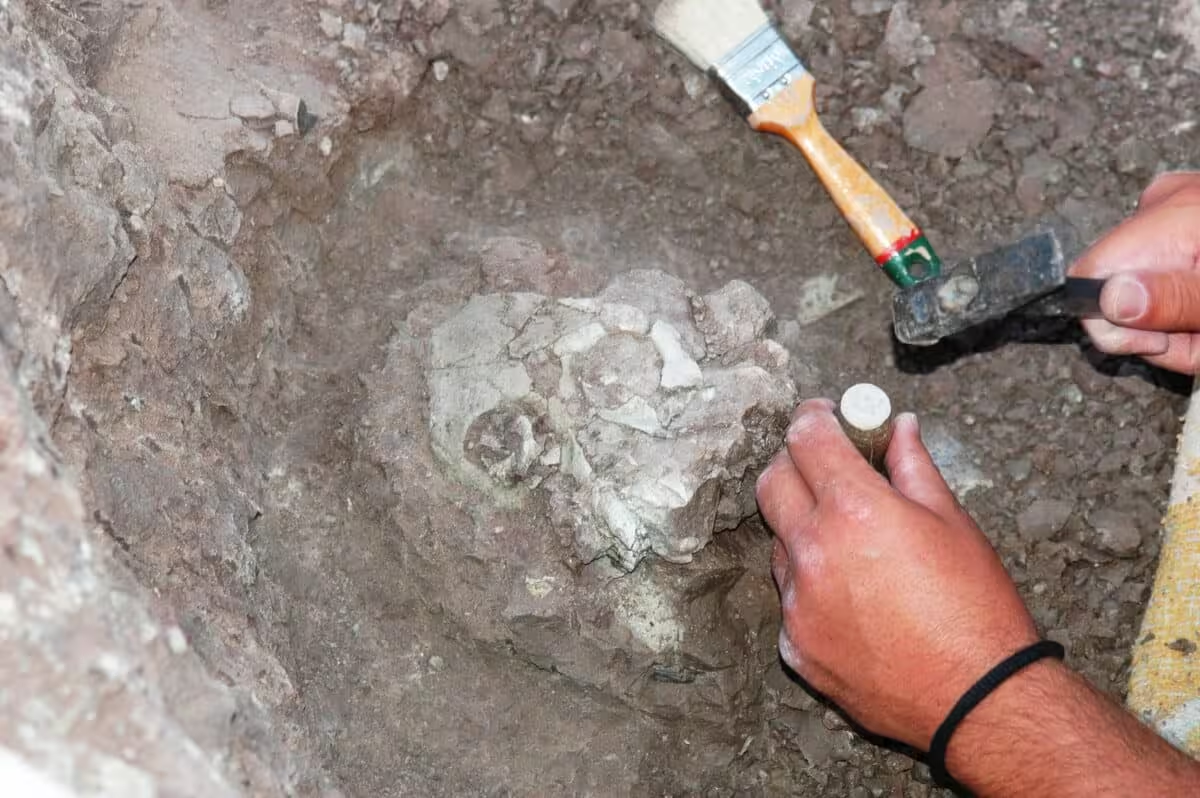
The specimen was retrieved at the Çorakyerler locality within the Çankırı Basin of Anatolia, a site known for yielding thousands of vertebrate remains. Researchers led by Ayla Sevim‑Erol of Ankara University and David Begun of the University of Toronto described the find in Communications Biology. The cranium represents a new genus and species, which the authors named Anadoluvius turkae.
By examining more than a hundred anatomical characteristics, the team placed Anadoluvius within the hominine clade that includes humans, chimpanzees, gorillas and their extinct relatives. If the classification holds, the discovery fuels the ongoing debate over whether early hominine evolution unfolded in Africa, Europe, or across both continents.
Dental and Cranial Features Point to Hominine Ties
The skull exhibits a suite of traits that align it with hominines. Its enamel is unusually thick, the canine teeth are relatively small, and the facial structure is short and robust—features commonly linked to diets that require substantial chewing forces, such as hard or gritty foods.
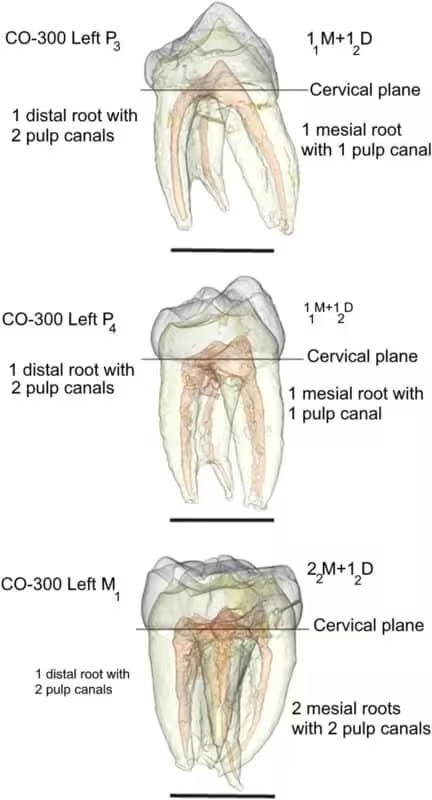
The reduced size of the canines is especially striking; they fall below the typical range for African apes and approach the dimensions seen in australopithecines such as Australopithecus afarensis. Computed‑tomography scans also revealed that the distal roots of several lower premolars and the first molar fuse into a single structure housing two canals—a pattern reminiscent of the Bulgarian ape Graecopithecus but distinct from the Greek species Ouranopithecus.
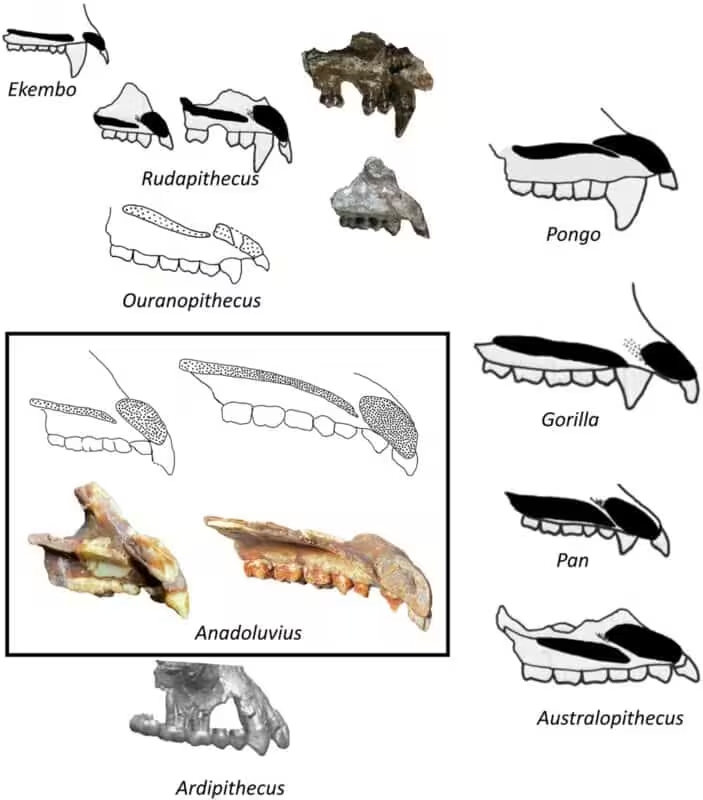
Together with variations in jaw proportions and molar dimensions, these observations led the authors to propose at least three separate late‑Miocene hominine genera in the eastern Mediterranean: Ouranopithecus, Graecopithecus and the newly identified Anadoluvius. Earlier fragmentary finds had left the regional diversity ambiguous; the Çorakyerler cranium provides a more solid basis for comparison.
European and Anatolian Ape Evolution Revisited
Phylogenetic analyses group Anadoluvius, Ouranopithecus and Graecopithecus with African apes and humans, separating them from the orangutan lineage. The researchers argue that the most straightforward scenario involves these eastern Mediterranean apes descending from earlier dryopithecins that inhabited central and western Europe.
If this interpretation is correct, hominines would have maintained a prolonged presence in Europe before the first unequivocal African records appear. African hominine fossils older than about seven million years are currently lacking, whereas the European‑Anatolian record stretches from roughly 9.6 to 7.2 million years ago and includes several taxa spanning Spain to central Anatolia.
David Begun notes that, to date, members of this radiation are known only from Europe and Anatolia, suggesting an origin farther west before a subsequent eastward spread toward the Mediterranean. The authors do not rule out an African source; an undiscovered African ancestor could have migrated into Europe before the existing fossil record begins. Nevertheless, they consider a European origin more parsimonious given current evidence, while acknowledging that future finds could shift the balance.
The late‑Miocene hominine assemblage across Europe and Anatolia spans at least 2.3 million years, a temporal range comparable to the later diversification of australopithecines in Africa. This parallel may hint at a sustained regional evolutionary trajectory rather than a brief dispersal event, though it cannot alone determine the geographic birthplace of the lineage.
Reconstructing a Open‑Landscape Habitat
The ecosystem surrounding Anadoluvius differed markedly from the dense forests favored by many modern apes. Associated fauna at Çorakyerler include giraffes, zebras, elephants, antelopes, porcupines and large carnivores, indicating an open woodland and dry grassland environment akin to present‑day African savannas.
Stable‑isotope analysis of a tooth from the specimen points to a diet dominated by C3 plants and suggests cooler, drier conditions than those recorded at some European sites. Sevim‑Erol argues that the ape’s robust jaws and thick enamel would have been advantageous for processing tough resources such as roots and tubers, which become important in seasonally variable settings.
Because no post‑cranial remains have yet been recovered, the proportion of time the animal spent arboreally versus terrestrially remains uncertain. Nonetheless, the combination of strong jaws, thick enamel and open‑habitat fauna mirrors patterns observed in early African hominins, where similar dental adaptations are linked to dietary shifts.
The broader animal assemblage also supports the geological interpretation of the site. Hipparionine horses, various bovids and proboscideans are typical of open Miocene landscapes across Eurasia and Africa, making Çorakyerler a valuable window into central Anatolia’s late‑Miocene ecosystem.
Ongoing Debates Over Hominine Origins
The prevailing model of human evolution continues to locate the emergence of hominines in Africa, a view reinforced by extensive fossil and genetic data, especially for later stages such as the rise of the hominin clade and the appearance of Homo sapiens.
Rather than overturning this framework, the Turkish cranium enriches our understanding of ape diversity in the eastern Mediterranean several million years before the first recognized African hominins. Fossils from Greece, Bulgaria and now Turkey reveal multiple related genera coexisting across the region.
Repeated phylogenetic tests in the study cluster these Eurasian apes with African apes and humans, distinguishing them from orangutans. The authors stress that broader phylogenetic work and additional fossil discoveries from both Africa and Eurasia are essential for refining the picture. The Çorakyerler material remains curated at Ankara University, ready for future comparative research.
In sum, the find demonstrates that great‑ape diversity in the eastern Mediterranean was richer than previously recognized and that hominine‑like lineages were present well before the earliest documented African specimens. Whether these taxa represent the cradle of the hominine lineage or a later Eurasian offshoot from an undiscovered African ancestor remains an open question.
This article has been fact checked for accuracy, with information verified against reputable sources. Learn more about us and our editorial process.
Last reviewed on .
Article history
- Latest version
Reference(s)
- “Anasayfa.” Ankara Üniversitesi <https://www.ankara.edu.tr/>.
- “University of Toronto.” University of Toronto <https://www.utoronto.ca/>.
- Sevim-Erol, Ayla. “A new ape from Türkiye and the radiation of late Miocene hominines - Communications Biology.”, vol. 6, no. 1, August 23, 2023, pp. 842 Nature, doi: 10.1038/s42003-023-05210-5. <https://www.nature.com/articles/s42003-023-05210-5>.
Cite this page:
- Posted by Hassan Raza