Volcanic Ash‑Sealed Cave Uncovers 16 New Species, a Lost New Zealand Bird‑Frog World
Scientists uncover 16 extinct species in a sealed New Zealand cave, exposing a million‑year‑old extinction event hidden beneath volcanic ash.
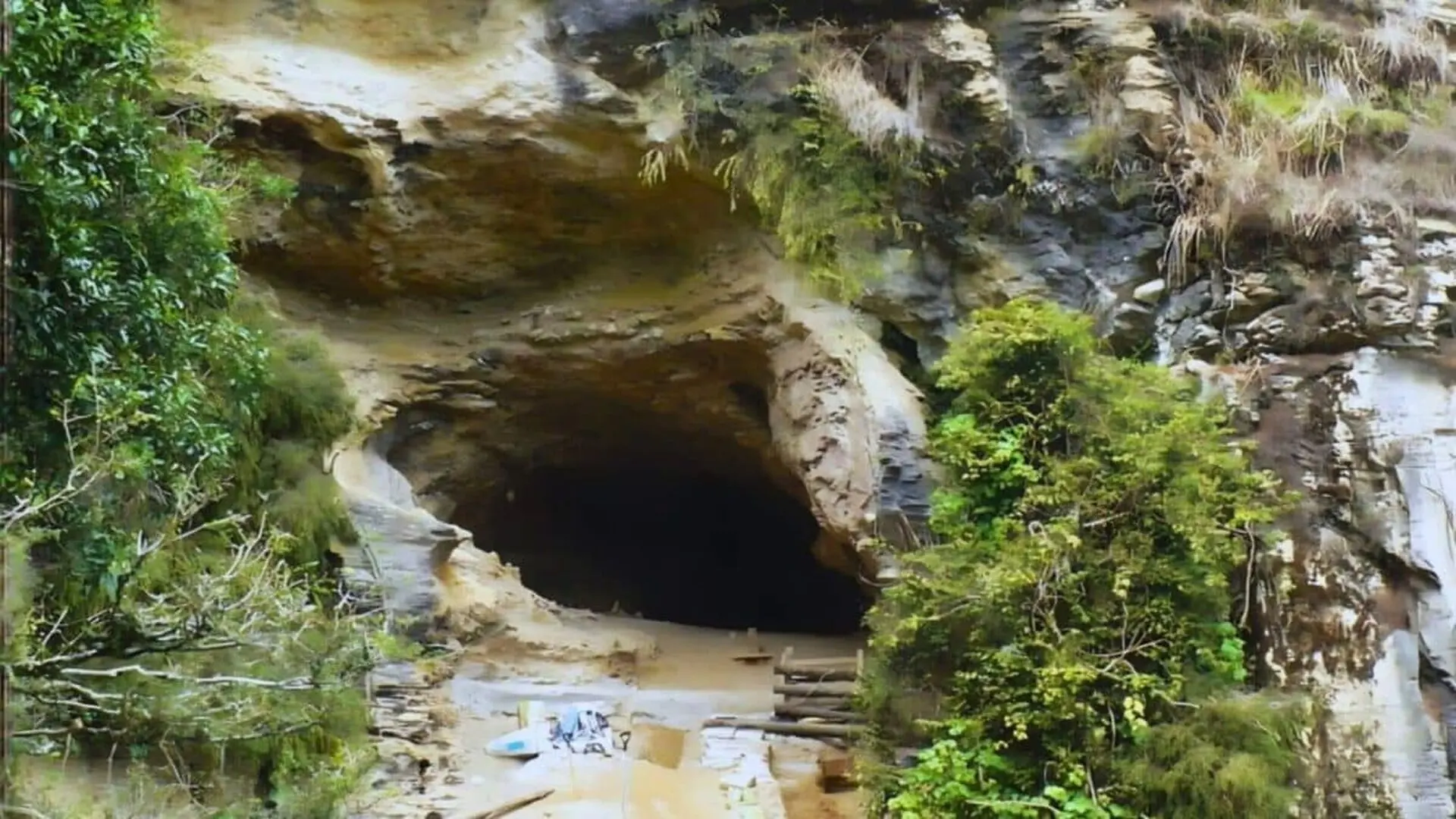
A hidden cave on New Zealand’s North Island, sealed beneath volcanic ash for more than a million years, has yielded an unprecedented collection of fossils. Researchers uncovered remains representing 16 previously undocumented species, including 12 birds and four frogs, most of which vanished long before humans ever set foot on the islands.
The discovery, detailed in the Journal of Palaeontology, bridges a substantial hiatus in New Zealand’s fossil record that stretched from roughly 15 million to 1 million years ago. Lead author Trevor Worthy, an associate professor at Flinders University, called the find a newly identified bird community that predates the fauna encountered by later human settlers. Co‑author Paul Scofield, senior curator of natural history at Canterbury Museum, likened the result to uncovering an entire missing volume of the country’s ancient history.
Ash Deposits Lock Fossils in a Precise Timeframe
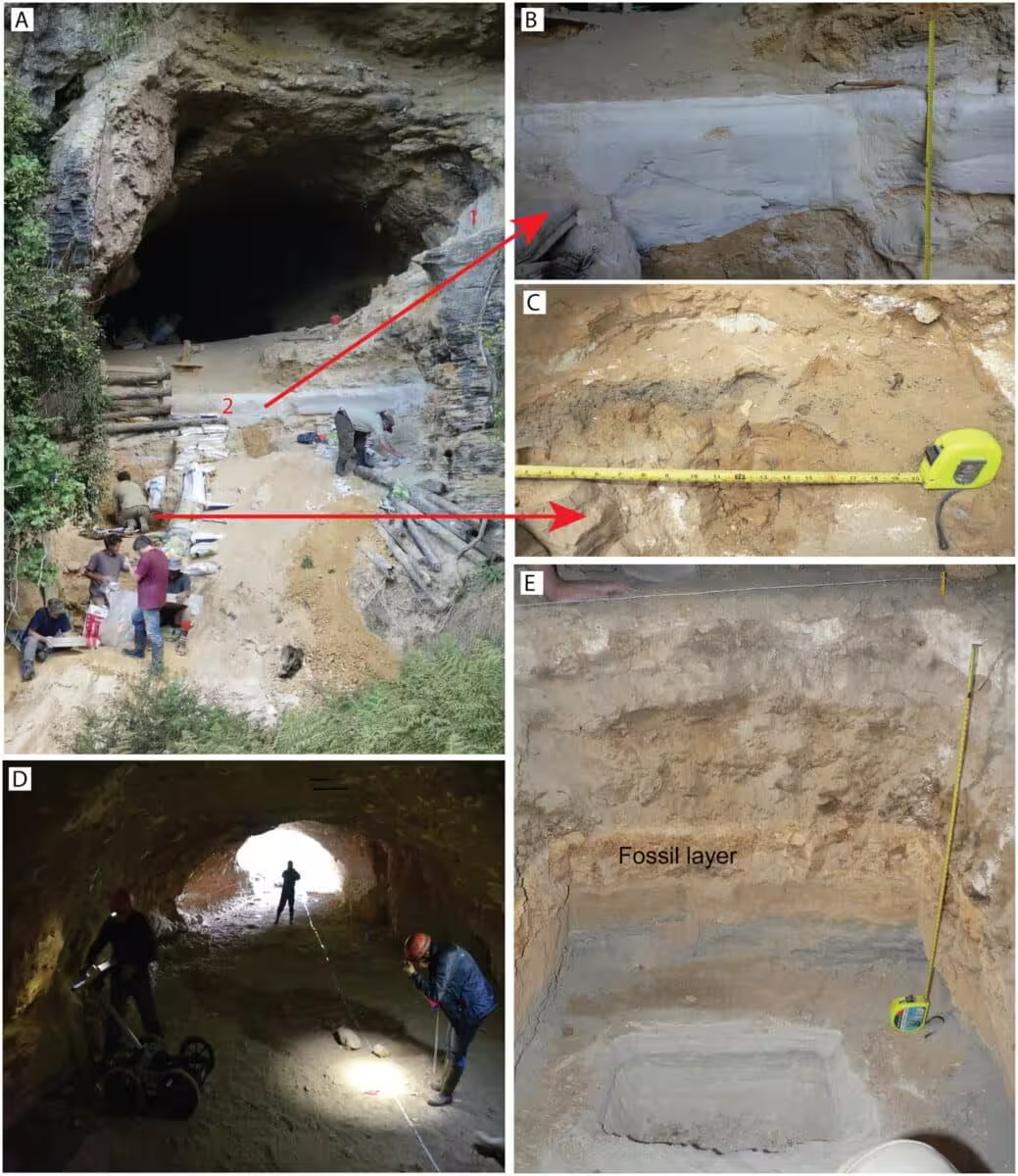
Two distinct volcanic ash layers frame the cave’s contents, each linked to a separate major eruption. Radiometric dating places the lower layer at about 1.55 million years ago and the upper layer at roughly 1 million years ago, providing a rare chronological anchor for material of this age. The rapid burial by ash prevented water, soil movement, or scavengers from disturbing the bones, creating a snapshot of a forest ecosystem with exceptional clarity.
Earlier digs have documented New Zealand fauna from 20 to 16 million years ago, yet the interval that followed remained virtually blank. This new site pushes the fossil record forward, illuminating an ecosystem that disappeared before the better‑known bird communities that later defined the islands, roughly a million years earlier.
Ancient Wave of Extinctions Occurred Long Before Humans Arrived
Analysis of the assemblage suggests that between 33 and 50 percent of the region’s species vanished during the million‑year span preceding human settlement. The losses unfolded entirely through natural processes, with no human presence to influence the outcome.
Scofield attributes the primary drivers to rapid climate fluctuations and repeated volcanic eruptions. Situated in a geologically active zone, the North Island would have experienced habitat destruction, ash‑covered forest floors, and widespread disruption of food resources, gradually eliminating species unable to adapt swiftly enough.
“For decades, the extinction of New Zealand’s birds has been viewed mainly through the lens of human arrival 750 years ago,” Worthy noted. “This study demonstrates that volcanic super‑events and dramatic climate shifts were already shaping the unique composition of our wildlife a million years earlier.” The avian assemblage encountered by Polynesian settlers therefore represented the survivors of an earlier, extensive extinction wave.
While the human‑induced loss of iconic species such as the moa is well recorded, the cave evidence situates those events within a much longer pattern of turnover that began well before any anthropogenic impact. The findings highlight the scarcity of fossil material from the 15‑million‑ to 1‑million‑year window, revealing a distinct avifauna that occupied the islands and then disappeared without obvious descendants.
New Bird and Frog Species Reveal Hidden Evolutionary Links
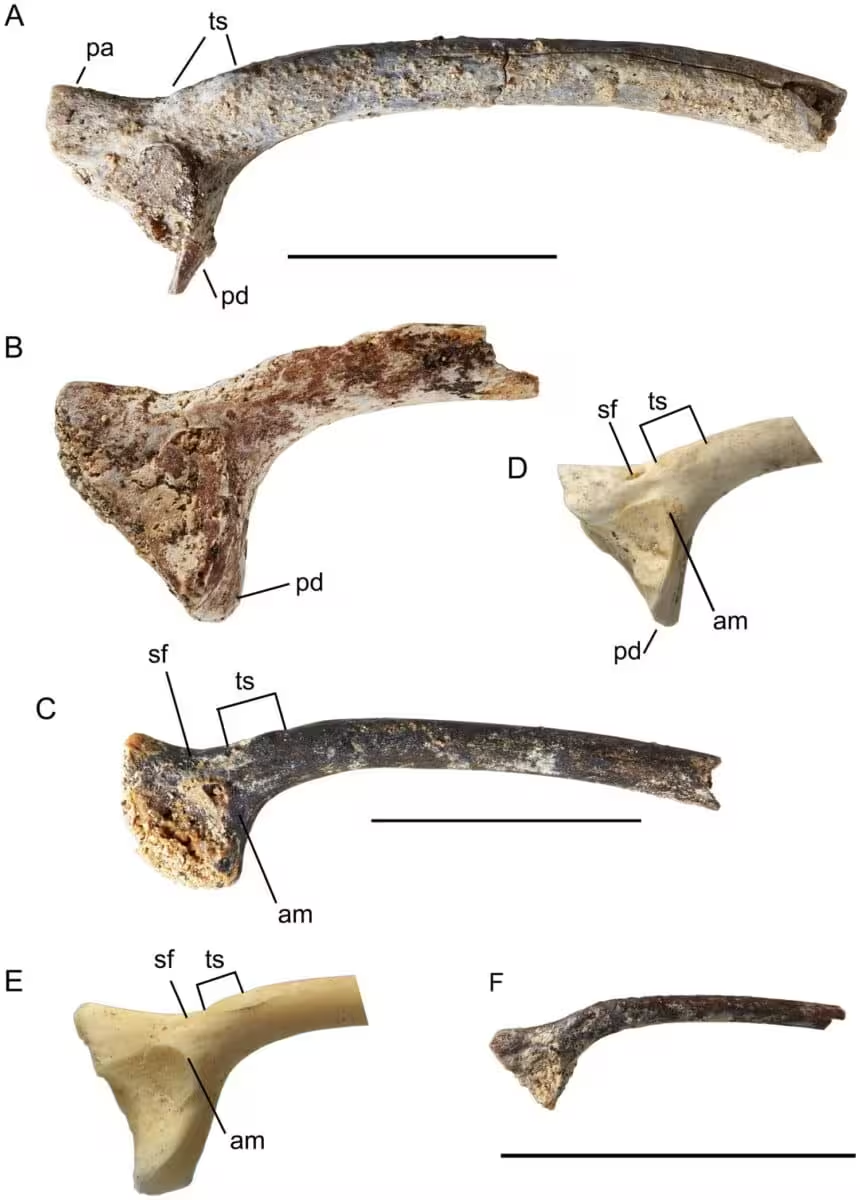
Among the newly described taxa are lineages that still have living relatives, offering fresh insights into evolutionary trajectories. Notably, researchers identified an ancestor of the modern takahe—a large, flightless rail that survives today only through intensive conservation—extending the known history of that lineage and prompting questions about its resilience amid widespread extinctions.
The team also uncovered fossils of an extinct pigeon closely related to Australian bronzewing pigeons, indicating biogeographic connections between New Zealand and Australia during this era. Contemporary New Zealand pigeons belong to a separate lineage, meaning the ancient bird left no direct modern descendant on the islands, yet its presence suggests a richer pigeon fauna than previously recognized.
The four frog specimens belong to the ancient Leiopelma lineage, one of the world’s most primitive frog groups. These fossils expand the regional record for this lineage and may help clarify how amphibian populations responded to the same pressures that drove avian extinctions. Whether any of the fossil species are direct ancestors of today’s New Zealand frogs or represent extinct side branches remains unresolved.
Scofield described the shifting forest and shrubland habitats of the period as having forced a reset of bird populations, a dynamic that likely spurred evolutionary diversification across the North Island. The assemblage captured in the ash‑sealed cave may represent one phase of that process: a community shaped by earlier turnovers, preserved just before another round of change.
This article has been fact checked for accuracy, with information verified against reputable sources. Learn more about us and our editorial process.
Last reviewed on .
Article history
- Latest version
Reference(s)
- Worthy, Trevor H.., et al. “The first Early Pleistocene ( ca 1 Ma) fossil terrestrial vertebrate fauna from a cave in New Zealand reveals substantial avifaunal turnover in the last million years.” Alcheringa: An Australasian Journal of Palaeontology, vol. 50, no. 1, January 26, 2026, pp. 480-519. Informa UK Limited, doi: 10.1080/03115518.2025.2605684. <https://www.tandfonline.com/doi/full/10.1080/03115518.2025.2605684>.
- “Associate Professor Trevor Worthy - Flinders University.” Flinders University <https://www.flinders.edu.au/people/trevor.worthy>.
- “Paul Scofield Senior Curator Human History.” Canterbury Museum <https://www.canterburymuseum.com/research-education/our-researchers/paul-scofield>.
Cite this page:
- Posted by Hassan Raza