2600-Year-Old Chinese Tomb Uncovers Hundreds of Bronze Bells Silenced by Ritual
Archaeologists reveal bronze bells from Lord Qiu of Zeng’s tomb were deliberately taken apart before burial, reshaping view of funerary rites.
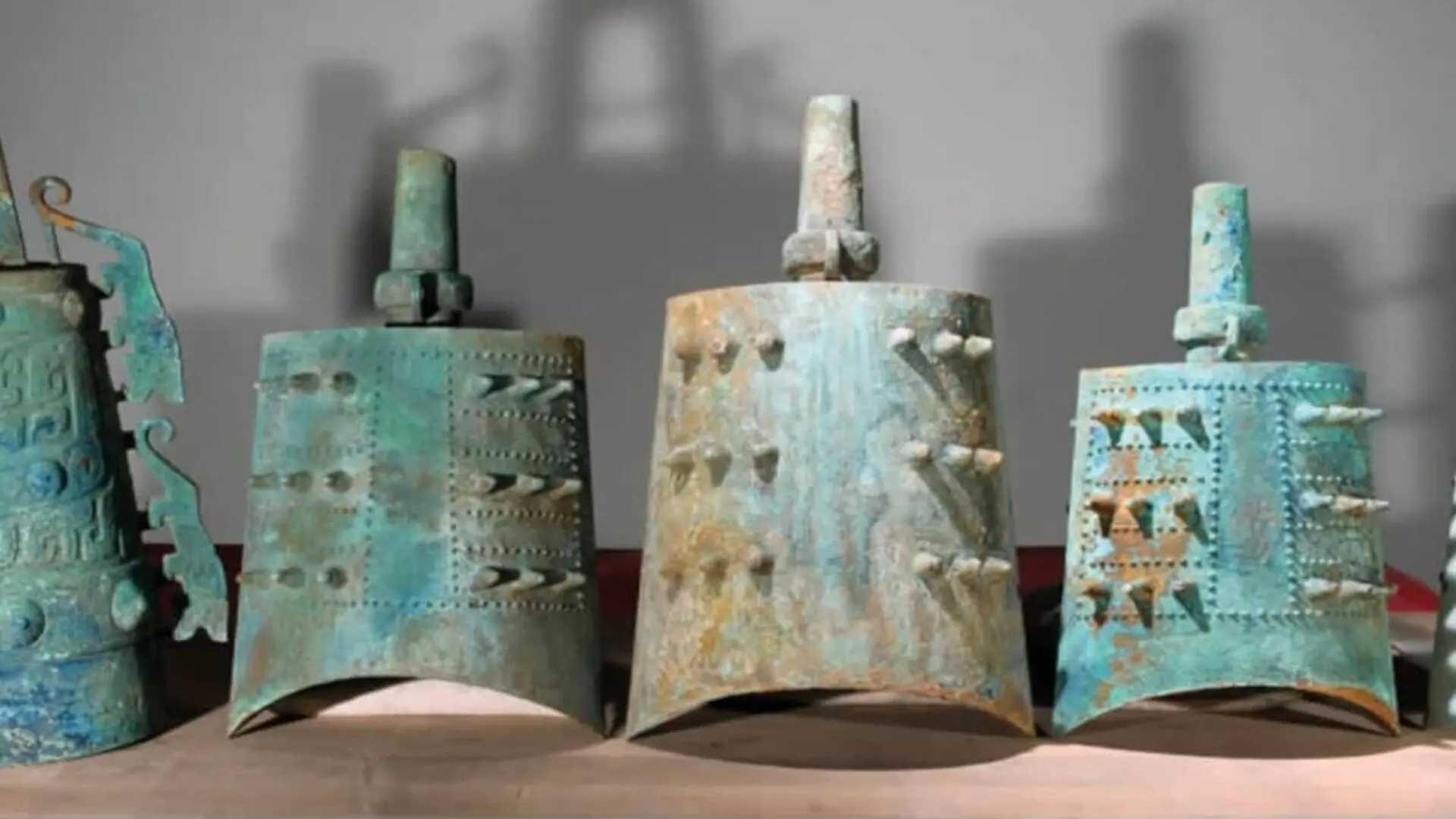
Lord Qiu’s burial chamber, situated in the Zaoshulin Cemetery of Hubei Province, dates to more than 2,600 years ago and offers fresh insight into how early Chinese societies linked material culture, ritual practice, and the nexus of political authority with the spiritual realm.
Central to the discovery are a suite of intricately cast bronze bells produced during a turbulent phase of the Zhou dynasty, when rival states frequently clashed. In the Zhou worldview, such bells were not merely musical devices; they functioned as conduits between the living, the heavens, and ancestral spirits.
Bronze Chimes Commissioned Amid Zhou‑Era Conflict
According to University College London archaeologist Chinglong Tse, Lord Qiu ordered the bells either in 677 B.C. or 646 B.C., a period marked by heightened tension with the neighboring state of Chu. Artisans adorned the bells with dragon motifs, embedded quartz, and inscribed praises for Qiu’s forebears, explicitly requesting their protection over Zeng.
The study notes that the bells’ spiritual efficacy depended on their precise arrangement and suspension from a wooden rack, integrating them into a larger ceremonial system rather than serving as ornamental prestige items.

The bells’ placement on the rack enabled them to fulfill a symbolic role, linking the ruler to ancestral forces thought to steer the state’s destiny. After Qiu sealed peace with Chu through a marriage alliance involving the Chu king’s sister, the original purpose of the bells—seeking supernatural aid against Chu—became obsolete.
Ritual Deconstruction of the Bells After Lord Qiu’s Death
When Lord Qiu passed, his mourners deliberately altered the burial context. They dismantled the wooden rack, dispersed its fragments throughout the chamber, and clustered the bells in a disordered heap.
The tomb’s intact condition rules out looting as a motive. Tse interprets the arrangement as a ceremonial “deactivation,” intended to prevent the bells from continuing their ritual function in the afterlife.
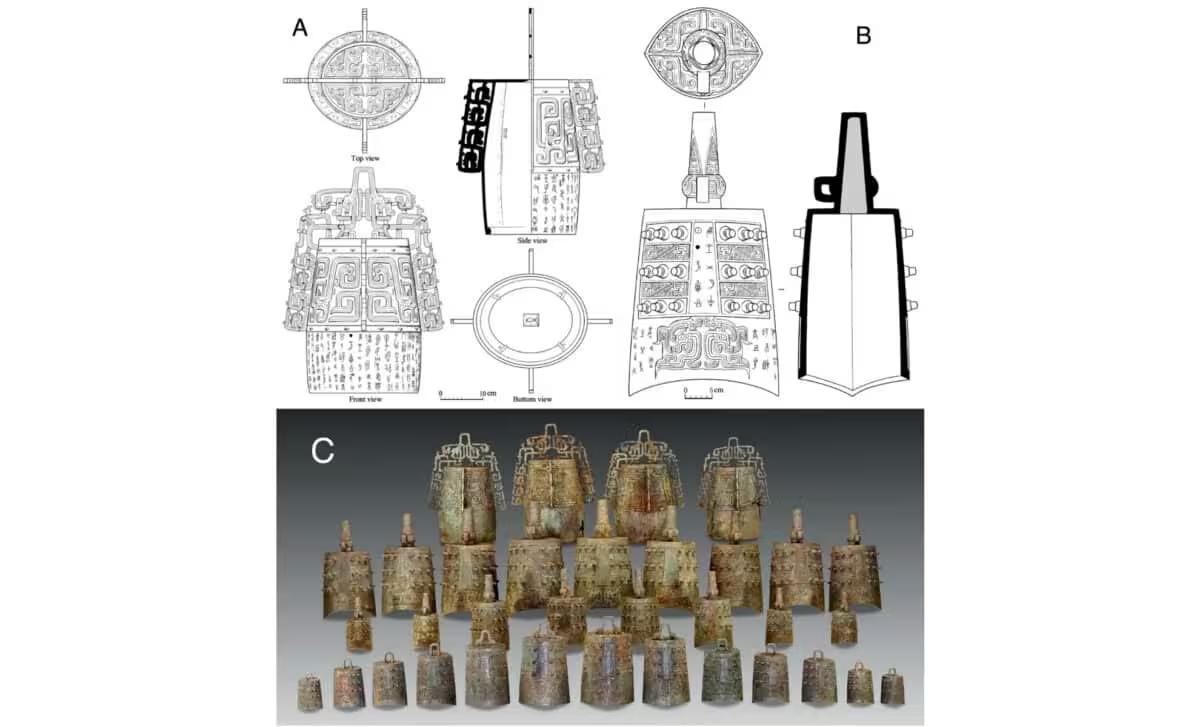
A nearby cache of smaller bronze bells, arranged in two parallel rows facing southeast, bears inscriptions that label them as objects intended for post‑mortem use. This contrast suggests that Qiu’s family deliberately separated instruments linked to his temporal authority from those meant for his journey into the ancestral realm.
What the Bells Reveal About Ancient Zeng Worldviews
Tse cautions that interpreting ancient artifacts solely as utilitarian items can impose modern, secular frameworks onto societies that operated under fundamentally different belief systems. In Zeng, bronze bells were active participants in a dynamic relationship among ruler, ancestors, and the spirit world.
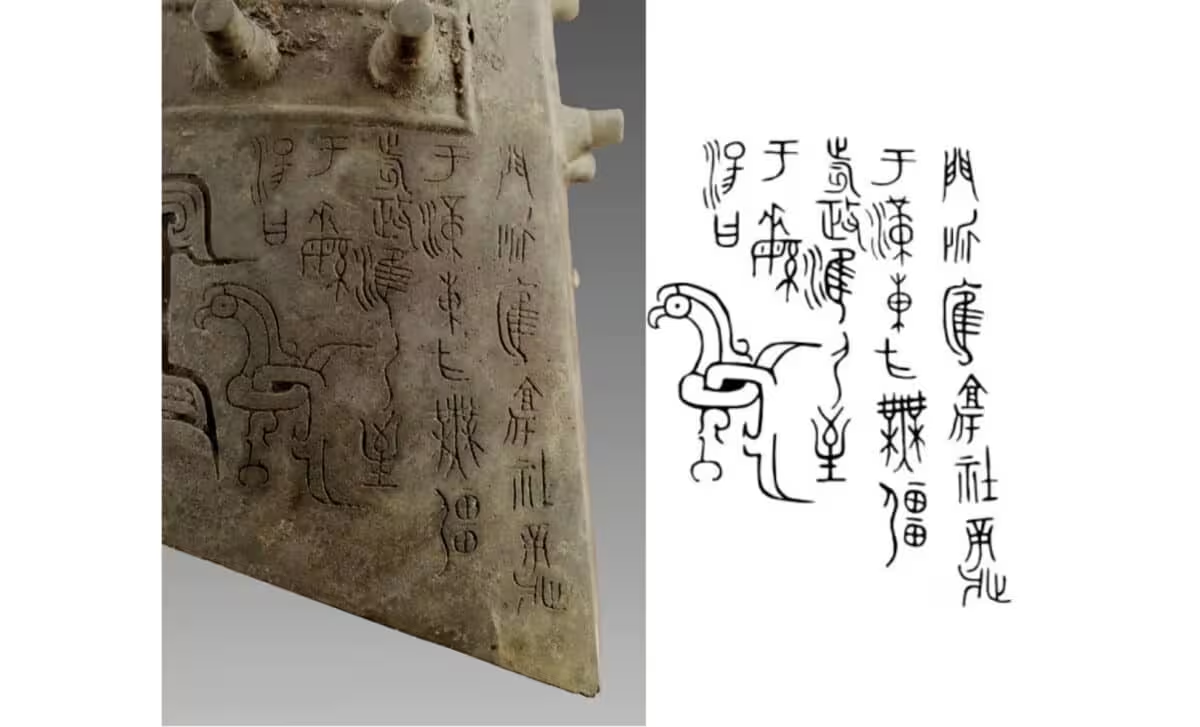
By integrating archaeological data with contemporaneous texts, scholars can better grasp how objects were perceived in their original cultural context. The deliberate re‑configuration of the bells in Lord Qiu’s tomb underscores how shifting political realities and evolving religious ideas could reshape the symbolic life of material culture.
Future excavations of Zeng bronze‑casting workshops are expected to shed further light on manufacturing techniques and the broader social significance of these instruments. The case of Lord Qiu’s bells illustrates the capacity of ancient communities to adapt ritual paraphernalia when its original purpose no longer aligned with the surrounding world.
This article has been fact checked for accuracy, with information verified against reputable sources. Learn more about us and our editorial process.
Last reviewed on .
Article history
- Latest version
Reference(s)
- Tse, Chinglong. “‘The Bells Are Harmonious and Resonant’: Numinous Ancestors, Resonant Bells and the Personhood of Lord Qiu of Zeng in Tomb M190 at Zaoshulin, Hubei | Cambridge Archaeological Journal | Cambridge Core.”, pp. 1-19. Cambridge Core, doi: 10.1017/S0959774326100651. <https://www.cambridge.org/core/journals/cambridge-archaeological-journal/article/bells-are-harmonious-and-resonant-numinous-ancestors-resonant-bells-and-the-personhood-of-lord-qiu-of-zeng-in-tomb-m190-at-zaoshulin-hubei/F2A3CEF8CC14BA7421A55BE0CA004D8F>.
Cite this page:
- Posted by Vikram Desai