FCC Greenlights Space Mirror Demo to Shine Sunlight on Earth in Emergencies
New orbital mirror test aims to prove satellites can safely redirect sunlight to Earth, paving way for groundbreaking solar‑lighting technology.
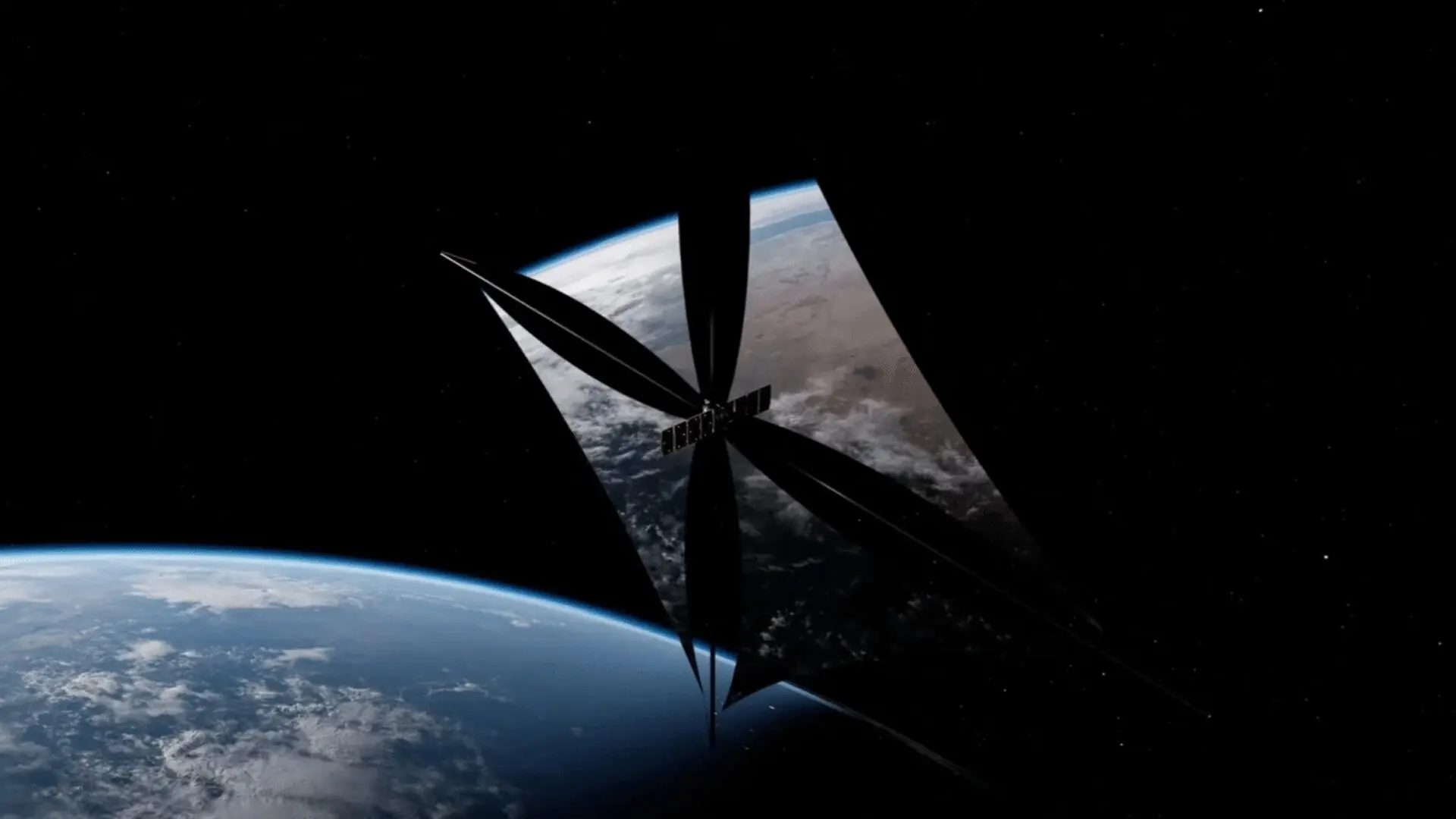
The U.S. government has granted permission for a pioneering satellite experiment that will test the ability to bounce sunlight back to Earth, marking a bold step in unconventional space applications. The clearance allows the startup Reflect Orbital to launch a limited‑duration probe aimed at determining whether orbital mirrors can deliver focused illumination for uses ranging from disaster relief to infrastructure support. Though modest in scope, the project signals a growing interest in leveraging satellites for purposes beyond traditional communications and Earth‑observation.
Global Curiosity Over Space‑Based Light Mirrors
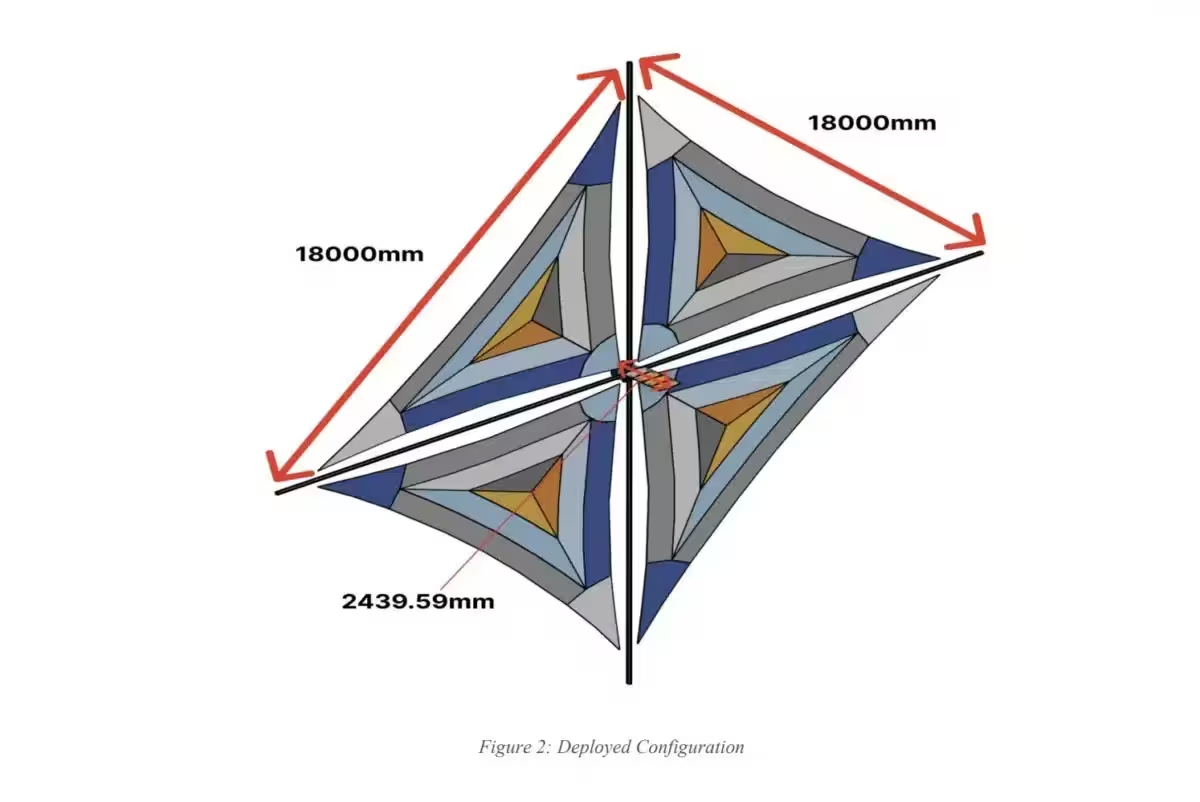
Reflect Orbital’s plan revolves around a relatively simple premise: a satellite fitted with a highly reflective panel that can steer sunlight toward selected ground locations during twilight or night. Rather than proposing a permanent artificial lighting system, the test aims to assess whether controlled reflections can be achieved safely and with sufficient precision before any larger‑scale rollout is contemplated.
Proponents envision the technology as a temporary lighting source for emergency responders, remote construction sites, scientific outposts, humanitarian missions, and other scenarios where conventional illumination is unavailable or impractical. Detractors, however, warn of potential impacts on astronomical observations, wildlife, the night sky, and orbital traffic if the concept were to be expanded into a sizable constellation.
These divergent viewpoints shaped the federal review that preceded the approval.
The Federal Communications Commission (FCC) addressed the concerns directly in its order, stating:
“The Communications Act states that it is the policy of the United States to ‘encourage the provision of new technologies and services to the public,’ and Reflect Orbital’s demonstration satellite is an example of a potentially groundbreaking technology that the Commission has found is in the public interest to support,” the order says.
The FCC emphasized that the authorization is limited to a tightly defined experimental mission rather than a commercial rollout.
Regulators Find Public Gains Outweigh Limited‑Mission Risks
The decision followed an extensive review that examined technical filings, public comments, and environmental considerations. Rather than assessing a future commercial fleet, the commission focused on the specific characteristics of the single test satellite slated to validate the concept in orbit.
In its rationale, the FCC highlighted the temporary nature of the experiment and its role in generating data for future evaluations. The agency added:
“Independently, we find that any such risks are outweighed by the public interest benefits of authorizing communications to support testing of the technology in a limited, short-duration manner to inform whether there are longer-term benefits from an expanded use of this technology,” the FCC added.
The commission also distinguished between objections to the test satellite and speculative concerns about a massive future constellation. According to the order, many comments referenced hypothetical large‑scale deployments rather than the specific demonstration craft. The FCC noted:
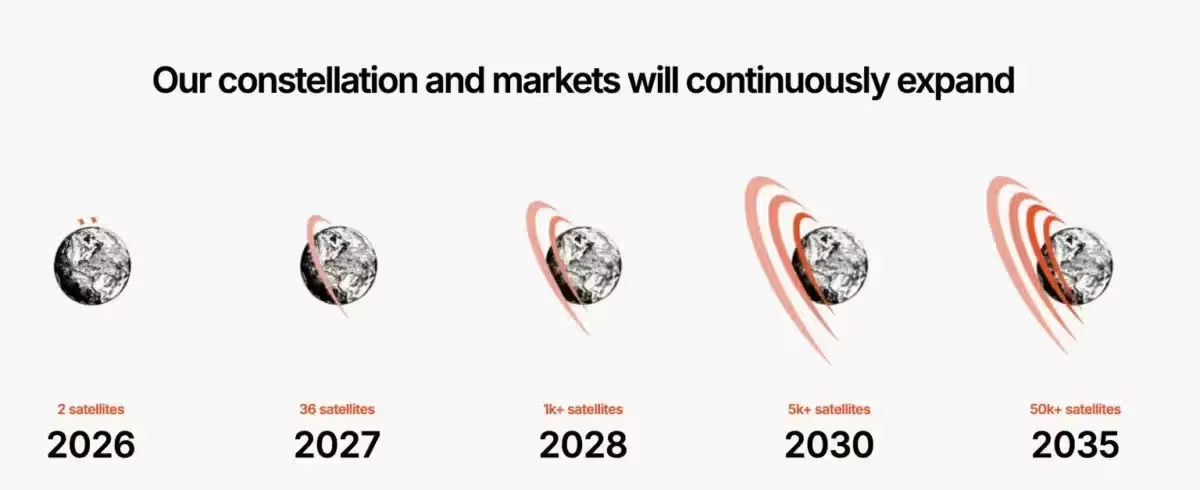
“The majority of these comments focus on a hypothetical plan to deploy tens of thousands of satellites, and those who argue the single satellite will harm the human environment do not demonstrate with specificity the potential harm will be caused by the single satellite, but rather rely on the same studies as the commenters objecting to a larger constellation,” the FCC adds.
As reported by The Conversation, the debate over orbital mirrors extends beyond engineering challenges. Astronomers warn that bright satellites can compromise night‑sky observations, while environmental scientists examine how artificial lighting might affect ecosystems. The approved test aims to deliver real‑world data that could inform these unresolved issues.
Beyond Night‑Time Lighting: Potential Uses Outlined by the Company
Reflect Orbital frames the demonstration as a proof of concept for a suite of services. The firm argues that precise orbital reflections could support emergency responders when conventional power grids fail, offering temporary illumination for hazardous‑area operations. Additional envisaged roles include aiding construction crews, maritime navigation, remote research stations, and any scenario where short‑term lighting improves safety without permanent infrastructure.
In a statement issued after the FCC’s approval, the company highlighted growing interest from international stakeholders. It said, “The license grant follows extraordinary global demand for Reflect Orbital’s lighting and energy services, including most recently numerous requests to assist search‑and‑rescue efforts in the aftermath of the tragic earthquake in Venezuela.”
These assertions illustrate why governments, emergency planners, investors, and the broader space sector have taken notice. Whether orbital mirrors become a practical tool will hinge on engineering performance, cost structures, regulatory frameworks, and public acceptance. The upcoming mission will be the first to collect operational data rather than relying solely on simulations and theoretical models.
Implications of a Single Test for a Potential New Space Market
Although only one spacecraft is authorized, the outcomes could shape an entirely new class of commercial space services centered on controlled illumination from orbit. Successful validation might prompt discussions on international regulations, environmental safeguards, traffic management, and coordination with the astronomical community.
Conversely, a failure would also yield valuable insights by exposing technical constraints before larger investments are made. This makes the experiment a critical test case irrespective of its final result. As commercial activity in orbit accelerates and firms propose increasingly novel concepts, regulators must balance the encouragement of innovation with the protection of shared orbital and environmental resources. Reflect Orbital’s demonstration stands as a concrete example of that ongoing balancing act.
This article has been fact checked for accuracy, with information verified against reputable sources. Learn more about us and our editorial process.
Last reviewed on .
Article history
- Latest version
Reference(s)
- Lawler, Samantha. “The U.S. just approved a giant space mirror to test ‘sunlight on demand.’ Low Earth orbit is getting weird.”, July 10, 2026 The Conversation, doi: 10.64628/AAM.5wyhaujnp. <https://theconversation.com/the-u-s-just-approved-a-giant-space-mirror-to-test-sunlight-on-demand-low-earth-orbit-is-getting-weird-283482>.
Cite this page:
- Posted by Vikram Desai