Bronze Age Stone Footprints Reveal Personal IDs and Water Rituals in Scandinavia
Ancient 3,000-year-old footprints found in northern Europe reveal long-hidden secrets
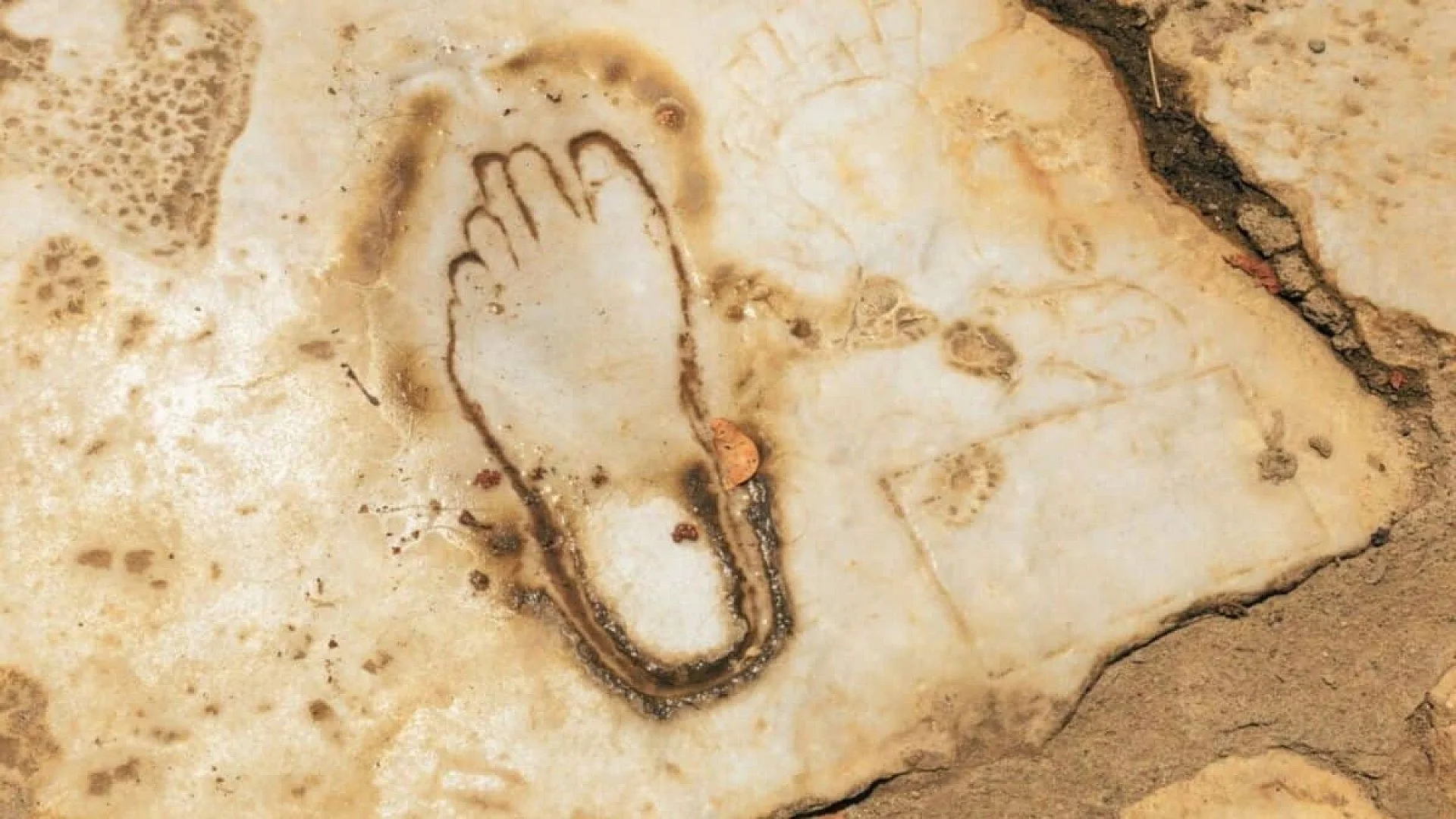
Across the rocky outcrops of Scandinavia, thousands of carved footprints have puzzled researchers for decades. New analysis indicates these marks were more than decorative symbols.
The stone‑cut impressions, known as podomorphs, are scattered throughout Sweden, Denmark and Norway. They belong to the broader Nordic Bronze Age rock‑art tradition that flourished between roughly 1700 and 500 BCE. While ships, animals and human silhouettes dominate the visual repertoire, the foot motifs form a distinct category.
A recent paper by Fredrik Fahlander of Stockholm University, appearing in the Oxford Journal of Archaeology, turns the usual question on its head. Instead of asking what the prints symbolise, the study examines how they were positioned, organised and linked to their surrounding landscape.
Carved Imprints Echo Real Footsteps
Although podomorphs represent a minor fraction of the Nordic Bronze Age rock‑art corpus, the attention to their form is striking. The investigators recorded fine pecked details—cross‑straps and other elements that resemble footwear—suggesting an attempt to reproduce the mark a foot would leave in soft substrates such as sand, clay or snow.
This level of craftsmanship stands out against the dominant style of the era. Simple cup marks account for more than 90 percent of the documented carvings in the region, as noted in the Oxford Journal of Archaeology.
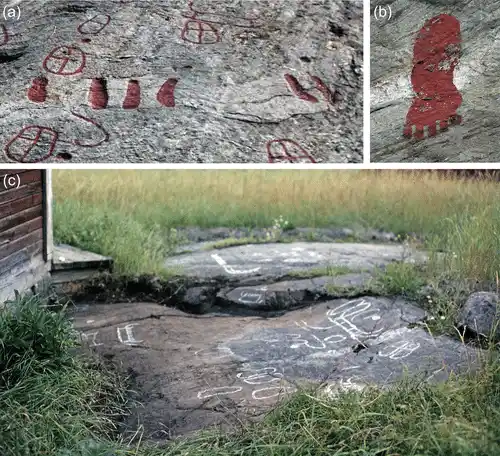
The footprints themselves show considerable variation; no two are identical. Differences in size, shape and decorative detail led Fahlander to argue that the carvings were likely linked to particular individuals rather than serving as generic icons.
“These factors taken together are understandable if, as proposed, the Bronze Age podomorphs in general are linked to specific individuals. Another aspect is that the majority of sites only include single podomorphs or odd numbers of them,” he wrote in the study.
The uniqueness of each carving implies that preserving a personal footprint in stone may have been an act of lasting commemoration, turning a fleeting trace into a permanent record.
Water‑Rich Settings Reveal Deliberate Placement
Location proved as informative as form. Fahlander’s survey shows that many podomorphs sit on specific bedrock features—mineral veins, natural depressions that collect rainwater, or surfaces regularly swept by wave splash.
The pattern appears intentional. Water was not a passive backdrop; it seems to have been woven into the experience of the artwork.

In several cases the footprints were incised into colourful, mineral‑rich zones of the rock, making them stand out against the surrounding stone. Coupled with flowing water, these spots would draw attention far more effectively than ordinary surfaces.
Fahlander suggests that water may have helped “activate” the images, turning static carvings into components of a dynamic environment shaped by rainfall, waves and seasonal change.
Uneven Pairs Hint at Social Bonds
The spatial arrangement of the podomorphs adds another layer of interpretation for Bronze Age societies. Most sites display either a solitary imprint or an odd number of them. When two footprints appear together, they rarely match; one may be larger, differently shaped or more elaborately detailed.
Some paired examples show evidence of sequential creation, with a later imprint added to an existing carving rather than produced as a single design.
Fahlander interprets these disparities as signs of multiple contributors, possibly recording friendships, pacts or marital ties on the same stone surface.

“The care and energy invested in this practice show the importance of materializing personal prints in stone.”
Unlike ships, animals and other common Bronze Age motifs, podomorphs never appear on bronze artefacts or burial monuments. Their confinement to water‑exposed bedrock sets them apart, hinting at a uniquely personal role within the communities that produced them.
This article has been fact checked for accuracy, with information verified against reputable sources. Learn more about us and our editorial process.
Last reviewed on .
Article history
- Latest version
Reference(s)
- Fahlander, Fredrik. “A STEP IN STONE. ONTOLOGIES OF PODOMORPHIC PETROGLYPHS IN SOUTHERN SCANDINAVIAN BRONZE AGE.” Oxford Journal of Archaeology, May 6, 2026 Wiley, doi: 10.1111/ojoa.70020. <https://onlinelibrary.wiley.com/doi/10.1111/ojoa.70020>.
- “Fredrik Fahlander - Stockholm University.” <https://www.su.se/english/profiles/f/ffahl>.
Cite this page:
- Posted by Vikram Desai