A Tanzanian Volcano Could Unlock Mercury’s Greatest Geological Mystery
Rare Tanzanian volcano unlocks Mercury’s mysterious surface hollows hinting at carbon-rich volcanic origins
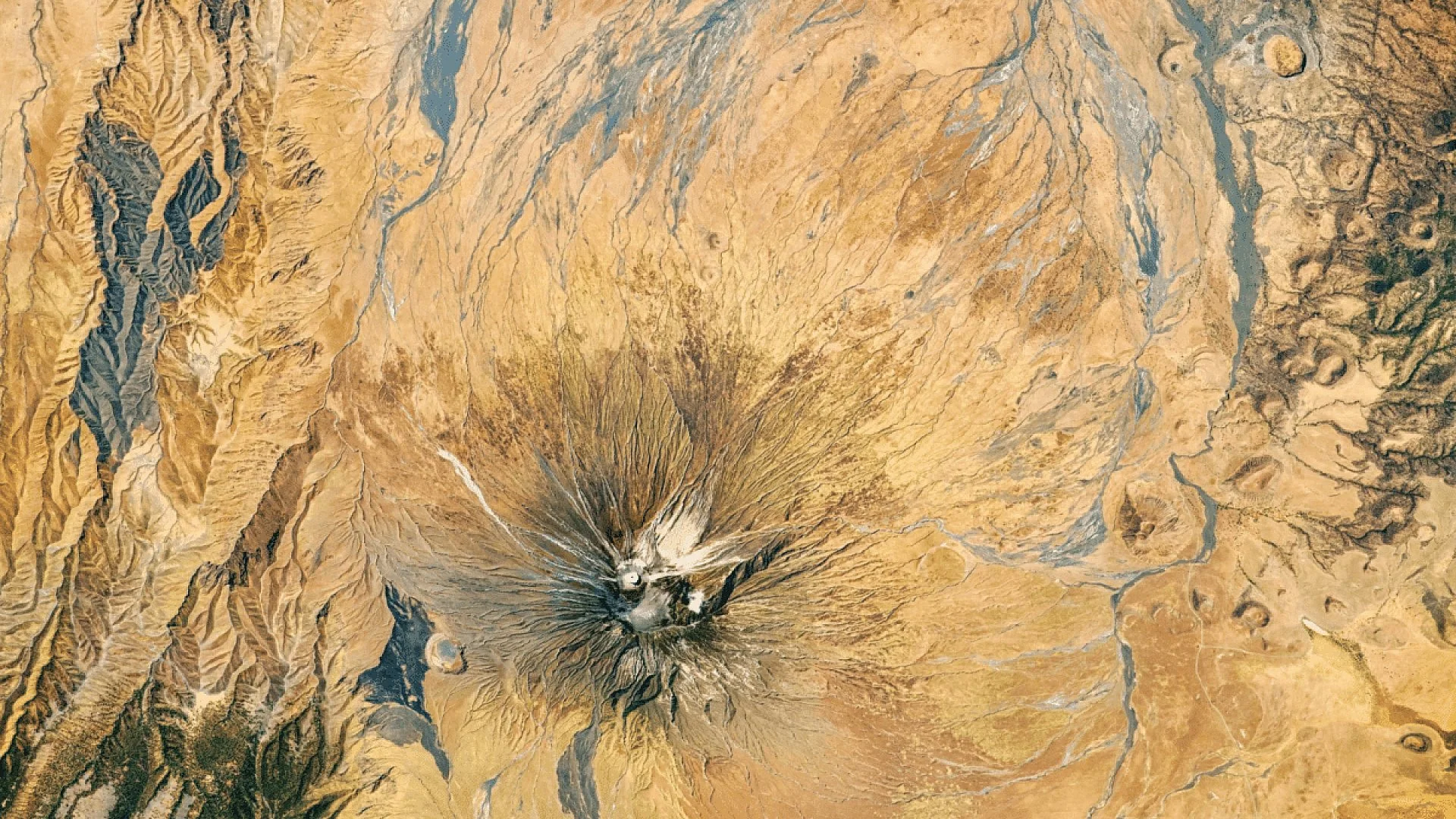
A recent Icarus paper links Tanzania’s rare carbon‑rich volcano, Ol Doinyo Lengai, to the bright, irregular depressions known as “hollows” that dot Mercury’s surface, suggesting that the planet’s extreme environment could produce similar features through carbon‑laden eruptions.
A Sacred Peak Spews Uncommon Lava
Ol Doinyo Lengai, honored as the Mountain of God by local Maasai and Sonjo communities, erupts carbonatite magma—a rock with more than fifty percent carbon. This type of lava solidifies at temperatures about a hundred degrees Celsius lower than the silicate lavas that dominate Earth, making it one of the planet’s coolest volcanic materials. Researchers propose that, if Mercury’s interior contains comparable carbon‑rich deposits, impact‑driven eruptions could generate the hollows observed on the innermost planet.
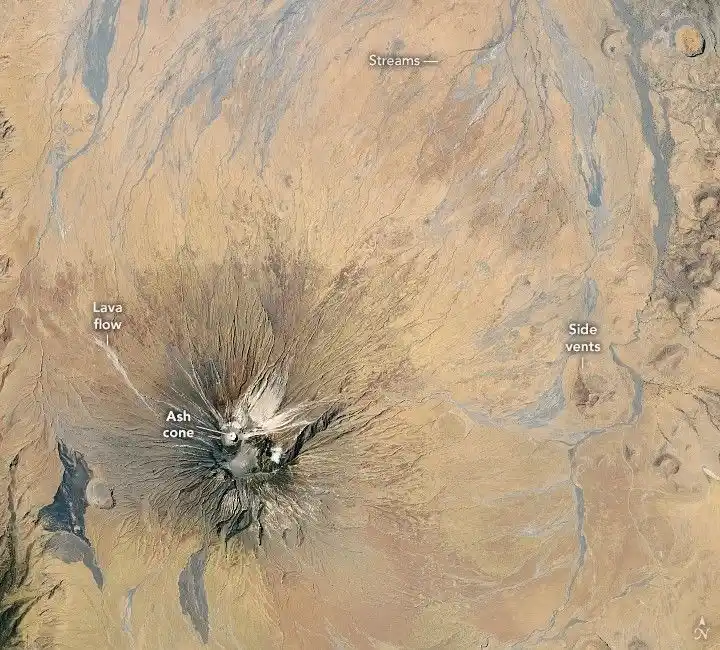
Credit: NASA’s Earth Observatory
In the lab, scientists isolated fresh carbonatite melt to record its unaltered chemistry and infrared signature. These benchmarks will help interpret data returned by the BepiColombo spacecraft—an ESA‑JAXA mission currently on its way to Mercury—by providing a terrestrial analogue for the planet’s mysterious surface spots.
Decoding Mercury’s Bright Depressions
“Mercury resembles the Moon in many ways, so we don’t anticipate large‑scale volcanism,” explained Maximilian Paul Reitze, a planetologist at Universität Münster and lead author of the Icarus study. He added that the hollows appear geologically fresh and may still be forming, which implies a volatile‑driven process unlike anything seen on Earth or Io.
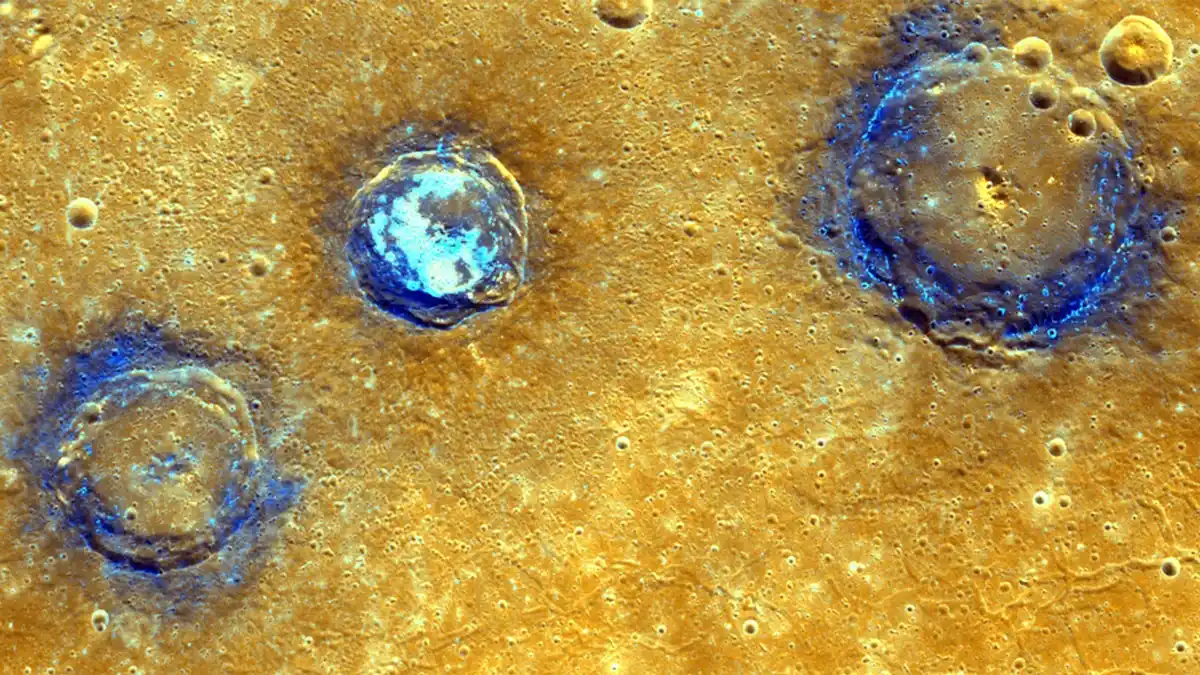
Credit: NASA/Johns Hopkins University Applied Physics Laboratory/Carnegie Institution for Science
Despite detailed mapping by NASA’s MESSENGER mission between 2011 and 2015, scientists have yet to pinpoint the chemical drivers of these bright pits. Early hypotheses invoked sulfide‑rich crustal material, but the high thermal stability of sulfides—up to roughly 1 000 °C—makes them unlikely candidates for rapid, explosive venting.
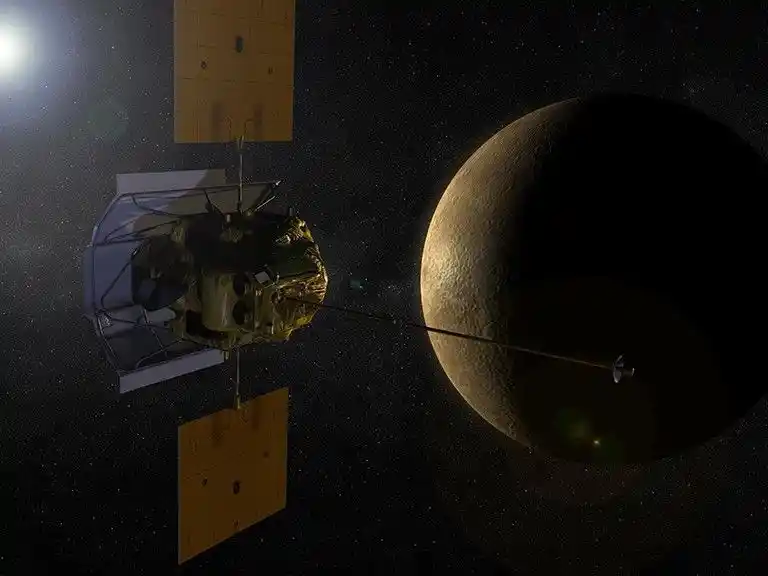
Credit: NASA
Carbon‑Rich Magma as a Viable Mechanism
The new study suggests that impact heating could melt carbon‑laden reservoirs beneath Mercury, prompting eruptions that leave behind the observed hollows. Earth’s Ol Doinyo Lengai serves as a natural test case for how carbon‑based lavas behave when exposed to extreme temperatures and low‑pressure environments.
“Sulfides remain stable up to about 1 000 °C, which cannot account for the explosive volcanism required to produce those hollows,” Reitze noted. By contrast, carbonatite melts liquefy at significantly lower temperatures, offering a plausible pathway for rapid degassing and surface alteration.
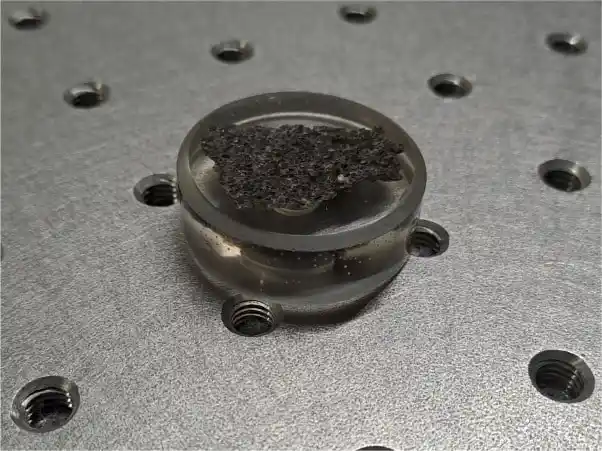
Credit: Icarus
Community Response and Remaining Questions
Planetary scientist Paul Byrne of Washington University in St. Louis, who was not involved in the research, cautioned that Mercury’s carbon inventory appears modest. “We know carbon exists in the crust, but in very low amounts,” he said, adding that regions with relatively higher carbon do not line up with the distribution of hollows, implying that any carbon‑driven volcanism would require a richer source than currently measured.
Byrne also described Mercury as “a molten core wrapped in a thin shell of rock,” suggesting that early giant impacts may have stripped away much of the original mantle. While he remains skeptical that carbonatite eruptions alone can explain every hollow, he acknowledged that the hypothesis “is an interesting one” and deserves further testing as BepiColombo gathers more data.
This article has been fact checked for accuracy, with information verified against reputable sources. Learn more about us and our editorial process.
Last reviewed on .
Article history
- Latest version
Reference(s)
- Reitze, Maximilian P.., et al. “Carbonatites from Ol Doinyo Lengai, Tanzania — An unusual rock as analog for Mercury as potential species for hollow formation.” Icarus, vol. 454, August 1, 2026, pp. 117073 Elsevier BV, doi: 10.1016/j.icarus.2026.117073. <https://www.sciencedirect.com/science/article/pii/S0019103526001399>.
Cite this page:
- Posted by Vikram Desai