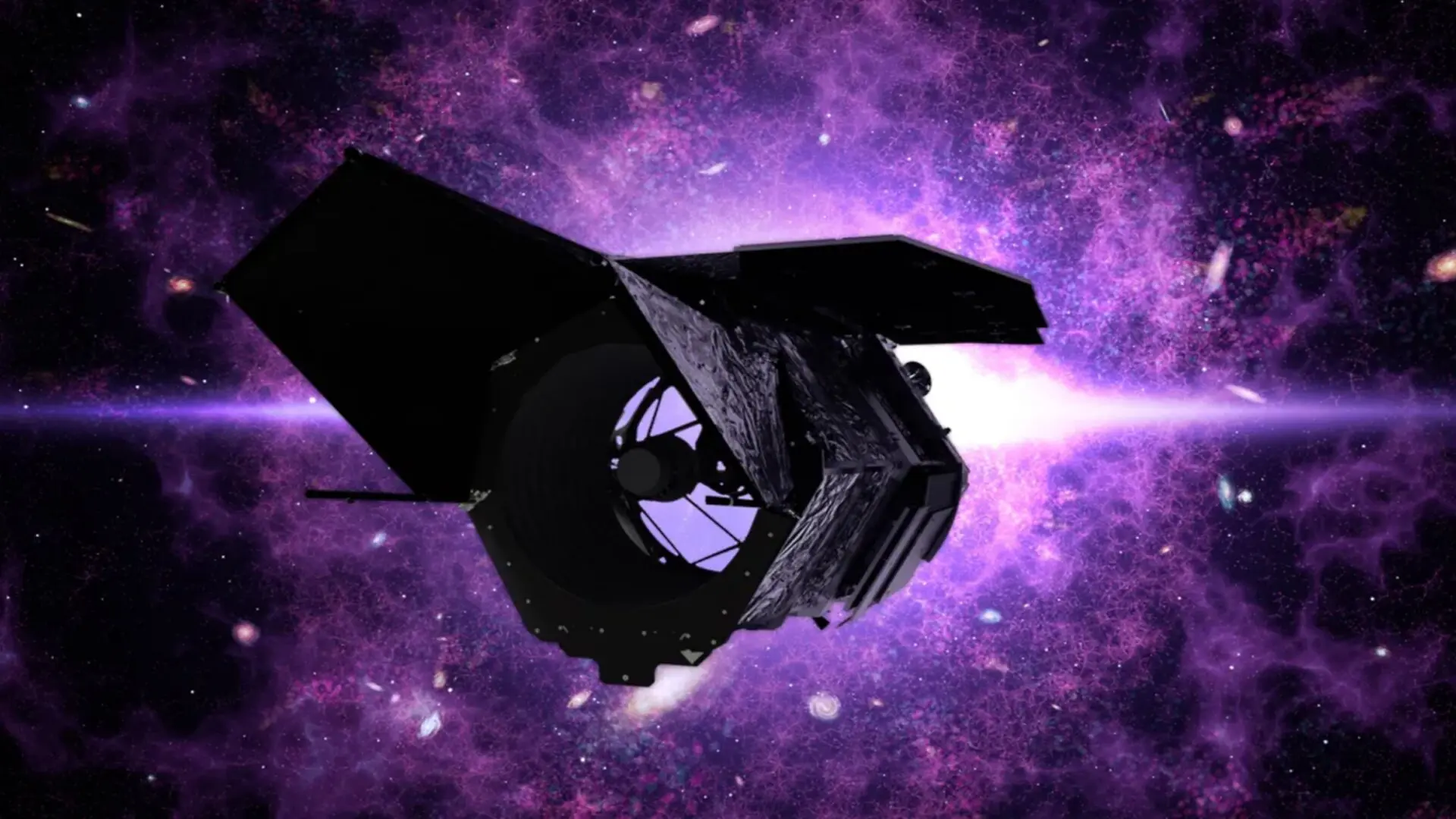
NASA’s Nancy Grace Roman Space Telescope has officially moved into its final science commissioning phase. Following a successful series of operational evaluations, the observatory has proven it can effectively track targets, record high-quality imagery, and transmit scientific data back to Earth, setting the stage for its primary mission to survey the cosmos with unprecedented speed and precision.
Clearing the Final Hurdles for Deep Space Exploration
The shift into this concluding phase, confirmed by NASA on October 22, 2026, marks a pivotal moment for the Nancy Grace Roman Space Telescope. Having verified that all core hardware and primary instrumentation are functioning as designed, the mission team is now shifting their focus toward fine-tuning the observatory’s performance under a variety of real-world observing conditions.
“We’ve established that the observatory is fully functional,” said Julie McEnery, Roman’s senior project scientist at NASA’s Goddard Space Flight Center in Greenbelt, Maryland. “The telescope can guide and take exposures, data flows appropriately, and we can slew from one place to another for observations. So now we’re drilling into the fine details of the quality of the images we’re collecting.”
The current calibration campaign is designed to meticulously characterize how the telescope responds to incoming light. By identifying and accounting for minor instrumental variables, researchers can ensure that they can distinguish between genuine astronomical signals and artifacts created by the spacecraft itself. Early metrics are promising, with several key systems demonstrating performance levels that surpass initial expectations.
It’s the final countdown
We’re one step closer to Roman’s first images! The observatory is now fully functional and the team is performing their final checks and calibrations before starting science observations.
https://t.co/rnLmBsiw5m https://t.co/f8c9yklql7
— Nancy Grace Roman Space Telescope (@NASARoman) October 22, 2026
Navigating Complex Cosmic Environments
One of the primary concerns for mission operators was whether the telescope’s fine guidance system could maintain stability within densely packed star fields or regions obscured by dense interstellar dust. These environments often lack the clear, isolated reference points typically used by observatories to lock onto a target.
“The way Roman locks onto a target is by holding steady on individual stars found in the direction it needs to point,” explained Tom Barclay, Roman operations project scientist at NASA Goddard. “We had a concern that in regions where stars are either packed extremely close together or embedded in thick dust, the fine guidance system might get confused or have trouble staying tethered to those stars. But test observations of such regions have shown that Roman performs wonderfully in all cases.”
This validation is critical for the mission’s success, as it ensures that Roman can reliably observe crowded galactic centers and star-forming nebulae without jitter or tracking errors, allowing for the consistent monitoring of faint objects and subtle brightness fluctuations.
The scientific ambitions of the Roman mission—which include mapping dark energy and cataloging distant galaxies—require more than just high-resolution imaging. They demand an extreme level of precision where any variation in focus or pointing stability must be minimized to avoid obscuring the minute signals astronomers are searching for.
“To achieve the groundbreaking science we expect from Roman, we need to have a crystal clear window into space, not one marred by pointing jitter or out-of-focus images,” noted Josh Schlieder, Roman’s Wide Field Instrument scientist at NASA Goddard. “Any imperfections that affect image quality must be minimized because even very small flaws could mask the small signals we are aiming to measure.”
By establishing this baseline of stability now, the team is building the foundation necessary to extract meaningful data from the vast sky surveys the telescope is slated to perform.
Unlocking New Efficiencies in Sky Surveys
Beyond its stabilizing capabilities, the telescope is proving to be exceptionally fast, an attribute that could fundamentally alter the pace of modern observational astronomy. During current commissioning tests, the observatory has shown an impressive ability to capture high-detail mosaics of the sky in very short windows of time.
Jeremy Perkins, an astrophysicist and Roman’s observatory integration and test scientist at NASA Goddard, noted that the detail captured in these brief exposures is significant. This level of efficiency may allow future astronomers to execute massive sky-mapping projects that were previously considered too time-intensive to be practical.
The Wide Field Instrument is central to this potential, offering both a broad field of view and the sensitivity required to spot objects nearly one hundred million times fainter than what the naked eye can perceive. As Schlieder put it, the potential for discovering the unexpected buried within this massive volume of data is immense.
Looking Toward the Start of Routine Operations
As the final calibration phase continues, the mission team remains focused on refining the telescope’s responses to ensure that all observational data is calibrated to the highest possible standard. Because some systems are currently exceeding performance requirements, scientists are optimistic that the observatory may provide more flexibility and scientific reach than originally anticipated.
The transition from commissioning to routine science operations marks the final step in preparing Roman for its primary task: providing a clearer, faster, and more detailed view of the universe than ever before. For the researchers waiting to dig into the incoming data, the goal is to turn this vast stream of imagery into a deeper understanding of galactic structure, dark energy, and the hidden mechanisms of our cosmos.
Fact Checked
This article has been fact checked for accuracy, with information verified against reputable sources. Learn more about us and our editorial process.
Das, Karan. “NASA Confirms Its New Space Telescope Is Fully Operational and Ready to Reveal the Universe.” BioScience. BioScience ISSN 2521-5760, 23 October 2026. <https://www.bioscience.com.pk/en/subject/space-science/nasas-roman-telescope-moves-closer-to-uncovering-millions-of-hidden-cosmic-objects>.
Das, K. (2026, October 23). “NASA Confirms Its New Space Telescope Is Fully Operational and Ready to Reveal the Universe.” BioScience. ISSN 2521-5760. Retrieved October 23, 2026 from https://www.bioscience.com.pk/en/subject/space-science/nasas-roman-telescope-moves-closer-to-uncovering-millions-of-hidden-cosmic-objects
Das, Karan. “NASA Confirms Its New Space Telescope Is Fully Operational and Ready to Reveal the Universe.” BioScience. ISSN 2521-5760. https://www.bioscience.com.pk/en/subject/space-science/nasas-roman-telescope-moves-closer-to-uncovering-millions-of-hidden-cosmic-objects (accessed October 23, 2026).