Archaeologists Used Homer’s Iliad to Locate a Massive Shipwreck Graveyard Off the Coast of Greece
Archaeologists exploring the waters off the Greek island of Kasos have discovered a treasure trove of ancient shipwrecks spanning thousands of years.
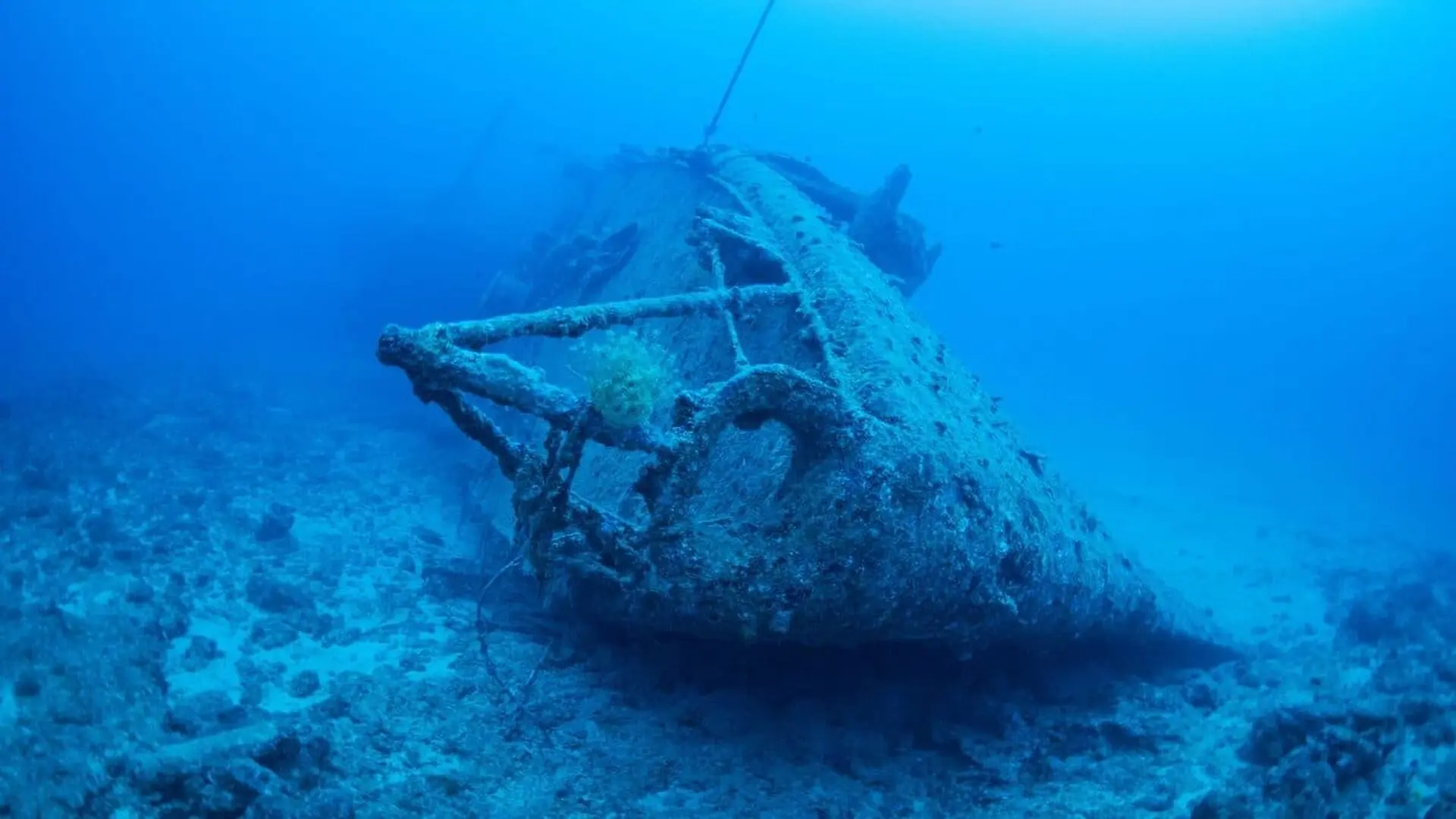
A multi-year underwater survey off the coast of the small Greek island of Kasos has revealed a sprawling “graveyard” of maritime history, with archaeologists discovering ten distinct shipwrecks spanning five millennia. The findings, which range from artifacts dating back to 3000 B.C.E. to a vessel lost during World War II, provide a vivid look at the evolution of Mediterranean trade and travel.
Conducted by the Hellenic National Research Foundation in collaboration with the Greek Ministry of Culture, the intensive four-year project concluded in October 2023. By conducting the first systematic mapping of the treacherous Kasos-Karpathos reef, researchers were able to pinpoint the wreckage sites at depths ranging between 65 and 155 feet.
Historical Echoes from the Aegean
The research team found inspiration in Homer’s Iliad, specifically the Catalogue of Ships, which mentions the island of Kasos as a contributor to the Achaean forces during the Trojan War. According to Xanthie Argiris, director of the Kasos Maritime Archaeological Project, referencing the epic poem was more than an academic exercise; it served as a fundamental guide to understanding the region’s long-standing maritime significance.
“The fact that Kasos contributed ships to this legendary expedition underscored its historical importance and maritime prowess,” Argiris noted, speaking to All That’s Interesting.
A Timeline of Lost Vessels
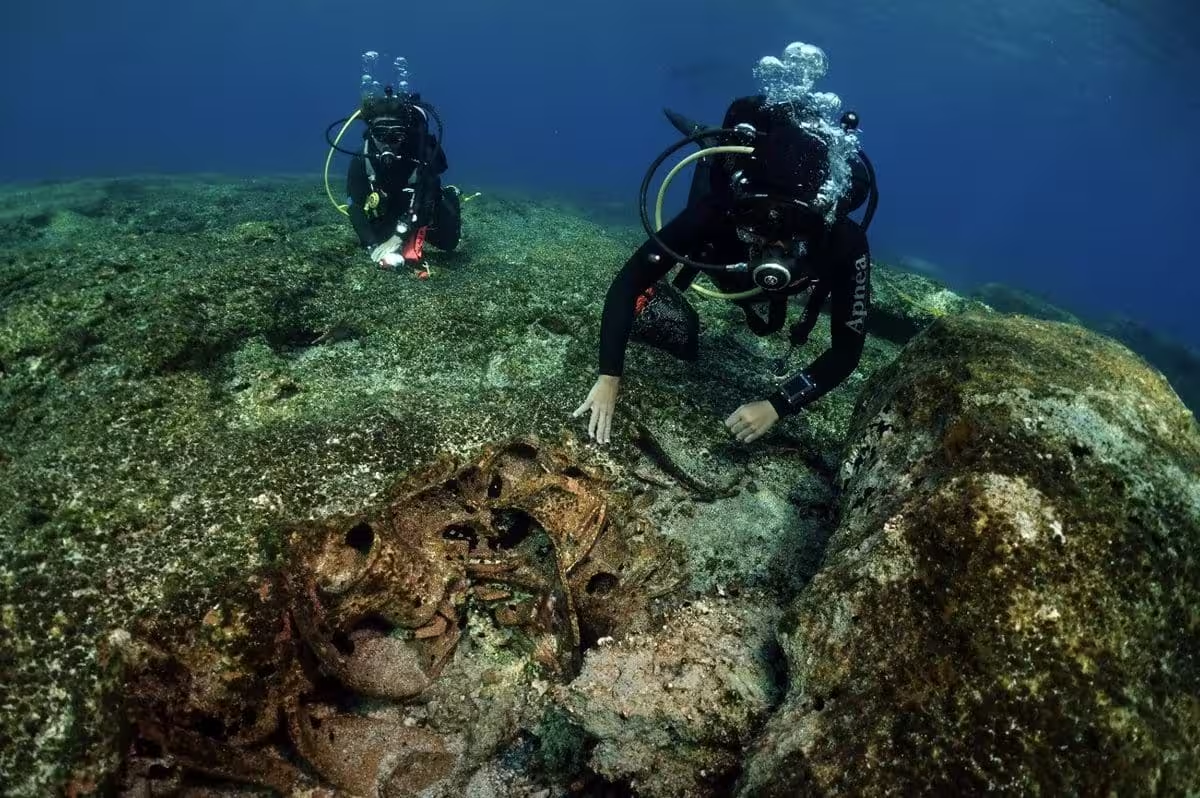
The variety of the discoveries shocked the research team, who noted that the diversity of the wrecks surpassed their initial projections. The catalog of findings includes ships from the Classical period (c. 460 B.C.E.), the Hellenistic era, and the Roman and Byzantine ages. Despite their different origins, the artifacts suggest a bustling intersection of cultures, with items recovered originating from as far as Spain, Africa, Italy, and Asia Minor.
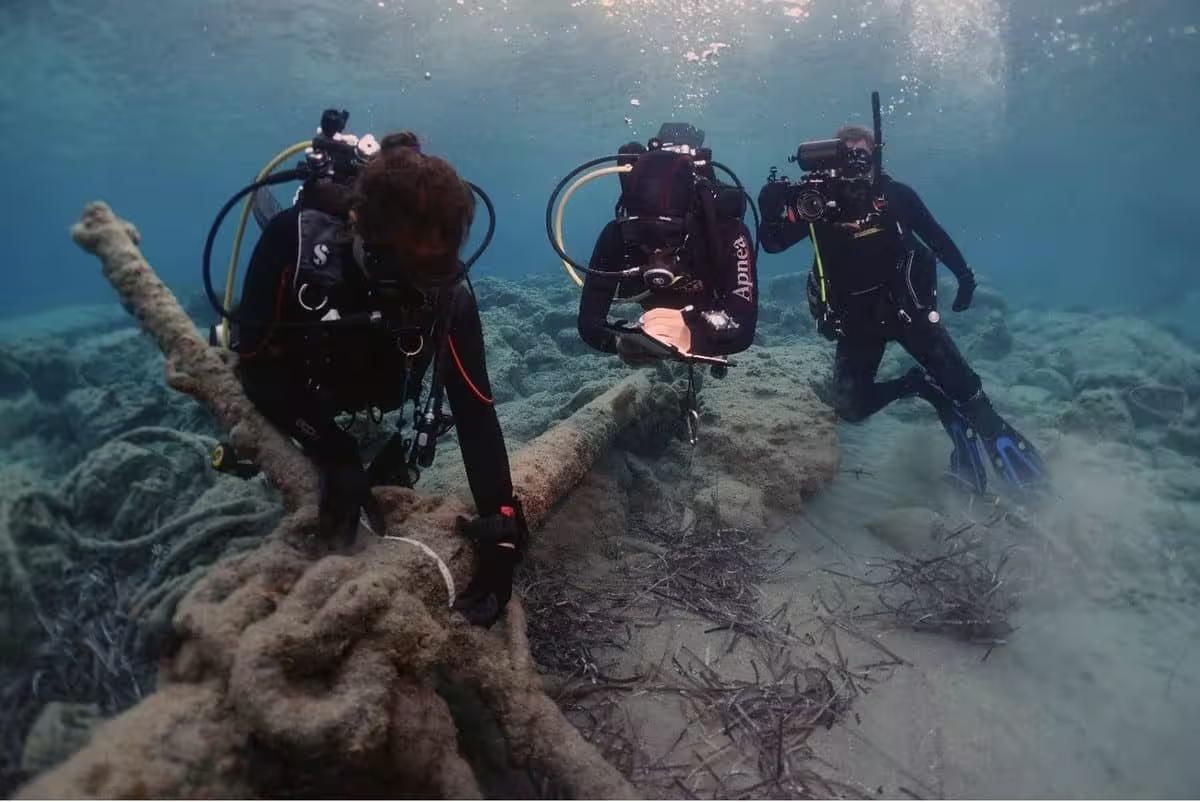
- A Spanish amphora featuring a stamped handle, dated to approximately 150–170 C.E.
- African terra sigillata flasks, highlighting Roman-era trade routes.
- A stone anchor originating from the Greek Archaic period.
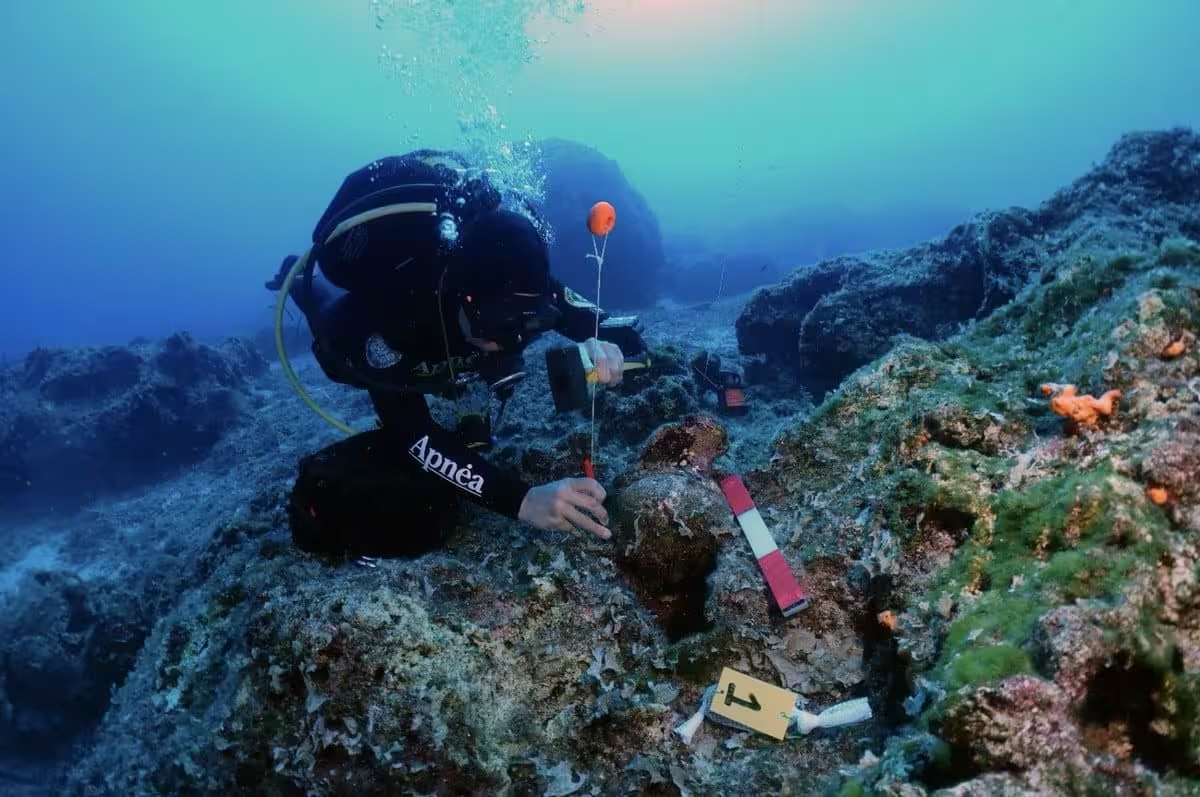
- Diverse drinking vessels and ceramics recovered during the course of 20,000 individual underwater photographic documentations.
Expanding the Horizon
The wealth of data gathered over the four-year survey is currently being synthesized for a forthcoming publication, which will feature contributions from a multidisciplinary team of conservators and historians. However, the work in the Kasos Strait is far from over. Starting this June, the team plans to extend their underwater explorations to the waters surrounding nearby Karpathos.
Argiris remains optimistic that these ten vessels are merely the beginning. “Our initial findings represent just a fraction of the maritime history that lies beneath the surface,” she stated, noting that further investigation will likely reveal even more secrets held by the seabed.
This article has been fact checked for accuracy, with information verified against reputable sources. Learn more about us and our editorial process.
Last reviewed on .
Article history
- Latest version
Reference(s)
- <https://eie.academia.edu/XanthieArgiris/Seminars>.
- Fraga, Kaleena. “Shipwreck Graveyard With 10 Vessels Discovered Off Greek Coast.”, March 18, 2024 All That's Interesting <https://allthatsinteresting.com/kasos-strait-shipwrecks>.
Cite this page:
- Posted by Vikram Desai