Century-Old Mystery Solved as Forensic Analysis Confirms Ancient Egyptian Human Sacrifice
A century after an archaeologist first noted mysterious fractures, modern forensic science finally reveals the truth behind these ancient remains.
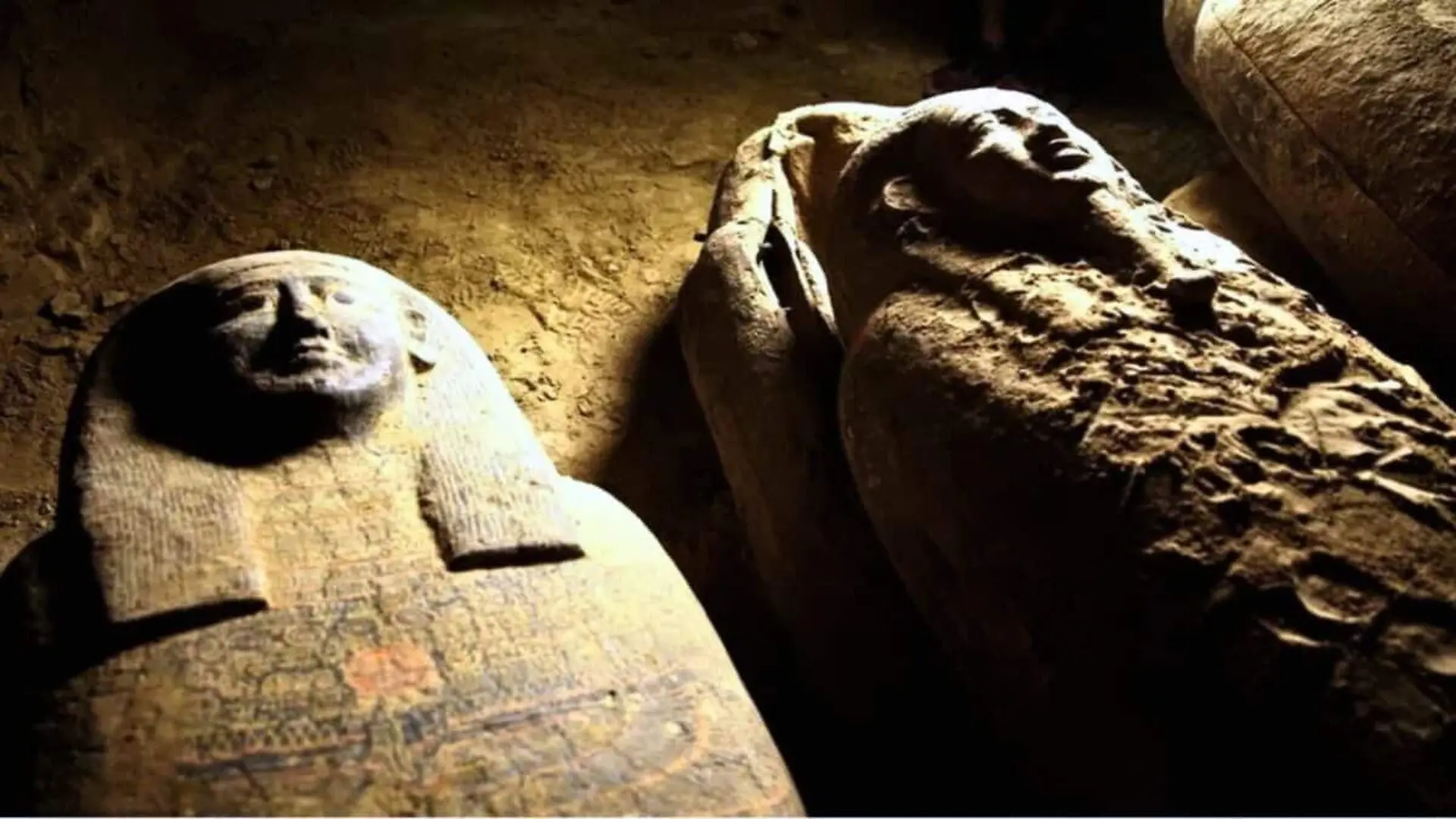
For nearly a century, the contents of a specialized collection at the University of Cambridge remained largely silent, despite the macabre origins of the human remains they held. These dozens of skulls, recovered from the royal burial grounds of Egypt’s earliest pharaohs, were long suspected of being linked to the brutal practice of retainer sacrifice—a ritual where servants and officials were executed to accompany their sovereign into the afterlife. A new forensic investigation has now provided the evidence that earlier archaeologists could only hypothesize, confirming that these individuals met violent, state-sanctioned ends.
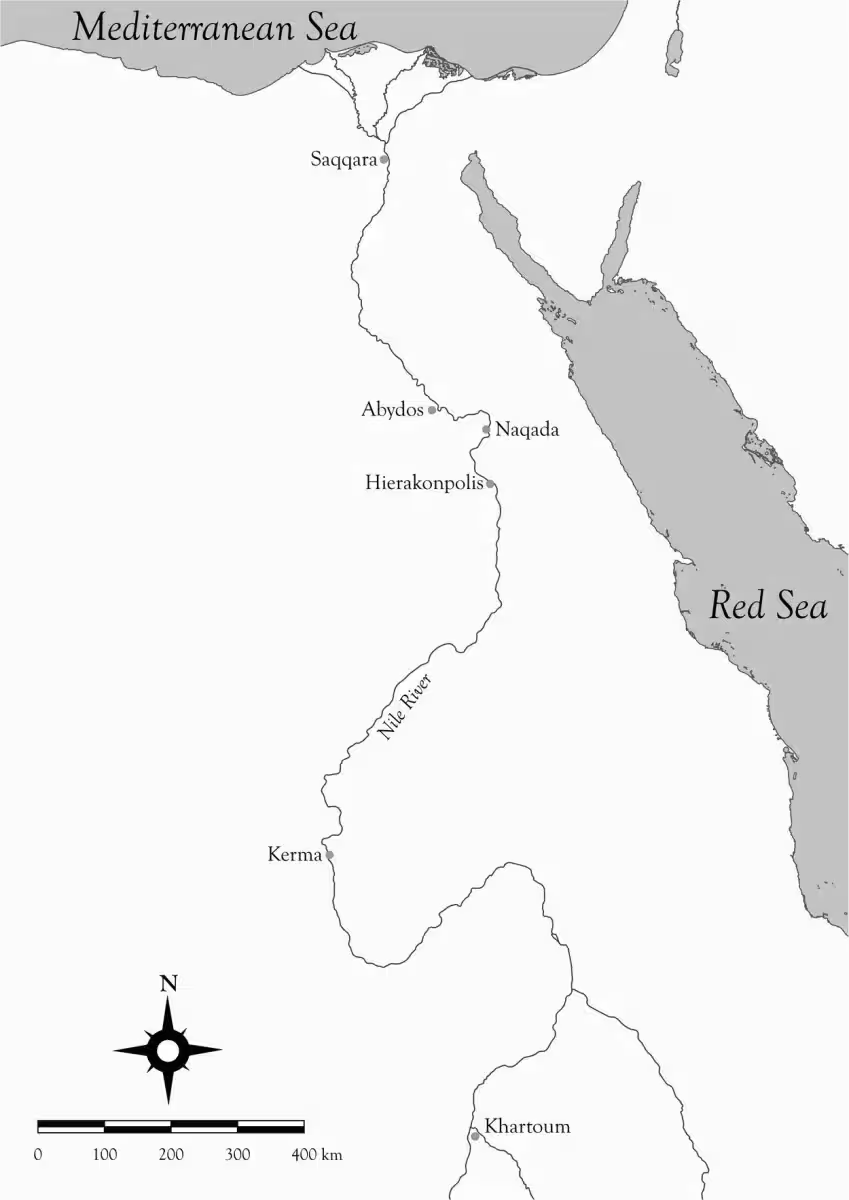
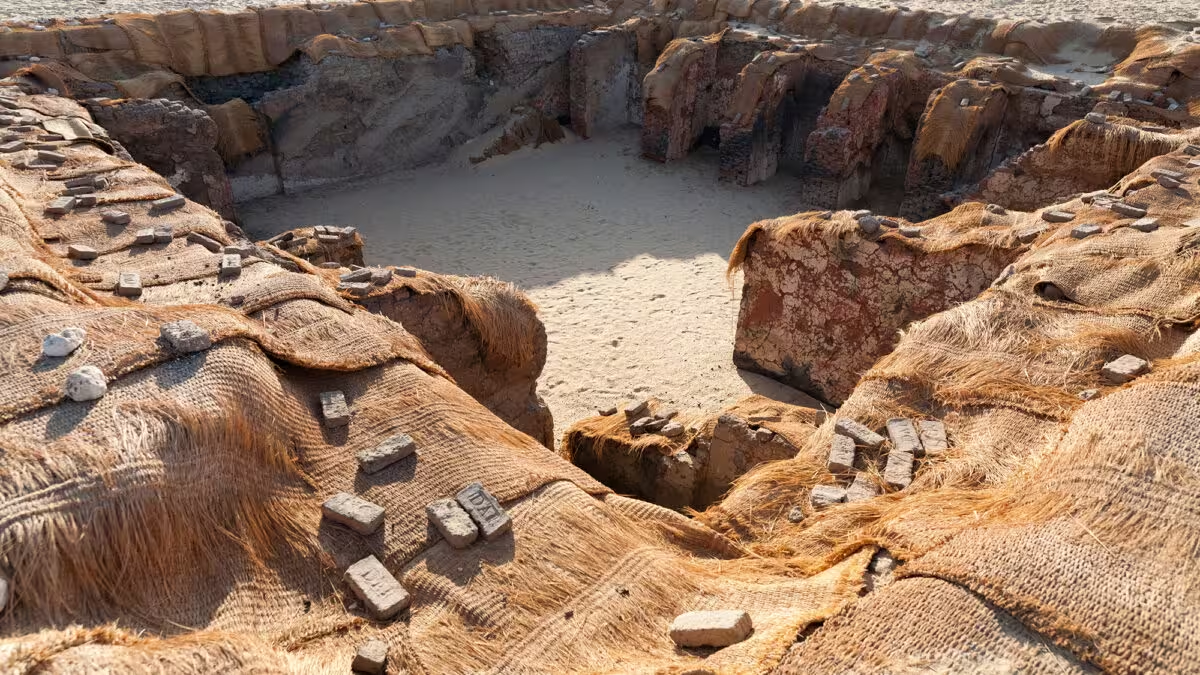
The saga began in the 1920s when British Egyptologist Flinders Petrie excavated the Umm el-Qa’ab necropolis at Abydos. Dating back to approximately 3000 B.C., this site served as the final resting place for the inaugural rulers of a unified Egypt, predating the iconic Giza pyramids by half a millennium. Petrie noted with unease that these royal tombs were surrounded by hundreds of smaller, subsidiary graves. The sheer volume of burials occurring simultaneously with the death of a king suggested a coordinated purge, yet Petrie failed to find definitive physical proof of trauma, leaving his theories open to academic debate for a century.
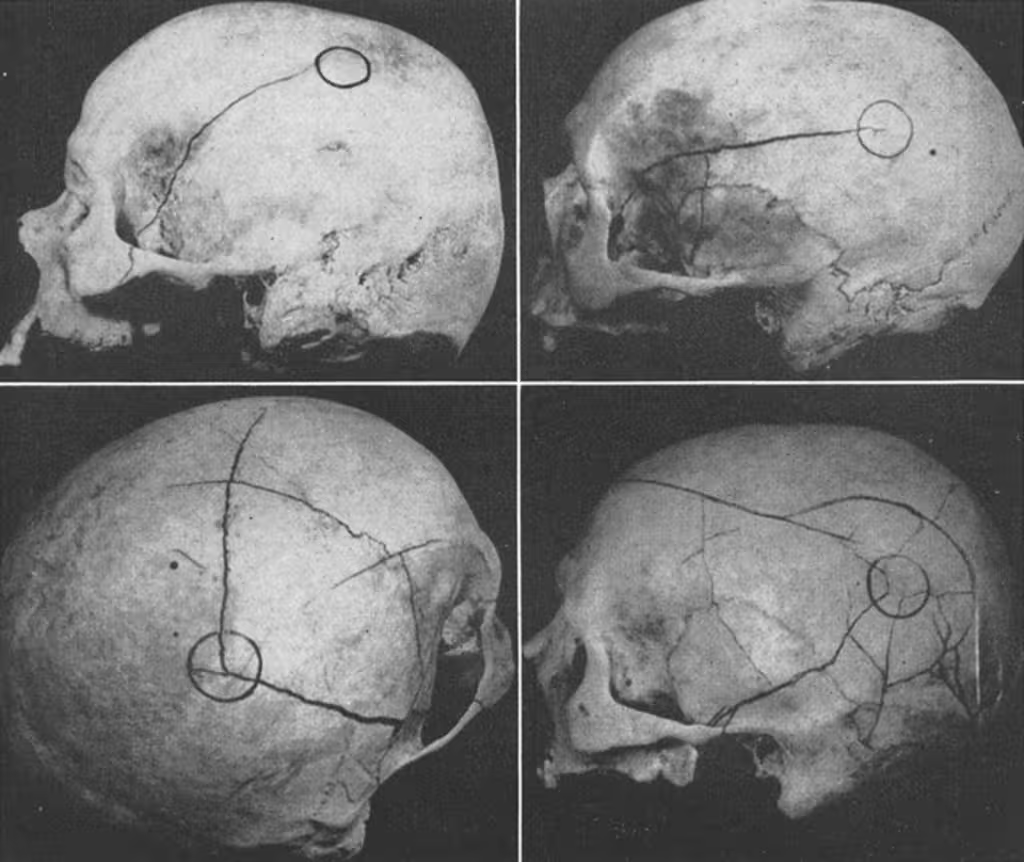
Bioarchaeologist Roselyn Campbell revisited 46 of these skulls held in the university’s Duckworth Collection, applying modern forensic scrutiny to identify injuries that had previously been dismissed as post-mortem decay. Her findings, published recently, revealed that 39 percent of the subjects—18 individuals in total—suffered significant cranial trauma.
The majority of these wounds were linear fractures, which forensic analysis identifies as the result of perimortem impact. “The injuries on the preserved crania are generally linear fractures, which would likely cause rapid unconsciousness, internal bleeding, and death,” Campbell noted. Some skulls even displayed evidence of sharp-force trauma, including a severe blow to the eye socket.
Decoding the Mechanics of Execution
The nature of the fractures challenges long-held assumptions about how these deaths were carried out. While ancient iconography often depicts pharaohs striking enemies with heavy maces, the resulting fractures from such weapons would be depressed—inwardly crushed—which is not consistent with the linear cracks observed in the study. Campbell suggests the implement was likely a flat, relatively light object, perhaps fashioned from wood. This conclusion contrasts with some historical artistic depictions of ritual killings, which show victims with their hands bound while being stabbed in the chest, suggesting that the methods of sacrifice may have been more varied or nuanced than once thought.
The graves in question belong to the funeral complexes of First Dynasty rulers, including King Djer, King Djet, and the female ruler Meretneith. While the very first pharaohs had few subsidiary burials, the practice expanded significantly under their successors before vanishing almost entirely by the beginning of the Second Dynasty, roughly 2730 B.C.
A Display of Absolute Authority
The motivation behind these mass deaths likely bridged religious belief and political theater. Campbell posits that while some may have been buried to serve their ruler in the next world, the act also served as a stark demonstration of a king’s absolute control over his subjects. Whether these individuals were willing participants or coerced victims remains a subject of ongoing investigation.
For scholars like Jacobus van Dijk of the University of Groningen, the findings provide a critical, evidence-based anchor for a theory that has long been contested. As Campbell prepares to release her forthcoming book, State-sanctioned Violence and Human Sacrifice in Early Dynastic Egypt, the study serves as a somber reminder of the human cost that underpinned the rise of one of history’s most enduring civilizations.
This article has been fact checked for accuracy, with information verified against reputable sources. Learn more about us and our editorial process.
Last reviewed on .
Article history
- Latest version
Reference(s)
- “Roselyn Campbell - College of Liberal Arts - Purdue University.” <https://www.cla.purdue.edu/directory/profiles/roselyn-campbell.html>.
- Campbell, Roselyn A.. “New data from old bones: using bioarchaeology and forensics to reassess legacy data from ancient Abydos, Egypt.” Frontiers in Environmental Archaeology, vol. 5, October 5, 2026 Frontiers Media SA, doi: 10.3389/fearc.2026.1858940. <https://doi.org/10.3389/fearc.2026.1858940>.
Cite this page:
- Posted by Vikram Desai