Thetford Treasure Re-Dated: 5th-Century Pagan Hoard Reveals Gold Silver Secrets
New study reveals hidden complexities behind the 1979 gold and silver treasure, showing the legendary find holds far more secrets than previously thought.
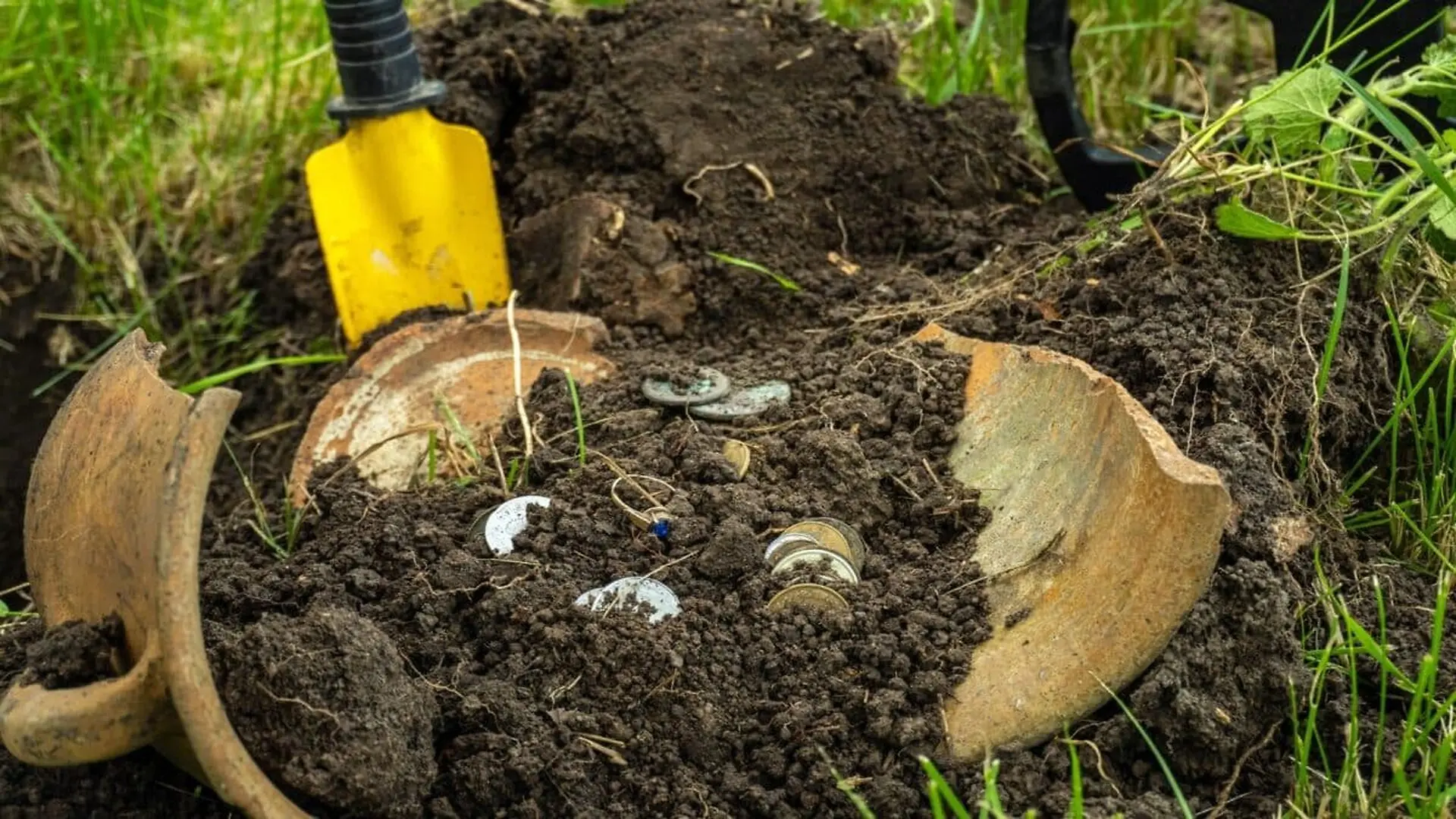
A hoard discovered in East Anglia in 1979, commonly called the Thetford Treasure, is being reassessed after a recent analysis proposes a burial date several decades later than the one traditionally accepted. The collection of gold ornaments and silver dining implements may therefore belong to a different historical phase.
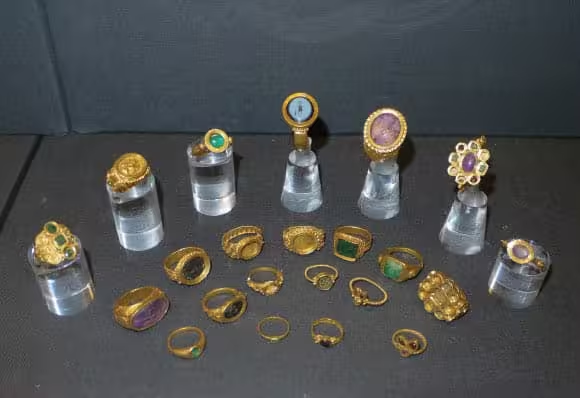
The assemblage, unearthed at Fison’s Way on Gallows Hill near Thetford, has long been celebrated as one of Britain’s most impressive late‑Roman finds. Museum inventories record a total of 81 pieces, now housed in the British Museum, encompassing gold finger‑rings, additional gold adornments, and a suite of silver spoons or strainers that together signal the wealth of a high‑status owner.
A persistent obstacle to precise dating has been the absence of contemporary coinage. In Roman archaeology, coins typically anchor a site to a narrow chronological window, but none were recovered with the Thetford objects. Consequently, scholars have relied on stylistic comparisons with other European discoveries, a method that has produced evolving interpretations, the latest of which appears in the Journal of Roman Archaeology.
Re‑evaluating the Hoard’s Timeline
The treasure first emerged when a metal‑detector hobbyist encountered it on a construction site in 1979, as documented in excavation reports. The artifacts were not stored in a single container; a portion lay inside a shale box while the remainder was scattered nearby, hinting at either intentional segregation or later disturbance.
Among the items are 22 gold finger‑rings, a variety of other gold jewelry, and 36 silver spoons or strainers. Museum records emphasize that this blend of personal luxury pieces and upscale diningware points to ownership by an affluent individual or group.
The ongoing difficulty posed by the lack of coins forces researchers to date the hoard primarily through comparative typology rather than direct archaeological markers, a point underscored in the new study.
A Later Burial, New Interpretations
The most striking revision put forward by the recent research is a shift from a late‑4th‑century to a 5th‑century CE interment. Professor Ellen Swift of the University of Kent explains:
“There is compelling evidence that the treasure was buried in the 5th century CE rather than the late 4th CE,” she said. “Since wider evidence found at the site confirms the religious context previously established by inscriptions on the spoons within the hoard, this means, remarkably, that the re‑dating of the Thetford hoard suggests a pagan cult center survived there into the 5th century CE.”
Published in the Journal of Roman Archaeology, the article links several objects to later stylistic phases, thereby extending the timeline and subtly reshaping ideas about the waning Roman presence in the region.
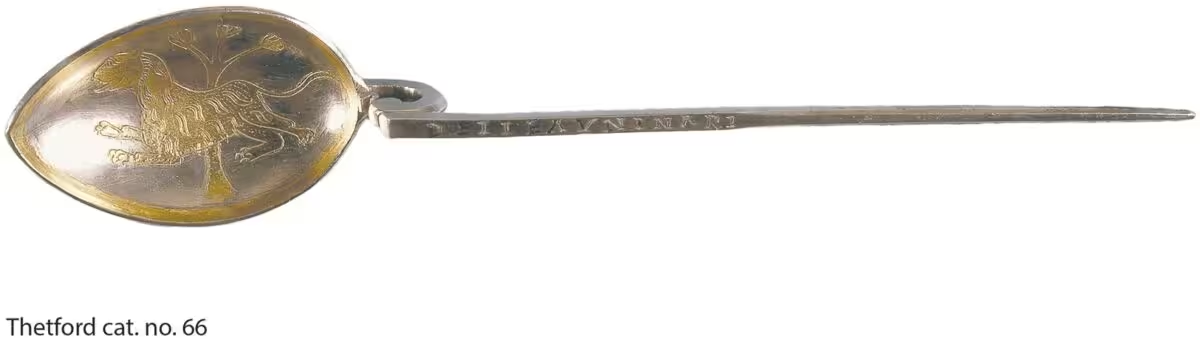
Some of the silver spoons carry inscriptions that point to religious use. The revised dating suggests that these practices may have continued longer in East Anglia than previously believed, possibly extending into the 5th century CE.
The study also highlights the hoard’s richness. The quality and variety of the items indicate access to substantial resources and suggest the presence of local authority during a period often characterized as unstable.
Cross‑Cultural Links in Roman Britain
The jewelry within the collection displays a surprising mix of styles. Professor Swift notes that the pieces do not stem from a single design tradition but instead reflect multiple influences across the Roman world. Some later rings may have been produced in northern Italy or nearby regions, while a necklace featuring conical beads connects to the Balkans.
“Most of the jewelry is generically ‘Mediterranean Roman’ in style illustrating a geographically widespread shared culture among elites,” Professor Swift said.
These observations imply that, even at the fringes of the former empire, Britain remained linked to long‑distance trade networks. Goods, fashions, and ideas continued to circulate between distant regions well into the 5th century.
This article has been fact checked for accuracy, with information verified against reputable sources. Learn more about us and our editorial process.
Last reviewed on .
Article history
- Latest version
Reference(s)
- Swift, Ellen. “Rethinking the date and interpretation of the Thetford treasure: a 5th-c. hoard of gold jewelry and silver spoons | Journal of Roman Archaeology | Cambridge Core.”, vol. 37, no. 2, pp. 409-448. Cambridge Core, doi: 10.1017/S1047759424000278. <https://www.cambridge.org/core/journals/journal-of-roman-archaeology/article/rethinking-the-date-and-interpretation-of-the-thetford-treasure-a-5thc-hoard-of-gold-jewelry-and-silver-spoons/F5F60FDC125949D9AE2A72CF258814B8>.
Cite this page:
- Posted by Vikram Desai