Hidden Thai Cave Reveals 2,000-Year-Old Rock Art Discovered by Rangers
A newly uncovered Thai cave hidden in dense forest holds centuries‑old secrets, prompting experts to gear up for a groundbreaking exploration.
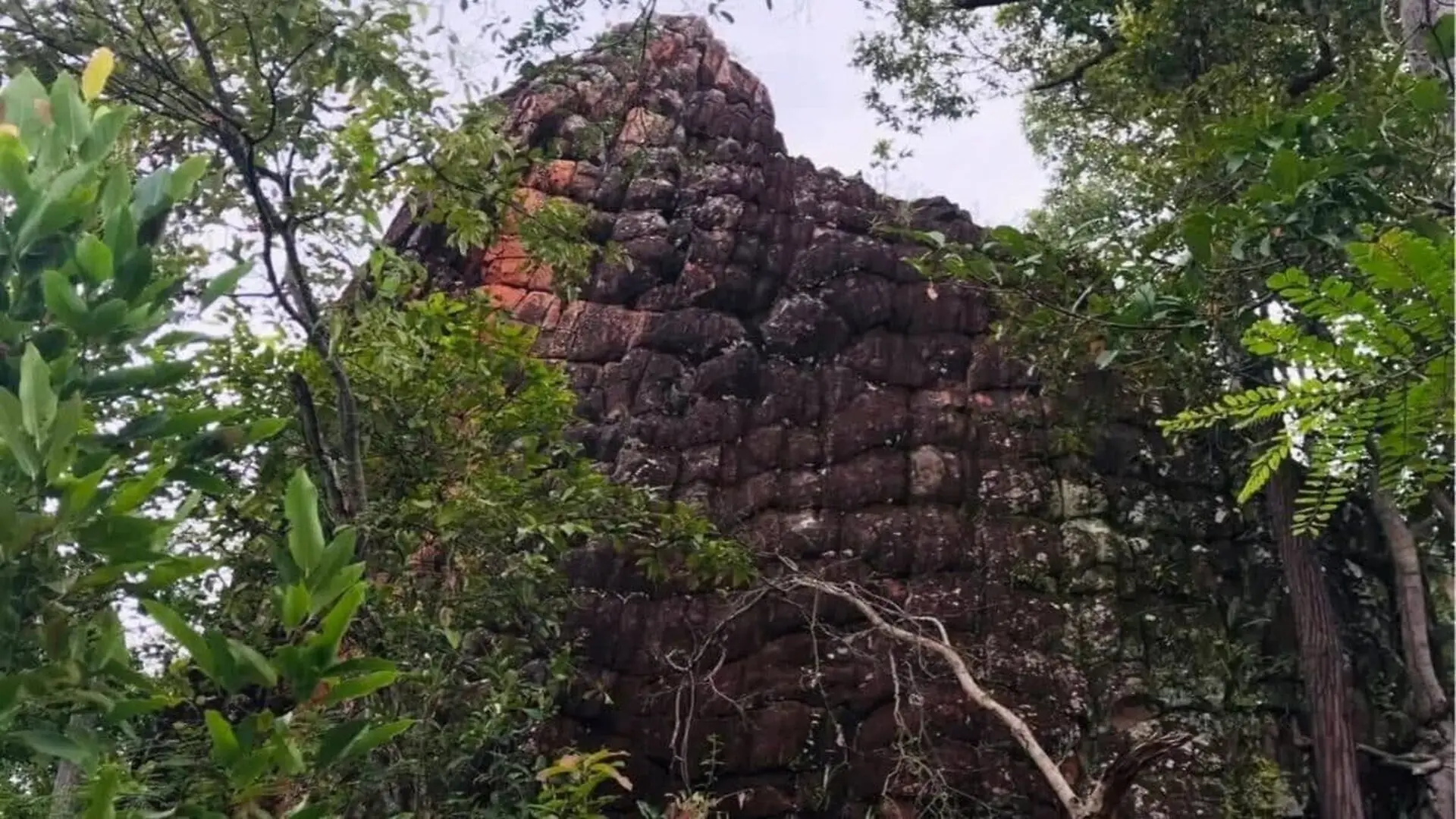
During a routine anti‑poaching sweep in the northern reaches of Thailand, rangers from Phu Khat Wildlife Sanctuary stumbled upon a previously undocumented cavern adorned with rock art that appears to date back roughly two millennia. The hidden site, deep within the forested watershed of the Khwae Noi River, was first noted between 14 and 16 August 2025.
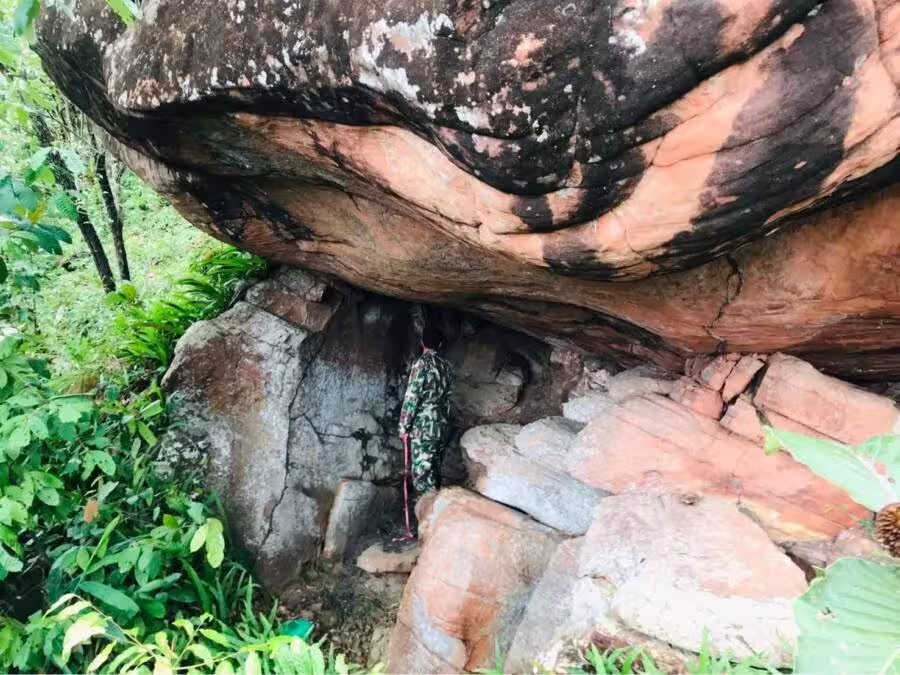
The sandstone opening, now called Tham Ta Kueng (Ta Kueng Cave), revealed clear signs of ancient human presence, prompting authorities to label the find as “remarkable” while cautioning that the initial assessment relies solely on visual inspection pending scientific verification.
How a Patrol Turned into an Archaeological Surprise
Rangers were traversing the Khun Nam Ton, Ang Khon Kaen and Tam Takung forest sectors of Nakhon Thai District, Phitsanulok Province, when they encountered the cave’s entrance. A statement from the Department of National Parks, Wildlife and Plant Conservation noted that closer examination of the sandstone walls revealed a series of prehistoric engravings, including geometric motifs and unusual “three‑finger” patterns.
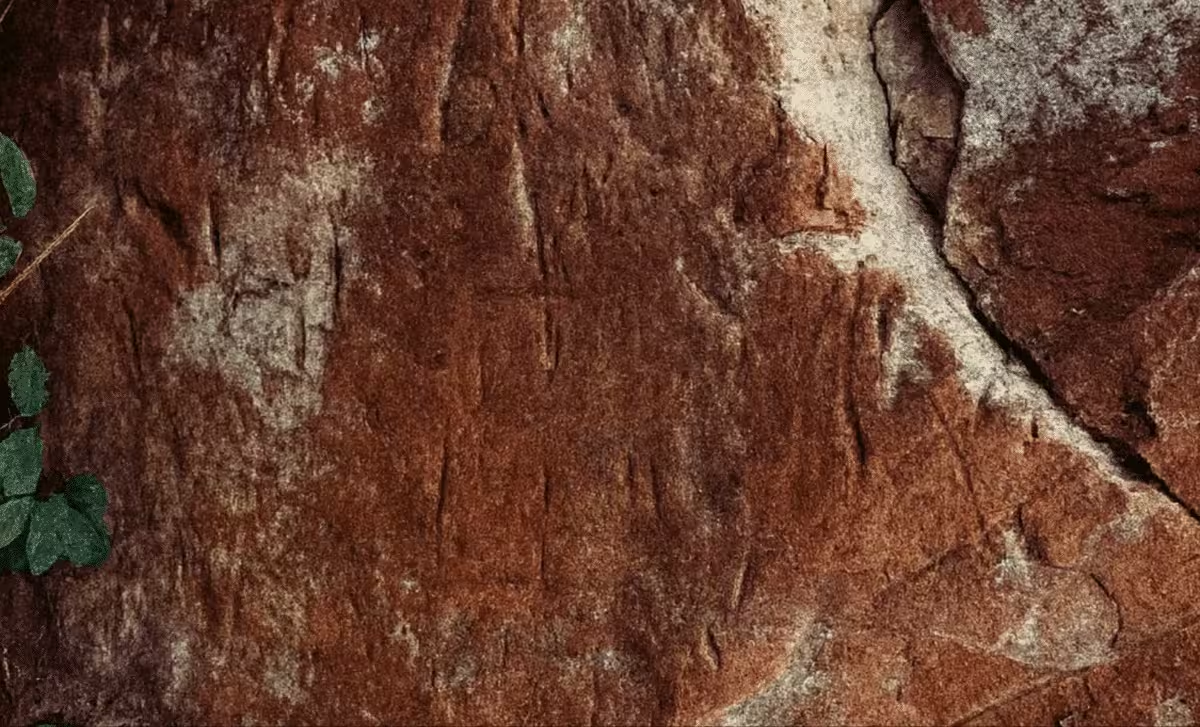
Based on visual dating, officials estimate that the cave was used around 2,000 years ago, aligning with Thailand’s prehistoric Metal Age. No archaeological team has yet examined the site, so the age remains provisional.
Unique Rock Art Challenges Existing Classifications
The motifs differ from those documented at other northern Thai sites, according to a report by Archaeology News. Mongkol Khamsuk, the head of Phu Khat Wildlife Sanctuary, described the discovery as both a valuable natural asset and a cultural landmark.
“The cave is a significant natural resource and it remains a cultural and historical landmark. More research will enable us to know more about the stories of this land, its ecosystems, and the people who may have lived here in the past.”
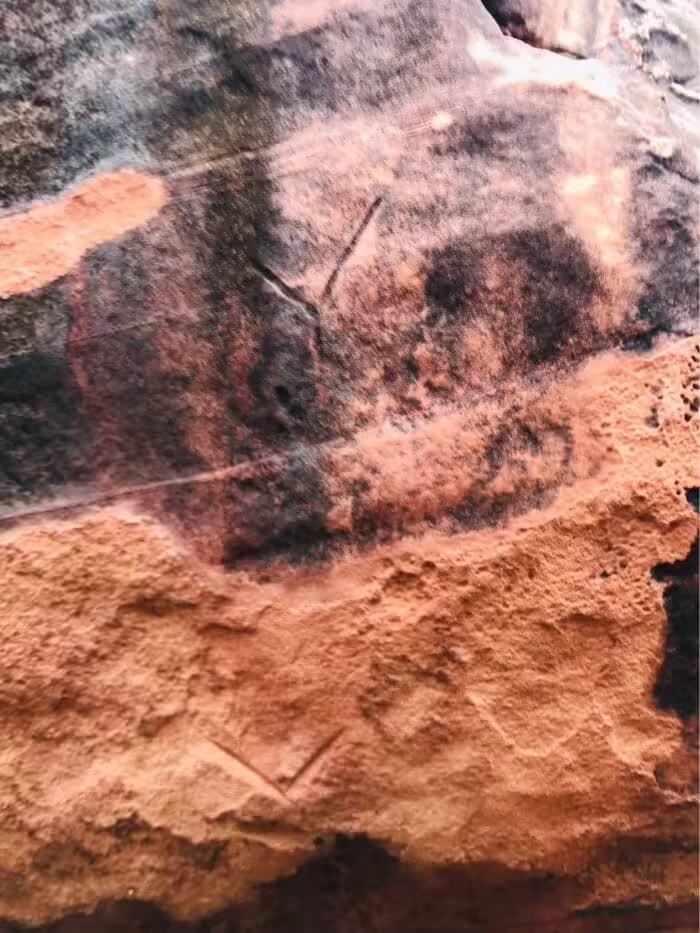
The cave’s isolation likely contributed to the preservation of the art, though officials acknowledge that the remote setting will pose logistical challenges for future archaeological work.
Next Steps for Scientific Exploration
Preliminary surveys have only scratched the surface. Researchers plan to employ techniques such as 3‑D laser scanning, pigment composition analysis, radiocarbon dating, and targeted excavations to contextualize the findings within the broader prehistoric record of the region.
Thailand’s archaeological record already includes prehistoric caves in Mae Hong Son that have produced wooden coffins dating between 1,000 and 2,300 years old, as well as Iron Age burials and rock art elsewhere. However, the distinctive engravings at Ta Kueng Cave do not match any known typology from these sites.
“The following study is expected to enable us to better understand the historical stories of the area, as well as learning about the nature and ecosystems of conservation forests, which are critical to preserving the country’s natural and cultural resources,” noted the authors.
This article has been fact checked for accuracy, with information verified against reputable sources. Learn more about us and our editorial process.
Last reviewed on .
Article history
- Latest version
Reference(s)
- Radley, Dario. “Mysterious cave with ancient rock art unearthed in Thai forest sanctuary.”, August 23, 2025 Archaeology News Online Magazine <https://archaeologymag.com/2025/08/mysterious-cave-in-thai-forest-sanctuary/>.
Cite this page:
- Posted by Vikram Desai