European Satellite To Test First Air‑Breathing Electric Thruster For Ultra‑Low Earth Orbit
Europe’s new mission will test if satellites can tap the upper atmosphere for propulsion, enabling them to stay in ultra‑low Earth orbit.
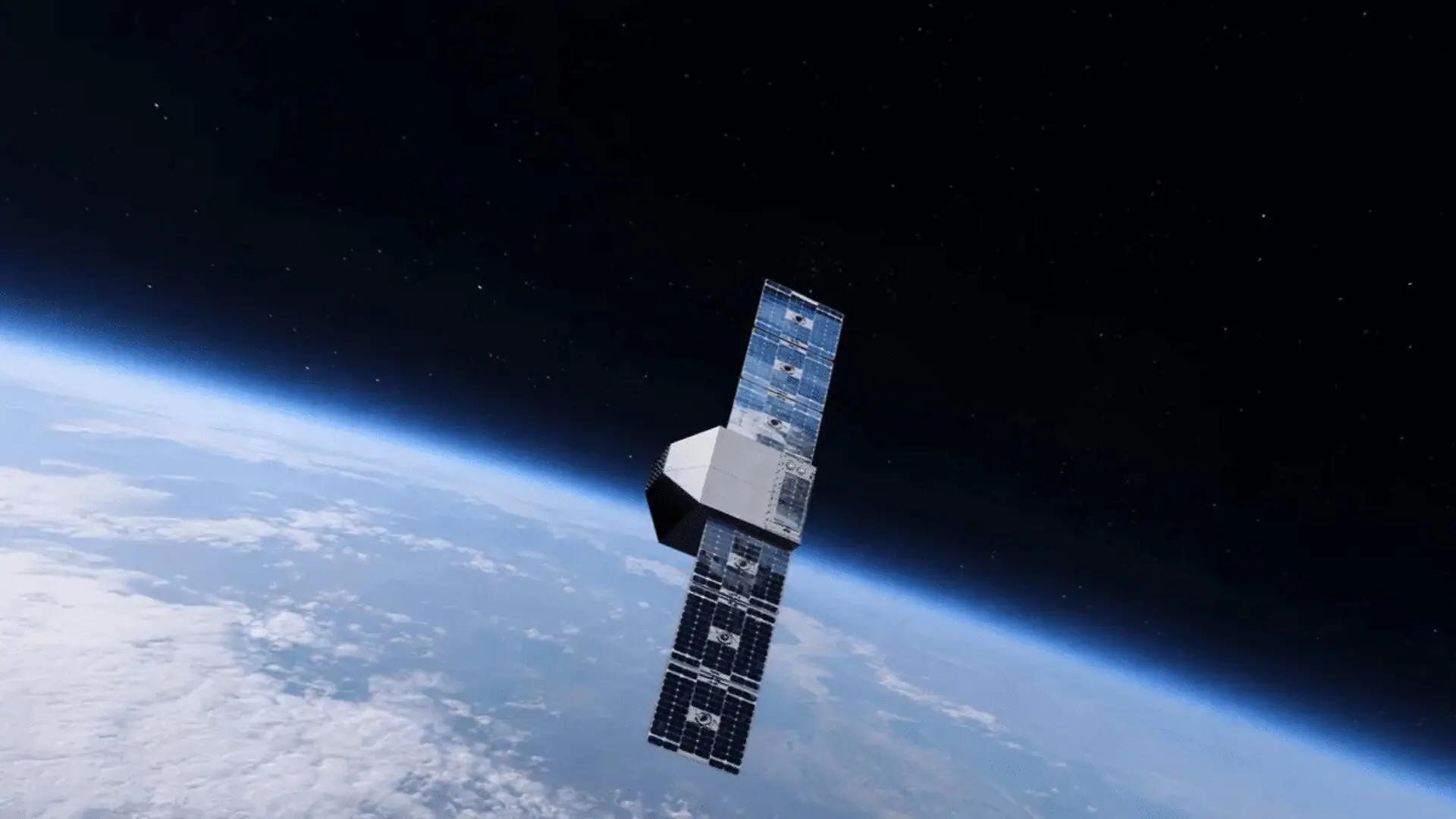
Kreios Space, a Spanish start‑up, is gearing up for a landmark in‑orbit test that could reshape how satellites stay aloft. The company will fly its air‑breathing electric propulsion (ABEP) system on a spacecraft built by Kongsberg NanoAvionics, targeting one of the toughest orbital regimes—very low Earth orbit (VLEO), where the thin remnants of the atmosphere are both a source of drag and, potentially, a source of propellant.
Testing a Thruster That “Breathes” Earth’s Upper Atmosphere
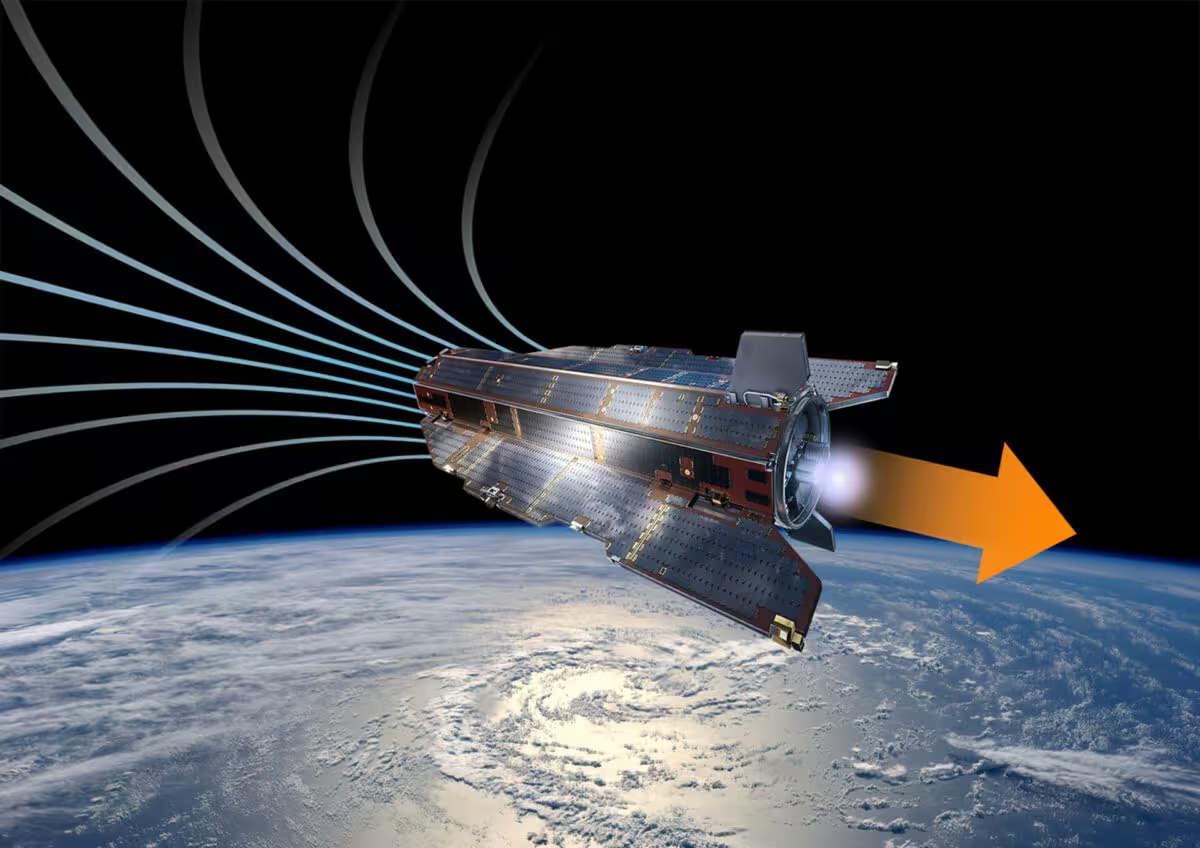
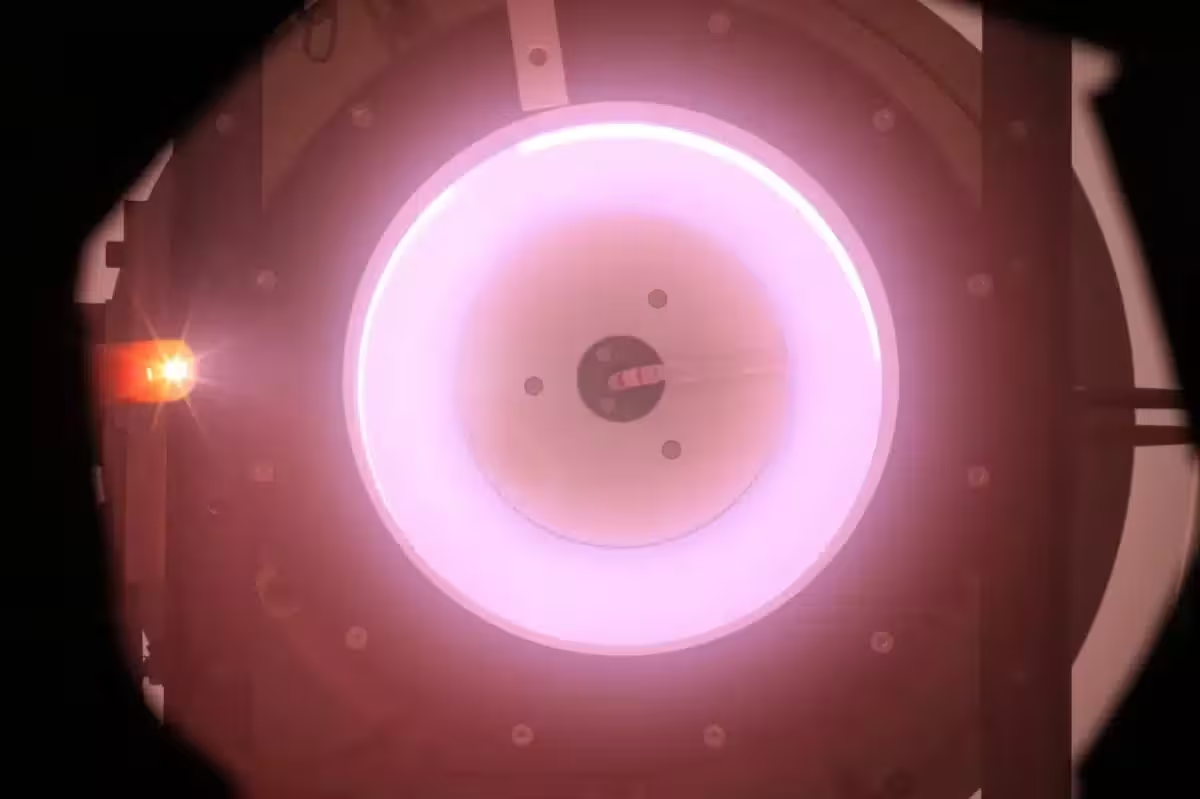
ABEP technology flips the conventional propulsion model on its head. Instead of carrying a finite fuel load launched from the ground, the thruster ingests the sparse particles that linger at altitudes between roughly 100 and 400 km (60‑250 mi). Those particles are heated, ionized and expelled to produce thrust, effectively turning the very drag that pulls a satellite down into the reaction mass it needs to maintain its orbit. The upcoming flight will move the concept from laboratory benches to a real‑world VLEO environment.
“Kreios is building the satellites that make sustained operations in very low Earth orbit possible,” said CEO Adrián Senar in the mission announcement on August 4. If the test succeeds, ABEP could become a viable propulsion option for future low‑altitude missions, reducing reliance on traditional propellant stores.
Why Operating Closer to Earth Matters
A VLEO platform sits much nearer to the planet’s surface, allowing imaging sensors to capture finer details without enlarging optics and enabling communication links that require less power. Senar highlighted that these performance gains could translate into higher‑resolution Earth observation, more efficient satellite communications and quicker response times for mission‑critical tasks.
“By enabling satellites to fly lower, longer and more efficiently, we are enabling higher‑resolution Earth observation, much better satellite communications, more responsive and accurate missions and a more sustainable orbital infrastructure,” Senar explained.
Because VLEO is far less crowded than the broader low‑Earth‑orbit band (160‑2,000 km), a successful ABEP system could free up valuable orbital real estate for commercial, scientific and governmental payloads while also ensuring that defunct objects re‑enter more quickly due to stronger atmospheric drag.
The Technical Hurdle: Harvesting Fuel from Thin Air
Living in VLEO demands continuous counter‑drag thrust, a requirement that quickly exhausts conventional propellant reserves. ABEP aims to sidestep that limit by extracting reaction mass directly from the ambient atmosphere. The challenge lies in gathering enough particles, ionizing them efficiently and delivering thrust sufficient to offset drag—all within the spacecraft’s power, mass and thermal budgets. Moreover, atmospheric density fluctuates with altitude and solar activity, forcing the thruster to adapt to a variable environment.
The upcoming demonstration will therefore test not only the thruster’s ability to generate thrust, but also its integration with a full satellite system that must operate reliably under relentless atmospheric resistance.
Kongsberg NanoAvionics Provides the Flight‑Ready Bus
To carry the ABEP experiment into orbit, Kreios has partnered with Lithuania‑based Kongsberg NanoAvionics, which will deliver its MP42 satellite bus customized for the mission’s unique demands. Integrating an experimental propulsion system requires more than mounting a thruster; it entails harmonizing power distribution, thermal management, attitude control, communications and structural design to cope with continuous drag.
Atle Wøllo, CEO of Kongsberg NanoAvionics, noted the rarity of such an undertaking: “Kreios is tackling one of the most demanding operating environments in space, and this mission joins a very short list of European VLEO initiatives.” He added that the company’s engineering team has worked closely with Kreios to adapt the MP42 platform to the propulsion system’s specifications.
This article has been fact checked for accuracy, with information verified against reputable sources. Learn more about us and our editorial process.
Last reviewed on .
Article history
- Latest version
Cite this page:
- Posted by Zara Tariq