Humanoid Robots Are Already Working in Factories But Home Autonomy Is Still Years Away
Humanoid robots are moving from labs to factories and warehouses in 2026, with cheaper models reaching developers, though adoption remains limited.
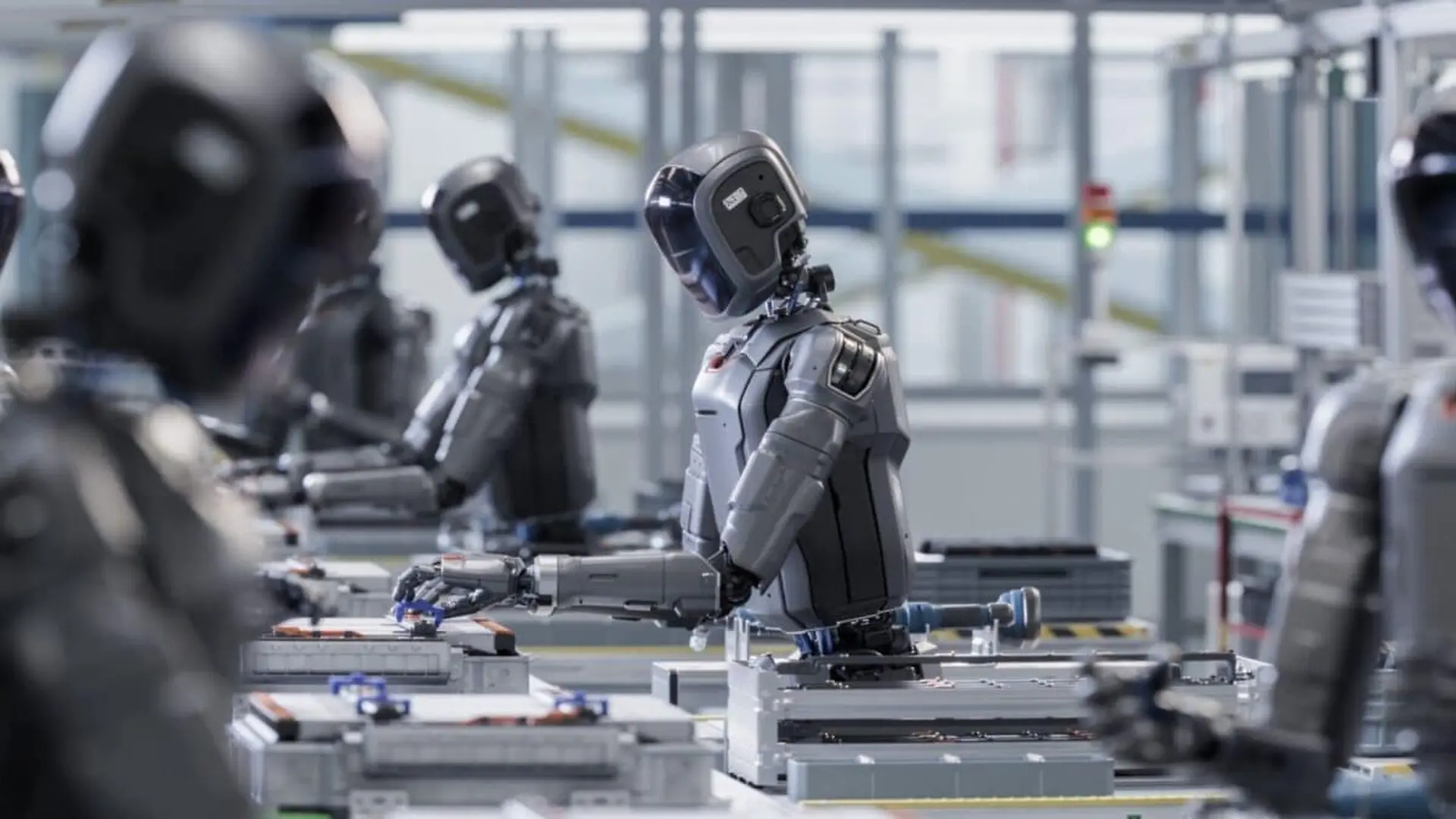
The most compelling data on humanoid robots now originates from controlled industrial settings, where repetitive tasks can be measured over long periods. Deployments in factories and warehouses offer concrete performance metrics, while domestic environments—filled with clutter, pets, children, and constantly shifting conditions—remain a far more challenging arena for reliable robot operation.
Industrial Rollouts Highlight Tangible Progress
Figure AI and Agility Robotics lead the field with publicly reported operating figures. New Market Pitch notes that Figure’s Figure 02 units logged 11 months at BMW’s Spartanburg plant, working 10‑hour shifts and accumulating more than 1,250 hours of runtime. During that stint the robots processed over 90,000 sheet‑metal components and contributed to the assembly of more than 30,000 BMW X3 models.
Those numbers matter because they reflect sustained, repetitive work rather than brief demonstrations. Building on that experience, Figure has launched the Figure 03 platform while keeping its focus on manufacturing and logistics environments.
Agility Robotics reports a similarly narrow but quantifiable deployment. According to New Market Pitch, its Digit humanoid moved in excess of 100,000 totes while performing live commercial tasks for GXO. The use case is specialized, yet the metric offers a clear picture of the kind of structured warehouse activity that humanoids can already execute with consistency.
Other players are pursuing distinct strategies. Apptronik maintains industrial collaborations with firms such as Mercedes‑Benz, Google and GXO, while Boston Dynamics is trialing its electric Atlas in enterprise contexts. Tesla continues development of the Optimus system for factory work, though the company’s own assessments, as reported by Futura, suggest a more cautious outlook than some public expectations.
Futura cited Elon Musk in early 2026 acknowledging that Tesla’s robots were “not doing useful work” yet and were primarily gathering training data. The outlet also estimated that the total number of humanoids engaged in genuinely productive autonomous work worldwide sits in the hundreds to low‑thousands.
Current robots excel when layouts, objects and procedures remain relatively predictable. They can lift items, recognize predefined objects and repeat motions reliably, but their ability to adapt to dynamically changing surroundings remains limited.
Dropping Prices Expand Reach, Yet Home Autonomy Lags
Pricing shifts are reshaping the market. Chinese maker Unitree now offers humanoid hardware at costs far below many Western industrial systems. New Market Pitch reports the Unitree G1 starts at roughly $13,500, while the R1 model is priced around $4,900.
Those figures open the technology to a wider audience of developers, academic institutions and research labs. Unitree also announced robust commercial growth, with revenue reported at RMB 1.7 billion for 2025, highlighting a business model that prioritizes broadly available hardware over closed‑door industrial deployments.
In the consumer sphere, Norwegian firm 1X is among the few companies directly targeting households with its NEO humanoid. The robot is offered via a $20,000 early‑access purchase option and a $499 monthly subscription.
Ungloved, the new 1X hand looks beautiful.
— 𝐀𝐆 (@AGkorthos) July 9, 2026
25 DoF, tendon-driven, force-controlled, tactile sensing, IP68 sealed, ±0.2mm positioning accuracy.
1X has already described NEO as being built in America’s most vertically integrated humanoid robot factory, and that strategy shows… https://t.co/l19VsuTnO2pic.twitter.com/i7pIdACZI5
Nevertheless, NEO underscores how far domestic autonomy still has to travel. Futura notes that a highly publicized home robot remains dependent on remote human operators for difficult tasks, and that human supervision becomes part of the system whenever the robot cannot complete an activity on its own.
Households present a far less predictable setting than assembly lines. Sources highlight cluttered rooms, diverse objects, pets, children and spontaneous human behavior as scenarios that current humanoids cannot yet navigate reliably without oversight.
In sum, the picture is split: humanoid robots are already executing well‑defined functions in factories and warehouses, and falling hardware costs are widening access. However, a universally autonomous robot capable of moving fluidly between unfamiliar tasks and environments—matching human reliability—has not yet materialized. Progress in 2026 is real, but it remains concentrated where conditions and jobs can be tightly controlled.
This article has been fact checked for accuracy, with information verified against reputable sources. Learn more about us and our editorial process.
Last reviewed on .
Article history
- Latest version
Reference(s)
- “https://twitter.com/BerntBornich/status/2075253825494237660.” <https://t.co/l19VsuTnO2>.
- “https://twitter.com/AGkorthos/status/2075260614805459243/video/1.” <https://t.co/i7pIdACZI5>.
Cite this page:
- Posted by Zara Tariq