The 19th‑Century Tomato Pill War: How a Fruit Became a Fake Cure Before Ketchup
Explore the 1830s ’tomato pill’ fad, its bitter sales war and the shocking discovery that ended the bizarre medical craze.

The lucrative market soon sparked a public showdown between rival vendors, and later laboratory examinations revealed that several of the claimed “tomato” remedies contained no tomato at all.
At the heart of the phenomenon was Dr. John Cook Bennett, a physician who began extolling the health benefits of tomatoes in 1834. His advocacy preceded the eventual rise of tomato ketchup as a staple condiment by several decades.
Bennett’s Tomato Health Campaign
Bennett asserted that tomatoes could ward off cholera and alleviate conditions such as diarrhea, headaches, and dyspepsia, an antiquated term for indigestion. Atlas Obscura points out that there is no record of him conducting scientific experiments to substantiate these claims.
History Cooperative credits Philadelphia chemist James Mease with publishing one of the earliest tomato‑ketchup recipes in 1812, establishing the condiment in American culinary records well before Bennett’s medical push.
From Cure to Commerce: The Rise of Tomato Pills
Entrepreneurs quickly capitalized on the trend, marketing concentrated tomato extracts as panacea.
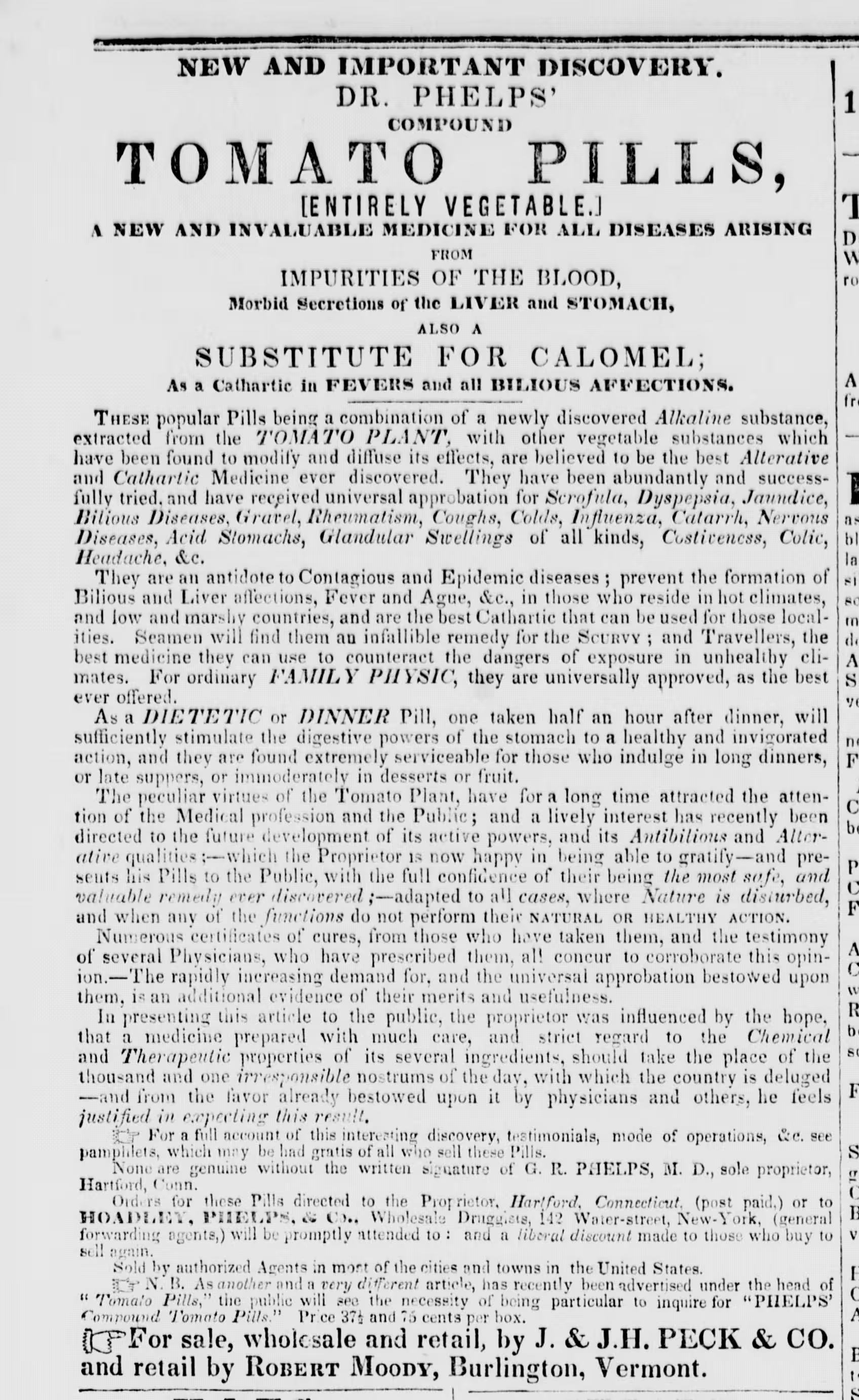
Yale‑trained physician Guy R. Phelps entered the fray with his own “Compound Tomato Pills,” igniting a rivalry that Atlas Obscura describes as a two‑year “tomato pill war.”
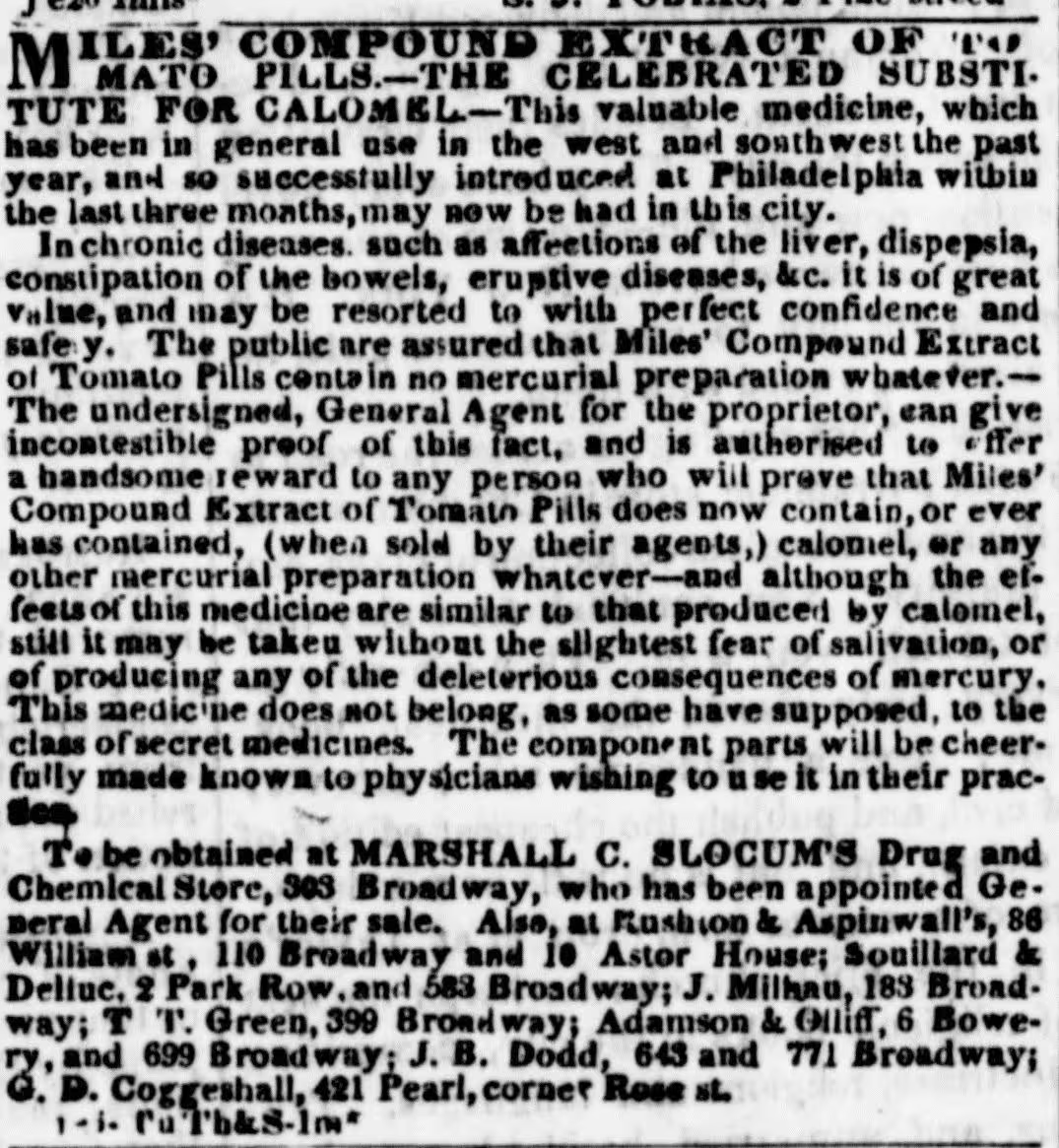
Scientific testing of the competing products eventually uncovered a stark reality: the pills sold by both Miles and Phelps lacked any detectable tomato content.
Although the public dispute wound down by late 1839, Phelps persisted in marketing his version into the early 1850s.
Tomato Ketchup Survives the Fad
Even as the medicinal craze faded, tomatoes continued to infiltrate American cuisine. Cookbooks, periodicals, and seed catalogs championed the fruit, and it appeared in a variety of preparations such as soups, preserves, and, most famously, ketchup.
The condiment’s lineage reaches back to Asian fermented fish sauces, with British cooks later adapting the concept using mushrooms, walnuts, and other ingredients before the tomato‑based version took hold in the United States.
Food historian Andrew F. Smith chronicled this quirky medical episode in his 1991 study “Tomato Pills Will Cure All Your Ills,” noting how competing narratives about the fruit shaped public perception during that era. Read the paper on JSTOR for a detailed analysis.
Ultimately, the rivalry over tomato pills dissolved by the end of the 1830s, and Phelps’s formulations vanished in subsequent decades. In contrast, tomato ketchup cemented its place in the American market, outlasting the brief episode that once promised it could cure every ailment.
This article has been fact checked for accuracy, with information verified against reputable sources. Learn more about us and our editorial process.
Last reviewed on .
Article history
- Latest version
Reference(s)
- <https://www.atlasobscura.com/articles/tomato-pill>.
- Hardy, James. “Who Invented Ketchup and What Was Ketchup Originally | History Cooperative.”, November 30, 2023 The History Cooperative <https://historycooperative.org/who-invented-ketchup/>.
- <https://www.jstor.org/stable/41112510>.
Cite this page:
- Posted by Zara Tariq