Cold War Pyramid Built for $5.7 Billion Was Shut Down After One Day: Now a Data Center
Discover the mysterious concrete pyramid in North Dakota that hides the secrets of America’s bold Cold War experiment.
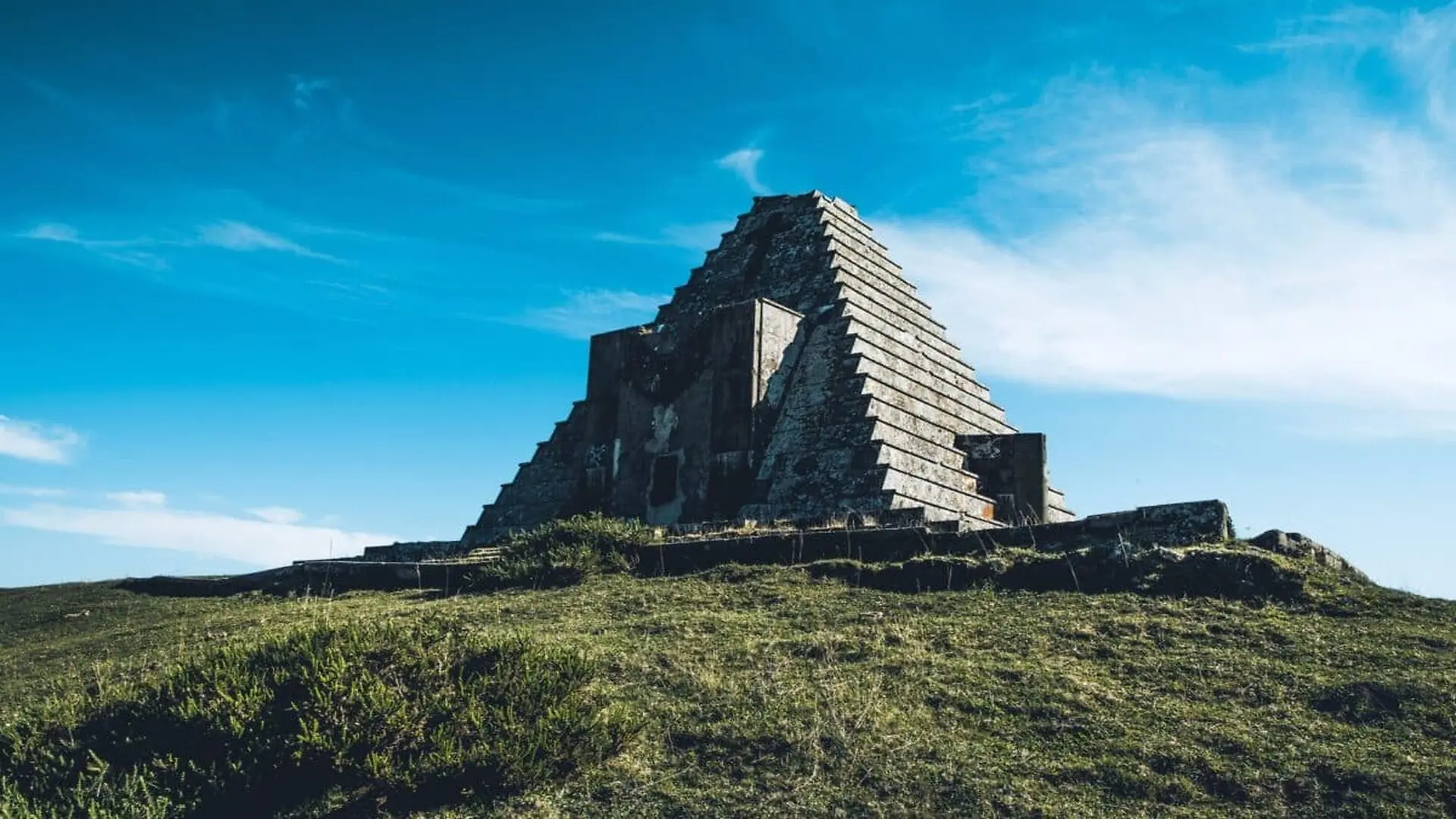
An expansive $5.7 billion defense installation erected on the North Dakota prairie in the mid‑1970s now stands as a striking reminder of Cold War engineering. The Stanley R. Mickelsen Safeguard Complex, a concrete monolith built to shield U.S. missile forces, saw only a fleeting period of active service before its mission was rendered moot.
Situated close to Nekoma, North Dakota, the installation was conceived at the height of U.S.–Soviet tensions to safeguard the Minuteman missile fields stationed at Grand Forks Air Force Base from a potential ballistic missile onslaught.
The project embodied a massive commitment to American missile‑defense capabilities, featuring sophisticated radar arrays and heavily fortified structures. Yet, rapid shifts in the strategic landscape meant the complex never became a lasting component of U.S. defense doctrine.
A Giant Concrete Pyramid Designed for Nuclear Interception
Congress gave the green light for the Safeguard Complex in 1969, and construction spanned from 1970 through 1974. Its primary aim was to protect critical missile infrastructure from a Soviet strike.
Two principal radar systems formed the heart of the site. The Perimeter Acquisition Radar scanned the northern horizon for inbound warheads, while the Missile Site Radar operated from within the pyramid‑shaped command bunker.
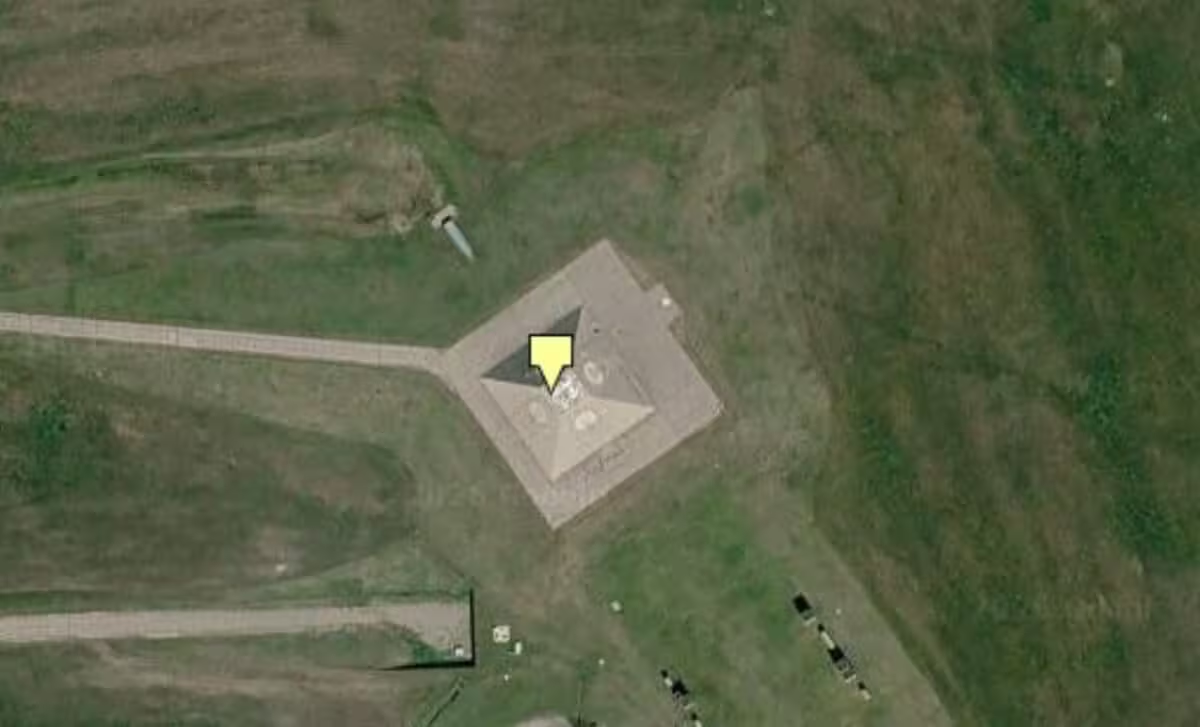
The radar network was linked to a defensive arsenal that included 30 Spartan long‑range interceptors and 16 Sprint high‑speed missiles. The pyramid itself was engineered as a hardened shelter, its thick concrete walls intended to survive a nuclear exchange.
Arms‑Control Agreements Cut the Project Short
The complex officially entered service on October 1, 1975, only for the U.S. House of Representatives to vote for its shutdown the following day. The decision stemmed from the SALT negotiations, which limited both superpowers to a modest number of anti‑ballistic‑missile sites, rendering a sprawling U.S. network unnecessary.
According to the Grand Forks Herald, the original Safeguard plan envisioned several installations nationwide, yet the Nekoma site emerged as the sole completed facility after other locations were cancelled.
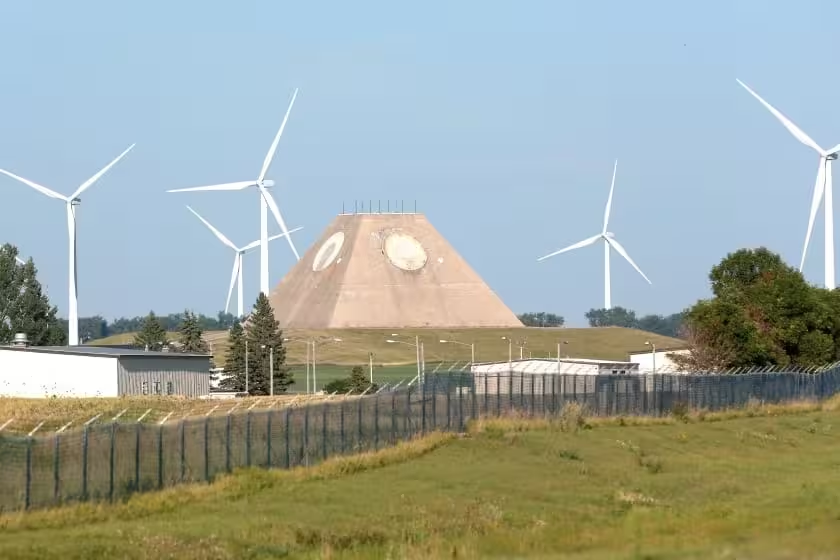
The facility continued limited activity for several months before its final decommissioning in 1976, concluding a venture that had consumed years of planning and construction yet delivered only a brief operational window.
Reimagining a Cold‑War Relic for the Digital Era
After the shutdown, the pyramid stood vacant for decades while military hardware was stripped, sensitive systems were relocated, and portions of the site were dismantled. Environmental remediation efforts persisted, and ownership eventually transferred. In 2017, the Cavalier County Job Development Authority took control of key sections of the former complex, including the distinctive pyramid.
Local officials later unveiled a proposal to convert the hardened structure into a high‑performance data center, targeting the growing demand for secure computing facilities.
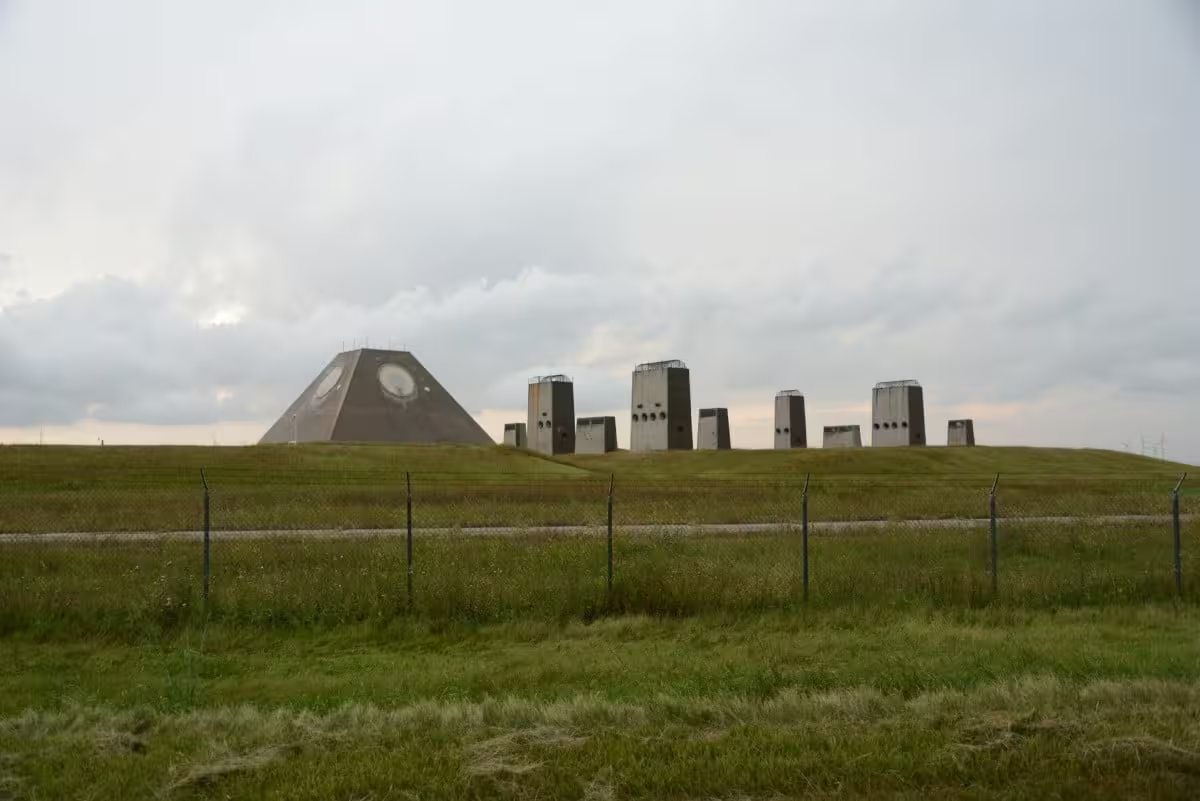
The redevelopment plan also includes a greenhouse that would capture and reuse the heat generated by the data‑center’s servers, turning the former missile‑defense site into a hub for both digital and sustainable agriculture.
This article has been fact checked for accuracy, with information verified against reputable sources. Learn more about us and our editorial process.
Last reviewed on .
Article history
- Latest version
Cite this page:
- Posted by Zara Tariq