Mushrooms Play Music: Bio‑Electric Signals Drive Robotic Arms in New Art Experiment
British researchers turn mushrooms into musical instruments, showing how fungi can interface with machines to create sound.
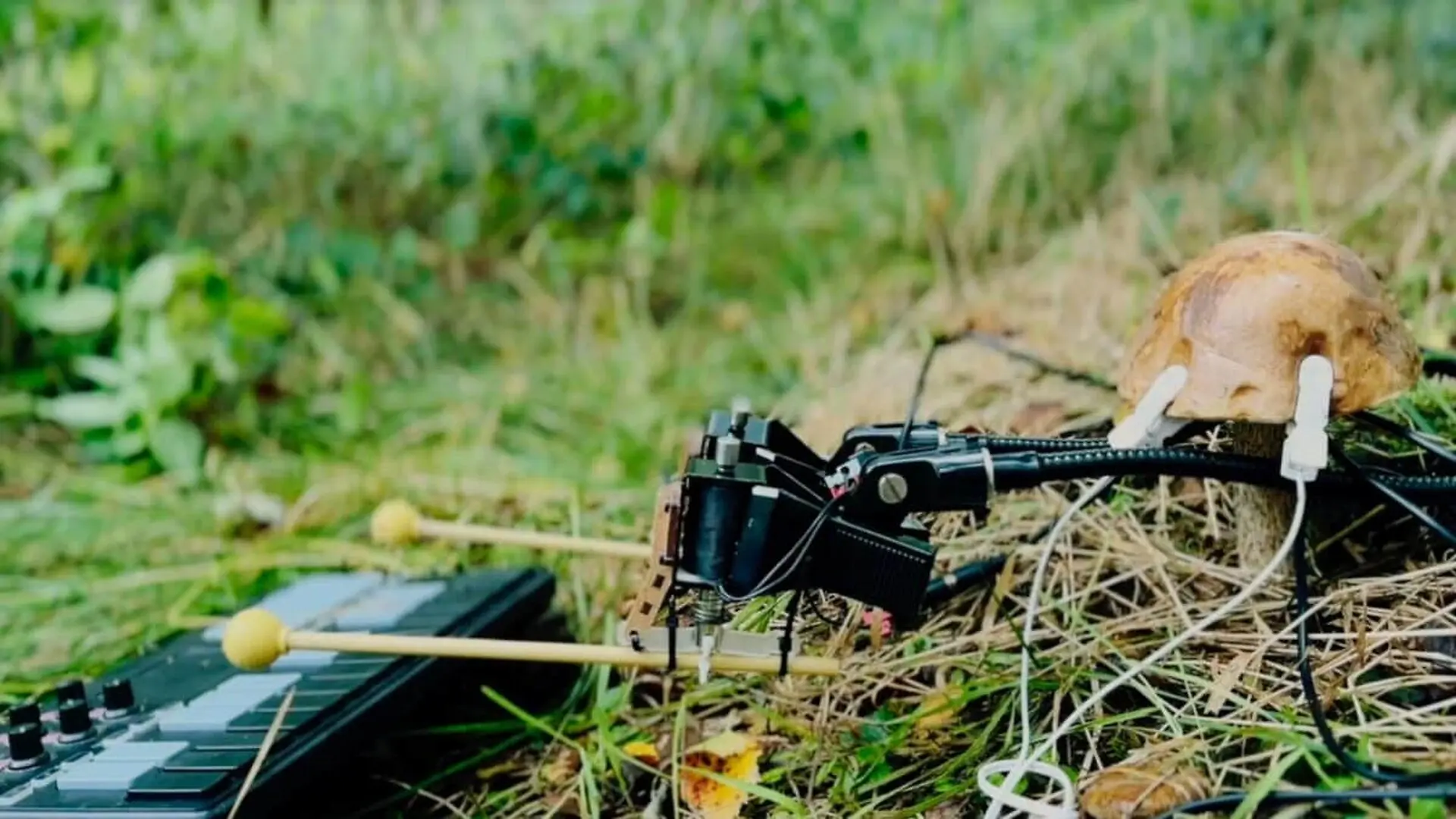
A UK‑based bio‑art collective has engineered a system that lets the natural electrical pulses of mushrooms steer a musical instrument, turning fungal activity into audible soundscapes.
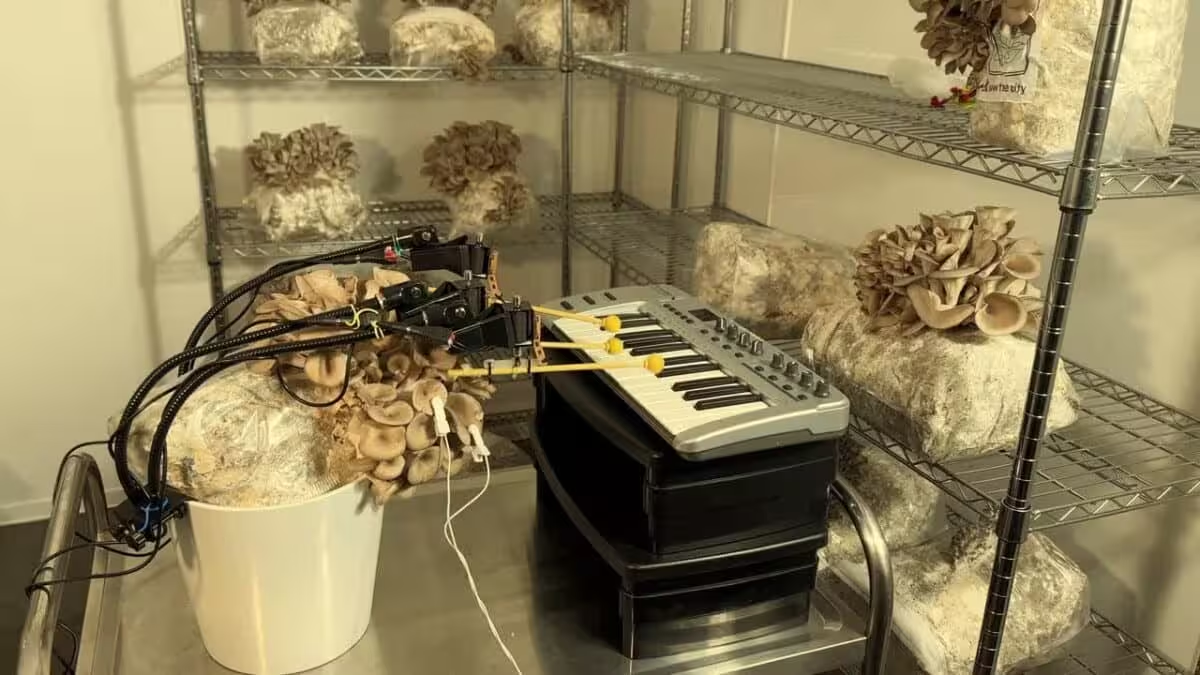
The setup links living fungal tissue to small robotic manipulators that interact with a MIDI keyboard and a digital synthesizer. Instead of conventional coding, the apparatus reacts directly to the subtle electrical changes generated by the organisms.
Jon Ross, an engineer with the group, explains that the platform monitors minute fluctuations in conductivity across mushroom caps and other plant surfaces, then translates those signals into commands for the robotic arms. “All living organisms generate bio‑electrical signals. Our equipment converts these signals into commands that control the bionic arms,” he told Outside.
Mushrooms Drive Robotic Instruments
By capturing the electrical variations produced by the fungi and converting them into mechanical actions, the experiment offers a novel way to “sonify” a mushroom’s physiological state without attempting to decode thoughts or emotions. Ross describes the outcome as a musical portrait of the organism’s internal dynamics.
Environmental factors such as light, temperature and humidity influence the recorded signals, causing the robotic arms to move differently and generate a constantly shifting auditory output.
Mycelial Networks Exhibit Electrical Signaling
Although mushrooms appear static above ground, they are anchored to extensive mycelial webs that transport nutrients and convey signals throughout the fungal colony. Research has documented electrical currents moving through these networks, prompting scientists to explore how fungi sense and communicate without a nervous system.
“We use scientific principles and technology to create our work, but we explore beyond science,” Ross noted. “Our art investigates plant and mushroom intelligence in a way that people can see and hear.”
Expanding Live Organisms in Musical Performances
The mushroom‑music project sits at the intersection of biology, technology and artistic experimentation. The team plans to collaborate further with musicians, artists and researchers to craft new experiences that feature living organisms as active participants.
Observations indicate that different fungal species generate distinct electrical patterns, with variations tied to factors such as light exposure, humidity and temperature. “Yes, there are differences in activity patterns among various species of plants and mushrooms,” Ross confirmed, adding that environmental conditions play a key role.
Future installations aim to showcase how plants and fungi can influence both sound and movement, probing how shifting surroundings alter biological responses.
This article has been fact checked for accuracy, with information verified against reputable sources. Learn more about us and our editorial process.
Last reviewed on .
Article history
- Latest version
Reference(s)
- Dapcevich, Madison. “Scientists Found a Way to Make Mushrooms Play a Musical Instrument.”, November 19, 2025 Outside <https://www.outsideonline.com/outdoor-adventure/environment/musical-mushrooms/>.
Cite this page:
- Posted by Zara Tariq