Ancient Waterway Hidden Near Red Pyramid Could Explain How Egyptians Moved Massive Stones
Study finds the mysterious structures near Egypt’s Red Pyramid were likely part of an ancient water-control system, revealing forgotten engineering.

A recent investigation of a hydraulic system close to Egypt’s Red Pyramid offers fresh insight into how builders may have moved massive stone blocks and supplies more than 4,500 years ago.
Twin Linear Features Likely Functioned as Ancient Dams
Researchers from the Paris‑based institute Paleotechnic combined satellite imagery, landscape analysis and watershed mapping to reassess two long structures that lie southwest of the Red Pyramid at the Dahshur necropolis. Rather than serving as ramps or causeways, the team argues that the eastern feature acted as a primary water‑retention dam while the western counterpart, equipped with a duckbill‑shaped weir, operated as a check dam that trapped sediment and moderated flow.
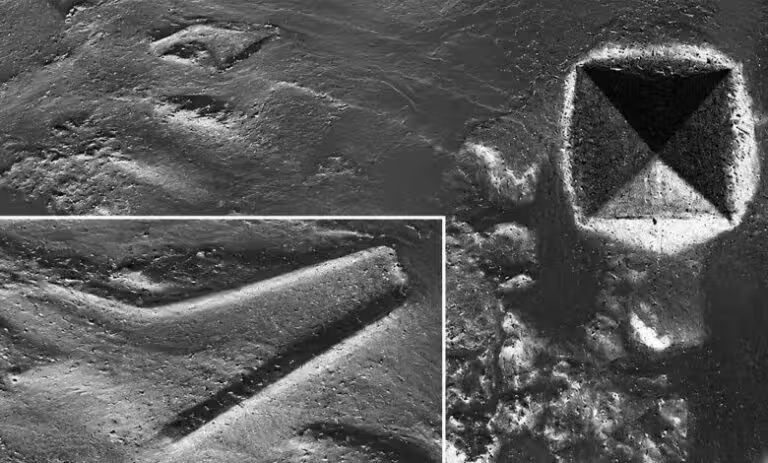
The authors describe the two installations as a coupled hydraulic system that could have buffered flood peaks, regulated episodic runoff and managed sediment before channeling water toward a diversion conduit or releasing it downstream into the ancient Wadi Dahshur.
How Waterways Could Have Aided Pyramid Building
If the proposed network functioned as intended, navigable channels might have allowed boats to transport limestone blocks, timber, food provisions and other resources much closer to the construction site. Such a system would have lessened the logistical burden of moving heavy materials across the desert.
The Red Pyramid, erected under Pharaoh Sneferu between roughly 2590 and 2575 BCE, rises about 105 meters (344 feet) and represents one of the earliest true smooth‑sided pyramids of Egypt’s Fourth Dynasty.
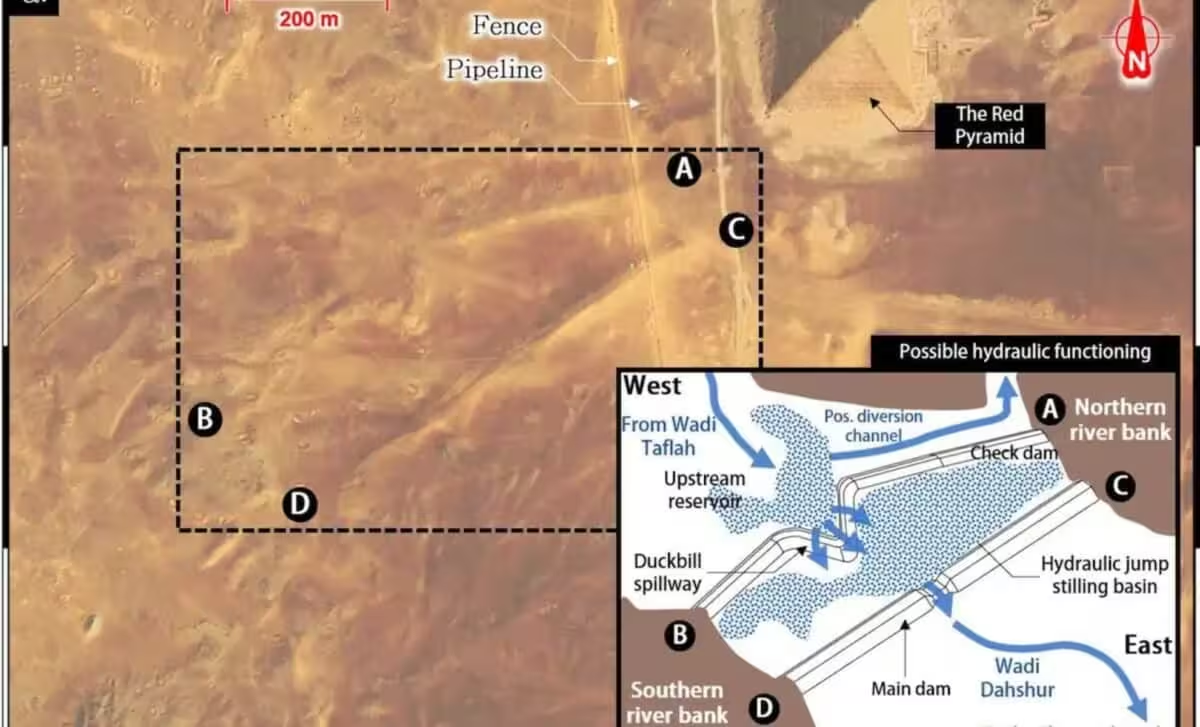
The study, published in npj Heritage Science, adds to a growing body of research that links many Old Kingdom monuments to now‑vanished branches of the Nile. Over 30 pyramids line a corridor between Giza and Lisht, prompting scholars to explore whether water routes once supported their construction.
“These results reinforce the view that water management, including flood regulation and controlled surface‑water exploitation beyond the Nile floodplain, may have played a more significant role in Old Kingdom engineering strategies than traditionally assumed,” the authors concluded.
The team cautions that additional hydraulic features could still lie buried beneath the sands of the Nile Valley, offering future opportunities to uncover the hidden infrastructure that enabled Egypt’s iconic architecture.
This article has been fact checked for accuracy, with information verified against reputable sources. Learn more about us and our editorial process.
Last reviewed on .
Article history
- Latest version
Reference(s)
- Landreau, Xavier. “Two possible ancient dams near the Red Pyramid on the Dahshur Plateau, Egypt - npj Heritage Science.”, July 20, 2026 Nature, doi: 10.1038/s40494-026-02833-9. <https://www.nature.com/articles/s40494-026-02833-9>.
Cite this page:
- Posted by Zara Tariq