Archaeologists Discover 1,700 Year Old Tomb Featuring Rare Greek Poem and Mysterious Shrine
Archaeologists in Egypt’s Dakhla Oasis have uncovered a 1,700-year-old tomb featuring a mysterious inscription and a touching message to the deceased.
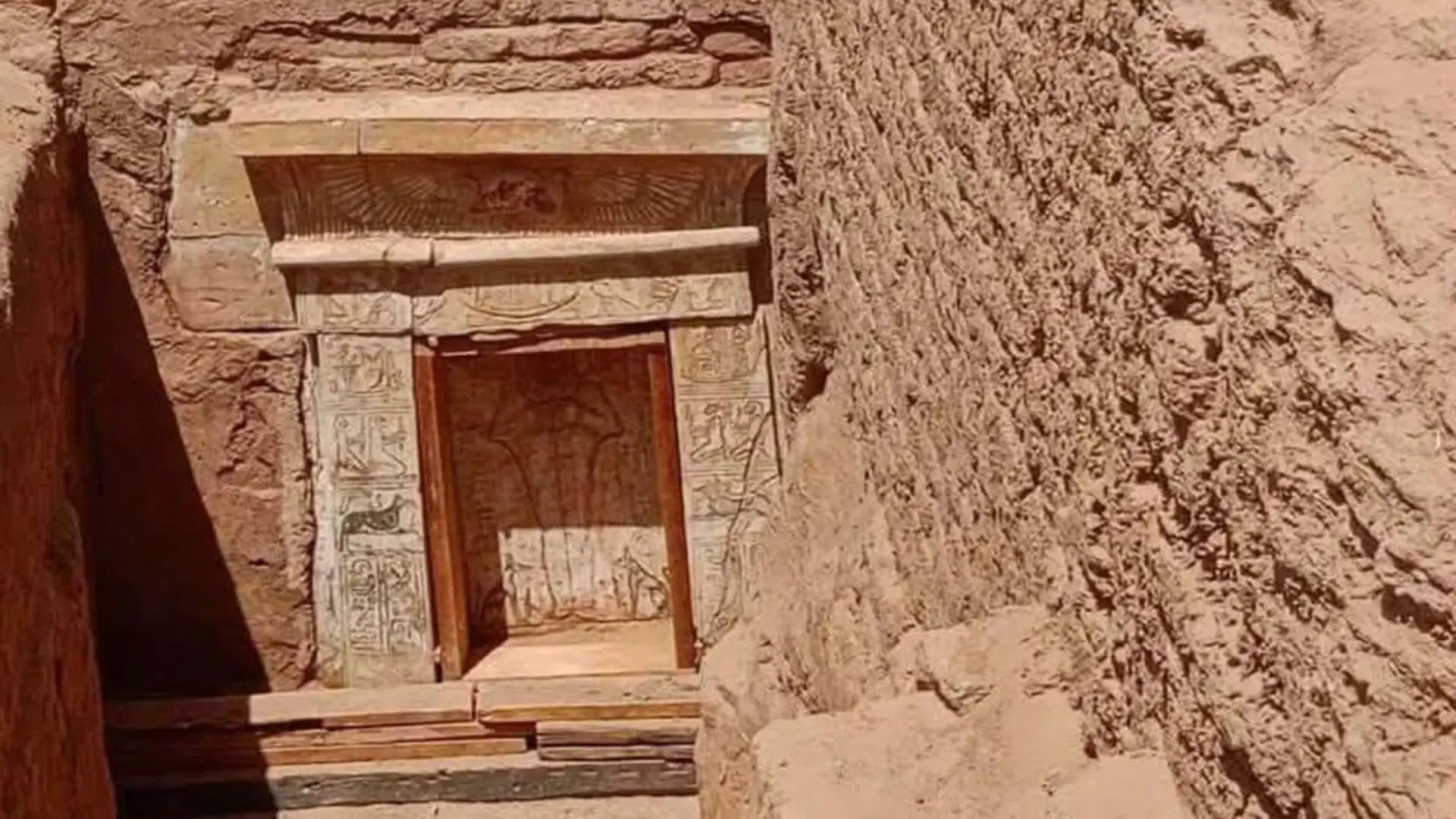
Archaeologists working in Egypt’s Dakhla Oasis have uncovered a remarkably well-preserved limestone tomb dating back 1,700 years. The site, which dates to the fourth century during the era of Roman rule, features a unique synthesis of cultural traditions, blending traditional Egyptian funerary iconography with a sophisticated, highly literary Greek eulogy.
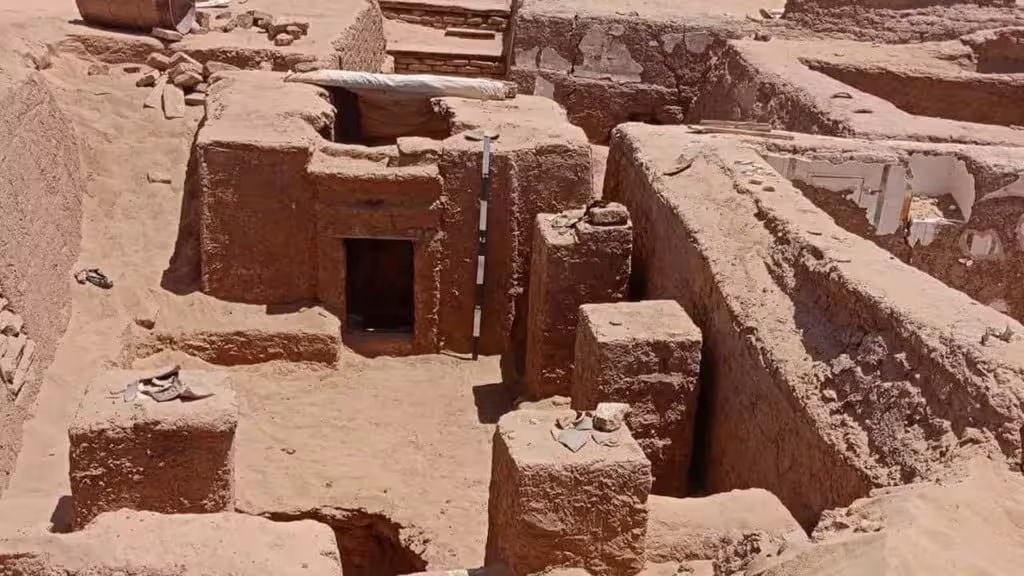
The structure is located near the ancient city of Mothis, modern-day Mut. Its design includes a distinctive pyramid-shaped roof and a staircase consisting of fourteen steps that descend into the burial chamber. While the tomb was constructed for a husband and wife—the man identified as Pisechtes, who researchers believe may have served as a judge—official reports from the Egyptian Ministry of Tourism and Antiquities did not confirm the recovery of human remains at the location.
A Literary Farewell in Greek
Perhaps the most significant find within the tomb is a 19-line epigram inscribed on a stone plaque. The poem serves as a poignant tribute, with the deceased’s son, Sarapion, addressing his father directly. According to Angelos Chaniotis, a researcher at the Institute for Advanced Study, the text is a rare, original work of literature. The author employs Homeric-style grammar and precise diacritical marks—a hallmark of an exceptionally educated individual—to honor his father’s legacy as an “advisor in life.” The poem concludes with a solemn request for the deceased to accept the ritual offerings presented by his grieving children.
Convergence of Ancient Beliefs
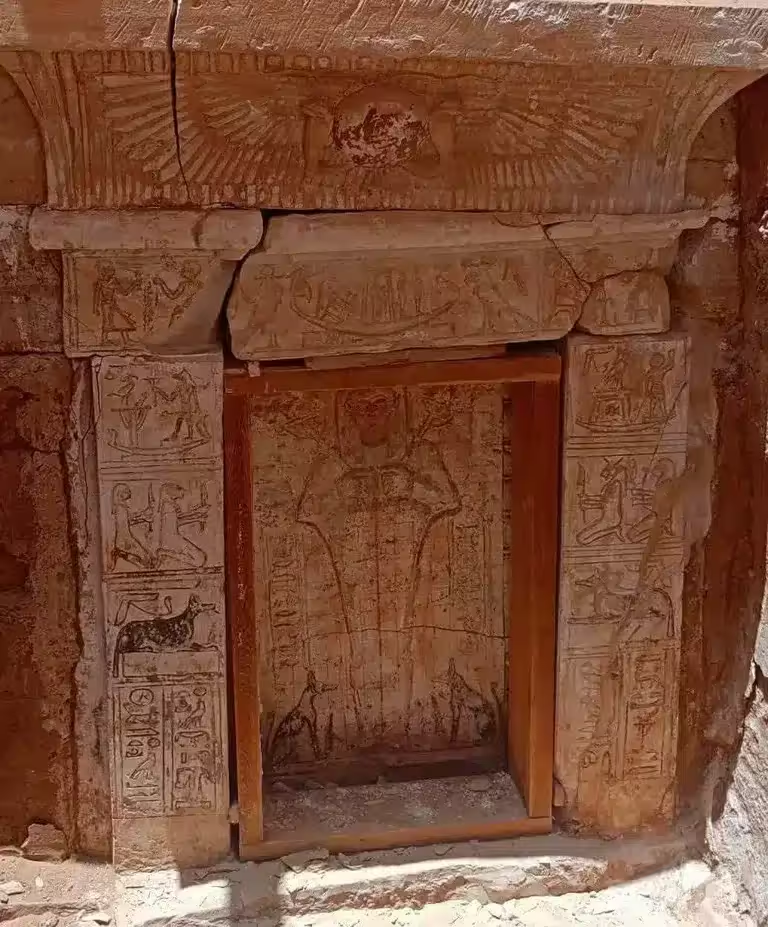
The tomb offers a rare glimpse into a period of religious transition. Despite the burial dating to the reign of Emperor Constantine the Great (A.D. 306–337)—a pivotal figure who oversaw the legalization of Christianity—the tomb is devoid of Christian imagery. Instead, the walls are adorned with traditional Egyptian motifs, including representations of the god Osiris, a winged sun disk, and protective cobras. Further hieroglyphic inscriptions were found, some of which reference the “Amduat,” an ancient funerary text detailing the sun god’s passage through the afterlife.
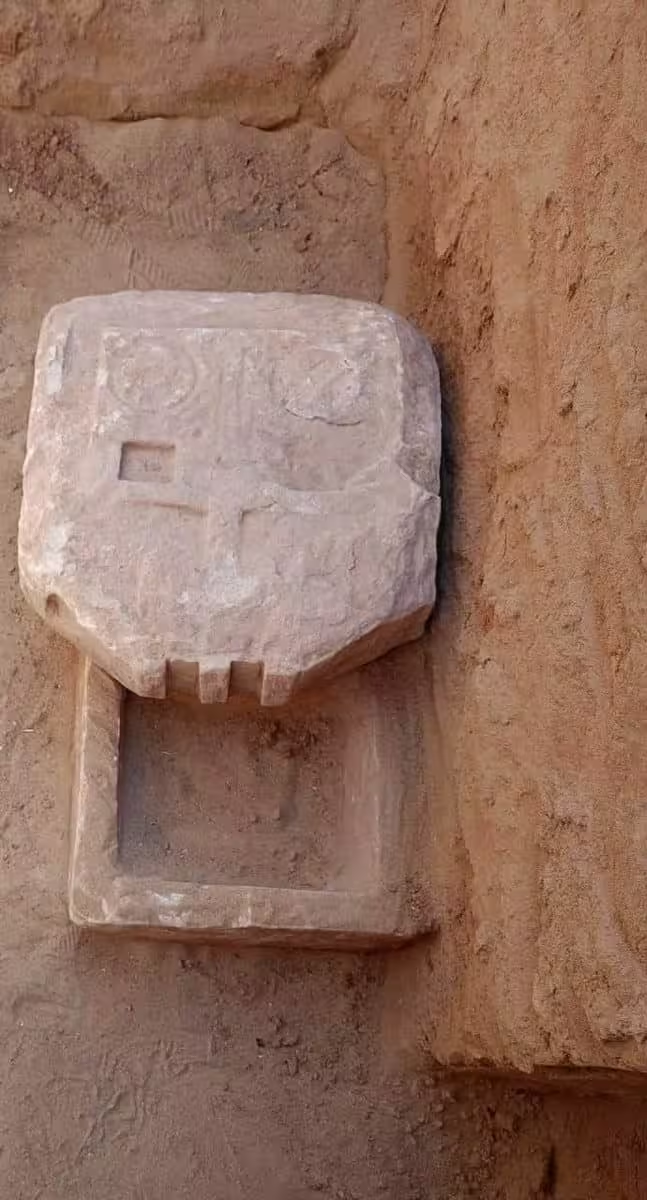
Archaeological teams also recovered various artifacts at the site, including an offering table, a purification basin, and ceramic vessels. A coin minted during the reign of Constantine further anchors the tomb’s timeline to the early fourth century. Evidence suggests that the site may have seen continued use after the initial burials, as researchers identified a mud-brick shrine constructed above the entrance at a later date, indicating the tomb’s enduring significance in the community.
This article has been fact checked for accuracy, with information verified against reputable sources. Learn more about us and our editorial process.
Last reviewed on .
Article history
- Latest version
Cite this page:
- Posted by Zara Tariq