Why Archaeologists Refuse to Open China’s 2200 Year Old Forbidden Tomb
Sealed for 2,200 years, Qin Shi Huang’s tomb allegedly hides deadly traps and mercury rivers. What do soil tests and ancient texts reveal about the site?
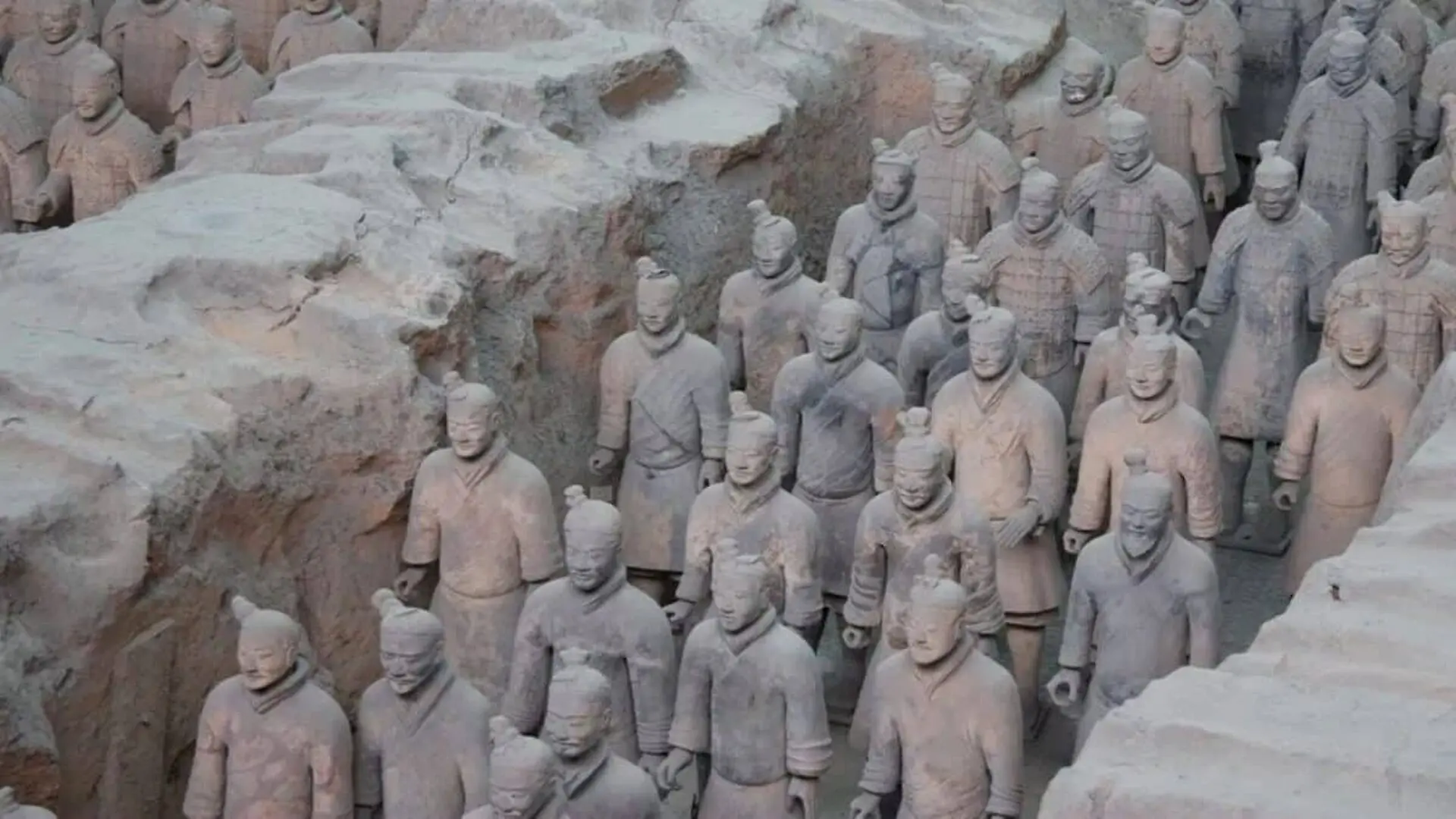
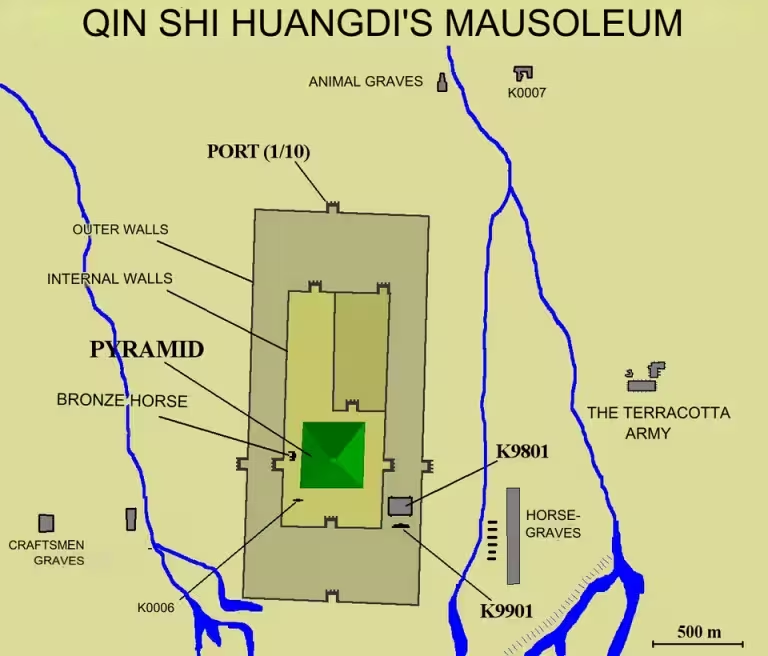
Beneath a sprawling earthen mound in China’s Shaanxi Province, the tomb of Qin Shi Huang has remained undisturbed for over 2,200 years. As the first emperor to unify the nation in 221 BCE, Qin Shi Huang demanded a final resting place that reflected his supreme authority. Today, that site persists as a massive, sealed archaeological enigma, shrouded in persistent legends of elaborate booby traps and flowing rivers of liquid mercury.
Engineering an Eternal Stronghold
Historical accounts paint a vivid picture of the emperor’s subterranean world, describing a miniature empire complete with ornate palaces, ceilings embedded with jewels, and intricate water systems. Beyond its aesthetic grandeur, the site was constructed as a defensive fortress. Chroniclers noted the installation of automated crossbows rigged to fire upon intruders and complex passage-closing mechanisms designed to seal the burial chamber permanently.
While such tales could be dismissed as folklore, modern science provides a sobering reality check. Soil analysis surrounding the burial mound has consistently detected mercury concentrations far exceeding natural levels. Because mercury vapor is highly toxic, the potential presence of these legendary liquid rivers presents a lethal obstacle to any future physical excavation.
The Terracotta Garrison
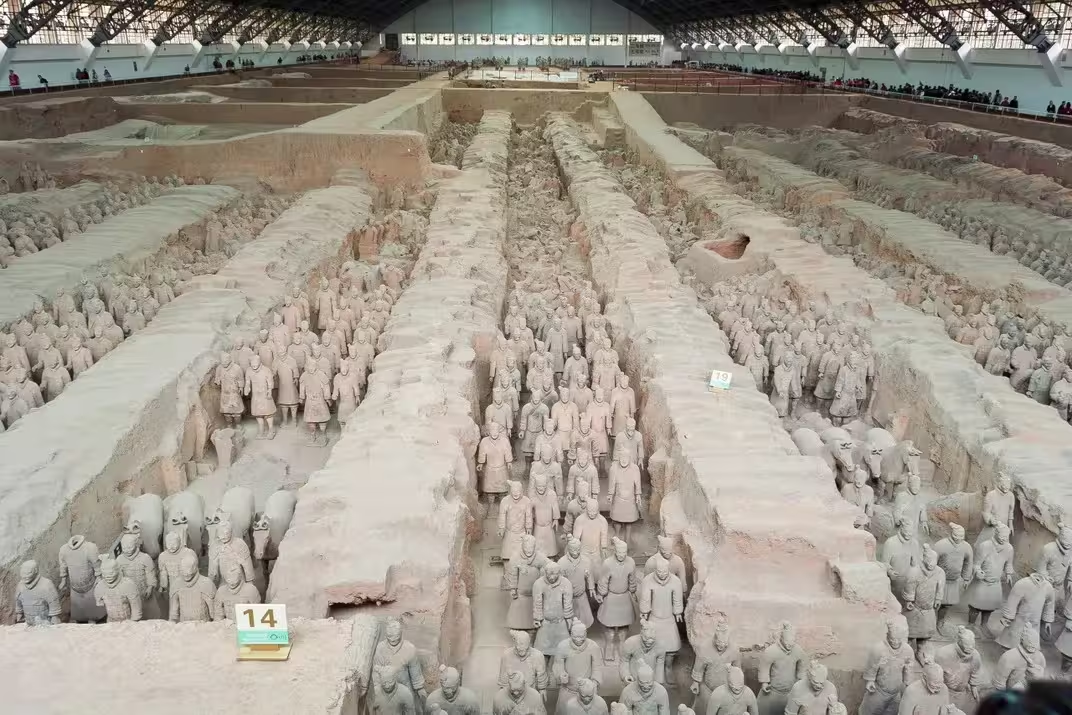
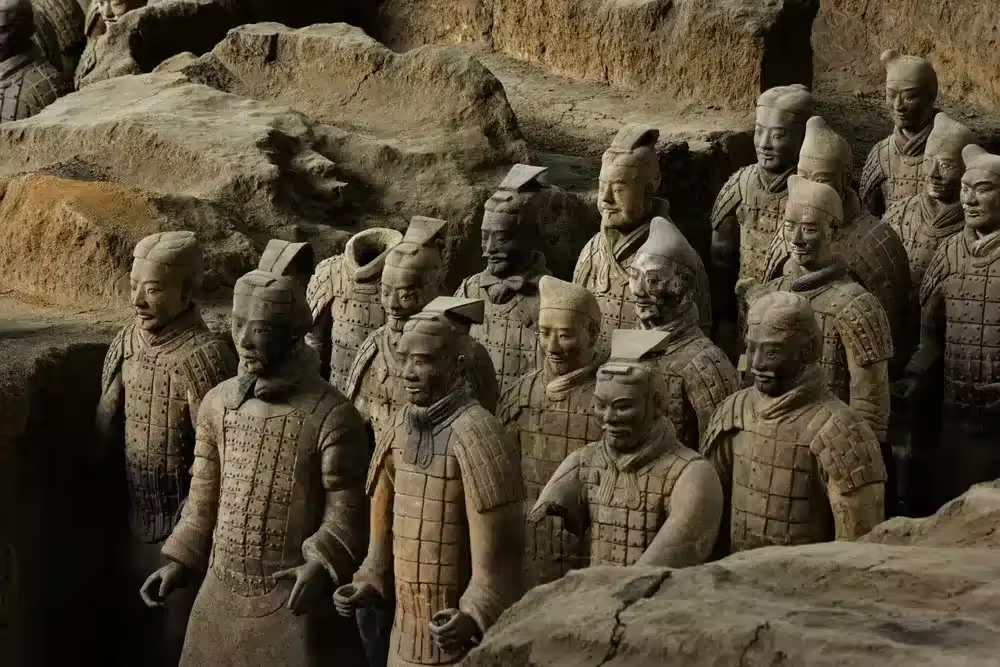
The discovery of the emperor’s funerary site in 1974 unveiled the famous Terracotta Army, a sprawling formation of roughly 8,000 life-sized statues crafted to guard the sovereign in the afterlife. The sheer technical mastery is evident in the individual facial expressions, distinct armor, and precision-engineered weapons found within the pits. As noted by Futura-Sciences, many of these bronze weapons remain remarkably sharp, testifying to the advanced metallurgical skills of the Qin Dynasty.
The Dilemma of Disturbance
The prospect of breaching the main tomb remains a subject of intense debate among experts. While the potential for uncovering priceless artifacts and gaining unprecedented historical insights is vast, the physical risks are equally significant. Previous excavations of the Terracotta Warriors have shown that exposure to modern air can cause rapid deterioration of colors and finishes, meaning the act of discovery could simultaneously be an act of destruction.
Concerns over the preservation of artifacts, the safety of the research team, and the cultural sensitivity of disturbing an emperor’s final resting place have resulted in a cautious approach. Current research relies heavily on non-invasive techniques, such as magnetic imaging and ground-penetrating radar, allowing scholars to probe the secrets of the necropolis while leaving the sanctity of the interior intact.
This article has been fact checked for accuracy, with information verified against reputable sources. Learn more about us and our editorial process.
Last reviewed on .
Article history
- Latest version
Reference(s)
- Laussel, Futura. “Why archaeologists still refuse to open China’s 2,200-year-old emperor’s tomb filled with deadly traps.”, March 11, 2026 Futura-Sciences <https://www.futura-sciences.com/en/why-archaeologists-still-refuse-to-open-chinas-2200-year-old-emperors-tomb-filled-with-deadly-traps_27538/>.
- <https://smarthistory.org/the-terracotta-warriors/>.
Cite this page:
- Posted by Zara Tariq