While Most People Throw Cardboard Away, the Netherlands Uses 24 Rolled Layers to Create a House That Arrives Ready With Kitchen and Bathroom Space
Dutch breakthrough transforms everyday material into rapid, compact housing using 24-layer wrap technique
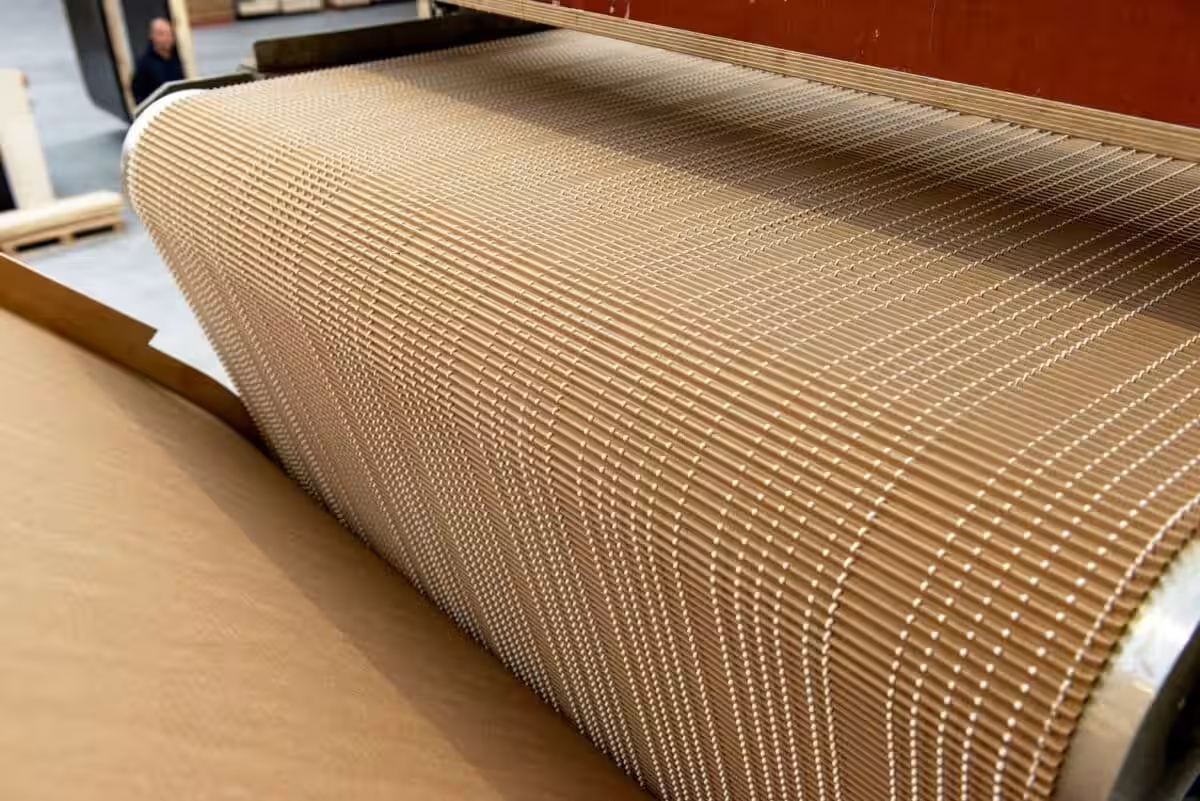
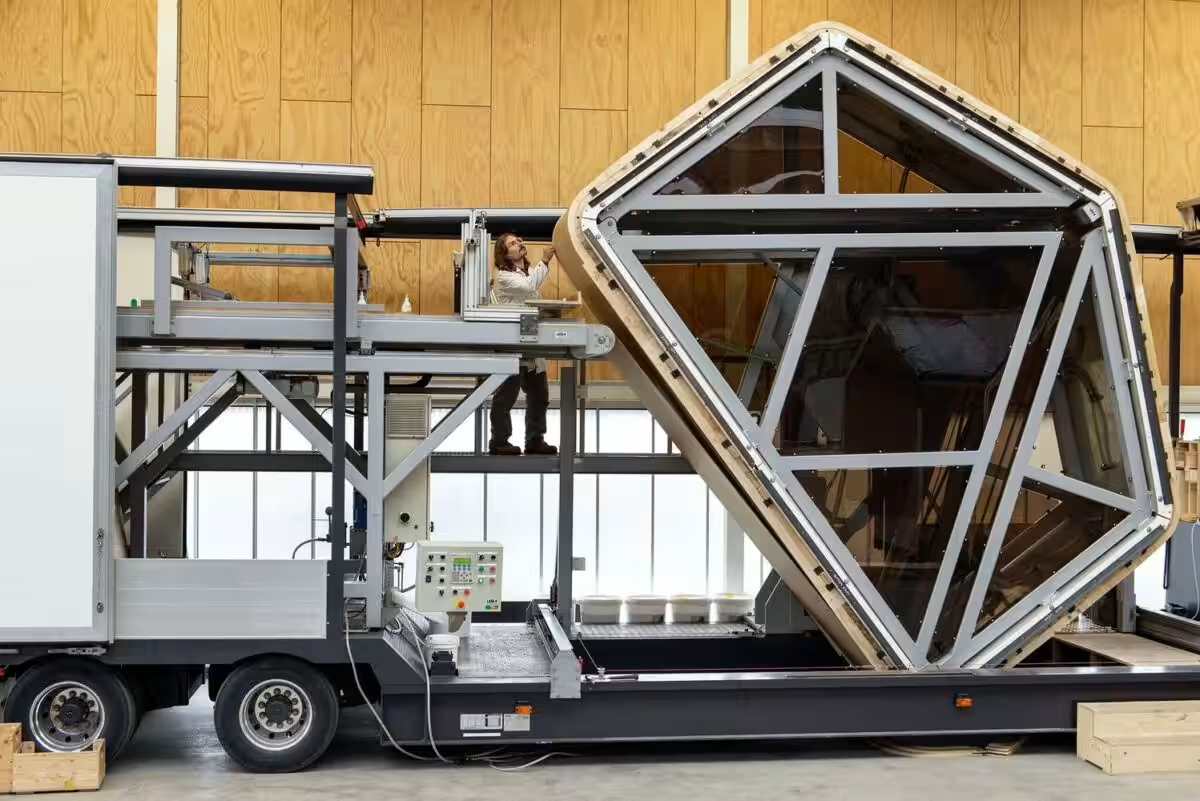
At a workshop in Amsterdam, a rotating mold and rolls of cardboard replace the traditional construction site’s concrete mixers, brick pallets, and weeks of weather‑dependent labour. The process yields a complete, livable house segment that can be linked to a foundation‑ready structure in just one day.
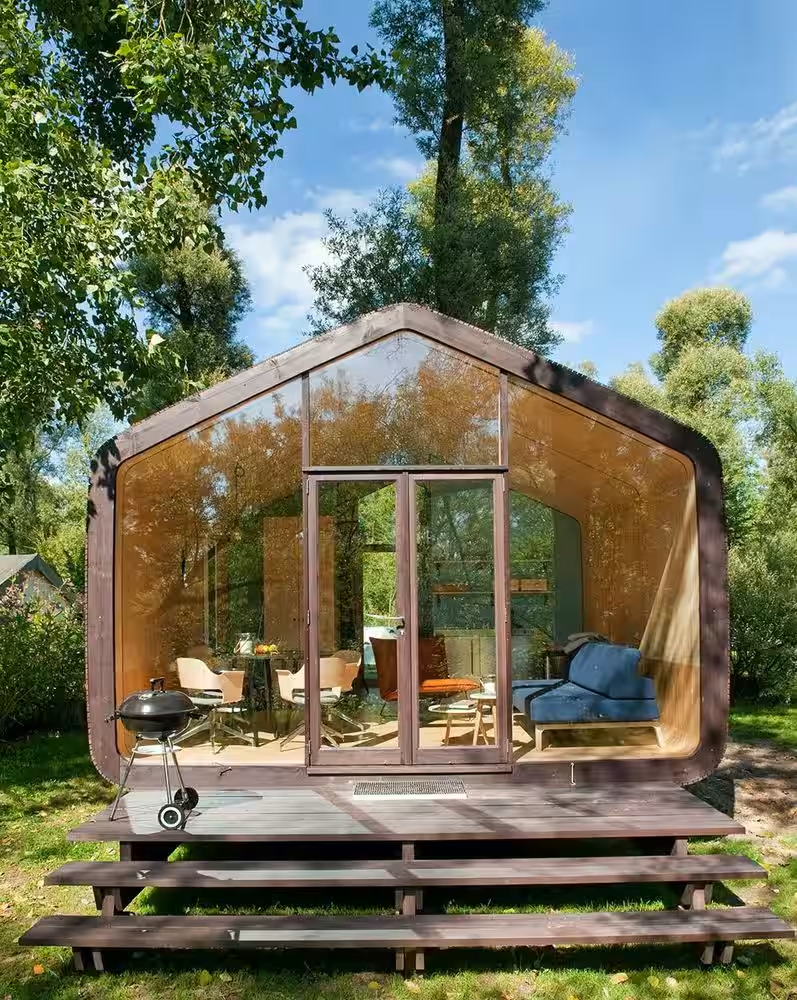
The innovation, marketed as the Wikkelhouse, comes from Dutch start‑up Fiction Factory. Since its launch, the firm has shipped more than 150 units across Europe and even to Chile. According to the company’s website, the modular cardboard dwelling can function as a vacation cabin, guest annex, office space, or compact permanent residence.
Turning Cardboard Into a Structural Envelope
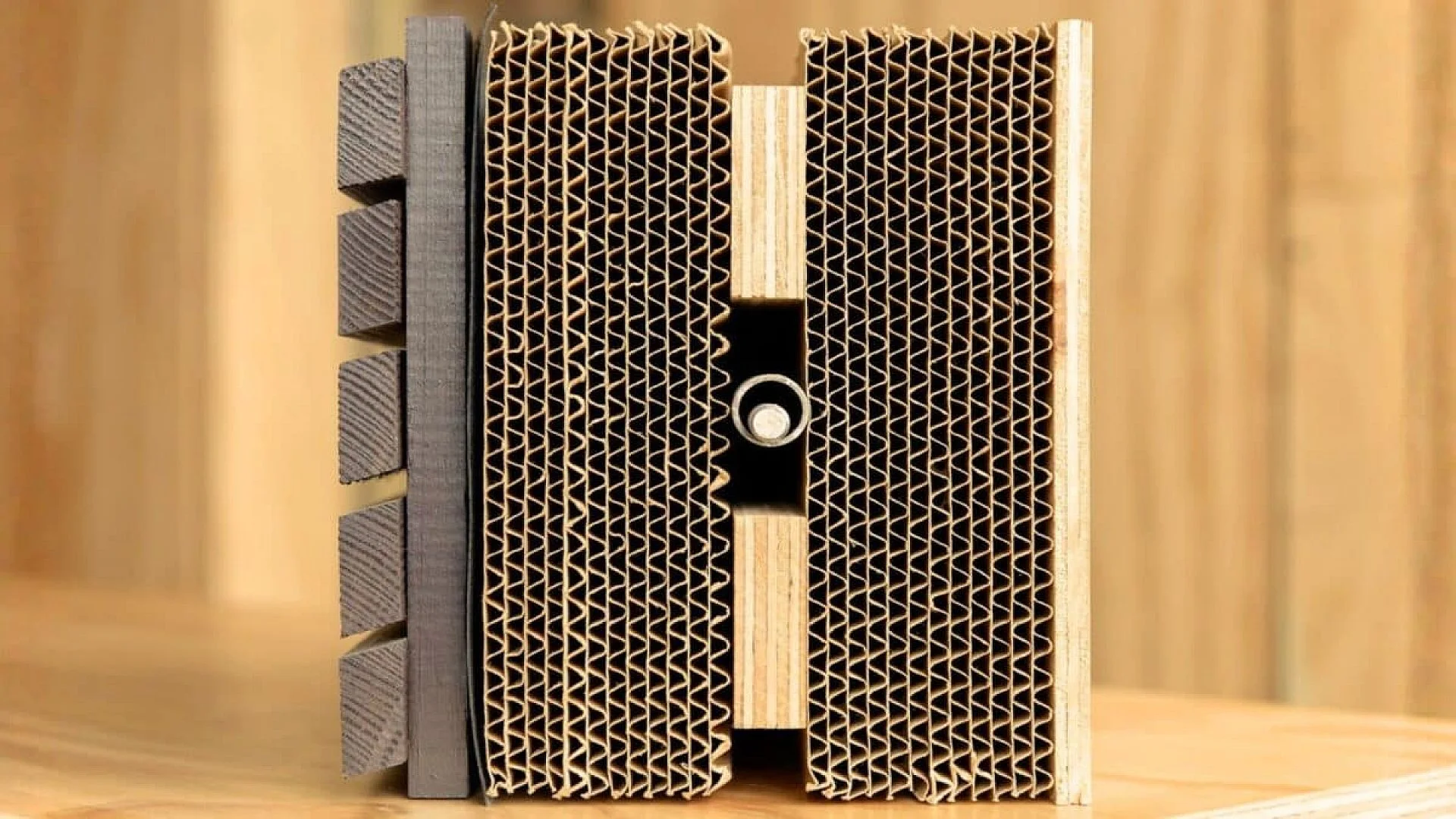
The term “Wikkelhouse” derives from the Dutch verb wikkelen, meaning “to wrap.” The production line begins with a house‑shaped rotating form. Around this core, a machine lays down 24 layers of premium cardboard, each bonded to the previous one with an environmentally‑friendly superglue. ArchDaily explains that this wrapping method endows the panels with load‑bearing capacity despite the unconventional material.
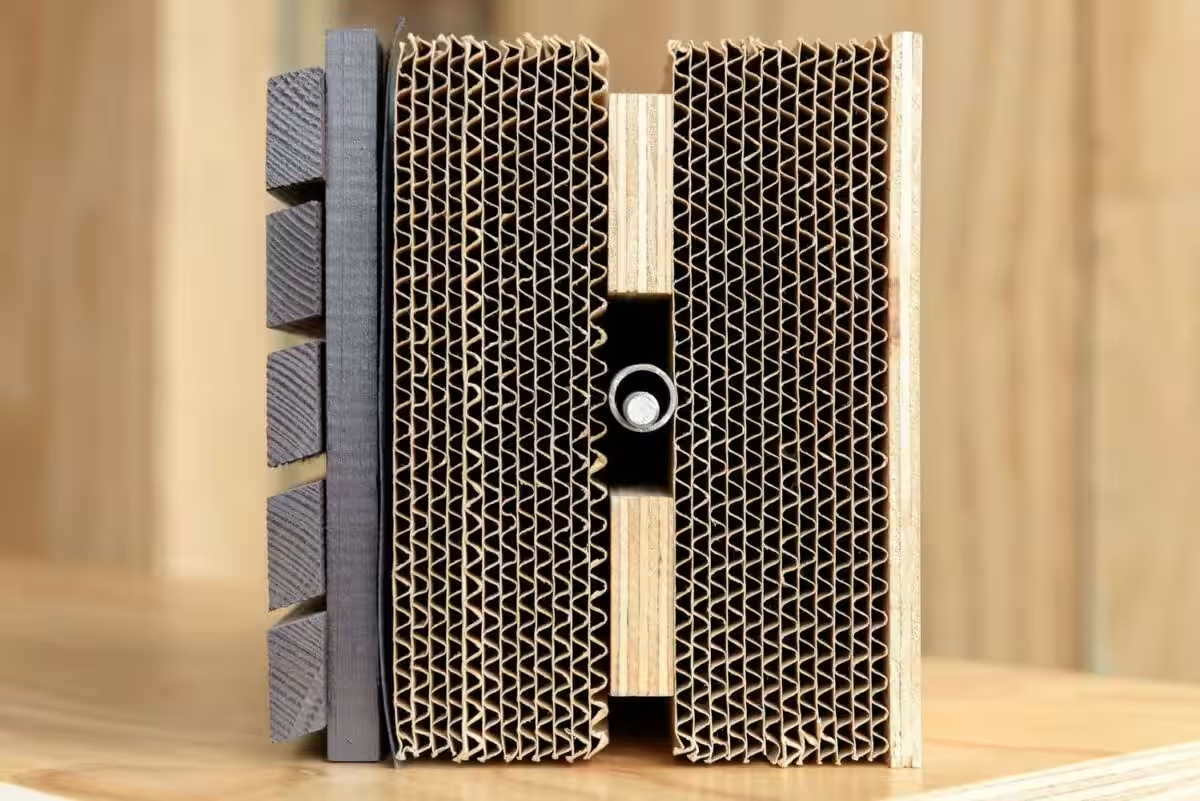
Fiction Factory notes that a single sheet of cardboard lacks rigidity, but when many layers are tightly glued they form a self‑supporting shell. After the 24‑layer core hardens, the module receives a water‑proof foil wrap that shields the cardboard from moisture. Wood paneling is then applied to both interior and exterior surfaces, giving the unit the look of a traditional timber cabin.
More than 60 % of a Wikkelhouse’s mass is wood, including the cladding and selected interior components. Insulation relies on flax fibres, which provide thermal and acoustic benefits. Global Construction Review estimates that the environmental impact is roughly one‑third that of conventional housing.
Each standard module measures about 4.6 m in length, 1.2 m in width and 3.5 m in height, delivering roughly five square metres of floor space. Reported weights range from 500 to 600 kg, light enough to forgo a permanent foundation—a point the company highlights repeatedly.
The modest mass also means the sections can be lifted, transported, and repositioned with a small crane and a flatbed truck, offering owners flexibility if circumstances change.
Flexible Layouts: From Kitchen Pods to Full‑Scale Dwellings
Because the system is modular, buyers are not locked into a single floor plan. Individual segments snap together end‑to‑end, and additional units can be appended later. The connections are engineered to be reversible, preserving the ability to reconfigure the layout long after installation. A recent feature on the project underscores this adaptability as a core design principle.
While a basic module is an empty room, Fiction Factory also offers a dedicated Home‑segment that consolidates plumbing, a compact kitchen, shower, and toilet within a 1.2‑meter‑deep unit. Adding this pod converts a chain of modules into a self‑contained residence.
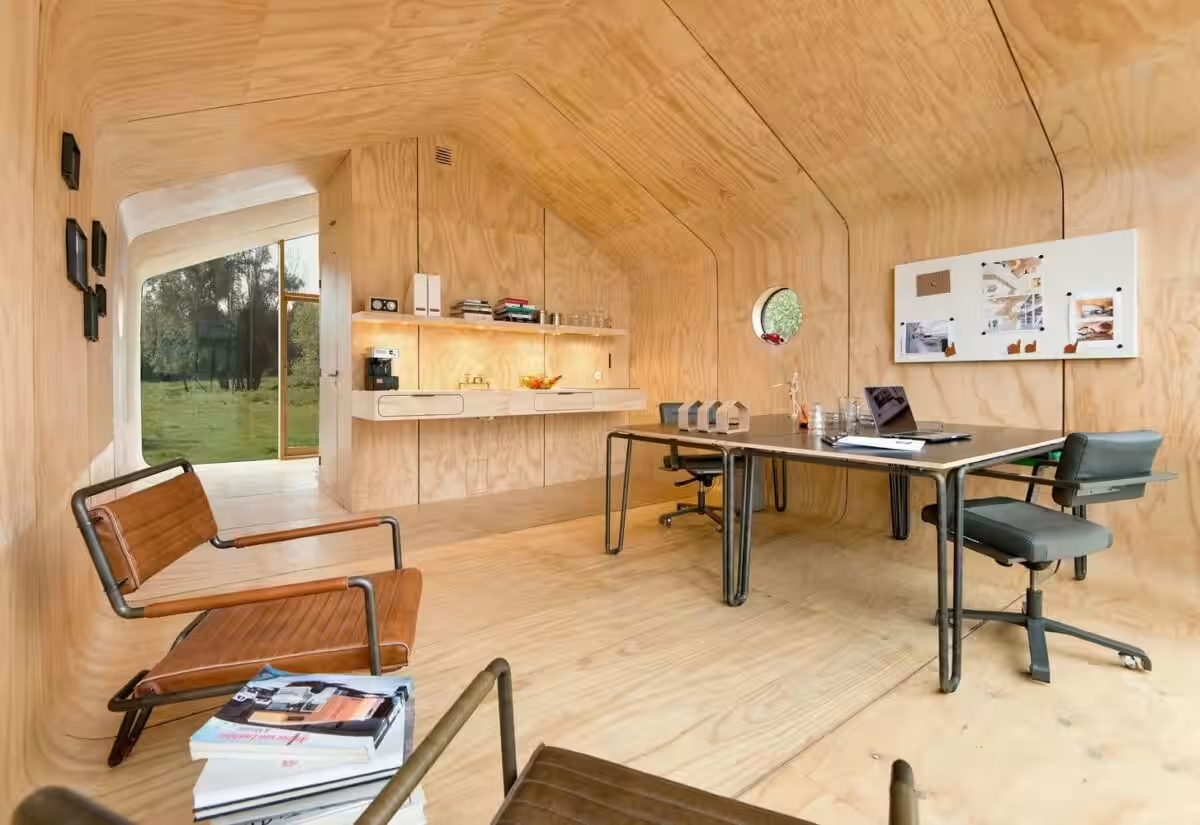
Customers can choose window locations, interior finishes, and overall layout. The compact footprint makes the structure suitable for everything from short‑term tourism to permanent micro‑living. Fiction Factory operates a rental scheme called Wikkelaway, allowing prospective owners to stay in existing units—situated at campsites, marinas, and holiday parks in the Netherlands, Belgium, and France—before deciding to purchase.
One‑Day On‑Site Assembly and Longevity Questions
All components are produced inside the company’s Amsterdam factory, where climate control eliminates weather delays during the wrapping, gluing, foil‑application and interior‑finishing stages. Completed modules are then shipped by truck to the building site.
At the destination, a small crew links the prefabricated sections and seals the joints. Fiction Factory claims the on‑site work can be finished within a single day, dramatically cutting construction waste and eliminating wet trades. The factory lead time for a new order, however, remains around seven months.
The primary durability concern is exposure to water. Fiction Factory points to the waterproof foil and wood cladding as barriers that keep the cardboard core dry. The company projects a service life of several decades; Global Construction Review cites an anticipated lifespan of 50 years, though the manufacturer’s own statements remain more general.
Potential buyers also raise questions about fire resistance, security and the risk of internal water leaks from the Home‑segment’s plumbing. Public commentary highlights the lack of detailed fire‑rating data and any information on how the structural core would react to a leak that bypasses the exterior waterproofing.
When a Wikkelhouse reaches the end of its usable life, the company emphasizes recyclability. Cardboard, wood and foil can be separated and routed to their respective waste streams. Fiction Factory is working toward a fully biodegradable version, though the target has not yet been achieved.
Market Scope and Cost Structure
Even after delivering more than 150 units, the Wikkelhouse remains a niche product confined to Europe. Sales are limited to the Netherlands, Belgium, Luxembourg, Germany, France, the United Kingdom and the Nordic countries. The firm has not announced plans to expand into North America or Asia.
Base pricing starts at EUR 40,000 (excluding VAT) for a three‑module configuration, not counting transport, site preparation or optional upgrades. Most completed houses fall in the EUR 60,000‑100,000 range before taxes and delivery costs. Interested parties must contact Fiction Factory directly for detailed specifications and a formal quote. The company handles all aspects of sales, marketing and production from its Amsterdam headquarters, operating without intermediary dealers.
Fiction Factory continues to produce modules at its Amsterdam plant and invites prospective clients to a monthly open day, where they can tour a finished Wikkelhouse and explore the technology firsthand.
This article has been fact checked for accuracy, with information verified against reputable sources. Learn more about us and our editorial process.
Last reviewed on .
Article history
- Latest version
Cite this page:
- Posted by Zara Tariq