Archaeologists Unearth 141 Roman Gold Coins Worth $322,000 Inside a Forgotten Fortress
Unusual gold coins from an obscure ancient emperor unearthed in crumbling fort ruins
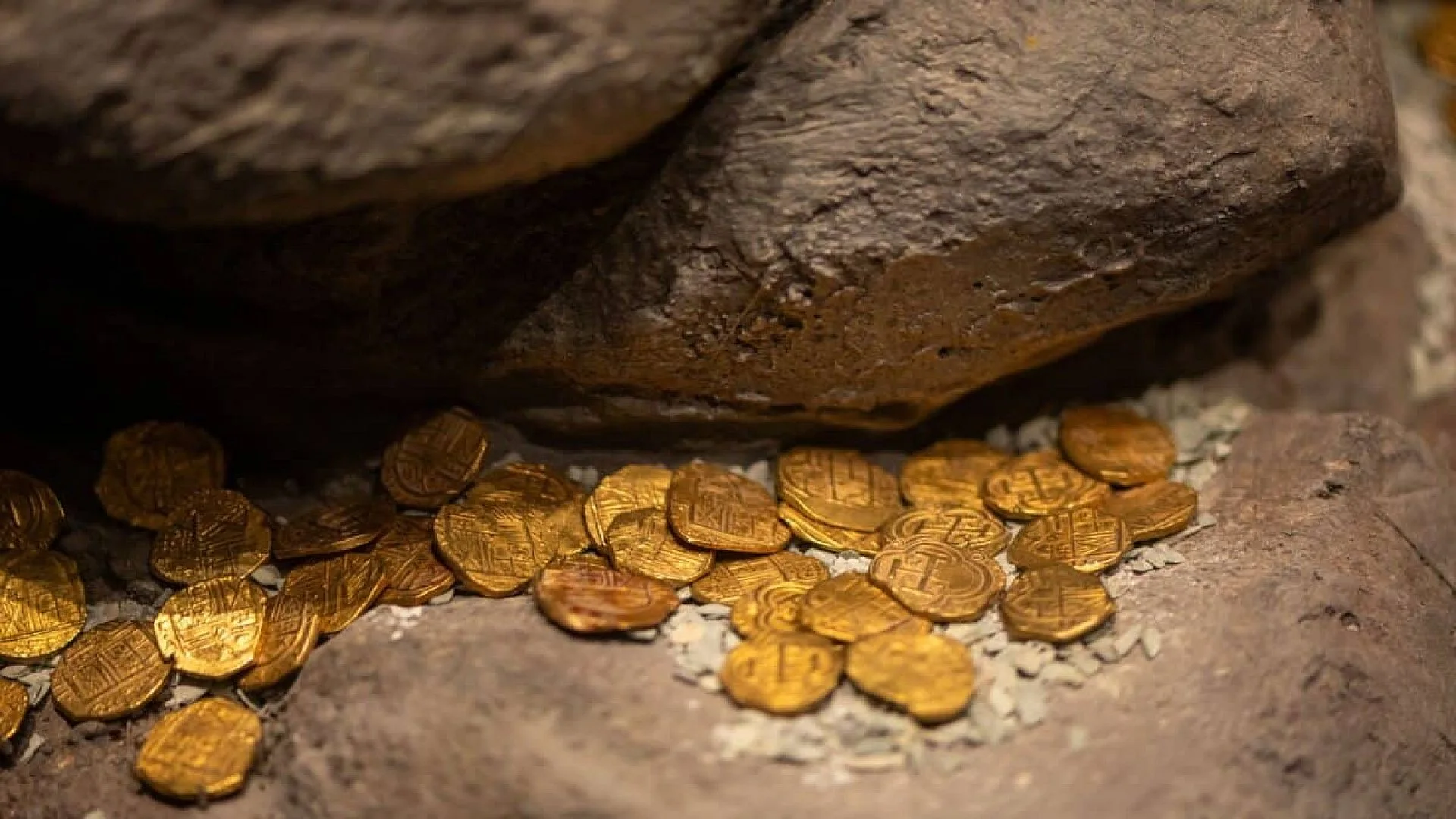
Archaeologists excavating the remains of a Roman fort in the Luxembourg village of Holzthum have uncovered a cache of 141 gold solidi, offering fresh insight into the empire’s final decades. The coins, minted between 364 and 408 CE, were carefully concealed amid the fort’s ruins during a period of intense political and religious turmoil.
The discovery, made during a four‑year dig that spanned from 2020 to 2024, was kept under wraps until the site could be fully cleared. Luxembourg’s National Institute for Archaeological Research (INRA) notes that the hoard was hidden at a time when the Roman world was grappling with the rise of Christianity and mounting internal divisions.
Eugenius Coinage Highlights a Short‑Lived, Contested Emperor
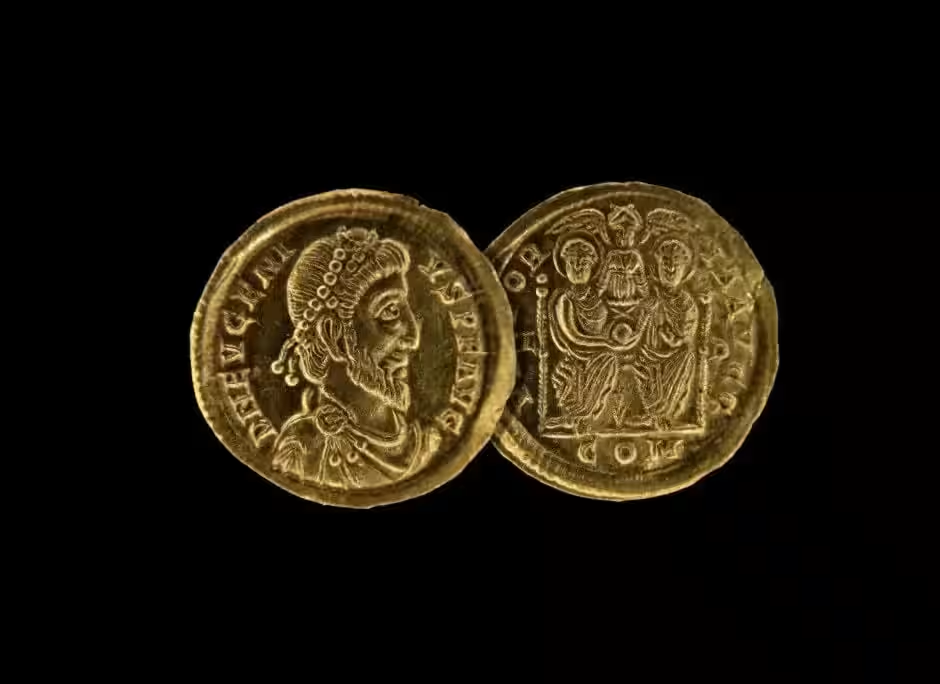
Among the solidi, three rare pieces bear the portrait of Emperor Eugenius, who ruled the Western Roman Empire for just two years (392‑394 CE). His brief reign, supported by the Frankish general Arbogast, was marked by an attempt to revive pagan practices in the face of an increasingly Christian empire. This clash with Eastern Emperor Theodosius I culminated in the Battle of the Frigidus in 394 CE, after which Eugenius was defeated and executed.
Excavation Complicated by Unexploded WWII Munitions
The dig faced an additional obstacle when the Luxembourg Army Mine Action Service was called in to clear unexploded World War II ordnance buried near the fort. Only after the area was declared safe could archaeologists continue their work.
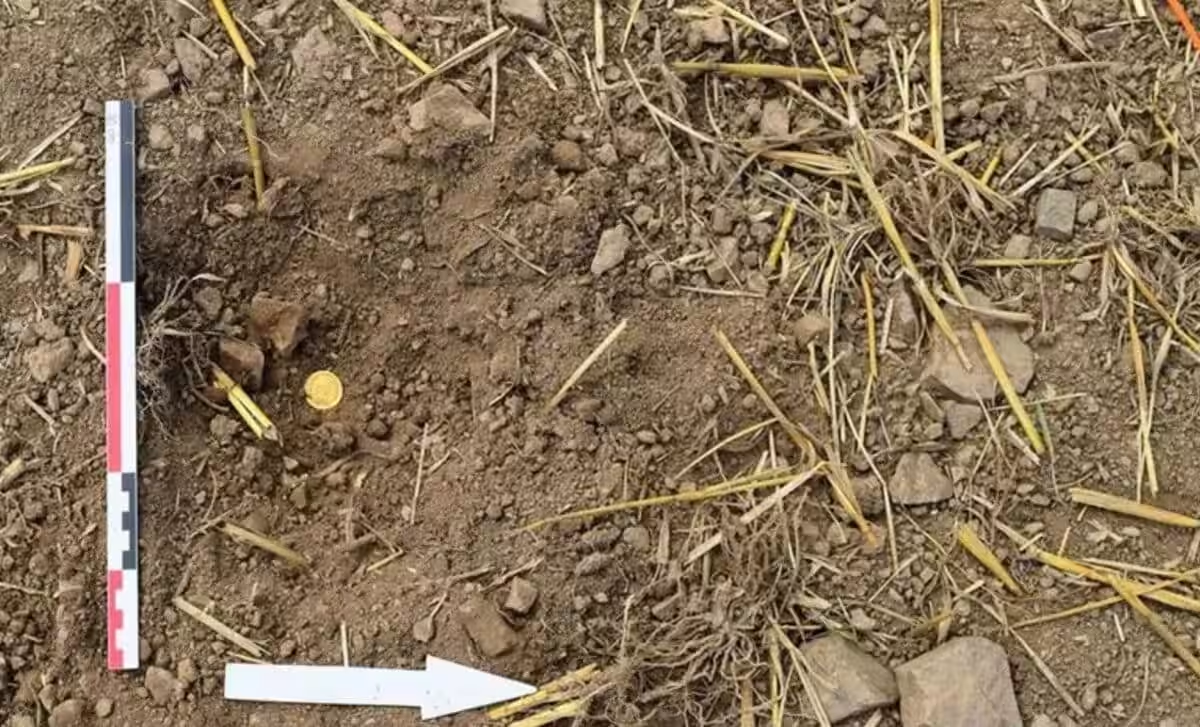
The hoard was concealed within the remains of the fort, alongside a small fortified watchtower typical of fourth‑century Roman border defenses. Archaeologists also uncovered several graves in the vicinity, the details of which are still being analyzed for publication.
Wealth Assessment and Scholarly Perspectives
The solidi are in excellent condition despite their six‑century age, and their collective market value is estimated at roughly 308 600 euros (about $322 000). Yet researchers emphasize that the true significance lies beyond monetary worth.
Rebecca Usherwood, a historian at Trinity College Dublin, explains that such a concentration of gold would have represented extraordinary wealth in the Roman world. “This represents a huge amount of personal wealth for the individual or group who collected these coins,” she told the Daily Express. “Most people in the Roman Empire would rarely, if ever, have seen a single gold coin. To find this many indicates the owner was of considerable social standing, likely a military officer rather than a common soldier.”
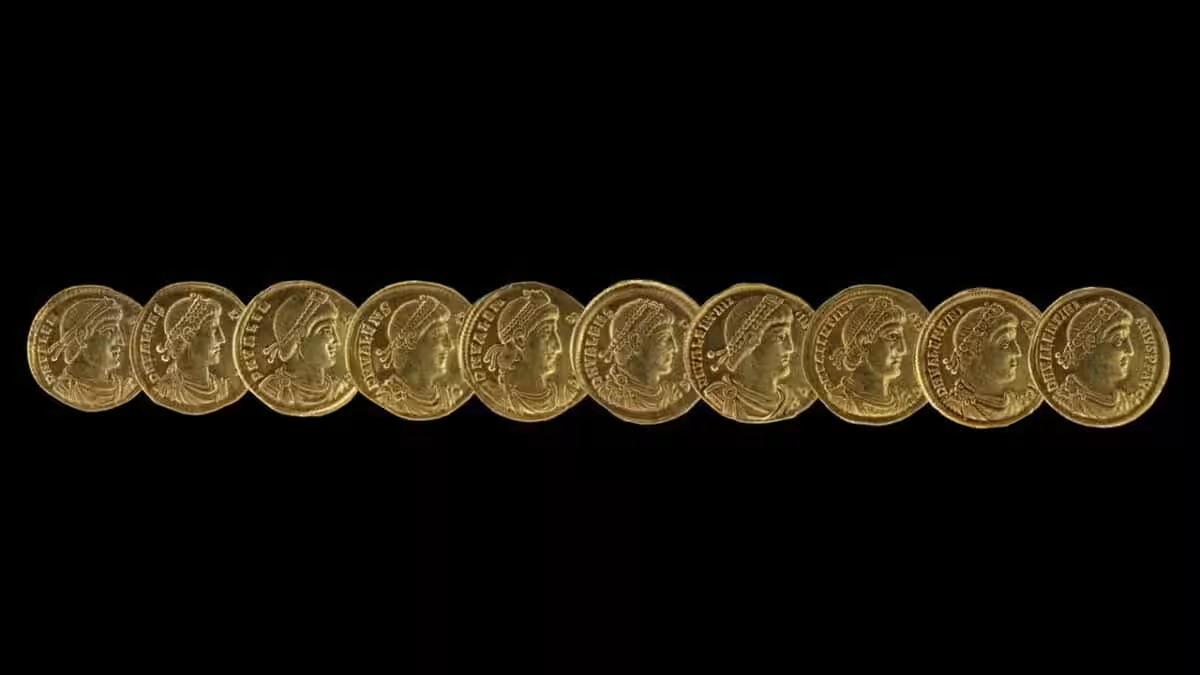
INRA stresses that uncovering a complete coin deposit in its original archaeological setting is exceptionally rare, offering a unique window into why valuables were hidden during periods of instability in Roman history and why such hoards were never reclaimed.
“It will still take some time to process the excavations and finds,” added Eric Thill, Luxembourg’s culture minister, in a separate statement. “But it will undoubtedly increase our knowledge and understanding of the last century of the Roman Empire in the West.”
This article has been fact checked for accuracy, with information verified against reputable sources. Learn more about us and our editorial process.
Last reviewed on .
Article history
- Latest version
Reference(s)
- “Rebecca Usherwood - Department of Classics - Trinity College Dublin.” <https://www.tcd.ie/classics/people/rebecca-usherwood.php>.
- Day, Joel. “Archaeology breakthrough as rare Roman coins worth £258k found in Luxembourg.”, January 25, 2025 Daily Express <https://www.express.co.uk/news/science/2005465/archaeology-breakthrough-roman-coins-luxembourg>.
- “THILL Eric.”, May 16, 2026 <https://gouvernement.lu/en/gouvernement/eric-thill.html>.
- “QP 56858 1733142699668.” <https://wdocs-pub.chd.lu/docs/exped/2024/12/QP_56858_1733142699668.pdf>.
Cite this page:
- Posted by Zara Tariq