Astronomers Locate Asteroid Moving So Fast It Challenges Space Mining Efforts
Science
Astronomers Locate Asteroid Moving So Fast It Challenges Space Mining Efforts
Astronomers have identified an asteroid rotating at such a high speed that traditional mining methods might prove ineffective, underscoring the disparity between space rocks that are easily reachable and those that are practically exploitable.
By Zara Tariq
Published:
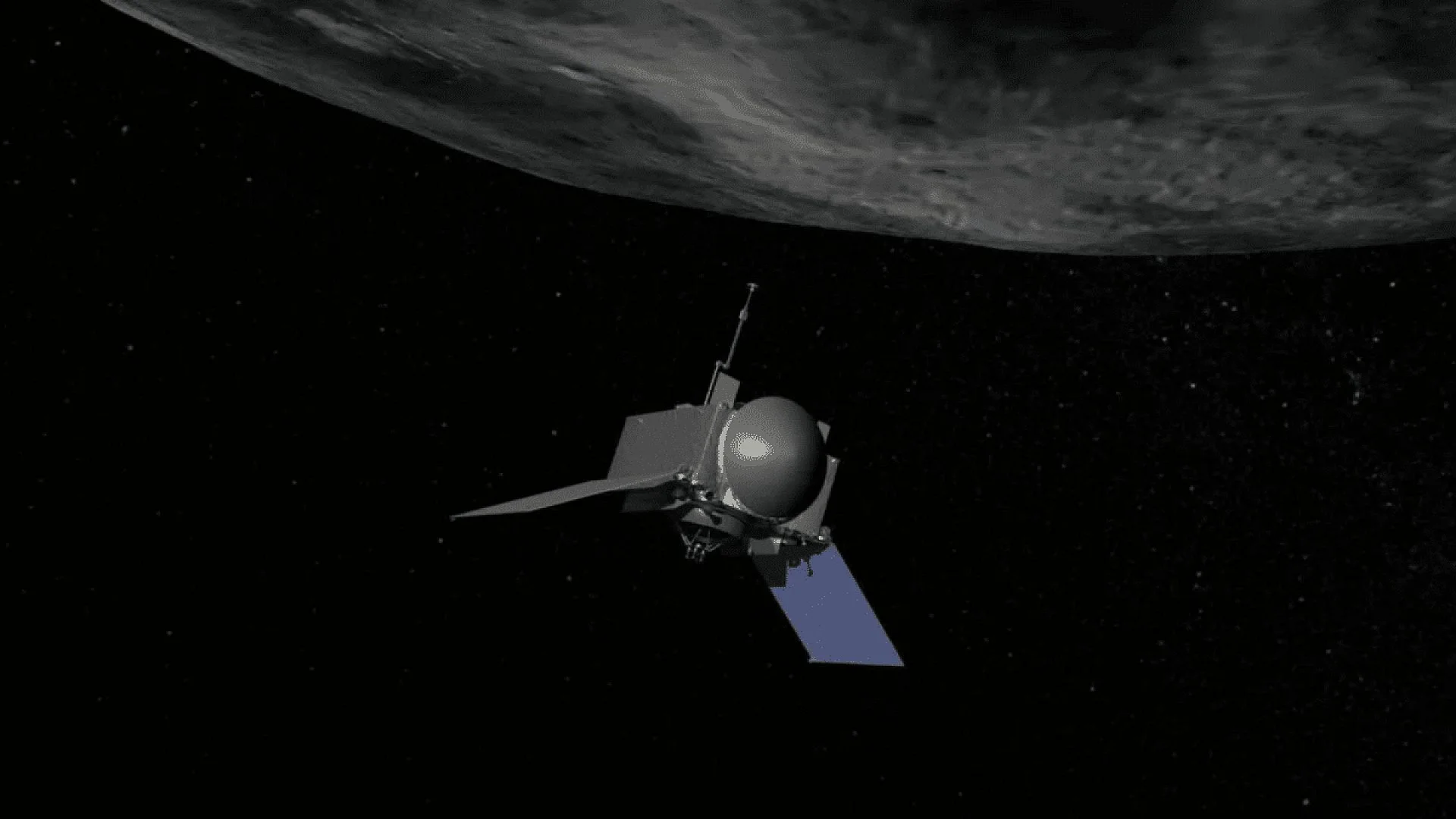
A newly discovered asteroid, 2022 OB5, has presented an unexpected challenge for asteroid miners. The asteroid’s rapid rotation, occurring once every 1.542 minutes, makes it one of the fastest-spinning small asteroids ever recorded. According to a study published in Icarus, this extreme rotation highlights the growing gap between celestial objects that are theoretically accessible and those that are practically exploitable. For companies aiming to harvest metals from space, the findings underscore the complexity of asteroid mining.
The Mission That Almost Reached The Asteroid
A leading private space mining company, AstroForge, selected 2022 OB5 for its Odin Mission, a 100 kg satellite designed to assess the asteroid’s metallic content. Launched aboard a Falcon 9 in February 2025, Odin encountered difficulties and was eventually declared lost. Despite this setback, the allure of 2022 OB5 persisted due to its low delta-v and potential as a metal-rich target.Uncovering The Asteroid’s Rapid Spin
Researchers utilized the HiPERCAM instrument at the Gran Telescopio Canarias in La Palma, Spain, to study 2022 OB5 remotely. HiPERCAM’s ability to capture simultaneous images across five optical bands allowed scientists to avoid biases caused by the asteroid’s rapid rotation. Observations confirmed that 2022 OB5 completes a rotation every 1.542 minutes, classifying it as an ultra-fast rotator. The results indicate that any spacecraft attempting to land or extract material would face centrifugal forces nearly 100 times stronger than the asteroid’s gravity, effectively flinging loose material and making conventional mining extremely hazardous.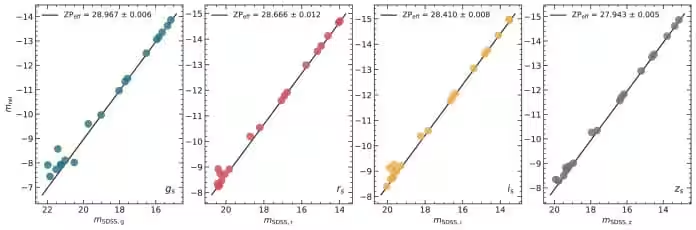
Credit: Icarus
Challenges For Asteroid Mining Companies
The fast rotation of 2022 OB5 presents a significant engineering challenge. Traditional landing or anchoring systems could fail, similar to what occurred with Rosetta’s Philae Lander on comet 67P/Churyumov-Gerasimenko in 2014, which bounced multiple times due to anchoring issues. Companies like AstroForge now must develop advanced station-keeping technologies or reconsider which asteroids are viable for extraction. Missions such as Deepspace-2, planned to target metallic asteroids later this year, are likely to incorporate these lessons, emphasizing precision and safety in future operations.
Credit: Icarus
Potential Value And Composition
Despite the rotation hurdle, 2022 OB5 remains of high interest because it belongs to the X-Complex taxonomy group, which can include iron-nickel-rich metallic asteroids. The latest study in Icarussuggests that some rubble-pile asteroids of similar size and spin might remain intact due to van der Waals forces between surface regolith grains. This insight provides hope that, while physically challenging, mining 2022 OB5 may still be possible. However, scientists stress that accessibility does not guarantee exploitability, a distinction that companies must recognize to succeed in space resource extraction.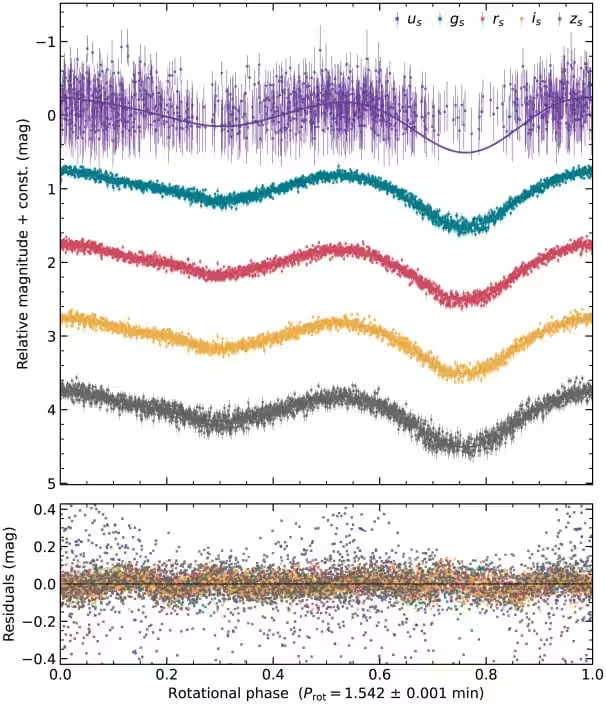
Credit: Icarus
Redefining The Space Mining Frontier
The discovery of 2022 OB5’s extreme rotation serves as a wake-up call for asteroid mining ventures. While technology continues to advance, the realities of fast-spinning small asteroids remind explorers that space is unforgiving. Remote sensing, high-speed imaging, and careful target selection are now more critical than ever, as the line between what is reachable and what can be mined safely becomes clearer. 2022 OB5’s case emphasizes that the next generation of missions will need ingenuity and precision to turn celestial bodies into viable sources of extraterrestrial resources.Fact Checked
This article has been fact checked for accuracy, with information verified against reputable sources. Learn more about us and our editorial process.
Last reviewed on .
Article history
- Latest version
Reference(s)
- Alarcon, M.R.., et al. “Accessible does not mean exploitable: HiPERCAM reveals the ultra-fast rotation of 2022 OB5.” Icarus, vol. 456, September 1, 2026, pp. 117153 Elsevier BV, doi: 10.1016/j.icarus.2026.117153. <https://www.sciencedirect.com/science/article/pii/S0019103526002198?via%3Dihub>.
Cite this page:
- Posted by Zara Tariq
End of the article