Aurora Alert: 23 States May Witness Northern Lights Like Never Before As Sun Erupted With 3 Massive Solar Flares
Geomagnetic storms to light up northern US skies with rare auroras Thursday and Friday
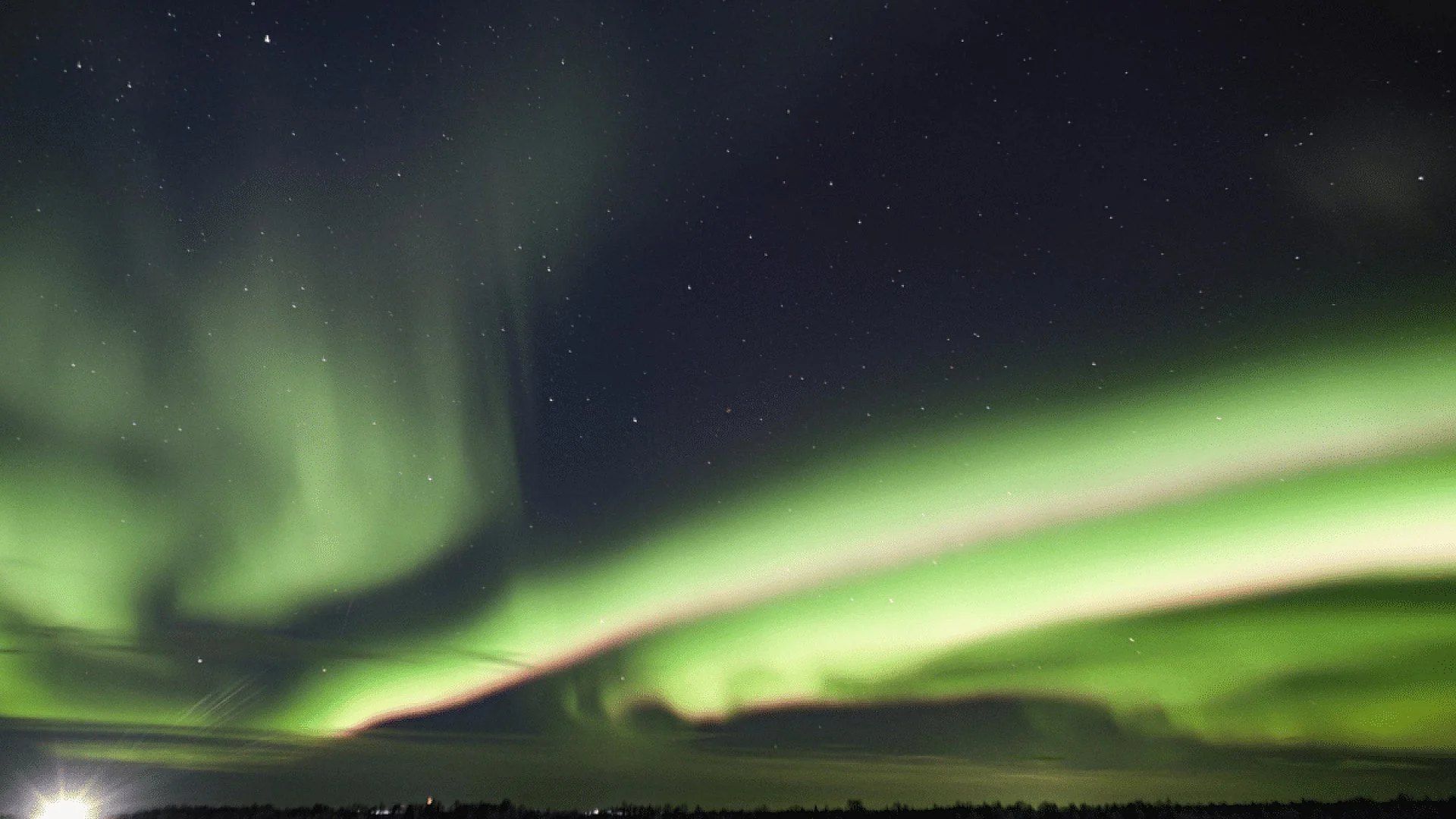
A rare geomagnetic surge could light up the night skies over much of the northern United States on Thursday and Friday, according to the National Oceanic and Atmospheric Administration (NOAA). Space‑weather specialists say the storm may reach G4 intensity, a level uncommon enough to generate vivid auroral curtains far from the polar regions.
Solar Turbulence Converges for a Powerful Storm
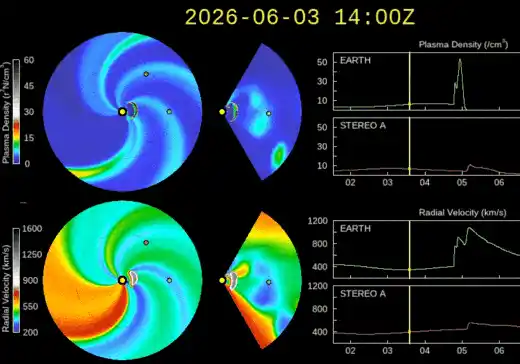
A trio of solar eruptions is set to slam Earth nearly together. On May 30 a coronal mass ejection (CME) erupted from the Sun, followed by a co‑rotating interaction region where fast solar wind overtakes slower streams, and a high‑speed stream streaming out of a coronal hole. The combined impact is expected to intensify the planet’s magnetic field dramatically.
The activity escalated on June 3 when an unexpected sunspot unleashed a series of X‑class flares, triggering additional CMEs that space‑weather monitors predict could arrive by June 5. Details of the flares and their associated ejections are tracked by SpaceWeather.com, which notes the overlapping events raise the odds of auroras being seen well below their usual latitudes.
Mid‑Latitude States Could Witness the Lights
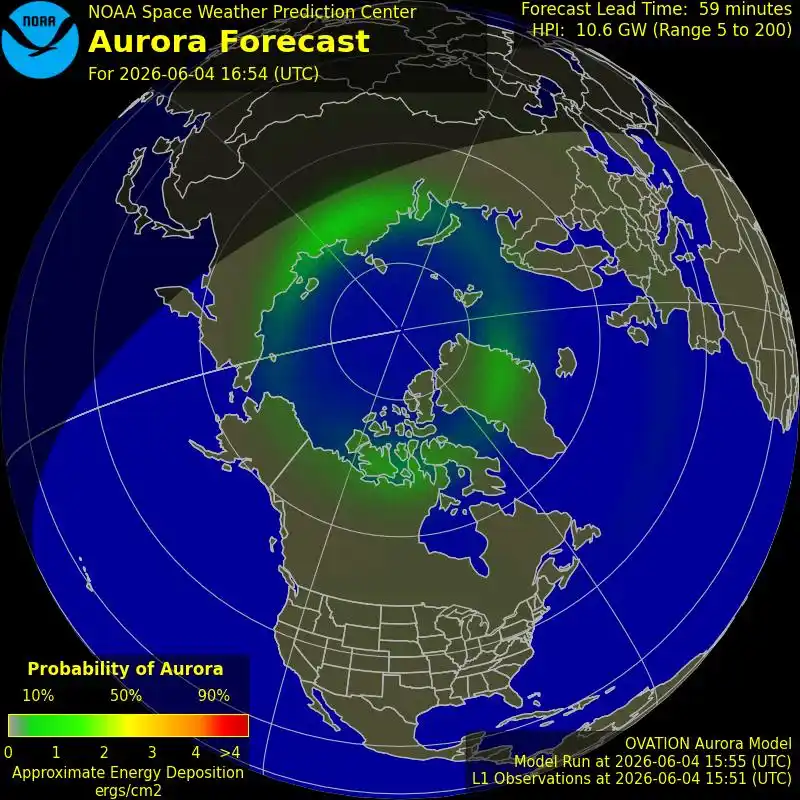
Should the forecasted G4 geomagnetic storm materialize, residents of northern Washington, Idaho, Montana, Wyoming, North Dakota, South Dakota, Minnesota, Wisconsin, Michigan, New York and Maine may see the aurora along the northern horizon. Even more southerly locations—including Oregon, Nebraska, Iowa, Illinois, Indiana, Ohio, Pennsylvania, Massachusetts, Connecticut, Rhode Island, Vermont and New Hampshire—might catch fleeting glimmers if conditions peak.
The Kp index is projected to climb to 8, a value that typically signals severe geomagnetic disturbance capable of producing bright displays at mid‑latitudes.
How Solar Storms Spark Aurorae
When charged particles from the Sun encounter Earth’s magnetic shield, they can trigger geomagnetic storms. A key factor is the interplanetary magnetic field (IMF) carried by the solar wind; if its north‑south component (Bz) turns southward, energy couples more efficiently with Earth’s magnetosphere, igniting rapid auroral activity. A sustained southward Bz of minus 5 nanotesla or stronger usually precedes visible auroras.
NOAA’s DSCOVR spacecraft, positioned about a million miles from Earth, measures solar‑wind speed and magnetic strength, enabling forecasters to issue short‑term alerts. Even with these observations, the warning window often shrinks to roughly thirty minutes before peak conditions, making precise timing essential for observers.
Viewing Tips as Summer Approaches
The aurora coincides with the June solstice, when nightfall is brief and twilight can dominate the evening sky. Limited darkness makes it harder to spot the lights unless the geomagnetic storm is particularly strong. Enthusiasts are encouraged to find dark sites away from city lights, keep an eye on live solar‑wind data, and stay flexible, as auroral bursts can appear suddenly and last only a few minutes.
Despite the short windows of darkness, the convergence of multiple solar disturbances and the prospect of a G4‑level storm offer a rare chance for residents far from the poles to experience one of nature’s most striking light shows.
This article has been fact checked for accuracy, with information verified against reputable sources. Learn more about us and our editorial process.
Last reviewed on .
Article history
- Latest version
Reference(s)
- “SpaceWeather.com -- News and information about meteor showers, solar flares, auroras, and near-Earth asteroids.” <https://www.spaceweather.com/>.
- “Aurora - 30 Minute Forecast | NOAA / NWS Space Weather Prediction Center.” <https://www.swpc.noaa.gov/products/aurora-30-minute-forecast>.
Cite this page:
- Posted by Zara Tariq