Construction Crews Digging a Swedish Tunnel Uncover Six Shipwrecks Lost Beneath the City
Arqueólogos descobrem seis naufrágios medievais escondidos sob um canteiro de obras sueco
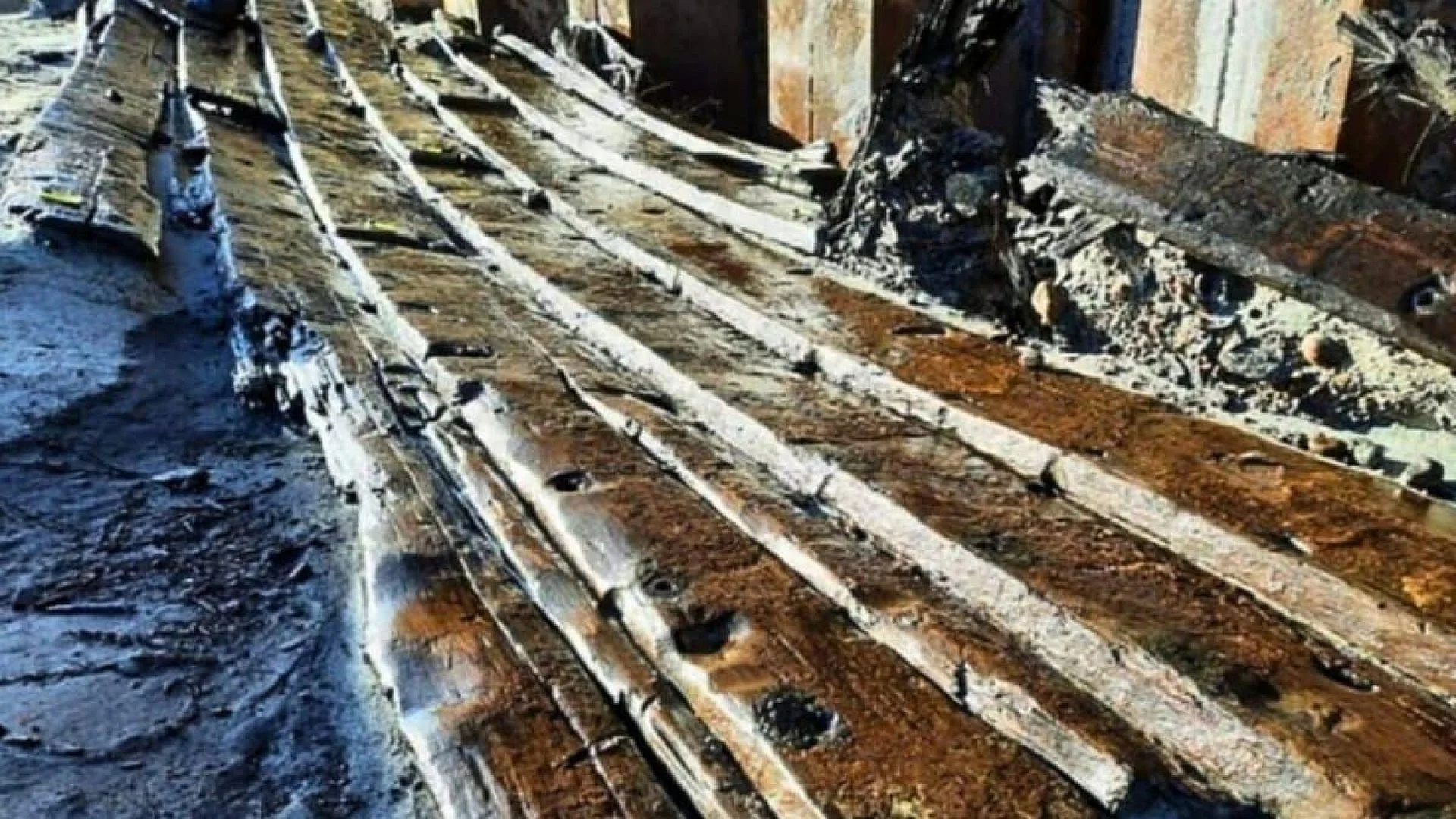
Excavations beneath central Varberg uncovered wooden hull fragments where railway work cut through what once was shoreline, harbor floor and roadstead. The ongoing archaeological study of the Varberg shipwrecks has now identified remains from six different vessels in Halland, Sweden. According to Arkeologerna, four of the ships belong to the medieval or late‑medieval era, one dates to the 1600s, and one remains undated.
The finds emerged from a dig that started in 2019 as part of the Varberg Tunnel project, a major undertaking by the Swedish Transport Administration in the city centre. The construction opened a rare window onto the original shoreline and harbor basin, allowing archaeologists to investigate a buried maritime landscape where vessels from several centuries have been preserved together.
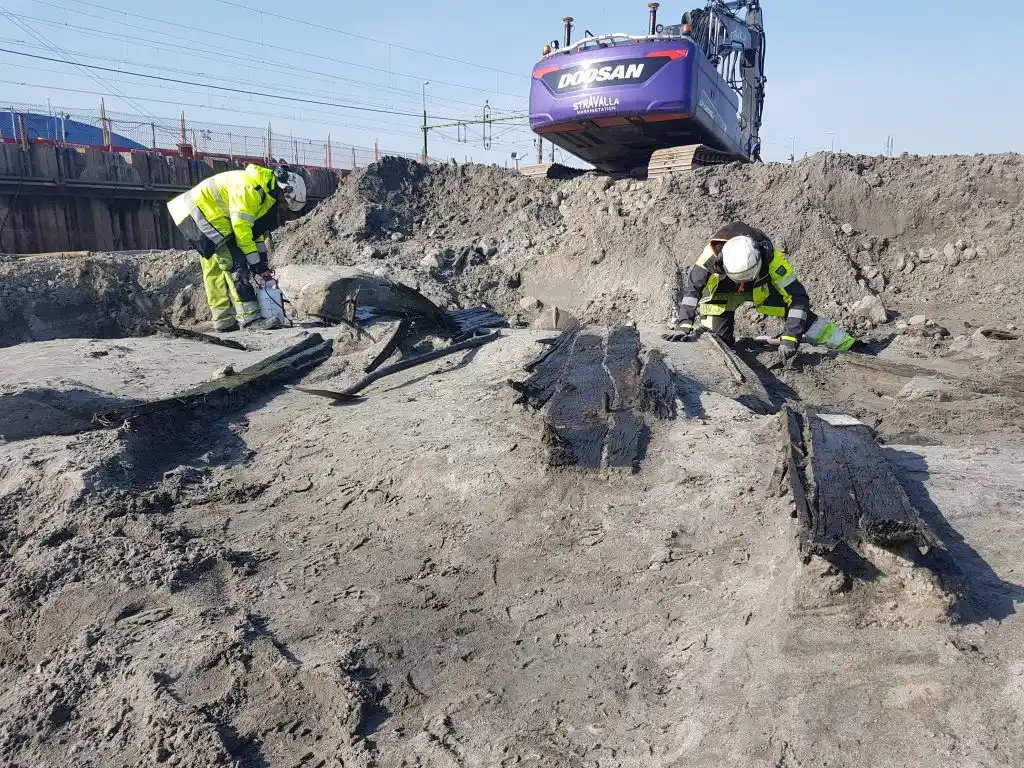
During the winter and spring of 2022, teams from Arkeologerna, the Bohusläns Museum, Visuell arkeologi and Kulturmiljö Halland focused on three of the ship remains—designated wrecks 2, 5 and 6. Their work offers a detailed glimpse of Swedish archaeology where historic harbor activity, shipbuilding and modern infrastructure intersect beneath the ground.
A Cluster of Ship Remains Unearthed Beneath Former Harbor
The six vessels are represented by fragments rather than complete hulls, and their preservation varies widely. Project leader Elisabet Schager noted that wreck 2 is the most intact of the three detailed in the recent report, being the only one with a continuous construction segment. By contrast, wreck 5 yielded only scant material and was recovered swiftly, while wreck 6 was discovered in a time‑sensitive zone alongside a broader survey of medieval cogs.
Such uneven preservation turns the site into a valuable laboratory for studying medieval shipwrecks. Instead of a single intact boat, archaeologists have recovered a mix of hull sections, scattered timbers, a keel and other construction details that can reveal building techniques and the types of waters these vessels navigated.
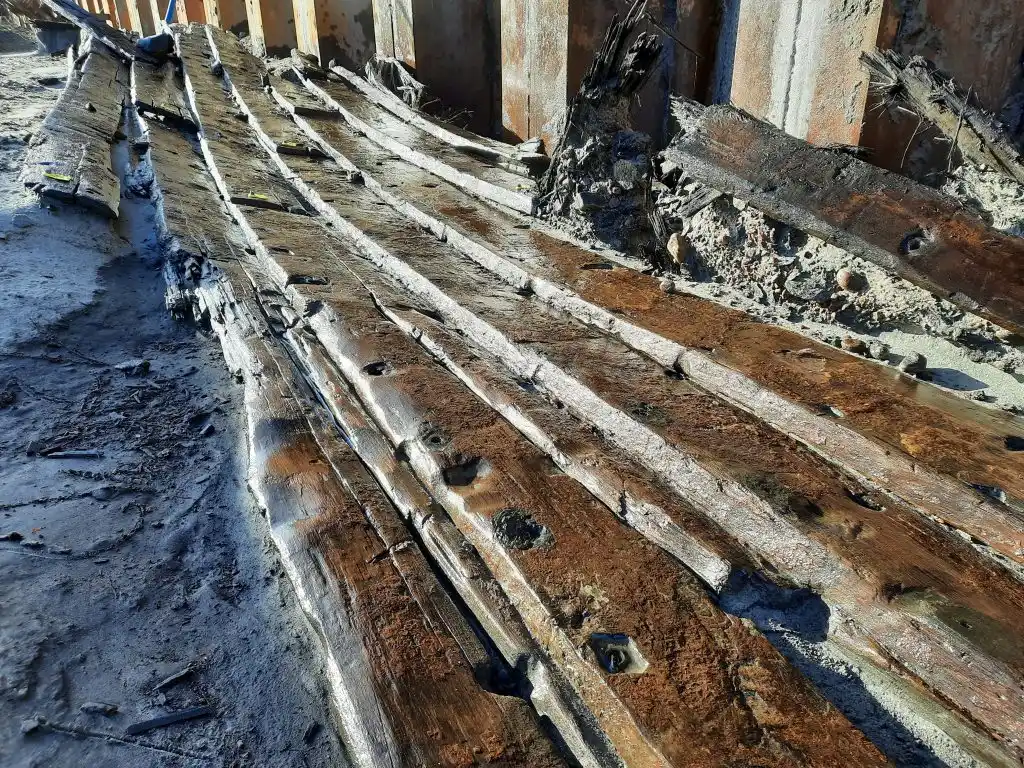
Schager explained that discoveries of historic ship remains are becoming more common along Sweden’s west coast, as large‑scale infrastructure projects often cut through former waterways and harbor districts from the Middle Ages and early modern era. The Varberg tunnel excavation opened one of these buried seascapes, yielding not a solitary find but a collection of vessels linked to the city’s earlier waterfront.
Wreck 2 Reveals a Mid‑16th‑Century Oak Vessel
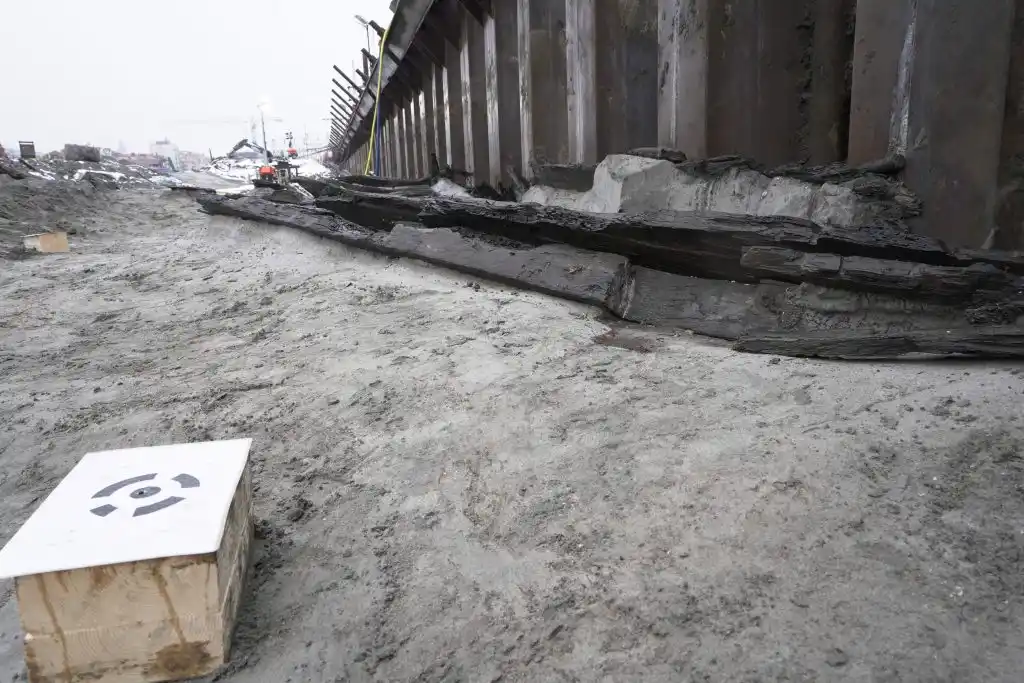
Wreck 2 is identified as the remains of an oak sailing ship constructed in the latter half of the 1530s. The first timbers were uncovered in 2021 during a night‑time excavation when a contractor was installing sheet piling for the railway. Because no archaeologist was present, the contractor lifted the timbers and set them aside for experts to examine the following day.
The material recovered from wreck 2 includes two hull sections from the starboard side and a scatter of timbers. Arkeologerna believes the rest of the hull still lies on the opposite side of the sheet pile. The ship was built using a clinker technique—overlapping planks—a hallmark of northern European boatbuilding traditions.
One of the hull sections bears a berghult attached to the exterior of the planking. Arkeologerna describes this as a reinforcing rubbing strake that would shield the hull when the vessel was alongside a quay and could also support upper structures. A cutout on the upper side of the berghult suggests it served a supportive role, indicating the ship was likely fully or partially decked.
Construction Techniques Vary Across the Finds
The berghult on wreck 2 also shows traces of fire, though the report does not specify the cause. While this does not confirm a particular incident, it adds another physical clue to the ship’s final moments before burial. Arkeologerna notes that the timbers from wrecks 2 and 5 originate from Halland or western Swedish oak forests, and that the vessels operated in waters beyond the medieval towns of Varberg and New Varberg.
Wreck 5 shares the clinker construction but dates to the 1600s based on dendrochronological analysis. Only a small portion survived, so it was removed quickly, yet it extends the documented record of the Varberg waterfront from the late medieval period into the early modern era.
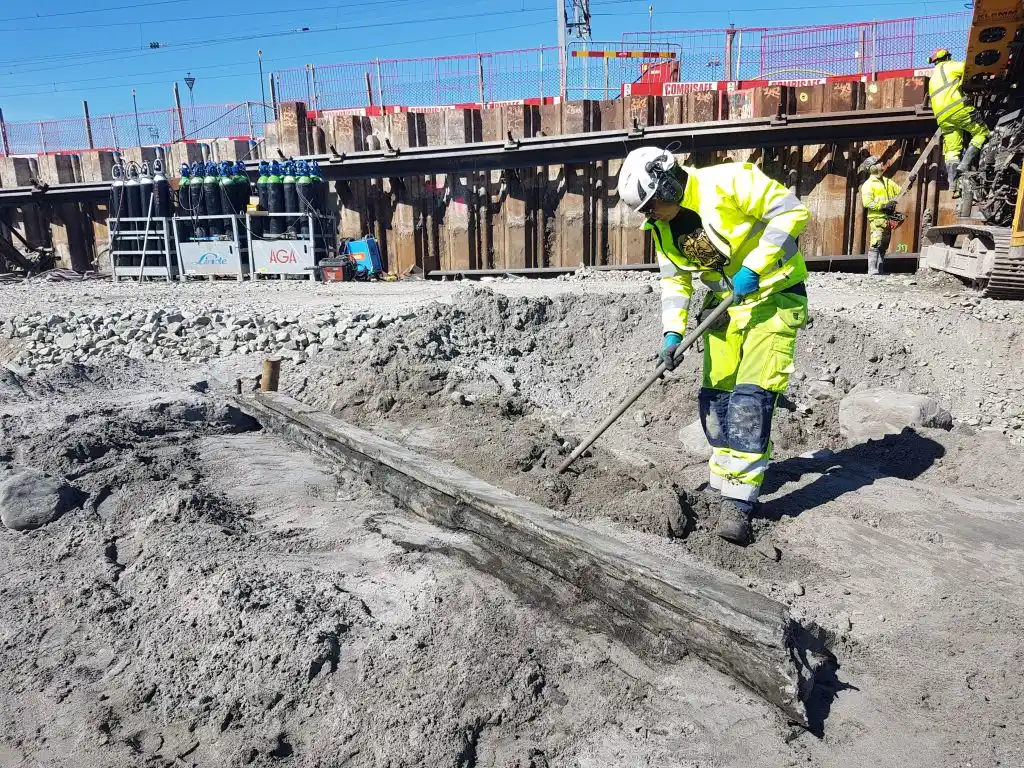
Wreck 6, by contrast, exemplifies a carvel‑built sailing vessel—planks were fitted edge to edge against the frame. It is the only one of the three with a preserved keel, described as a rabbeted keel featuring a groove to receive the first strake of planking.
Dutch Design Elements Detected in One Keel
Analysis of wreck 6 revealed construction features associated with Dutch shipbuilding traditions. However, dendrochronology could not pinpoint the timber’s origin or felling date, leading researchers to conclude that while the vessel exhibits Dutch‑inspired techniques, its wood supply remains uncertain.
Arkeologerna also highlighted that berghults are most frequently linked to carvel‑built ships, though they appear on clinker vessels as well. The team compared the berghult from wreck 2 with examples from the Osmund wreck in the Stockholm archipelago and the Riddarholm ship in Stockholm. The Osmund wreck, a clinker‑built pine vessel from the 1540s, and the Riddarholm ship, a clinker‑built oak vessel with trees felled between 1516 and 1524, provided useful analogues.
Research continues on the remaining finds, with Schager indicating that analyses of Varberg wrecks 3 and 4—identified as 14th‑century cogs—are underway. To date, fragments from six ships have been documented during the excavation.
This article has been fact checked for accuracy, with information verified against reputable sources. Learn more about us and our editorial process.
Last reviewed on .
Article history
- Latest version
Reference(s)
- “Flera hundra år gamla båtvrak i Varberg.” <https://arkeologerna.com/bloggar/arkeologi-i-varberg/aldre-batvrak-i-varberg/>.
Cite this page:
- Posted by Zara Tariq