Workers Digging on a Spanish Beach Expected Sand, Instead They Uncovered a Rare 2,000-Year-Old Roman Bust
Un esperto ritrovamento archeologico: una misteriosa testa romana riemerge da una spiaggia spagnola durante i lavori di routine
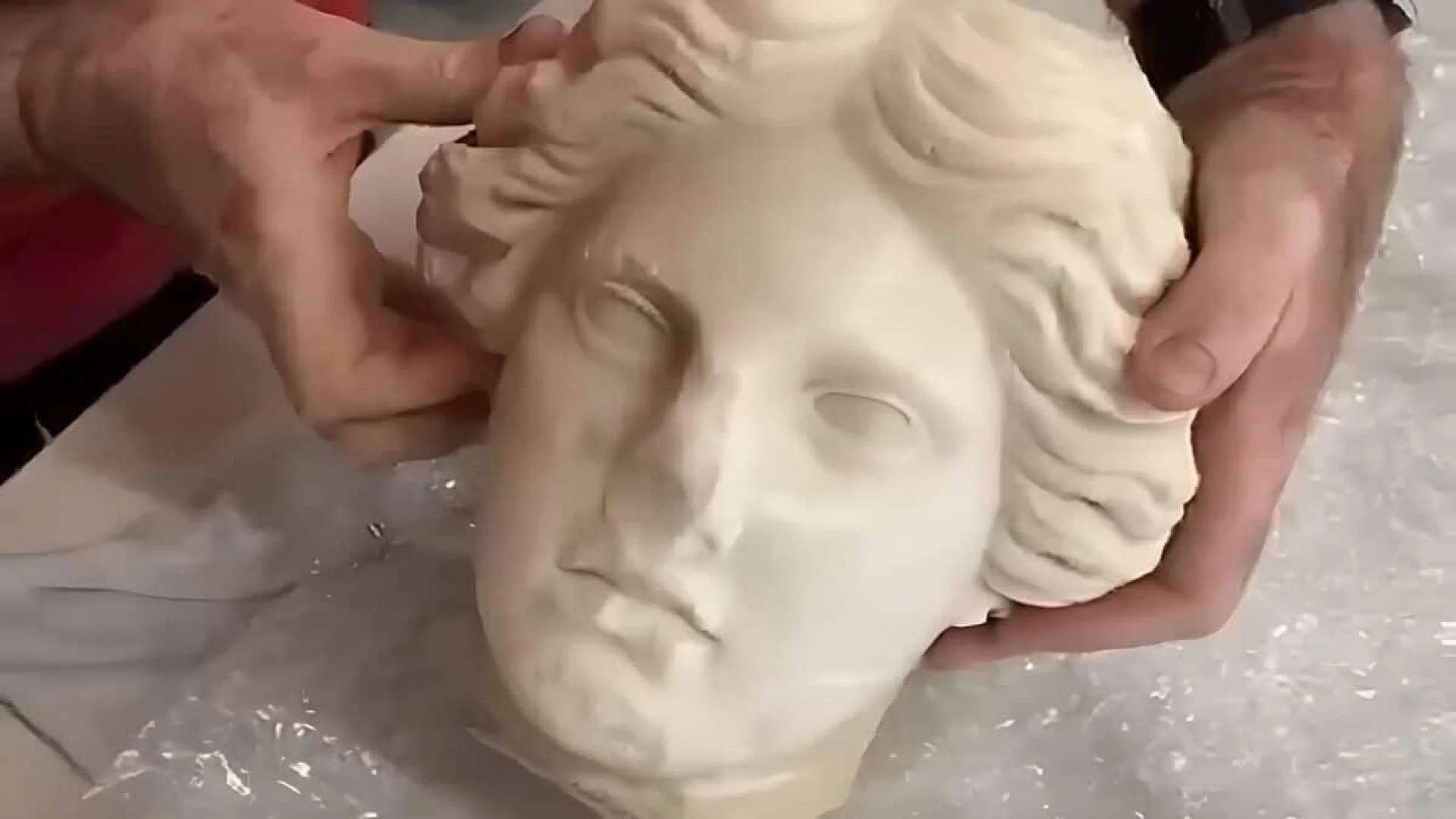
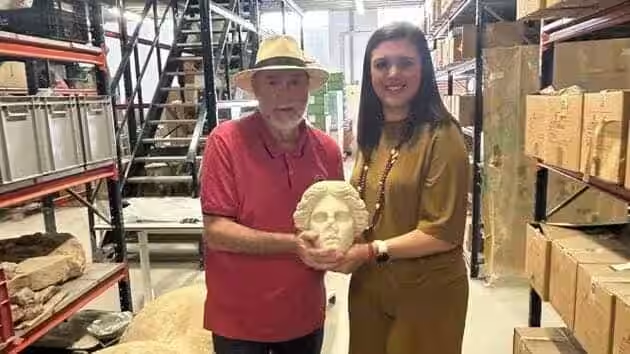
During a sand‑reclamation project on Alicante’s La Almadraba beach, construction crews uncovered a marble Roman bust that dates back roughly two millennia. Officials have called the find one of the most important Roman artefacts ever recorded in the province.
Coastal Work Turns Into Archaeological Surprise
The sculpture emerged while workers were clearing debris and sand. Initial inspection revealed a marble head likely originating from the first or second century AD, rather than the expected rock fragments.
Local heritage authorities described the piece as a “Roman head of great artistic quality and in an excellent state of preservation,” noting both its craftsmanship and the rare condition in which it survived. The discovery prompted an immediate suspension of the beach‑renovation activities while specialists conduct a thorough examination.
Could the Figure Represent Venus?
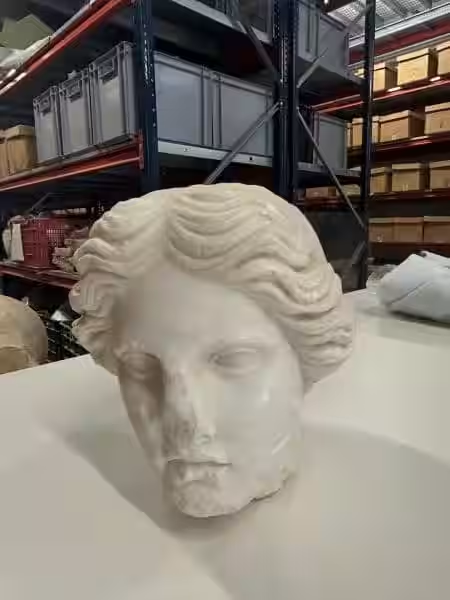
Preliminary analysis suggests the marble head may depict Venus, the Roman goddess of love and beauty, based on stylistic elements such as the hairstyle.
José Manuel Pérez Burgos, head of integral heritage, explained:
the bust displays “a hairstyle of Hellenistic influence, with wavy hair pulled back with a parting in the middle following the idealized model of representations of divinities such as the Greek Aphrodite or the Roman Venus.”
The observation aligns with artistic conventions typical of high‑imperial Roman depictions of female deities. Researchers continue to verify the bust’s age and provenance, noting that many fine details remain visible despite centuries beneath the sand.
A Fresh Chapter in Alicante’s Roman Legacy
The bust adds to a growing list of Roman discoveries near Alicante, including the 2009 uncovering of structures linked to the ancient settlement of Lucentum. Excavations in that area revealed foundations of a maritime villa, along with ceramics and coins that span from the third century BC to the fourth century AD.
Regional cultural authorities also reported that several other artefacts recovered at the La Almadraba site were in remarkably good condition, suggesting the villa may once have belonged to an affluent Roman owner with direct access to the coastline.
This article has been fact checked for accuracy, with information verified against reputable sources. Learn more about us and our editorial process.
Last reviewed on .
Article history
- Latest version
Cite this page:
- Posted by Zara Tariq