A Boy Stumbles Upon a V12 Engine in the Mountains and Uncovers a Forgotten Bomber Crash Hidden in Rocks Since 1951
Ancien moteur V12 découvert en Écosse révèle un mystère de montagne vieux de 75 ans
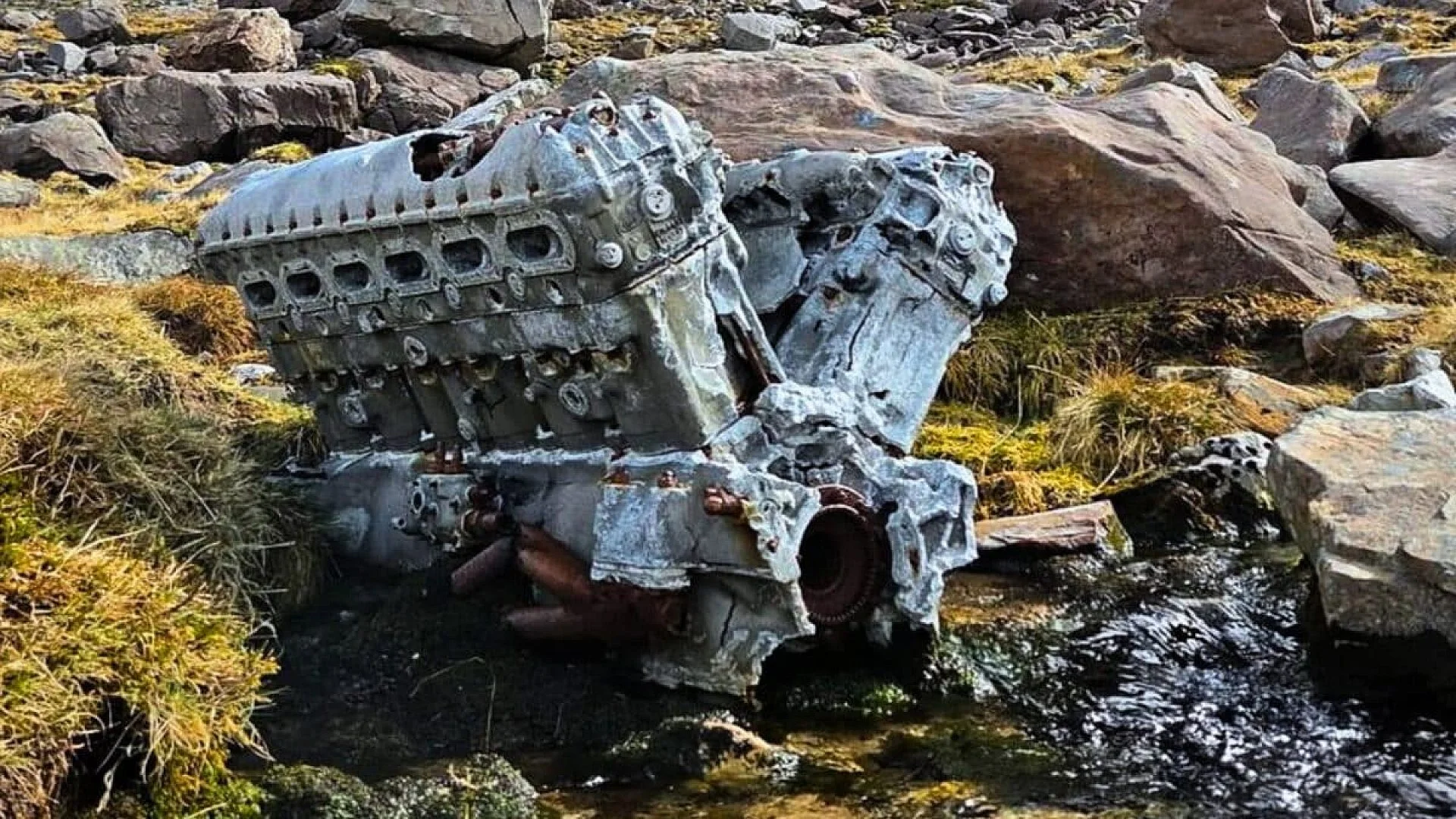
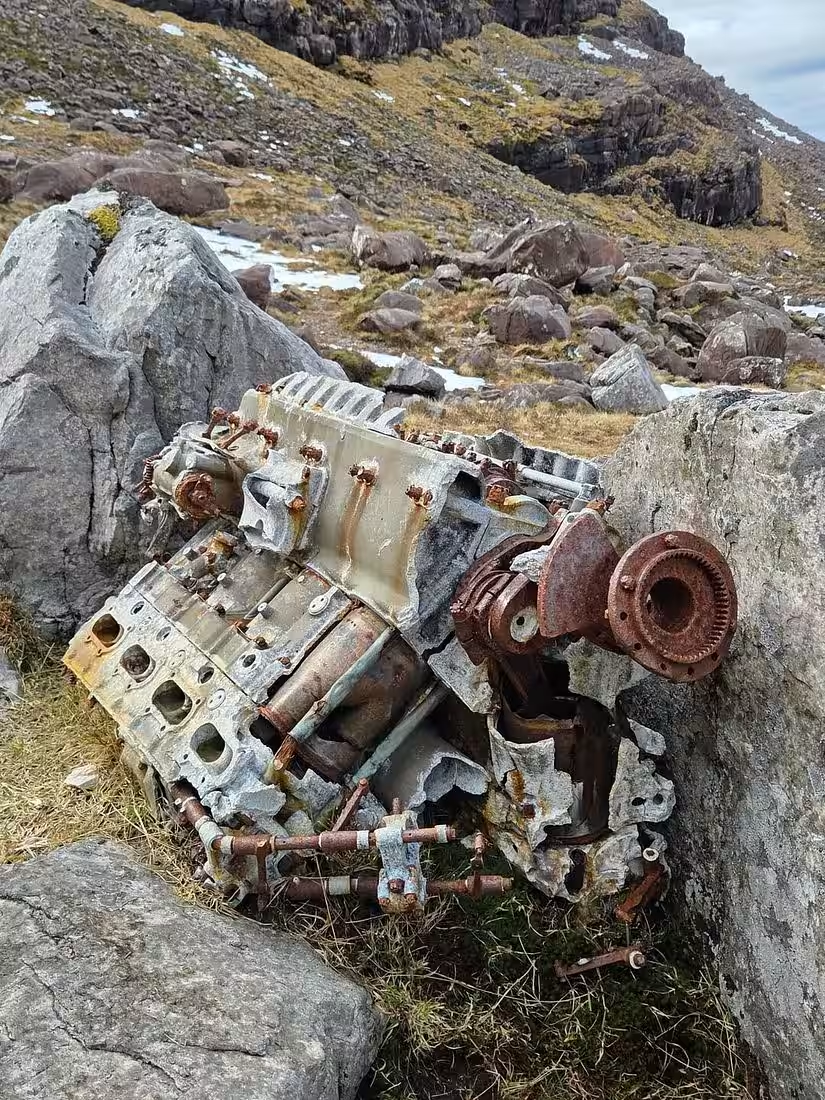
While trekking through the isolated highlands of north‑west Scotland, Mike Fernie came across an unexpected relic: a massive, well‑preserved V12 engine block nestled among rocks and heather at roughly 900 metres elevation. The component turned out to be a Rolls‑Royce Merlin, a World War II aircraft engine that had lain undisturbed on Beinn Eighe for three‑quarters of a century.
The Merlin is famed for powering fighters such as the Supermarine Spitfire and the North American P‑51 Mustang. The particular engine Fernie found, however, originated from an Avro Lancaster G.R. Mk. 3—a maritime patrol and rescue variant of the heavy bomber operated by No. 120 Squadron RAF.
The aircraft, registered TX264, lifted off from RAF Kinloss on the Moray coast on the night of 13 March 1951 with an eight‑person crew on a navigation training sortie. About six and a half hours later the crew reported a position roughly 60 miles north of Cape Wrath, after which all contact was lost, as recorded by the Peak District Air Crashes archive.
Night Flight Ends in Tragic Impact
Details of the early‑morning events on 14 March 1951 remain sparse. Evidence on the mountain points to a single, catastrophic collision: the Lancaster struck the Triple Buttress, a sheer cliff band on the northern face of Beinn Eighe. The impact ignited a fire that consumed the bomber, killing all eight airmen. No distress call was received, and no ground observers reported the crash at the time, leaving the aircraft unaccounted for for several days.
A breakthrough came on 17 March when a witness described a red flash in the Torridon area coinciding with the disappearance. Subsequent aerial searches redirected to the Torridon peaks, eventually revealing the charred wreckage perched high on Beinn Eighe.
Harsh Conditions Hindered Rescue Efforts
Locating the site from the air was only the first hurdle. Rescue parties from the RAF Mountain Rescue Team based at Kinloss faced deep snow, severe weather, and equipment ill‑suited to the rugged terrain. The exposed slopes of Beinn Eighe slowed every approach, delaying ground access until the end of March.
Even after reaching the crash zone, retrieving the crew’s remains proved arduous. The final missing airman was not recovered until August 1951, when thawing snow finally exposed his body.
The ordeal highlighted deficiencies in post‑war rescue capabilities. According to the Peak District Air Crashes archive, the incident spurred a reassessment of equipment and training, ultimately prompting lasting improvements in mountain‑rescue readiness.
Crew Lost in the Crash
- Flight Lieutenant Harry Smith Reid DFC, pilot, 29
- Sergeant Ralph Clucas, co‑pilot, 23
- Flight Lieutenant Robert Strong, navigator, 27
- Flight Sergeant George Farquhar, flight engineer, 29
- Flight Lieutenant Peter Tennison, signaller, 26
- Flight Sergeant James Naismith, signaller, 28
- Sergeant Wilfred Davie Beck, signaller, 19
- Sergeant James Warren Bell, signaller, 25
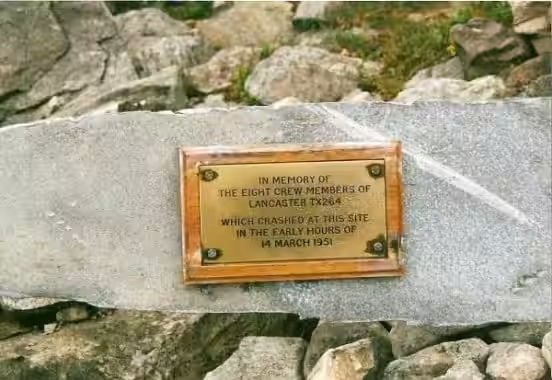
Five of the airmen were interred at Kinloss Abbey in Moray, while the others lie in cemeteries across Aberdeen, Birmingham and Buckie. Two rescuers—Flight Lieutenant Peter Dawes and Senior Aircraftsman Malcolm Brown—received honors (MBE and BEM respectively) for their bravery during the recovery operation.
Remnants Remain on the Mountain
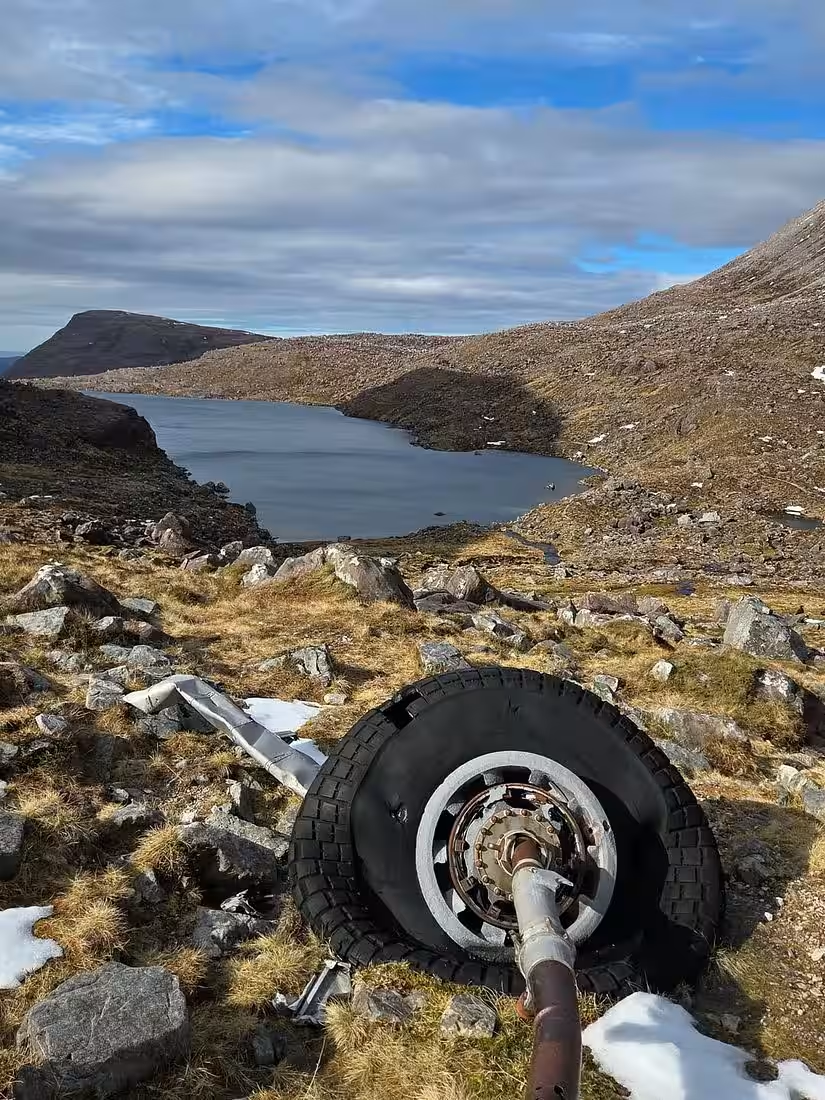
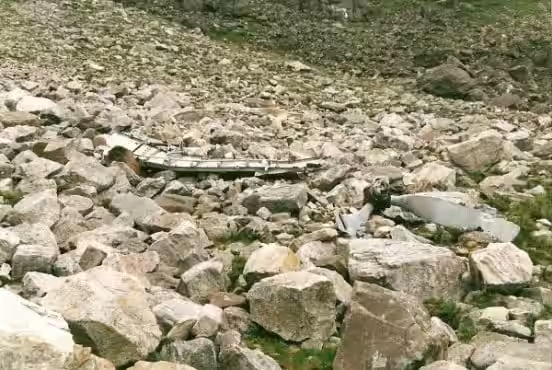
No comprehensive clean‑up ever took place; the crash site’s steepness and isolation made removal impractical. Wreckage still scatters from the impact zone, about 3 000 feet up, down into Coire Mhic Fhearchair, the glacial hollow beneath the cliffs. Among the debris are two engines, sections of landing gear, and countless smaller parts.
The Merlin block Fernie photographed is part of that lingering field of wreckage. The cold, damp Highland climate helped preserve it for decades. Situated within one of Scotland’s most rugged National Nature Reserves, the site is not a managed tourist attraction; reaching it requires a long, demanding trek through uninhabited terrain.
Today, the scattered remains serve as an unintentional memorial to the eight airmen who vanished on that night. Fernie’s discovery of the intact engine block stands as a tangible link to a historic tragedy that unfolded high on a Scottish mountain.
This article has been fact checked for accuracy, with information verified against reputable sources. Learn more about us and our editorial process.
Last reviewed on .
Article history
- Latest version
Reference(s)
- “1951-03-14|Lancaster G.R. Mk.3|TX264|No.120 Sqn, RAF|Beinn Eighe, Wester Ross.”, August 5, 2016 Peak District Air Accident Research <https://www.peakdistrictaircrashes.co.uk/crash_sites/scotland/avro-lancaster-tx264-beinn-eighe/>.
Cite this page:
- Posted by Zara Tariq