Spam Calls Won’t Stop? This One Simple Phrase Could Shut Them Down
That single-word answer might come at a price. Fraudsters are capturing voices, telecom companies are pushing back, and the solution is already built into your device.
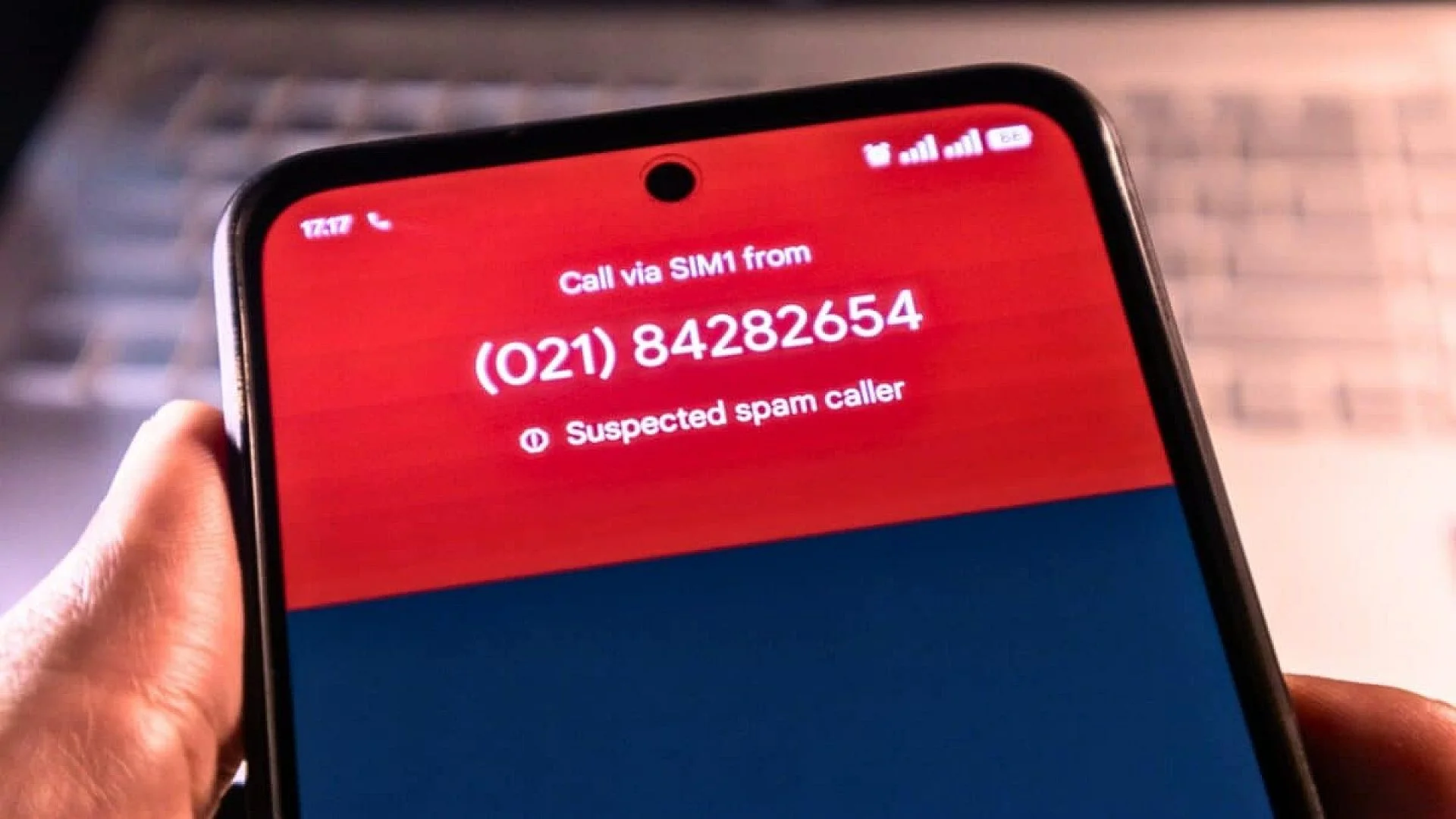
For millions of phone users, spam calls and robocalls have become a daily grind. Some people receive up to 14 unwanted calls a day, despite implementing various defenses. The issue is so widespread that consumer groups have dubbed it an epidemic, and the Federal Communications Commission has identified it as its top consumer complaint.
While some disruptions are merely annoying, others are outright fraud. One of the most common experiences is picking up a call that instantly disconnects, which is neither an accident nor harmless. Call centers rely on predictive dialer systems that ring multiple numbers simultaneously to keep agents busy. If you answer and no agent is available, the machine hangs up. This silence confirms a working line and logs the time someone picked up, which can be sold or used to refine future targeting.
Phone Settings Provide a First Line of Defense
Smartphones already have built-in features that can help reduce unwanted calls. On an iPhone, turning on Silence Unknown Callers stops numbers you’ve never contacted and don’t have saved from ringing. They go straight to voicemail and appear in the recent calls list. To access this feature, go to Settings, then find the toggle under Calls.
Android phones offer a similar feature for private or unidentified numbers, though numbers outside your contacts will still ring. One reader shared a practical workaround: leave the phone on Do Not Disturb but allow interruptions only from saved contacts. Both methods come with the same tradeoff: a doctor’s office or a delivery driver calling from an unfamiliar number may also be silenced.
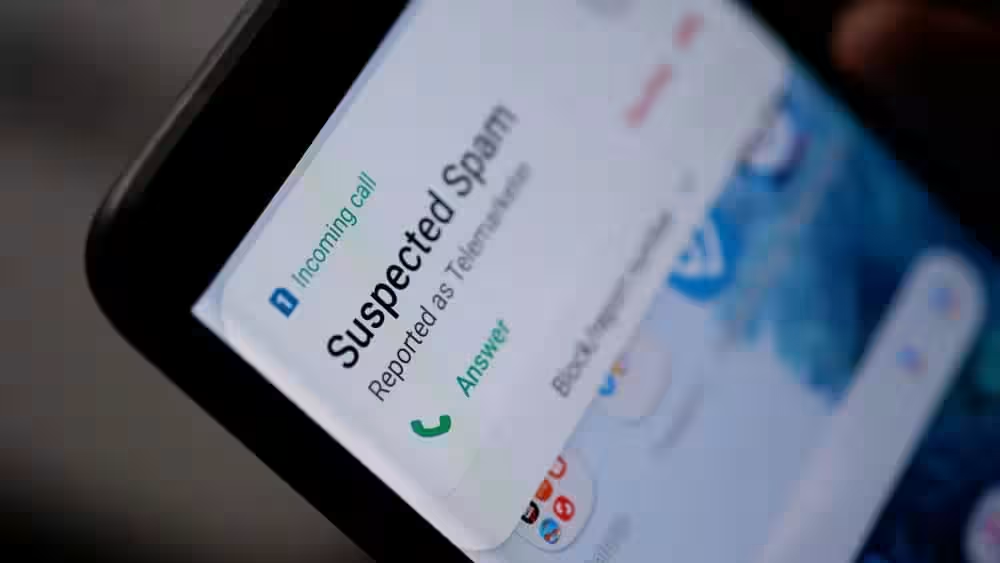
When an unwanted call slips through, iPhone and Android both allow you to block that specific number with a tap from the recent call list. You can also add numbers manually to a block list inside settings.
Carriers and Apps Offer Additional Protection
The major U.S. carriers each provide a filter. Verizon, T-Mobile, and AT&T offer basic call-blocking for free, with advanced options available behind a subscription. The Federal Trade Commission recommends checking what your provider offers.
For more robust filtering, apps such as Nomorobo, YouMail, Hiya, RoboKiller, and TrueCaller compare incoming numbers against databases of known spam. They label calls as spam or telemarketing before you answer. Apple has stated that “incoming calls are never sent to third-party developers.” Many apps charge monthly or annual fees, though some offer a free basic tier. A few can also be installed on VoIP landlines.
The Do Not Call Registry Offers Limited Relief
The National Do Not Call Registry, run by the FTC, is a list that tells legitimate telemarketers to stay away. Registering at DoNotCall.gov should reduce sales calls. The agency notes that the registry stores only phone numbers, no other personal information. Political calls, charity calls, legitimate surveys, and calls from companies you’ve done business with in the last 18 months are exempt.
Scammers ignore the registry entirely. “If you get a robocall, and you haven’t given the caller written permission to call you with robocalls, the call is illegal, period,” the FTC states. Being on the list does not change this.

For businesses you’ve interacted with before, consent often lies in fine print. The National Consumer Law Center notes that you can revoke that consent at any time. A short statement such as “I revoke consent” or a request to remove your number from the company’s records can work, though the Associated Press notes that firms sometimes resume contact using different numbers.
The Best Response Is Often No Response at All
When a robocall or a suspicious number appears on the screen, regulators and cybersecurity experts agree on one move: hang up. Do not press a button. Do not ask to be removed from a list. The FTC warns that pressing numbers “will probably only lead to more robocalls.” Caller ID is trivial to fake, a trick called spoofing. Neighbor spoofing goes further, matching your area code and the first six digits of your number so the call appears local.
Cybersecurity company Kaspersky advises against even speaking. A call that begins “Hello, can you hear me?” is often fishing for a “yes.” The company notes that scammers “can then store the recording of your confirmation and use it for fraudulent activities.”
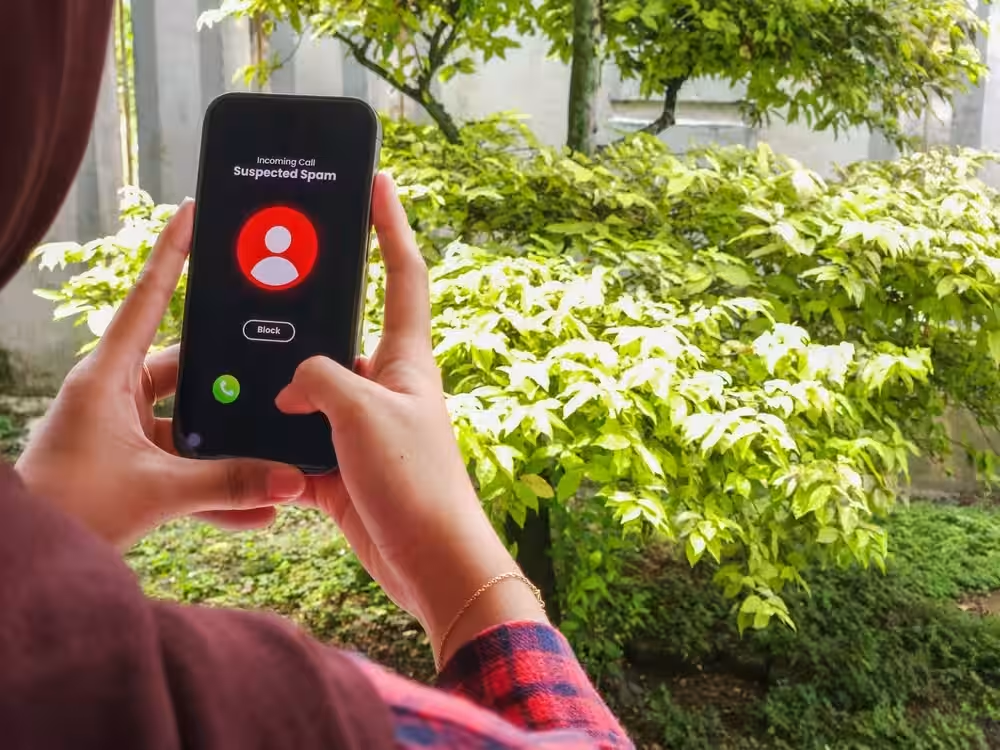
Reports can be filed with the FTC at DoNotCall.gov or, if you lost money, at ReportFraud.ftc.gov. The FCC also takes complaints. The FTC sifts through complaint data and call patterns to identify illegal operators and releases reported numbers each business day to strengthen blocking tools across the industry.
Home phones require a different approach. VoIP services may support built-in filters or third-party apps. A traditional landline can use a physical call-blocking device, a small box attached to the phone that checks incoming calls against scam-number databases or a list you create yourself. This box can stop the ring before it starts.
This article has been fact checked for accuracy, with information verified against reputable sources. Learn more about us and our editorial process.
Last reviewed on .
Article history
- Latest version
Reference(s)
- “How To Block Unwanted Calls.”, January 9, 2026 Consumer Advice <https://consumer.ftc.gov/articles/how-block-unwanted-calls>.
- “Report Fraud.” ReportFraud.ftc.gov <https://reportfraud.ftc.gov/>.
Cite this page:
- Posted by Zara Tariq