Archaeologists Just Unearthed a 1,000-Year-Old Rare Box Hidden for Centuries Beneath an Abandoned Church
Centuries of obscurity shrouded this extraordinary ancient box beneath the remnants of a forgotten church, sparking intense curiosity among archaeologists.
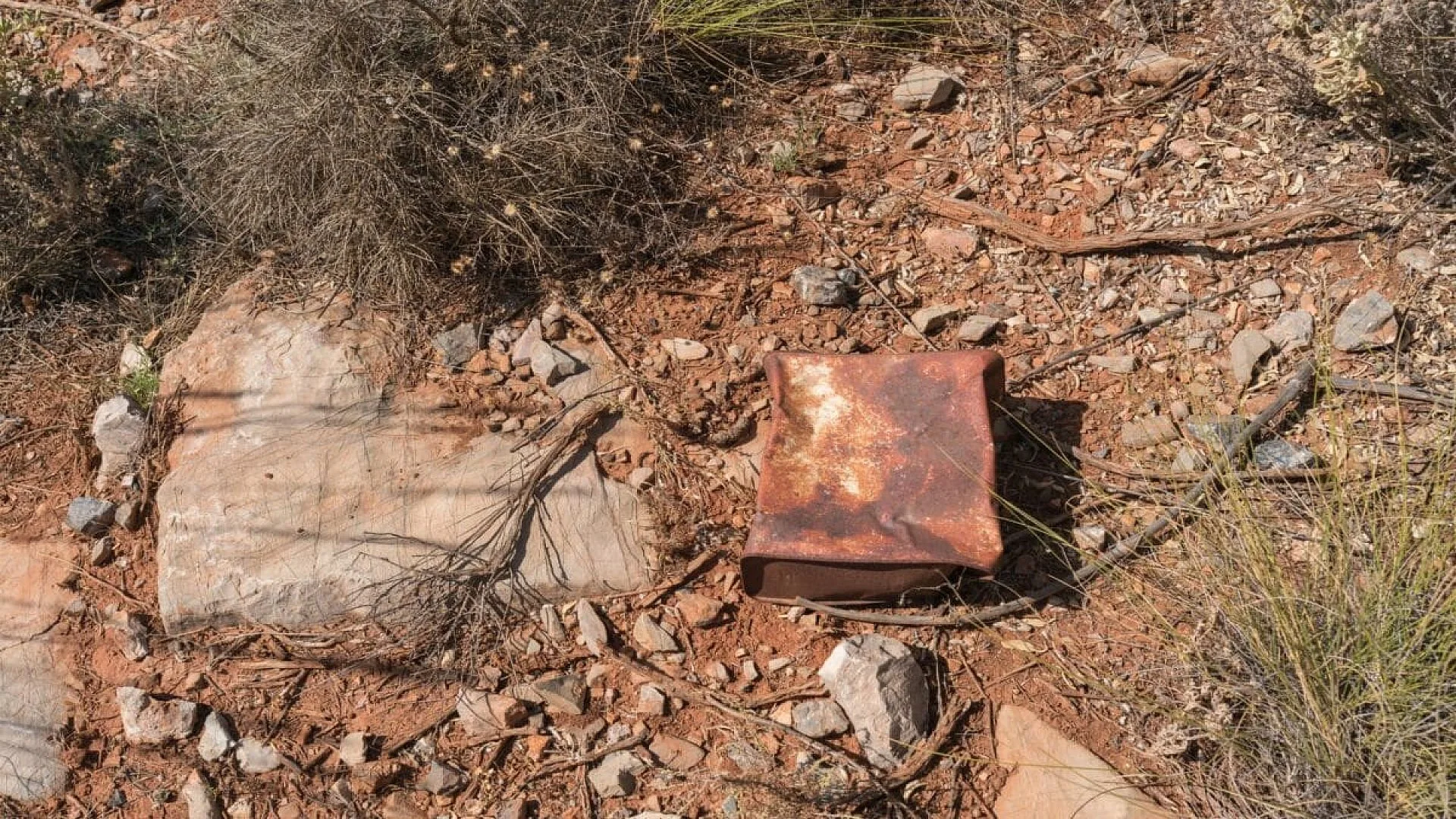
Archaeologists excavating the ancient ruins of a historic church in Austria have unearthed a remarkable relic hidden beneath the altar, a discovery that could shed new light on early Christian worship and the preservation of sacred artifacts. The object, a rare pyx, was discovered in fragments within a marble shrine and is considered an exceptional find.
The excavation, which began in 2016 at a hilltop site in the municipality of Irschen, has been a long and painstaking process. University of Innsbruck researchers reported that they had previously discovered the marble container beneath the remains of the church altar, where it had lain undisturbed for centuries.
What surprised the team most was that the pyx had remained intact. Typically, reliquary boxes like this one were removed when churches were abandoned, but in this case, the pyx had been left behind. Excavation leader Gerald Grabherr explained that only a handful of ivory pyxes of this kind exist worldwide, and very few have ever been recovered during archaeological digs.
A Fragile Ivory Relic Box
The marble shrine measured approximately 20 by 30 centimeters and contained broken fragments of the ivory box, along with metal components and wooden parts. Time underground had taken its toll on the object, leaving it badly damaged.
Restoration specialist Ulrike Töchterle explained that ivory is highly susceptible to moisture, becoming soft and fragile over time. Some larger fragments had even warped, making it impossible to physically rebuild the pyx in its entirety.
“Due to the extremely high humidity of 90 per cent in the marble shrine immediately after salvage, the risk of condensation and mould formation was very high, and the contents could not be allowed to dry out too quickly. This meant we had to ensure a very careful and prolonged drying process,” she explained.
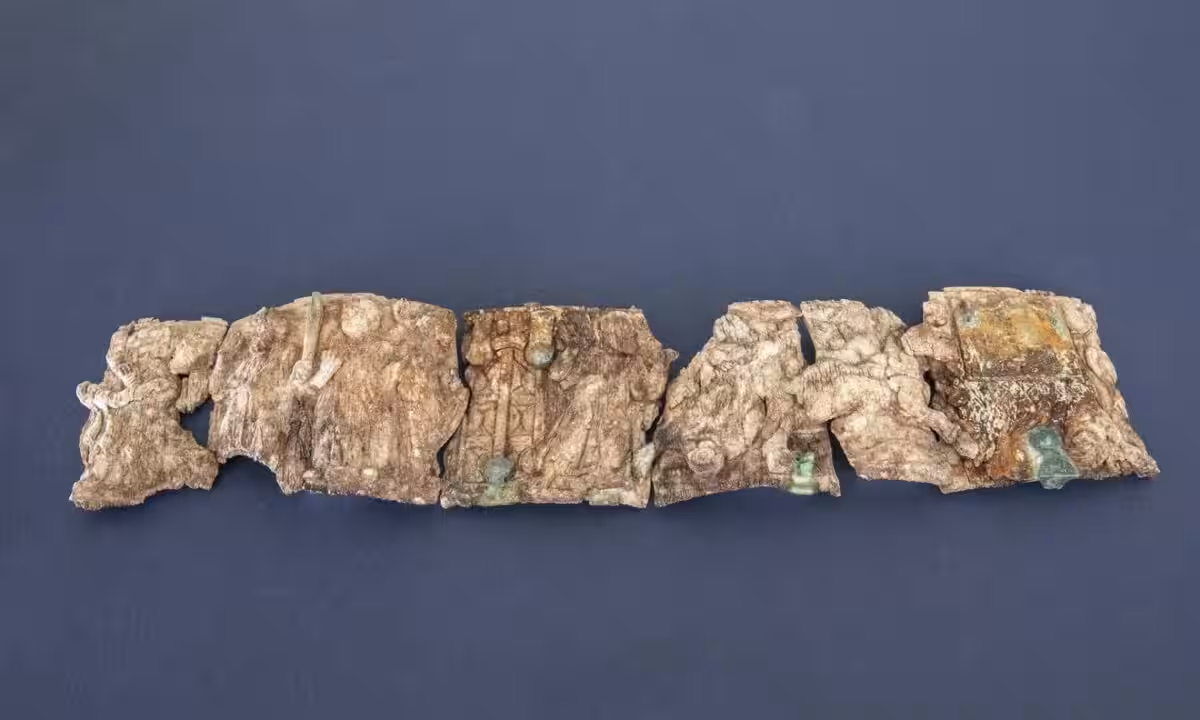
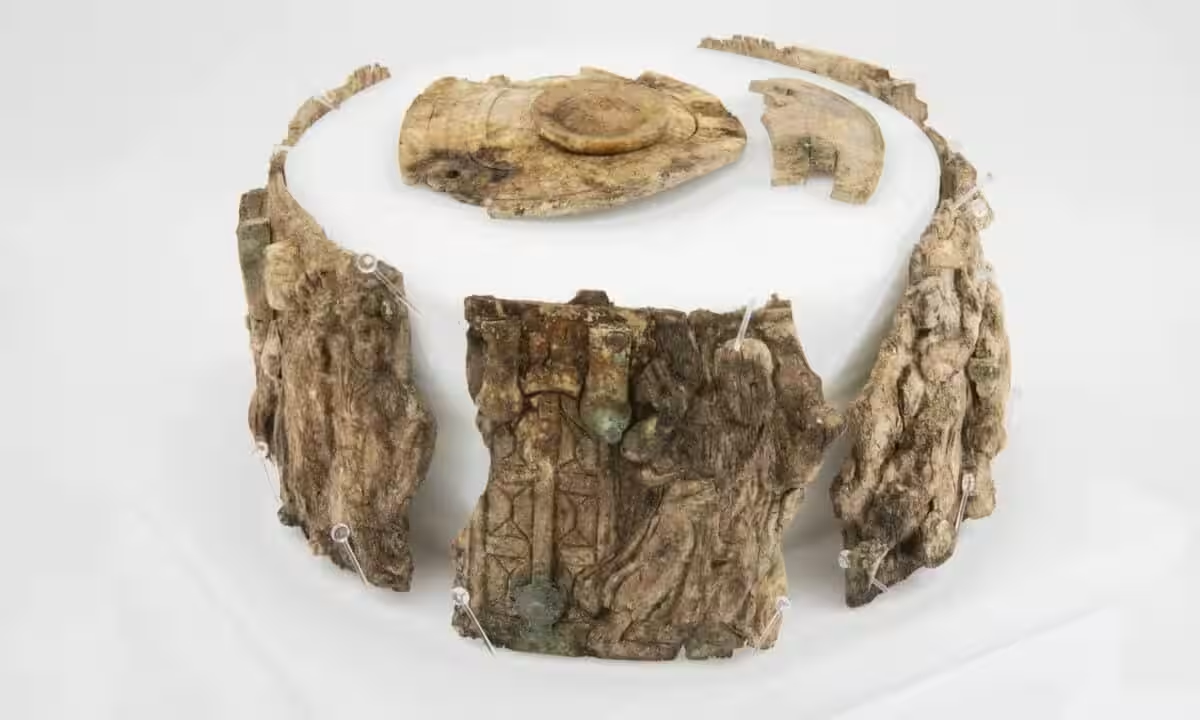
Instead of attempting to rebuild the pyx, the team is developing a 3D reconstruction to better understand its original appearance. This work began after a lengthy drying process aimed at stabilizing the ivory and limiting further deterioration. In a statement shared by the University of Innsbruck, Grabherr noted that:
“As far as I know, the last time one of these was found during excavations was around 100 years ago – the few pyxes that exist are either preserved in cathedral treasures or exhibited in museums.”
Unusual Biblical Imagery
As researchers examined the intricate carvings adorning the pyx, they identified scenes linking the Old Testament with the New Testament. One image appears to depict Moses receiving divine law on Mount Sinai, symbolized by a hand descending from the sky.
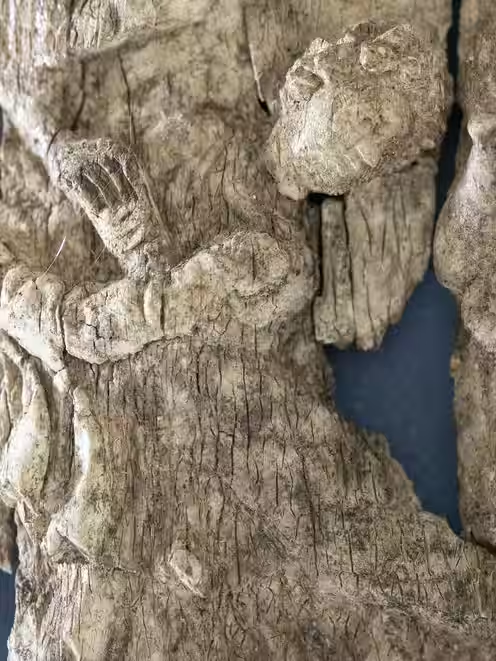
Several other biblical figures appear across the ivory panels before the artwork ends with a far more unusual scene. The final carving shows a man riding in a two-horse chariot while a hand emerging from the clouds pulls the vehicle upward toward heaven.
The research team believes the scene represents the Ascension of Christ. Grabherr noted that:
“The depiction of scenes from the Old Testament and their connection with scenes from the New Testament is typical of late antiquity and thus fits in with our pyx.” He added that: “However, the depiction of the Ascension of Christ with a so-called biga, a two-horse chariot, is very special and previously unknown.”
The Mystery of the Box Contents
The discovery has opened several ongoing investigations. Scientists are now analyzing the marble, the ivory, the metal hinges, and traces of glue used during the construction of the pyx.
Töchterle explained that stable isotope analyses could help determine where the ivory originated and possibly identify the elephant from which it came. Researchers are also examining the fragments of wood discovered alongside the reliquary.
The team suspects the wood may have belonged to the pyx’s original clasp mechanism. At the same time, archaeologists have not ruled out another possibility: the wood itself may have been the relic once stored inside the box.
This article has been fact checked for accuracy, with information verified against reputable sources. Learn more about us and our editorial process.
Last reviewed on .
Article history
- Latest version
Reference(s)
- <https://www.researchgate.net/profile/Ulrike-Toechterle>.
- “1,500-year-old reliquary discovered.”, June 25, 2024 <https://www.uibk.ac.at/en/newsroom/2024/1500-year-old-reliquary-discovered/>.
Cite this page:
- Posted by Zara Tariq