Divers Found a Ship 21,000 Feet Beneath the Ocean After It Went Missing for 77 Years
Following many years submerged beneath the waves, a fabled battleship has been discovered in outstanding condition during one of the most profound shipwreck explorations ever conducted.
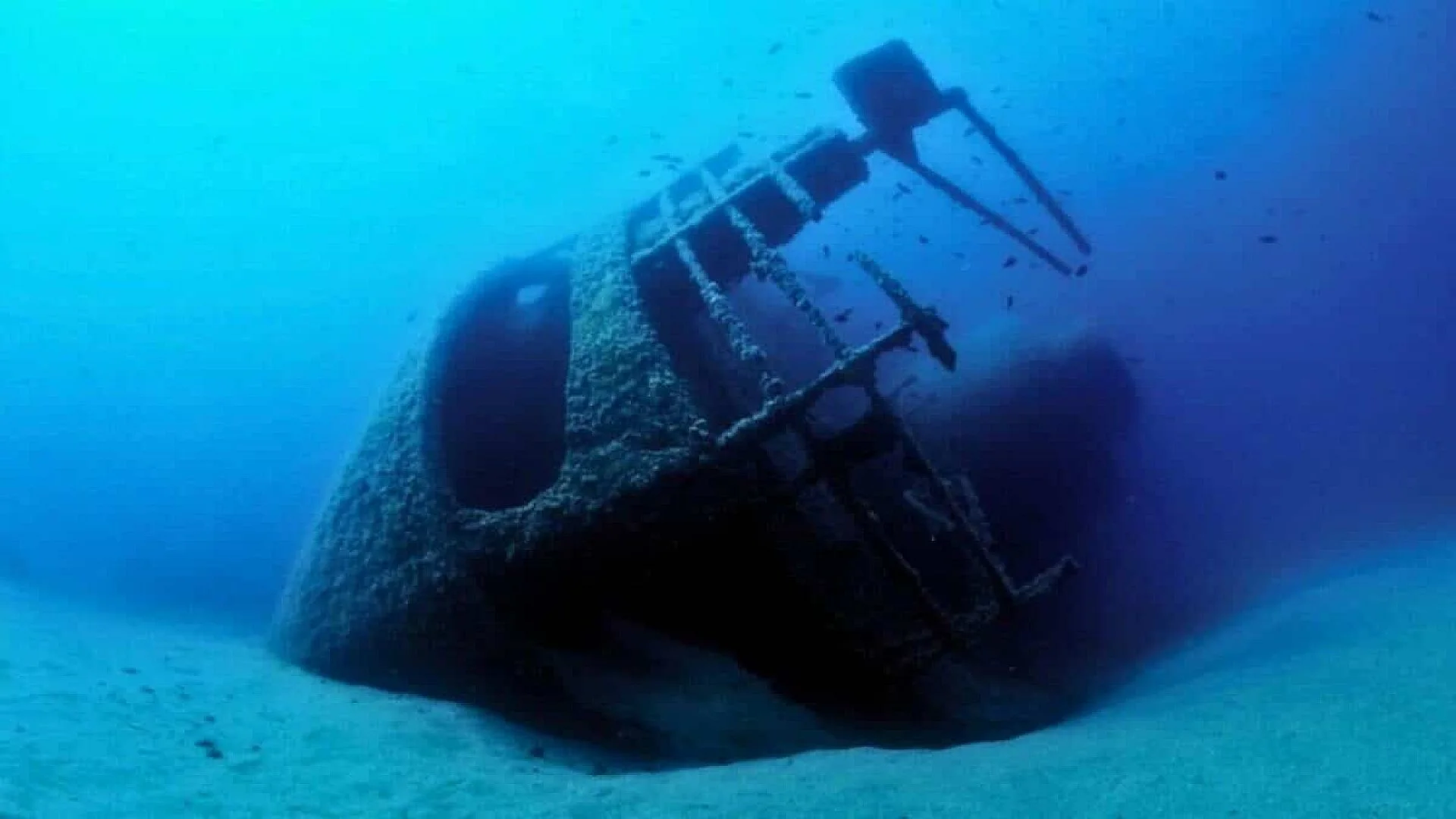
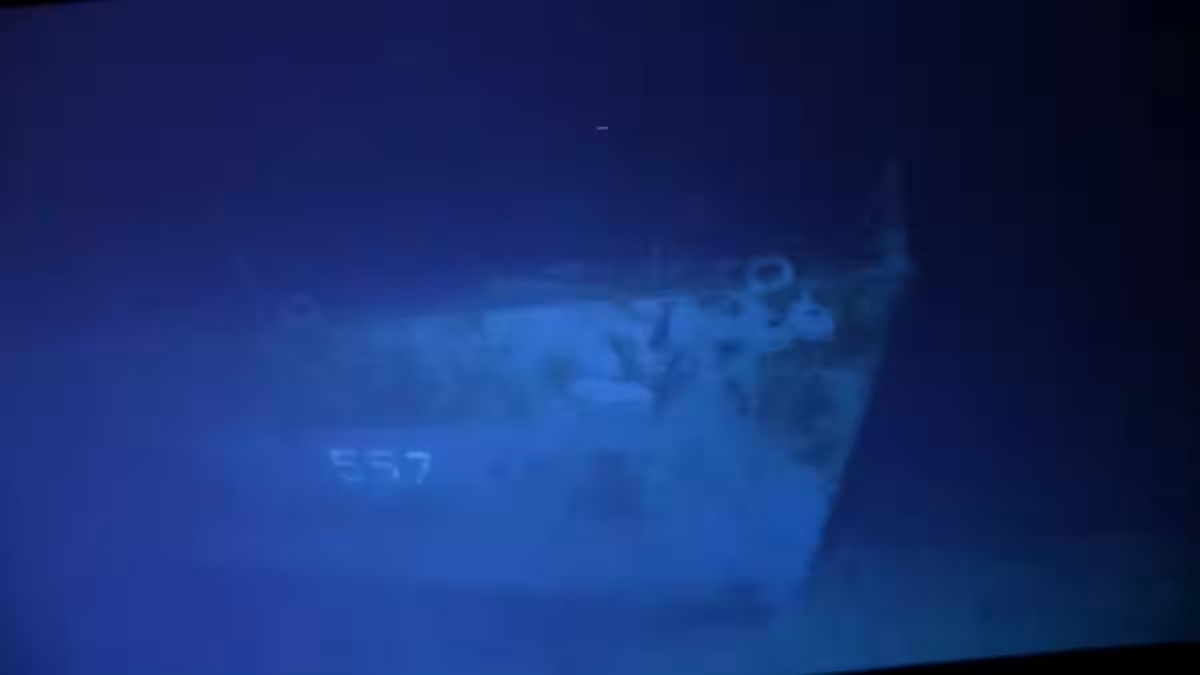
The long-lost USS Johnston, a U.S. Navy destroyer that met its demise during World War II, has finally been identified nearly 77 years after it sank during the Battle off Samar. Deep-sea explorers confirmed the ship’s identity after capturing images of the hull number “557” more than four miles below the surface of the Philippine Sea.
The discovery brings an end to years of uncertainty surrounding the wreck and sheds new light on one of the most dramatic naval battles of the war. Preserved in remarkable condition at a depth of 21,180 feet, the ship remains a poignant reminder of the crew’s final stand against a much larger Japanese fleet.
The destroyer was first located in 2019, but researchers were unable to determine whether the wreck belonged to USS Johnston or its sister ship, USS Hoel. That changed during a new expedition led by explorer and retired Navy officer Victor Vescovo, whose team used the submersible Limiting Factor to reach the site and document the wreck in detail. The latest dives produced clear images of the hull number, along with views of the ship’s bridge, gun mounts, and torpedo launchers.
A Battle Fought Against Overwhelming Odds
On October 25, 1944, USS Johnston was part of a small American naval group known as Taffy 3, assigned to protect escort carriers near the Philippines. The group suddenly came under attack from a far more powerful Japanese fleet that included battleships, cruisers, and destroyers.
According to the Navy History and Heritage Command, the Japanese force included the massive battleship Yamato, equipped with 18-inch guns. Despite the overwhelming imbalance, Johnston’s commander, Cmdr. Ernest Evans, ordered his ship to charge directly at the enemy fleet.
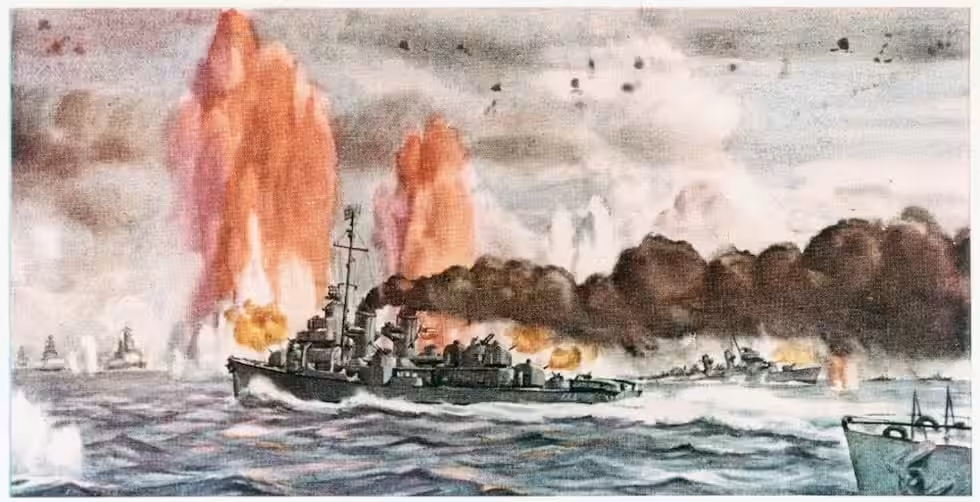
During the intense battle, the destroyer managed to damage the Japanese heavy cruiser Kumano before taking repeated hits itself. Evans was badly wounded but continued commanding the ship as the battle raged on. Even after Johnston ran out of torpedoes, the crew kept firing with the remaining 5-inch guns.
After more than two hours of combat, the destroyer was left disabled and surrounded by enemy ships. Evans gave the order to abandon ship shortly before Johnston rolled over and sank. Of the 327 crew members onboard, only 141 survived. Evans later received the Congressional Medal of Honor posthumously.
A Record-Breaking Wreck Dive
The expedition that confirmed the wreck’s identity also became one of the deepest wreck dives ever conducted. As stated by the Caladan Oceanic, Vescovo completed two dives lasting around eight hours each aboard the Limiting Factorsubmersible.
The images collected during the mission show how well the wreck has survived despite spending decades underwater. Much of the visible damage still appears linked to the battle itself rather than deterioration over time. The ship’s extreme depth and the cold conditions of the trench likely helped preserve it.
Researchers documented several sections of the destroyer, including the bridge structure and deck-mounted equipment. The team also collected sonar scans and other data that were later provided to the U.S. Navy free of charge.
At the end of the expedition, the crew aboard the support ship DSSV Pressure Drop held a small tribute near the battle site, sounding the ship’s whistle and placing a wreath in the water for the sailors who died there.
A Protected War Grave
Today, the wreck of USS Johnston is protected under the Sunken Military Craft Act of 2004, which prevents unauthorized salvage operations on U.S. military wrecks. The site is considered both a historical location and a war grave.
As mentioned in Popular Mechanic, the retired Rear Adm. Sam Cox, director of the Navy History and Heritage Command, the ship’s story remains an example of “honor, courage, commitment, and valor.” Historians continue to study the Battle off Samar because of the extraordinary imbalance between the small American force and the larger Japanese fleet it confronted.
The new imagery gives historians and archaeologists a closer look at the destroyer without disturbing the wreck itself.
This article has been fact checked for accuracy, with information verified against reputable sources. Learn more about us and our editorial process.
Last reviewed on .
Article history
- Latest version
Reference(s)
- <https://caladanoceanic.com/expeditions/samar/pressrelease/>.
- “Vessel | Five Deeps Expedition.”, July 15, 2018 Five Deeps Expedition <https://fivedeeps.com/home/technology/vessel/>.
- “Uss Johnston Dd 557 0.” <https://www.history.navy.mil/our-collections/photography/us-navy-ships/alphabetical-listing/j/uss-johnston--dd-557-0.html>.
- Mizokami, Kyle. “A Ship Saved Thousands of Lives Before Vanishing in the Dark. 77 Years Later, It Reappeared—Frozen in Time..”, April 7, 2026 Popular Mechanics <https://www.popularmechanics.com/military/a70953117/uss-johnston-wreck-explorers-find-remains-sunken-destroyer/>.
Cite this page:
- Posted by Zara Tariq