A Father and Daughter’s Fishing Trip Accidentally Uncovered a Hidden 151-Year-Old Shipwreck Linked to the Deadliest Fire in U.S. History
A typical outing on the water in Wisconsin took an unexpected turn when explorers stumbled upon a submerged relic, uncovering a long-lost shipwreck tied to a dark chapter of U.S. history.
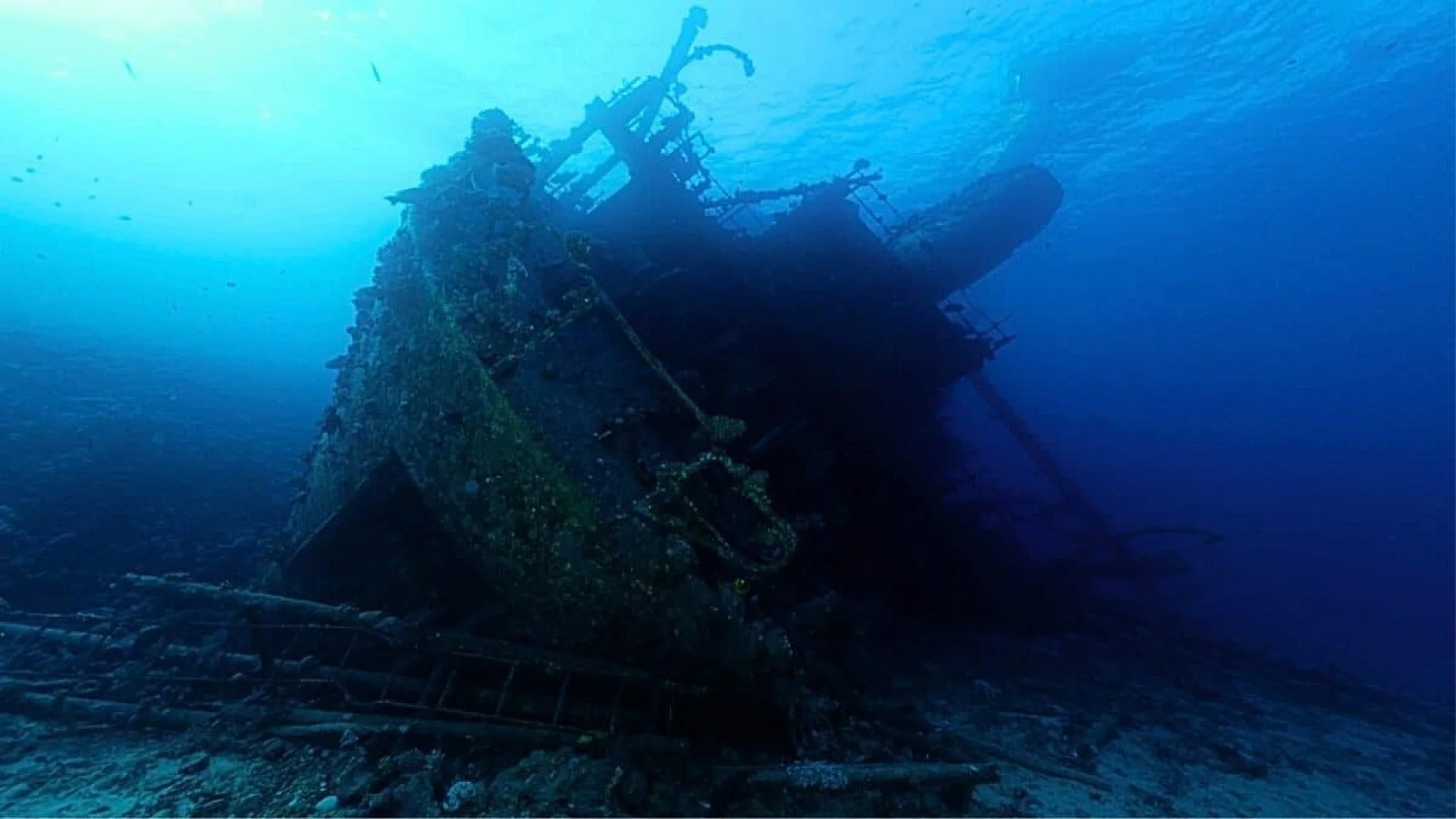
It was a sunny August day in 2022 when Tim Wollak and his 6-year-old daughter Henley embarked on a fishing trip to their favorite spot near Wisconsin’s Green Island. As they navigated the lake, their boat’s sonar suddenly picked up an unusual shape on the lake floor. Henley’s imagination ran wild, speculating that it might be the mythical “Green Bay Octopus.” Her father, however, suspected something much more significant – a Great Lakes shipwreck that had gone undetected for years.
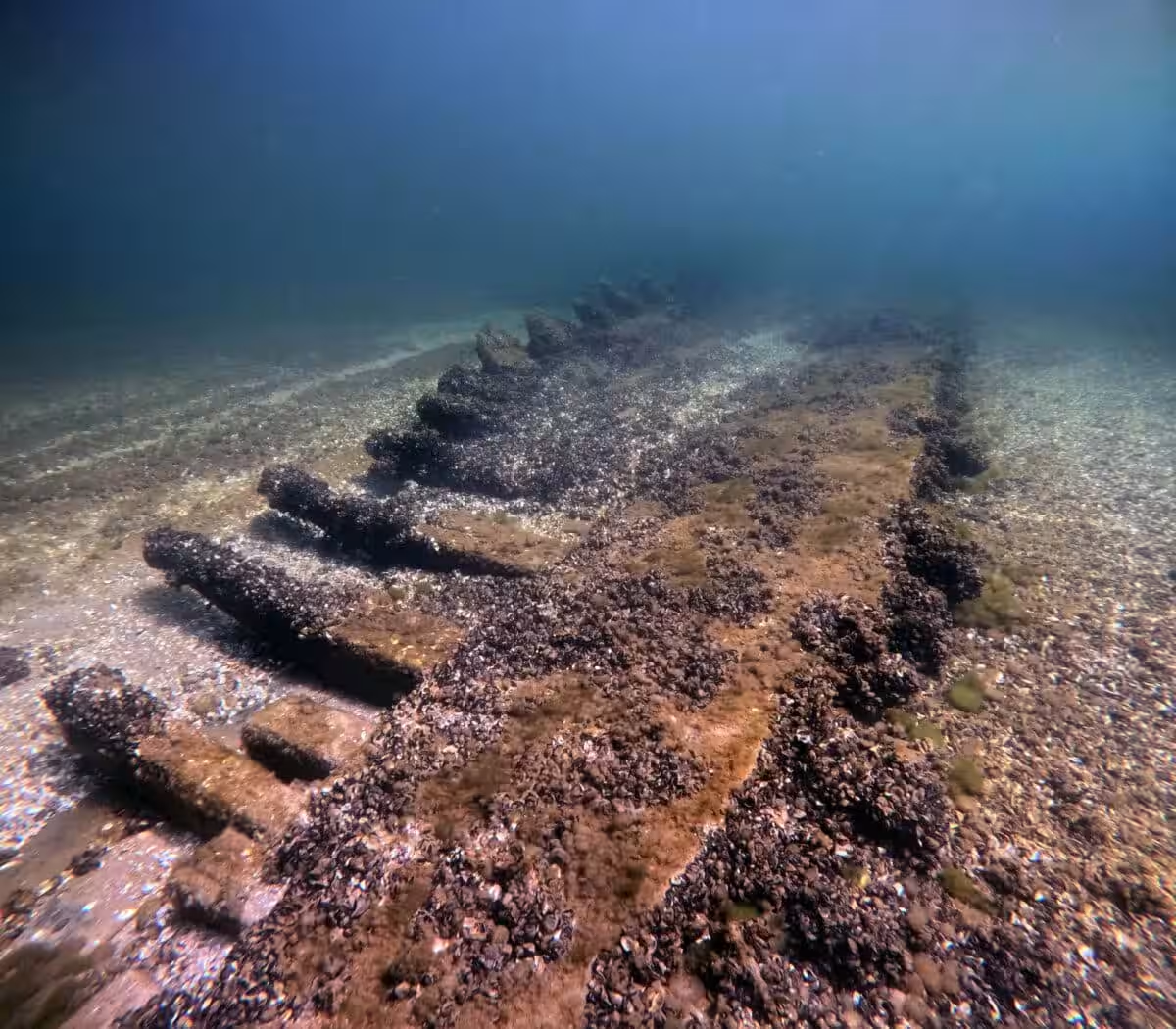
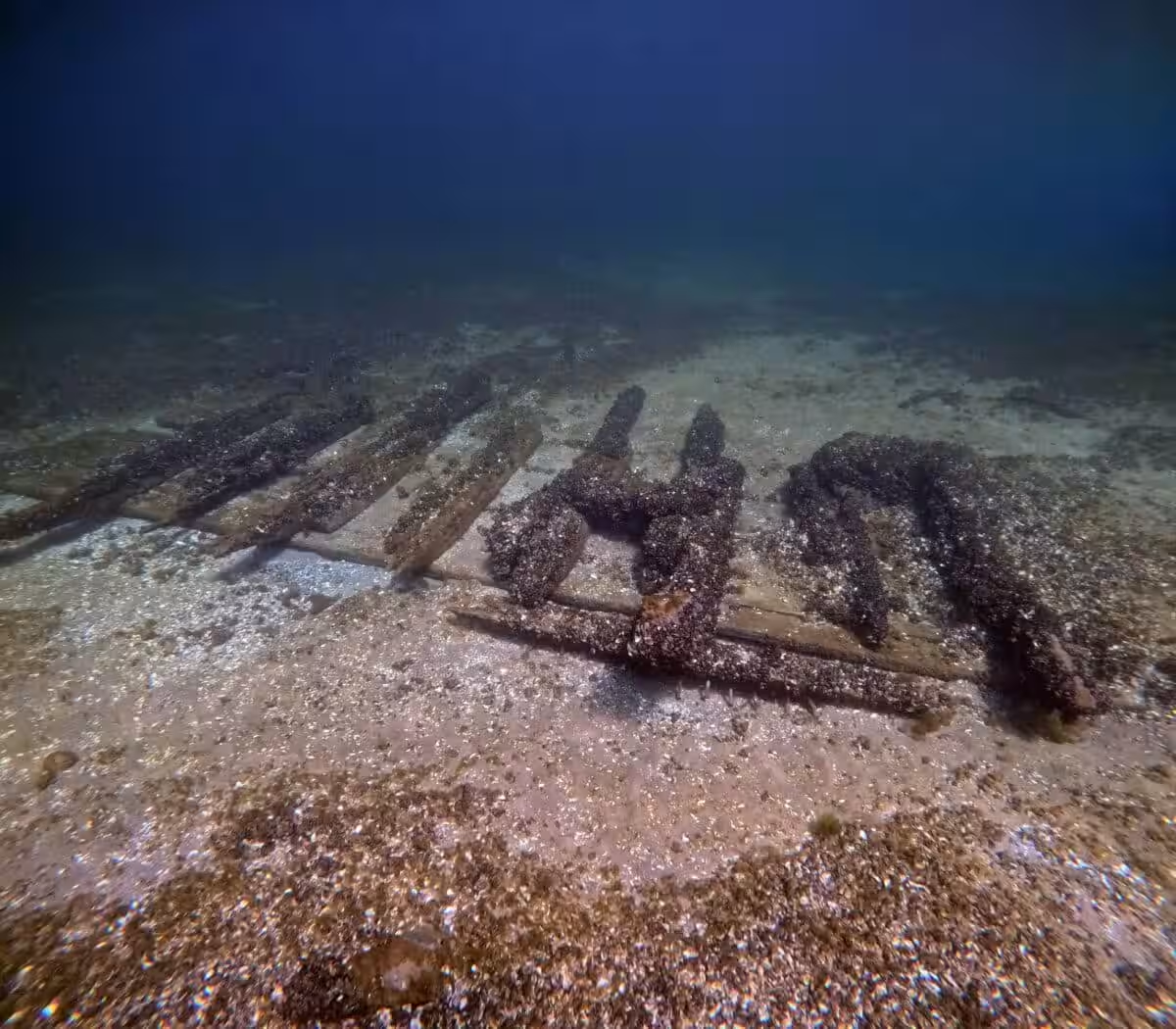
The images Tim posted on Facebook groups caught the attention of maritime archaeologists from the Wisconsin Historical Society. After conducting a thorough database search, they found no record of a shipwreck at that location. Intrigued, the society collaborated with the Wisconsin Department of Natural Resources to deploy a remotely operated vehicle (ROV) in December 2023. The footage confirmed the discovery: the 122-foot barkentine George L. Newman, a vessel that vanished on the same fateful night as the deadliest wildfire in American history.
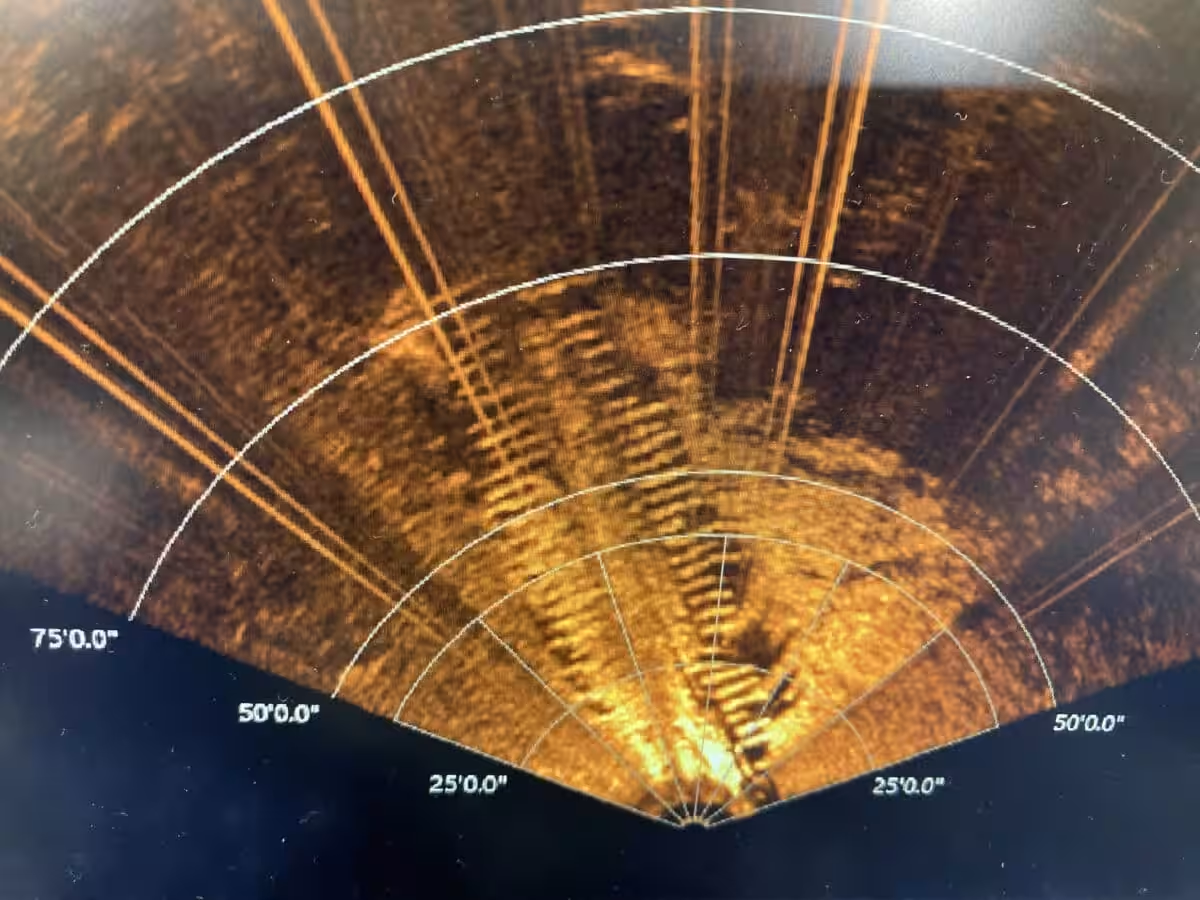
The wreck lies in less than 10 feet of water off the southeast point of Green Island, likely exposed by shifting sand. “It ended up breaking up in storms over the years and ice,” Tamara Thomsen, a maritime archaeologist for the historical society, explained to NPR. “And then it was kind of swallowed by the shoal, covered up with sand until it was recently exposed and discovered by the Wollaks.”
A ship built before the Civil War
The George L. Newman was constructed in 1855 in Black River, Ohio, by shipbuilder Benjamin Flint. This three-masted wooden sailing vessel was a barkentine, a rig that required a relatively small crew to operate, according to the Wisconsin Shipwrecks database. By the fall of 1871, the ship had been hauling cargo on the Great Lakes for 16 years.
On the evening of October 8, the Newman was carrying a load of lumber from Little Suamico, Wisconsin, when the crew sailed into what they could not have anticipated. Smoke from a massive wildfire burning across the region grew so dense that the men lost all visibility. Unable to see the shoreline or the water ahead, they ran the vessel aground on Green Island’s southeastern edge.
Samuel Drew, the island’s lighthouse keeper, had kept his light burning through the daytime hours because the smoke was so thick. That decision likely saved the crew. Drew rescued the men and sheltered them at the lighthouse for a week while they attempted to salvage what they could from the stranded ship. The effort proved futile. The Newman was abandoned and eventually broken apart by storms and winter ice.
The fire that history forgot
The smoke that blinded the Newman’s crew came from the Great Peshtigo Fire, which erupted the same day as the more famous Great Chicago Fire. While the Chicago fire claimed roughly 300 lives, the Peshtigo fire killed more than 1,200 people and burned between 1.2 million and 1.5 million acres, making it the deadliest fire in United States history.
The blaze started as a brush fire, probably ignited by railroad workers clearing land for tracks. It ballooned with terrifying speed, destroying the city of Peshtigo in roughly an hour and burning 16 other towns. The inferno grew so intense that it jumped across the waters of Green Bay and reached Wisconsin’s Door and Kewaunee counties. The Peshtigo Fire Museum, run by the Peshtigo Historical Society, keeps the memory of the disaster alive.
A time capsule in shallow water
The Wisconsin Historical Society confirmed the wreck’s identity by matching the ROV images against a database of historic shipwreck losses, cross-referencing location and physical features with records of the Newman’s final voyage. No other vessel fit the profile.
Maritime archaeologists describe shipwrecks like the Newman as time capsules that offer a direct look into the past. The wooden hull, the cargo remains, and the wreck’s position on the lakebed all preserve details about 19th-century Great Lakes shipping that written records alone cannot provide. “Shipwrecks give us a unique look into the past because each of them is basically like a time capsule,” Jordan Ciesielzyk, a maritime specialist with the historical society, told Popular Mechanics.
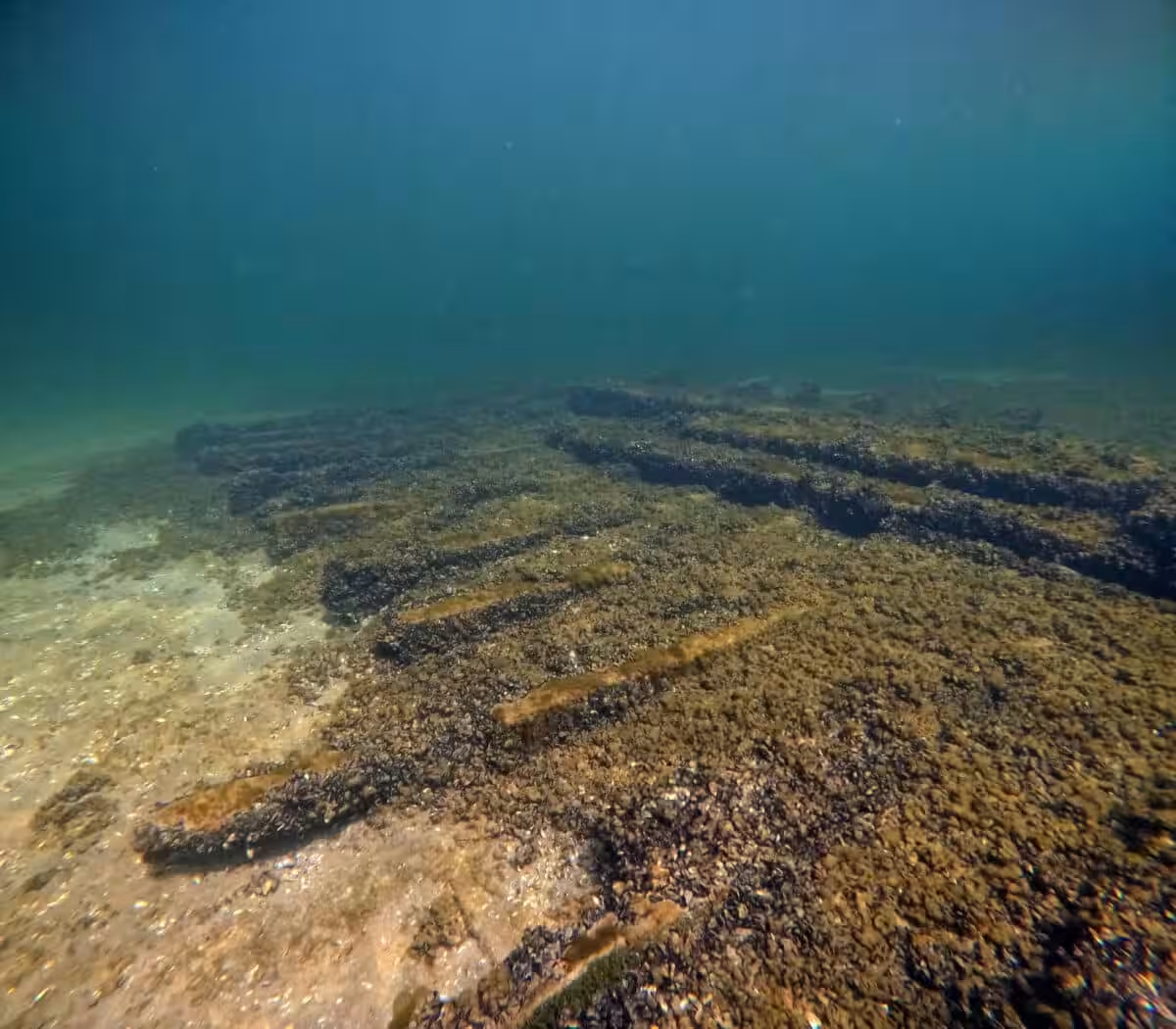
Ciesielzyk noted that 13 Wisconsin shipwrecks had been discovered in the previous year, all of them found by accident. The Wollak discovery stands out for its connection to the Peshtigo Fire and for the age of the vessel. “It was actually built in 1855, so it’s a pretty significant shipwreck, pretty old for Wisconsin shipwrecks anyways,” Thomsen said. “To have it tied to the Peshtigo Fire, it makes it even more special.”
What comes next for the wreck site
A full archaeological survey of the George L. Newman site is planned for the spring following the discovery, according to the historical society. Divers will document the wreck in detail over several days, recording measurements, capturing high-resolution imagery, and assessing the condition of the remaining structure. The team intends to nominate the site for inclusion on the National Register of Historic Places.
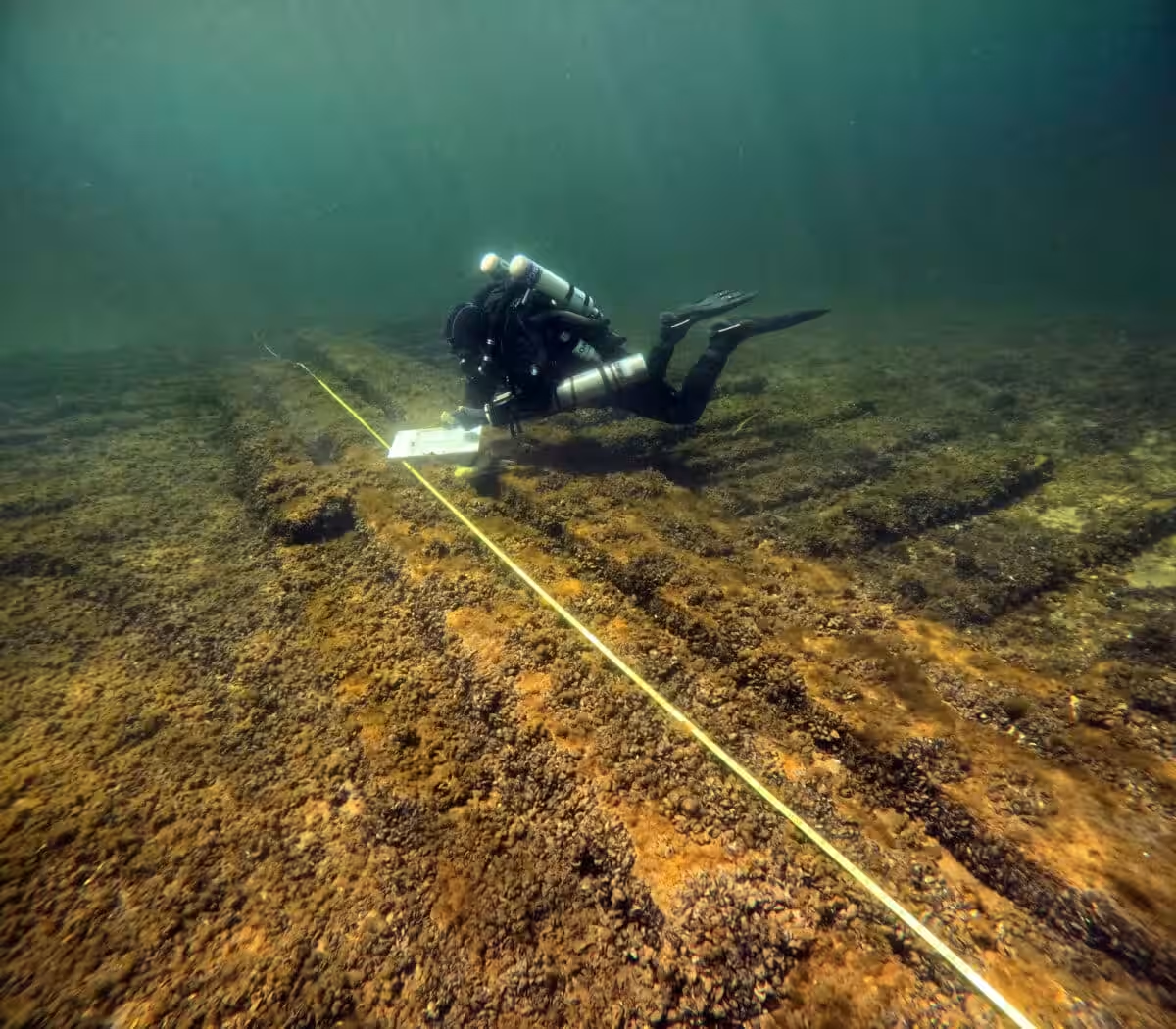
The wreck currently sits in shallow water near a popular fishing and swimming area, which makes it unusually accessible for a historical shipwreck discovery. Thomsen told WBAY that the survey will happen “as soon as I can get a group together,” with plans for multiple dives to properly record the site.
For the Wollaks, the discovery remains a family story that keeps growing. Henley, now 6, had a simpler expectation when the shapes appeared on the sonar screen. “She was hoping,” Tim Wollak said, “that there would be some treasure that we could get to keep from the boat.” The real treasure turned out to be a 151-year-old ship that even local historians did not know still sat just beneath the surface of a familiar fishing spot.
This article has been fact checked for accuracy, with information verified against reputable sources. Learn more about us and our editorial process.
Last reviewed on .
Article history
- Latest version
Reference(s)
- “G.L. Newman (1855) - WI Shipwrecks.” <https://www.wisconsinshipwrecks.org/Vessel/Details/237>.
- Newcomb, Tim. “A Father and Daughter Went Fishing—and Accidentally Discovered a 151-Year-Old Shipwreck.”, May 15, 2026 Popular Mechanics <https://www.popularmechanics.com/science/a71317720/wisconsin-father-daughter-find-shipwreck/>.
Cite this page:
- Posted by Zara Tariq