A Couple Renovating Their Kitchen Stumbled Upon a 17th-Century Treasure Buried Beneath the Floor
Beneath the timbers of a centuries-old hearth, a single swing of a pick uncovered an abandoned wartime relic. The long-lost artifact fetched a sum that stunned even seasoned collectors.
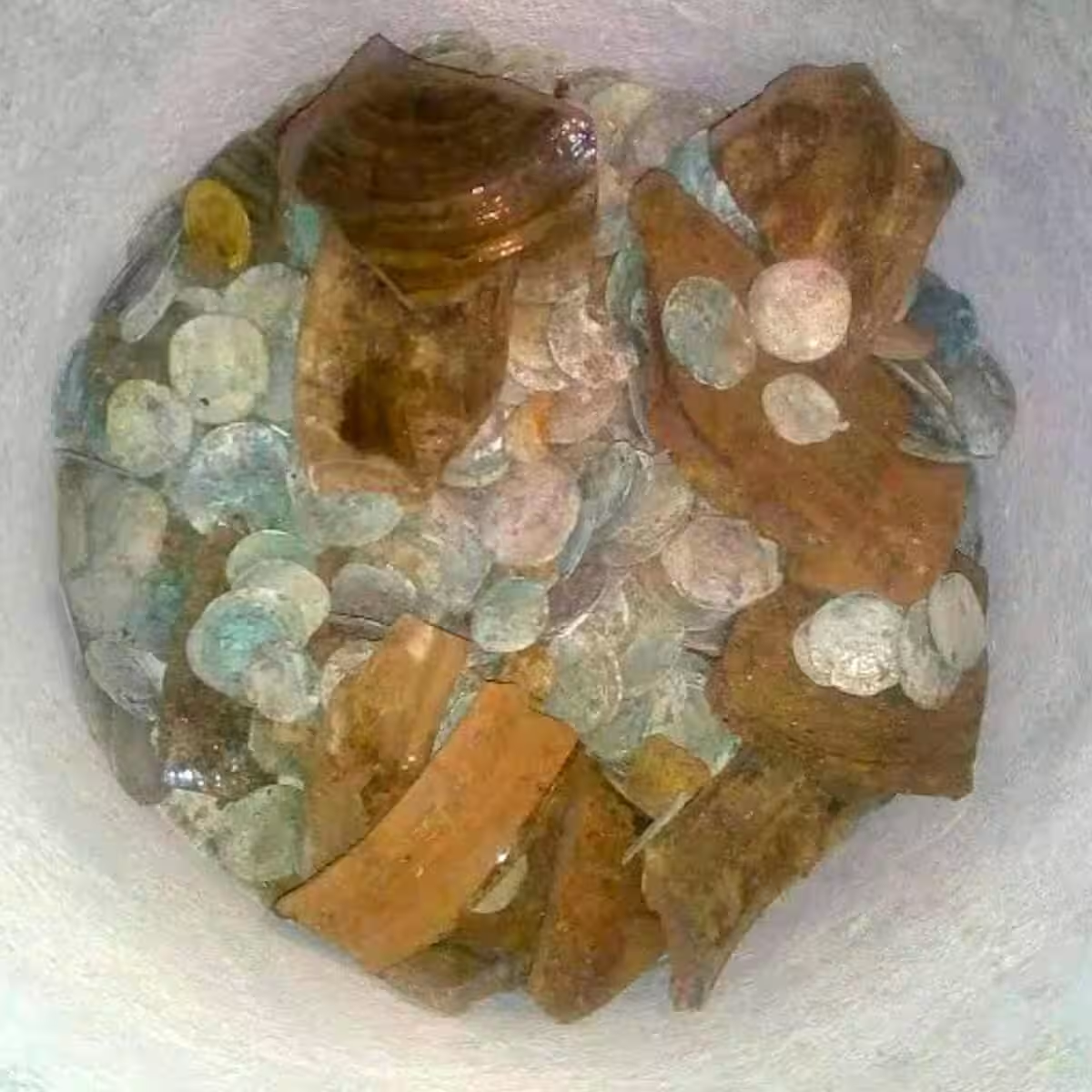
As Robert Fooks swung a pickaxe into the kitchen floor of his 400-year-old Dorset cottage, he inadvertently unearthed a piece of history that had been buried beneath his feet since the English Civil War. The strike of his pickaxe shattered a glazed pottery bowl that had been sitting in the earth, revealing a treasure trove of 1,000 gold and silver coins that had lain undisturbed since the mid-1640s.
The story of the Poorton Coin Hoard came to light after the coins were sold at auction in 2024. The treasure was discovered during a renovation of the cottage at South Poorton Farm, where Robert and Betty Fooks had been working to lower the ground level. “One evening, I was with the children and my husband was digging with a pickaxe when he called to say they’ve found something,” Betty Fooks recalled in an interview with The Guardian. “He put all the coins in a bucket.”

According to Julian Smith, a specialist at Duke’s Auctioneers, the dig site was a result of the couple’s decision to lower the ground level during the renovation. “The modern concrete floor was removed and the floor dug down by nearly 2ft to provide greater height to the downstairs of the property,” he explained. “In some areas there were old flagstones under the concrete, but the area the coins were found was bare earth.”
A Fortune in Gold and Silver, Minted for Kings and Queens
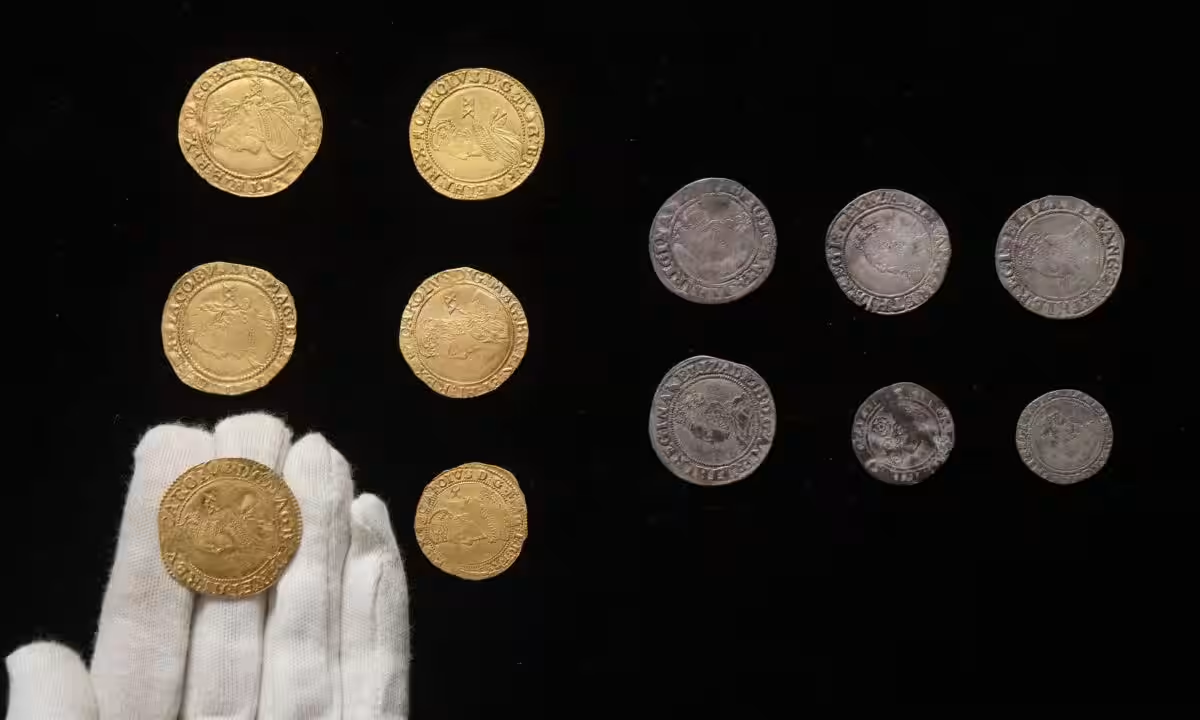
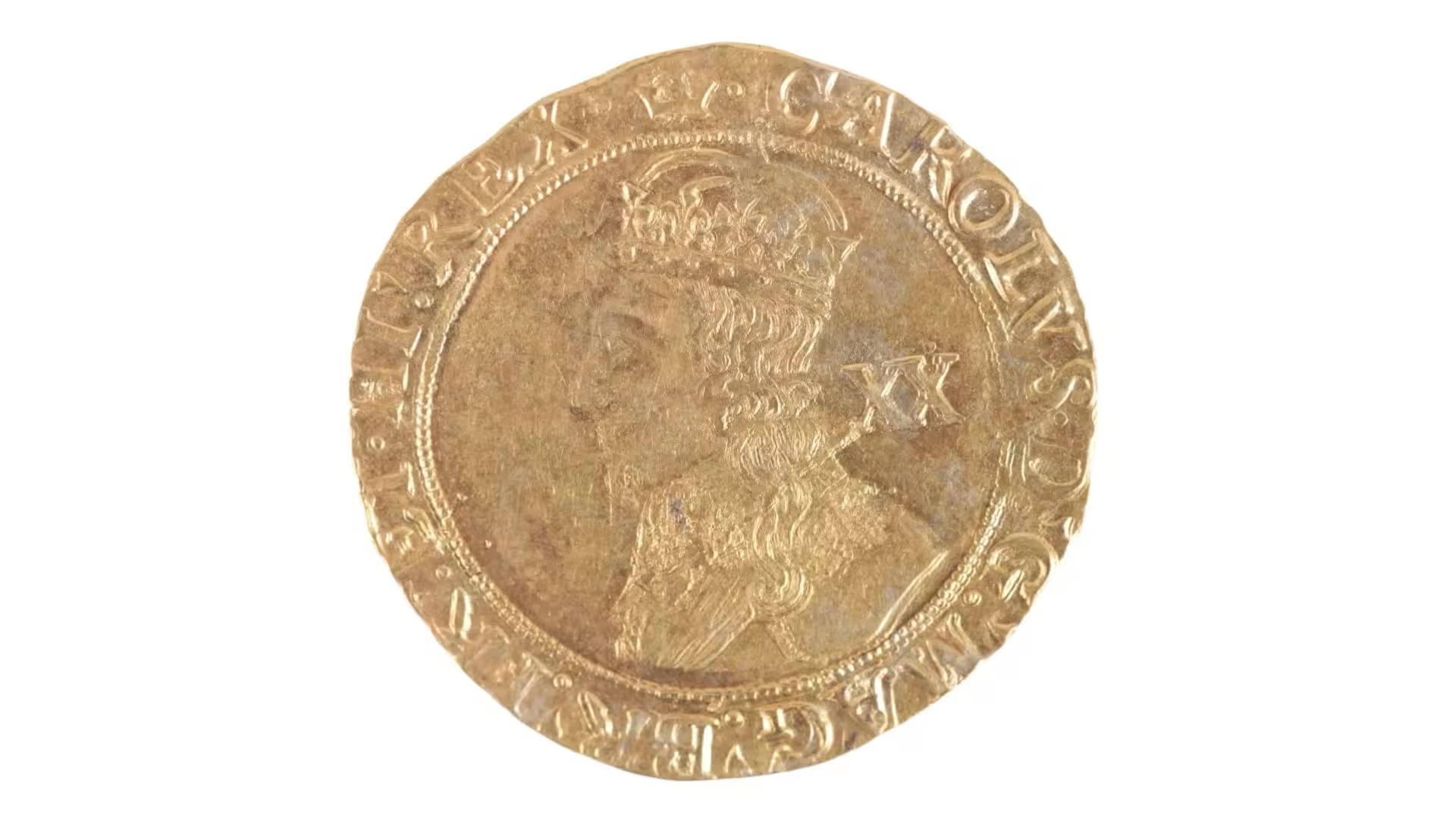
The Poorton Coin Hoard includes gold and silver currency from the reigns of five monarchs, spanning from Edward VI through Charles I. The coins range from worn sixpences to a gold unite valued at 20 shillings. Gold coins bear the faces of James I and Charles I, while silver half crowns, shillings, and sixpences carry the marks of Elizabeth I and Philip and Mary.
The couple reported the find to a local finds liaison officer, who sent the coins to the British Museum for cleaning and identification. Museum staff determined the coins were deposited once, between 1642 and 1644, based on the mint dates stamped into the metal. This two-year window falls directly within the first English Civil War.
War at the Doorstep, Treasure Under the Floorboards
During the English Civil War, burying coins was not a sign of caution; it was a matter of survival. Soldiers from both sides entered homes, demanding food and seizing anything valuable. Dorset sat directly in the path of troop movements throughout the conflict.
Waseem Ahmed, a doctoral student of history at University College London, explained the risks faced by ordinary families like the Fooks. “If you were a royalist or suspected royalist, you could have your estates sequestrated by the Parliamentary side and vice versa,” he said. “Property seizure was a tool of war, and ordinary families paid the price.”
In Lyme Regis, a Parliamentarian garrison survived an eight-week siege in 1644, resupplied by smugglers who slipped through naval blockades with food and gunpowder. Wealthy families like the Sydenhams and the Strangways switched allegiances as power shifted. In smaller settlements like Poorton, villagers could do little but hide what they could and hope no soldiers arrived. The pottery bowl shattered by Robert Fooks was one of those hiding places, sealed and never retrieved.
From a Shattered Bowl to a $75,900 Auction Result
The British Museum returned the cleaned and catalogued coins to the Fooks family. On April 23, 2024, Duke’s Auctioneers sold the collection, with bidding reaching roughly £60,740, or about $75,900, more than double the original estimate of £35,000. A single gold Charles I coin fetched £5,000. Full auction results are available through Duke’s Auctioneers.
The coins had waited nearly 400 years beneath that kitchen floor. Betty Fooks returned to the one fact that still stands out: the person who buried the hoard never came back for it. The war ended with the execution of Charles I in 1649 and an 11-year republic. Many who hid their savings did not survive to dig them up again.
The Poorton Coin Hoard now sits in the documented history of a country split by civil war. Its value lies in the metal, but also in the silence it fills between a burial in the 1640s and a pickaxe strike in 2019.
This article has been fact checked for accuracy, with information verified against reputable sources. Learn more about us and our editorial process.
Last reviewed on .
Article history
- Latest version
Reference(s)
- Morris, Steven. “Dorset couple find 17th-century treasure hoard while renovating kitchen.”, April 18, 2024 The Guardian <https://www.theguardian.com/uk-news/2024/apr/18/dorset-couple-find-17th-century-treasure-hoard-while-renovating-kitchen>.
- “1102 The Poorton Coin Hoard.” <https://app.dukes-auctions.com/en/auction/1102-the-poorton-coin-hoard>.
Cite this page:
- Posted by Zara Tariq