Scientists Dig Up A 90-foot Giant Dinosaur In Thailand That Could Crush Four Elephants
Researchers in Thailand have uncovered a dinosaur of extraordinary proportions, though the complete excavation process remains unfinished.
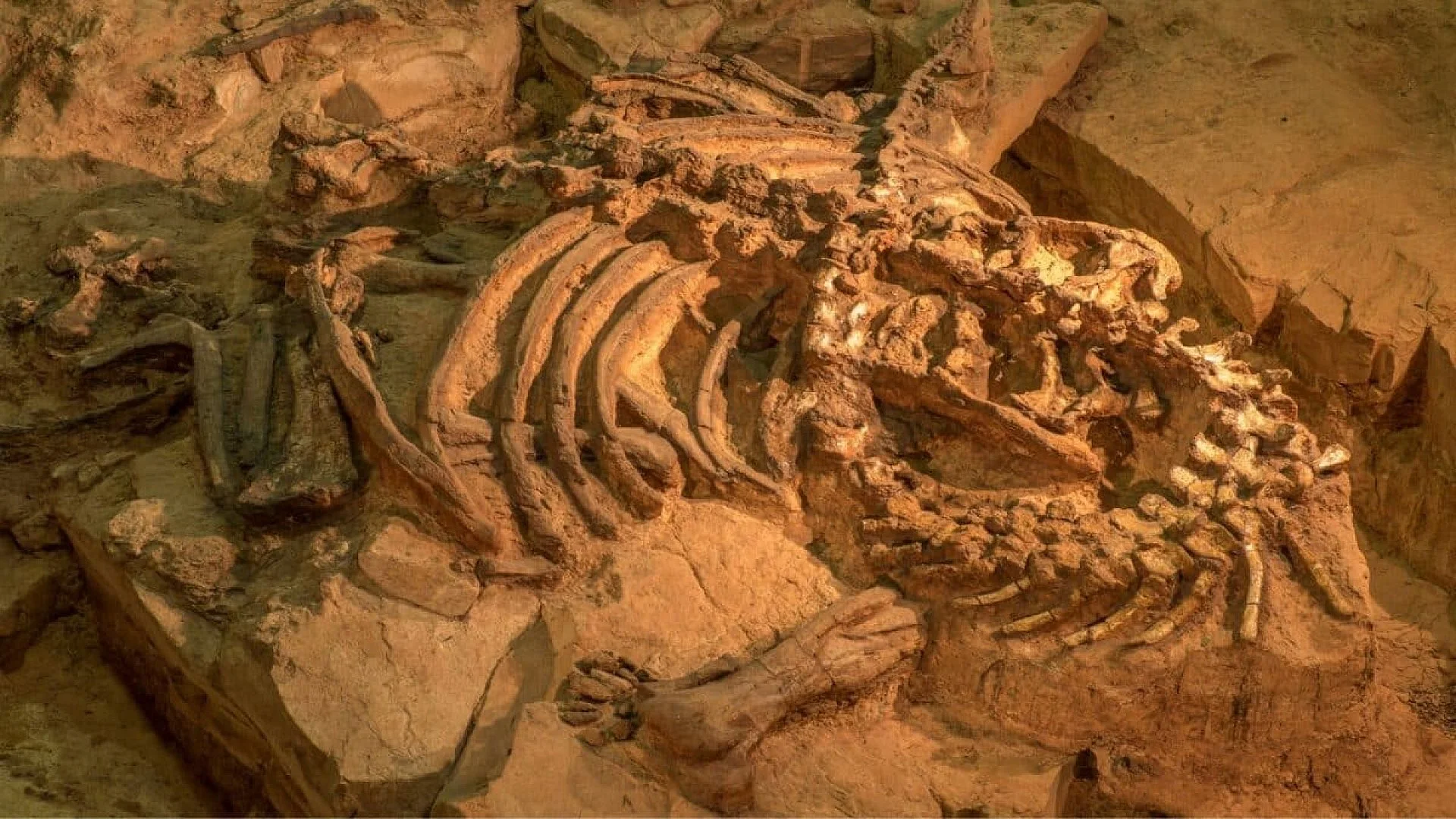
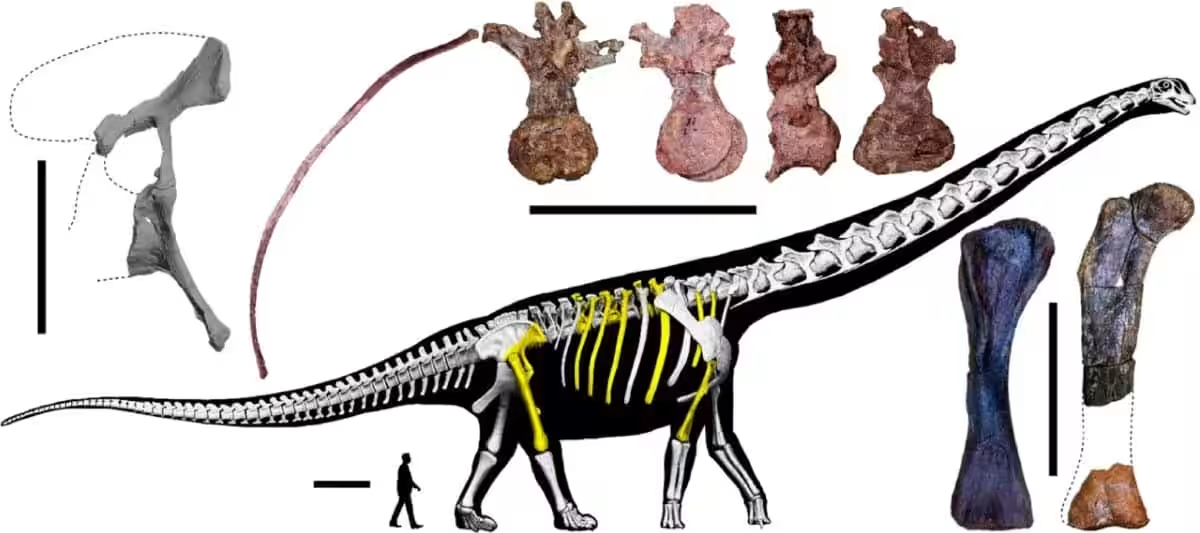
A monumental discovery has been made in Thailand, revealing the largest dinosaur ever found in Southeast Asia. Meet Nagatitan chaiyaphumensis, a massive sauropod that measured approximately 90 feet in length and weighed a staggering 30 tons, eclipsing even the mighty Tyrannosaurus rex in weight.
The groundbreaking find sheds light on the rapid growth of sauropods during the late Early Cretaceous, roughly 100 to 120 million years ago. According to Thitiwoot Sethapanichsakul, a Ph.D. student at University College London and lead author of the study, Nagatitan falls within the “upper middle” range of the largest species ever recorded.
Thailand has witnessed a surge in dinosaur discoveries, but Nagatitan stands out due to its enormous size and remarkably preserved bones. The research, published in Scientific Reports , reveals multiple parts of the skeleton, including the spine, pelvis, ribs, and legs.
A Colossal Herbivore of the Early Cretaceous
Nagatitan was a plant-eating sauropod boasting a long neck and tail. Sethapanichsakul notes that it lived during a period when sauropods began to reach impressive sizes. While Nagatitan weighed around 30 tons, later sauropods from the Cretaceous period grew even heavier, with some reaching up to 70 tons.
“Sauropods are known to have grown very quickly after hatching, and this probably relates to the dangers of predation. The sooner sauropods could become large, the safer they were because they would have been more difficult to tackle,” Paul Upchurch, a paleontologist at UCL and co-author of the study, stated.
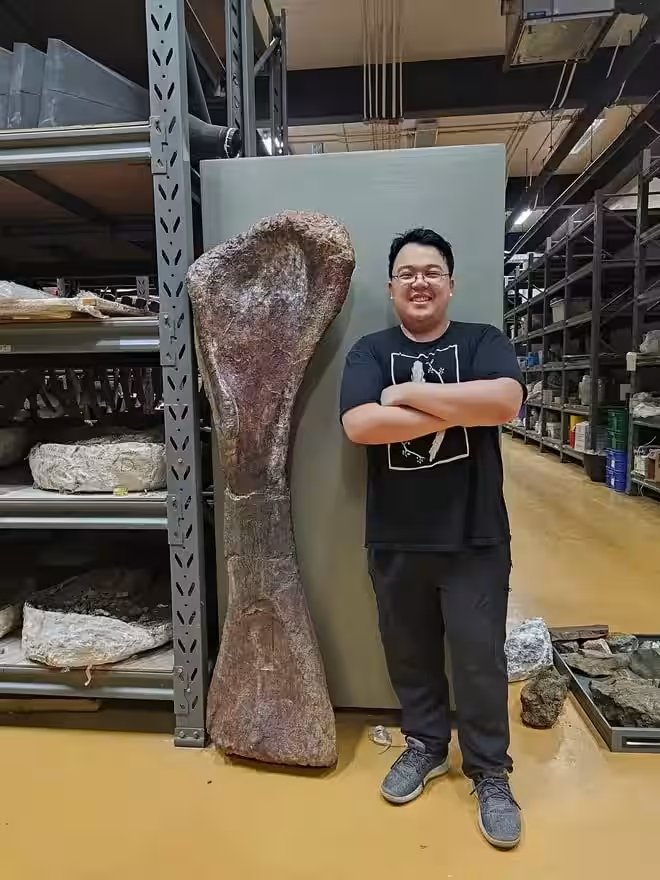
The team estimated the dinosaur’s dimensions from the bones they recovered. One front leg bone alone measured nearly 6 feet long. Mathew Wedel, a paleontologist at Western University of Health Sciences, who did not participate in the study, says the bones are “pretty nice material,” with little distortion, providing valuable information about the dinosaur’s structure.
“In fact, when I first saw the specimen, the kind of front leg bone is actually taller than me, which is quite surprising.” He added that“This dinosaur is very unique for us, especially in Southeast Asia, because of its size. “It is massive in comparison to what we currently know of.”
A Name Rooted in Local Heritage
The name Nagatitan chaiyaphumensis combines local mythology and the dinosaur’s enormous size, reflecting both the cultural heritage of the region and the remarkable scale of the creature. Sethapanichsakul explained:
“Naga comes from the mythological Naga [serpent creature] that is worshipped in Southeast Asia. Titan just [refers to] size.”
The species name, chaiyaphumensis, comes from Chaiyaphum province, where the fossils were first discovered. The fossils were initially uncovered by a local resident in 2016, with excavation continuing until 2019 before pausing due to funding issues. Work resumed in 2024 when new support became available.
Research published in Scientific Reports notes that this rock formation is likely the last in Thailand where large dinosaur fossils can be found, making Nagatitan the country’s “last titan.”
Unveiling Southeast Asia’s Colossal Herbivore
Wedel adds that finds like Nagatitan help scientists understand how dinosaurs lived in regions that haven’t been studied extensively. Each fossil find helps scientists map out the evolution and range of dinosaur species.
“We are trying to get people, especially in rural areas, to understand the values of paleontology,” Sethapanichsakul added. “And we do that through outreach and things like that, and having a brand-new dinosaur to announce really helps get people excited.”
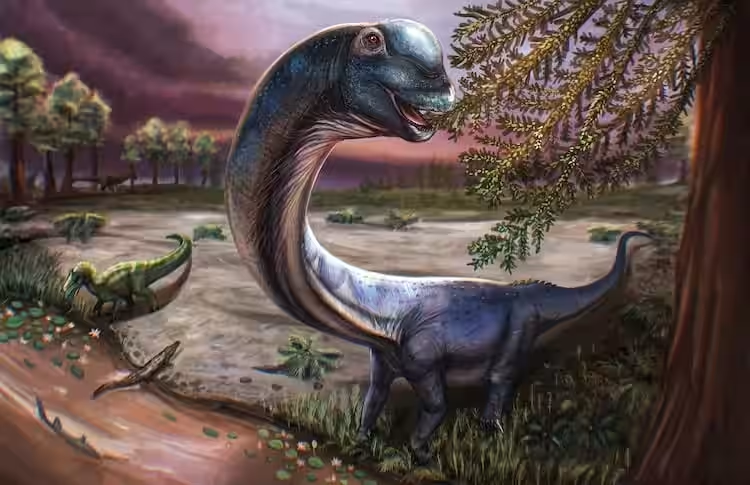
This dinosaur is the 14th named species from Thailand, and the team observes that the age of the rock formations and the changing landscape suggest no further large dinosaurs are likely to be discovered in the region. Wedel pointed out that fossils from Thailand reveal new details about how sauropods lived and adapted to their changing landscapes.
This article has been fact checked for accuracy, with information verified against reputable sources. Learn more about us and our editorial process.
Last reviewed on .
Article history
- Latest version
Reference(s)
- <https://www.researchgate.net/profile/Thitiwoot-Sethapanichsakul-2>.
- “Discovery.” <https://profiles.ucl.ac.uk/20382-paul-upchurch>.
- “Wedel Lab | COMP.”, February 12, 2021 <https://www.westernu.edu/osteopathic/research/labs/wedel-lab/>.
- Sethapanichsakul, Thitiwoot. “The first sauropod dinosaur from the Lower Cretaceous Khok Kruat Formation of Thailand enriches the diversity of somphospondylan titanosauriforms in southeast Asia - Scientific Reports.”, vol. 16, no. 1, May 14, 2026, pp. 12467 Nature, doi: 10.1038/s41598-026-47482-x. <https://www.nature.com/articles/s41598-026-47482-x>.
Cite this page:
- Posted by Zara Tariq