Archaeologists Found a 700-Year-Old Notebook Still Legible in a Medieval Toilet Beside Silk Used for Wiping
A remarkable discovery surfaced from a 13th-century latrine, where decay had inadvertently preserved an uncommonly personal glimpse into medieval existence.
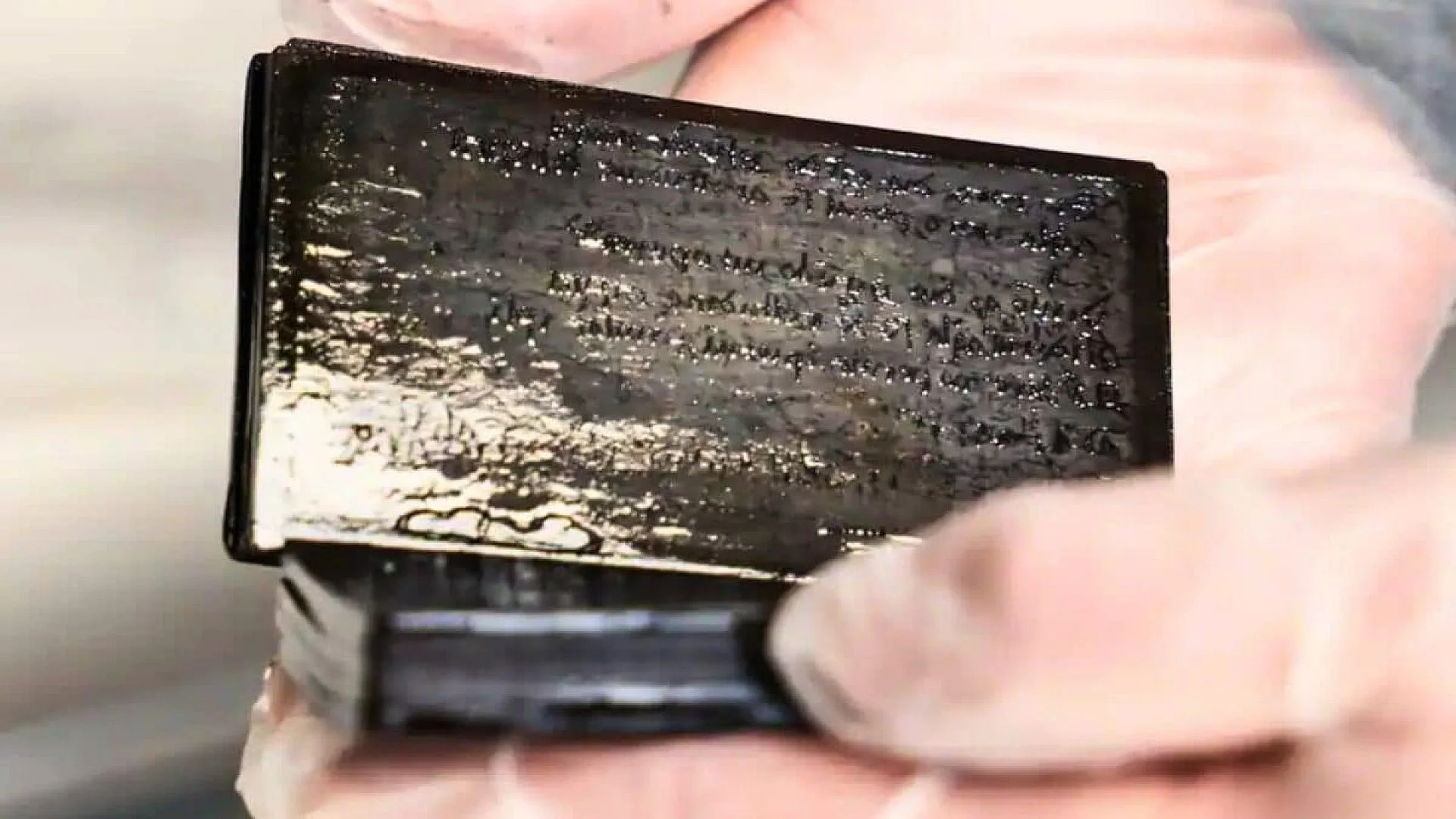
A medieval notebook unearthed from a 13th-century latrine in Paderborn, Germany still retains legible writing on its wax-coated pages. The latrine also yielded scraps of fine silk fabric that archaeologists believe were used as toilet paper, providing a glimpse into the high-status hygiene practices of the time.
The Landschaftsverband Westfalen-Lippe announced the discovery on May 12, 2026, revealing that the notebook is the only complete wax tablet book ever recovered in North Rhine-Westphalia. Construction crews excavating the foundation for a new city administration building stumbled upon the artifact inside a sealed latrine chamber, where the airtight, soggy conditions had preserved organic material for over seven centuries.

The notebook measures about the size of a palm and features a leather cover stamped with rows of lilies, which is consistent with the high status of its owner. The Latin cursive script is still visible on the surface, scratched in with a stylus. LWL culture director Dr. Barbara Rüschoff-Parzinger noted that the latrine is often a treasure trove for archaeologists, providing valuable insights into the daily lives of medieval people.
Related medieval wax tablets have been discovered in Lübeck and Lüneburg, where similar conditions preserved organic material, but this find is unique in that it includes the complete book with its binding and decorated case.
A Merchant’s Pocket Notebook
Eight of the ten wax pages are coated on both sides, and the Latin cursive runs in two directions, flipping orientation depending on how the user held the book. LWL city archaeologist Dr. Sveva Gai believes the owner was likely a Paderborn merchant from the educated upper bourgeoisie, as the handwriting suggests someone jotting notes rather than keeping a formal record.
Gai thinks the notebook ended up in the latrine by accident, but the reason remains a mystery. The lily motif on the leather cover reinforces the status claim, as the lily symbolized purity, royal power, and divine blessing in the Middle Ages.
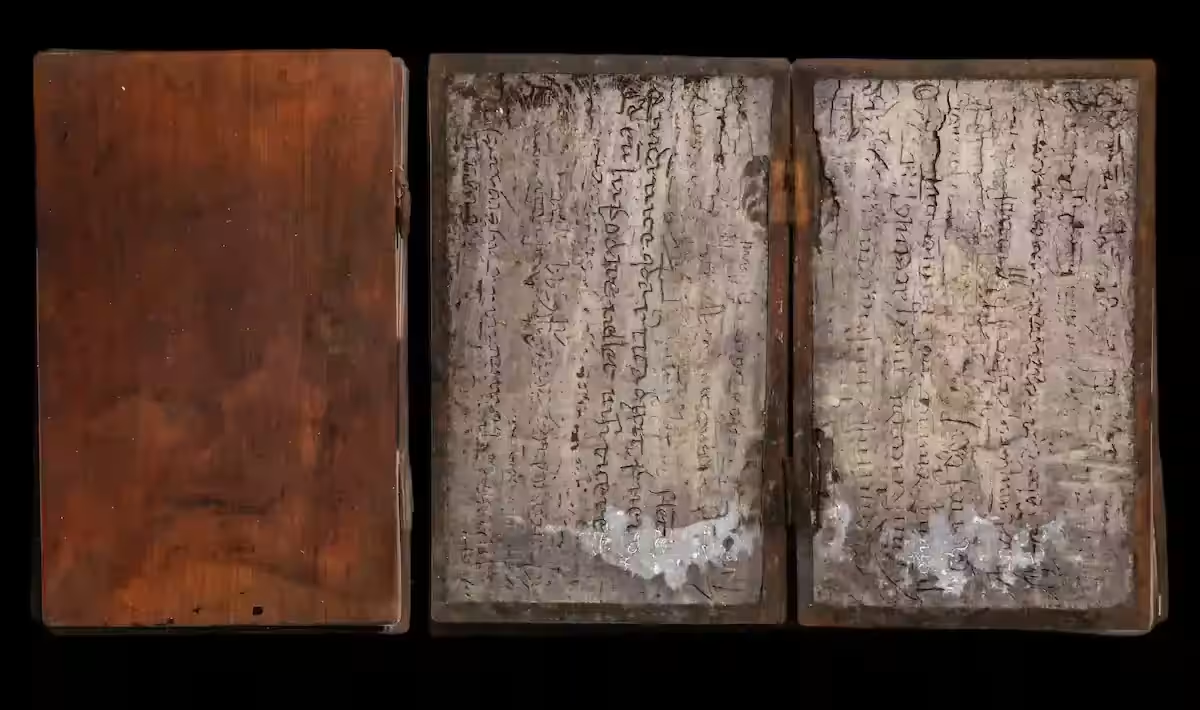
The dig, active since December 2024, uncovered five latrine chambers, including the one containing the notebook. The team also recovered barrel staves, a knife, fabric remnants, complete proto-stoneware vessels, and pieces of woven basket, which help date the notebook to the 13th to 14th century.
LWL conservator Susanne Bretzel described receiving the notebook still packed in a wet lump of earth, with a distinctly foul smell after centuries underground. The chamber’s moisture and lack of oxygen had preserved the leather, wood, and wax, preventing them from drying out and crumbling.
Silk Scraps and High-Status Hygiene
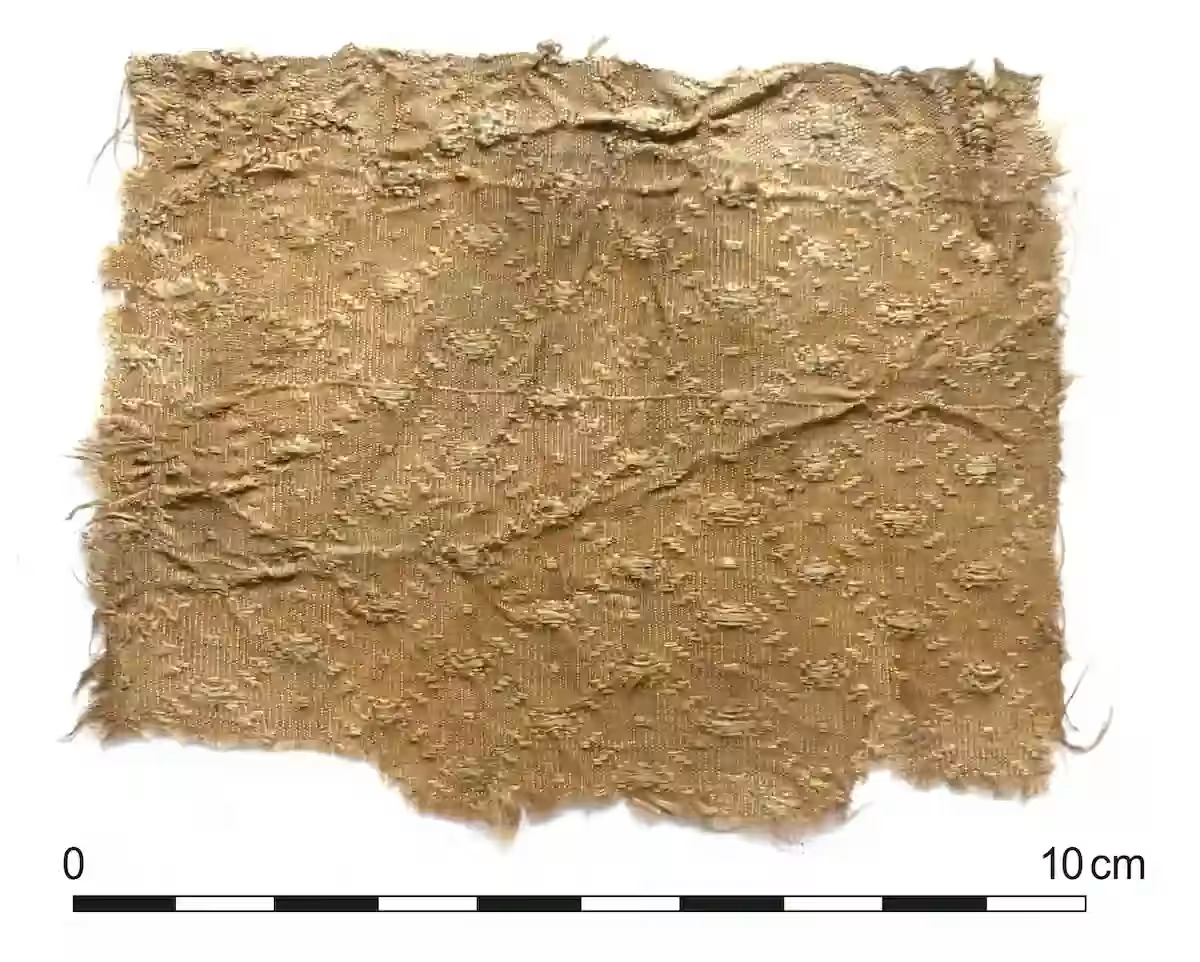
Inside the same latrine, Bretzel found fine silk fabric torn into rectangular pieces, which were likely used as toilet paper. The silk fragments were intricately woven and decorated, suggesting they originated from an expensive garment. Bretzel noted that the use of silk as toilet paper points to an affluent household.
Gai observed that central Paderborn was home to the upper bourgeoisie rather than nobility, and the lily motif on the leather cover reinforces this claim. LWL specialists pointed out that the lily symbolized purity, royal power, and divine blessing in the Middle Ages.
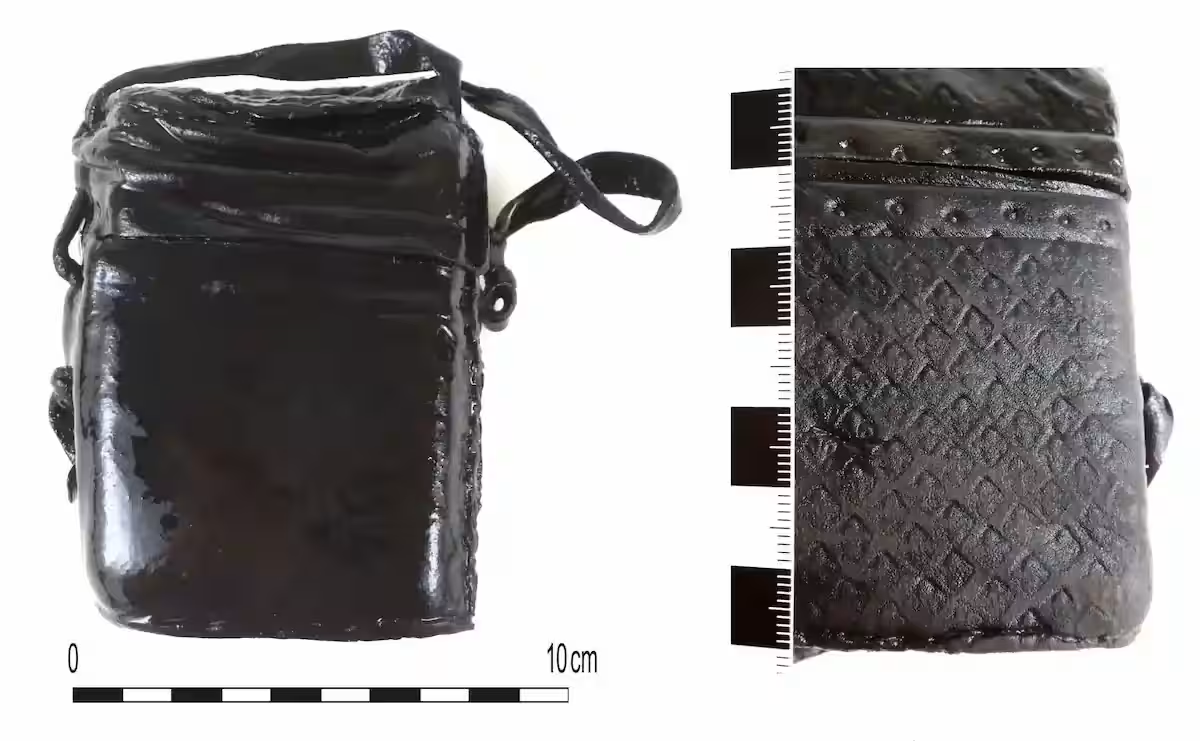
Researchers hope to link the latrine to a specific property parcel, which might attach a name to the notebook. “Then it would be possible, in the best case, to connect the wax tablet with the name of a specific person,” Gai said. The silk wipes, the decorated leather binding, and the use of Latin all point toward an owner with money and schooling.
Reading the Erased Layers
The visible script is not the only text the wax holds. Wax tablet books were reusable, and the stylus had a sharp tip for cutting letters and a flat, spatula-shaped opposite end for smoothing the surface clean. This erasing action left older writing pressed beneath the final layer, suggesting that several generations of notes may be stacked invisibly atop one another.
LWL specialists intend to apply high-resolution imaging to pull apart the superimposed layers and recover deleted entries. The visible text already shows that the user handled the book casually, rotating it to write in different directions as needed. Gai said this pattern, along with the consistent handwriting, fits a practical tool rather than a presentation piece.
Transcription has begun, but Gai warned that the work is slow. Medieval cursive Latin often contains irregular spellings that can twist meaning. Some words jump out clearly, while others require slow comparison with known period scripts. After the transcription is complete, the Latin will be translated into German. Rüschoff-Parzinger said the LWL is working with script and material specialists from across the region to bring in the right imaging tools.
A Year of Conservation Before Display
The artifact needs to be stabilized before any deeper study can proceed. Bretzel said the leather and wooden parts are now submerged in regularly changed distilled water, which keeps the organic material from warping or cracking after its sudden removal from waterlogged soil.
Conservation testing will map the wax in detail. Specialists want to know whether the coating is pure beeswax, a blend with resins, or a mixture that includes pigments. They need the softening temperature. The wood type also requires lab identification. Each data point shapes the long-term preservation plan. Bretzel estimated the full stabilization could take up to a year.
The LWL worked closely with the city of Paderborn and the excavation contractor throughout the construction project. Rüschoff-Parzinger said that coordination kept the build on schedule and got the fragile object to the Münster restoration workshop fast. Once conservation and study wrap up, the 13th-century notebook will go on display at the LWL-Museum in der Kaiserpfalz in Paderborn.
This article has been fact checked for accuracy, with information verified against reputable sources. Learn more about us and our editorial process.
Last reviewed on .
Article history
- Latest version
Reference(s)
- “Seltener Fund in Paderborn.” <https://www.lwl.org/pressemitteilungen/nr_mitteilung.php?urlID=63721>.
Cite this page:
- Posted by Zara Tariq