Watch Venus And A Slender Crescent Moon Dazzle The Western Sky Tonight!
A striking pairing of Venus and a delicate crescent moon will light up the western horizon on May 18, presenting stargazers with an uncommon and breathtaking alignment just after dusk.
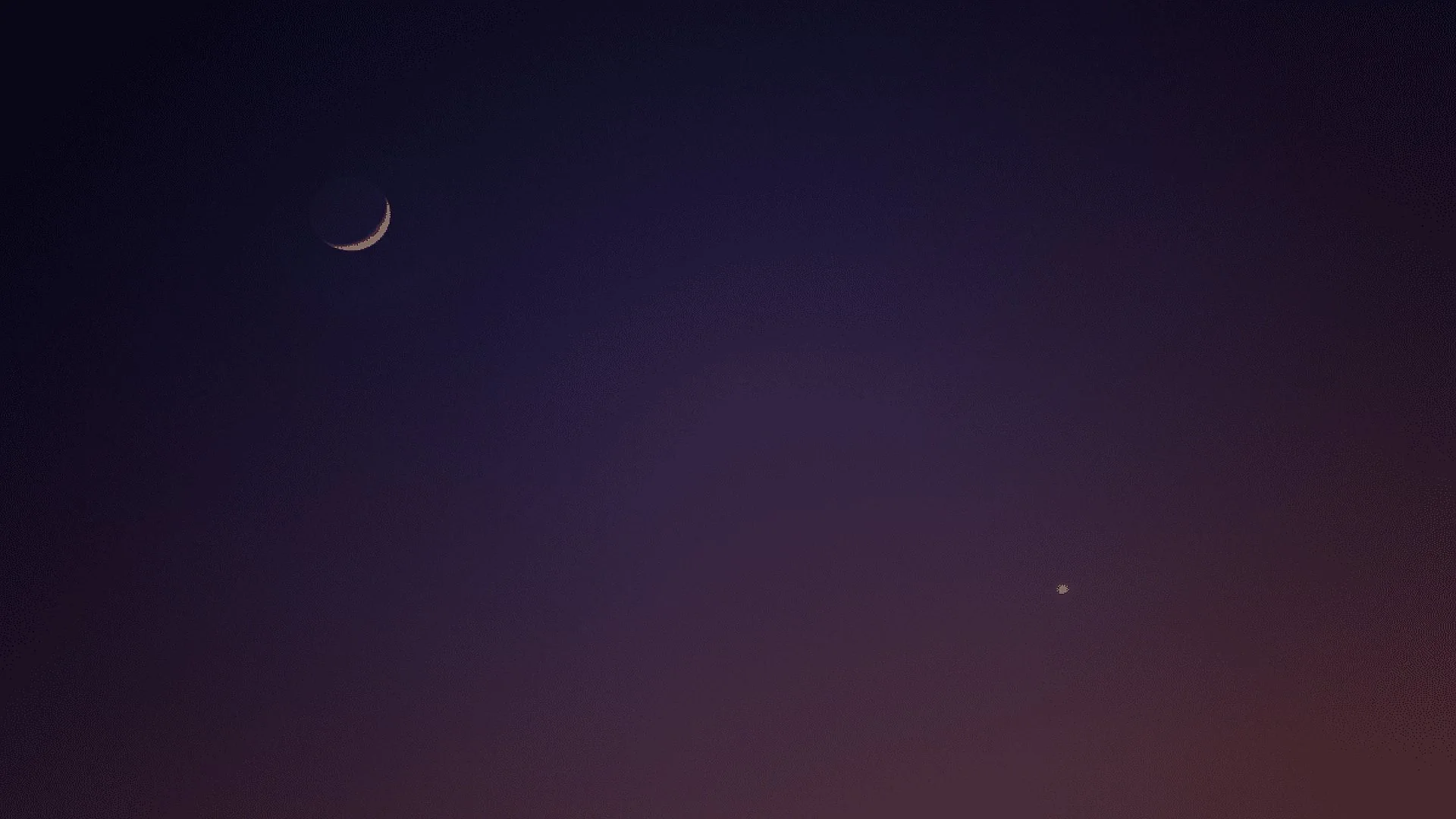
The evening sky is set to dazzle on May 18, as a brilliant Venus converges with a delicate crescent moon, creating a breathtaking spectacle that promises to captivate sky enthusiasts. This rare alignment will emerge just after sunset, offering a clear view of two of the sky’s brightest objects appearing remarkably close together from our vantage point on Earth.
A Celestial Harmony In The Western Sky
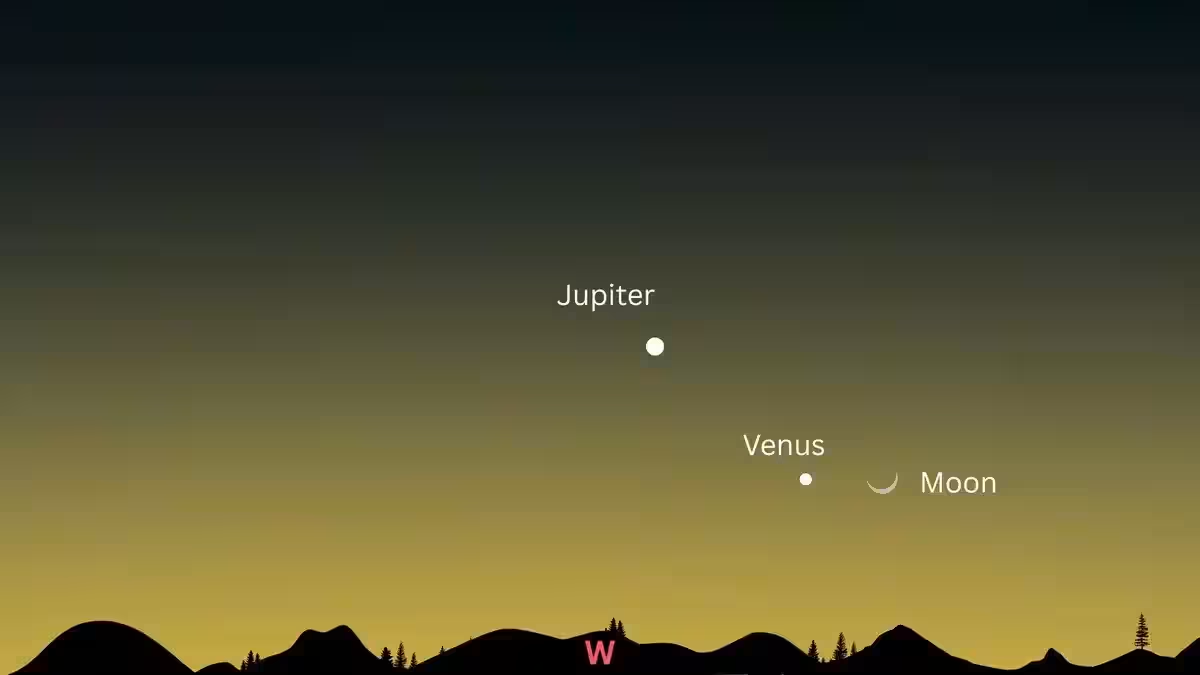
On the evening of May 18, observers will notice the crescent moon, just 2.1 days past the new moon, with only 7% illumination, positioned a mere 3 degrees to the right of Venus. To put this into perspective, holding your fist at arm’s length measures roughly 10 degrees, making the moon appear about one-third of a fist away from the radiant planet. Although the two seem close in the sky, they are separated by vast distances: the moon orbits 224,000 miles (360,000 km) from Earth, while Venus lies some 124 million miles (200 million km) away. This striking alignment creates the illusion of proximity and highlights the dynamic motion of celestial bodies in our solar system.
Brightness And Perception: A Surprising Contrast
Many casual observers assume Venus outshines the crescent moon, but the truth is more intriguing. Venus shines at a dazzling magnitude of -4.0, appearing as a small, sharp point of light, while the moon, even as a thin crescent, reaches magnitude -7.1, making it approximately 17 times brighter. The seeming discrepancy is due to the moon’s light being spread over a larger area, which makes it appear less intense than the concentrated brilliance of Venus. This contrast offers a perfect opportunity for amateur astronomers to explore the nuances of brightness and perception in the night sky.
Venus At Its Peak Visibility
During May, Venus is increasing its elongation from the Sun, moving from 24 to 32 degrees away, making it highly visible from northern temperate latitudes. The planet hangs in the western sky at dusk, 25 degrees above the horizon, and its gibbous disk is roughly seven-eighths illuminated. Space.com notes that this period offers excellent conditions for telescopic observation, as the bright twilight helps reduce the overwhelming glare of Venus. The planet will set around 10:50 p.m. local daylight time, providing several hours of viewing before it disappears below the horizon.
This article has been fact checked for accuracy, with information verified against reputable sources. Learn more about us and our editorial process.
Last reviewed on .
Article history
- Latest version
Reference(s)
- Rao, Joe. “Venus and a razor-thin moon steal the show after sunset tonight.”, May 17, 2026 Space <https://www.space.com/stargazing/venus-and-a-slender-crescent-moon-steal-the-show-after-sunset-on-may-18-2026>.
Cite this page:
- Posted by Zara Tariq