New AI Tool Lets Scientists Design Custom Proteins Using Simple Everyday Language
New AI tools allow scientists to design complex proteins using plain language, making advanced biological research accessible to a wider range of experts.
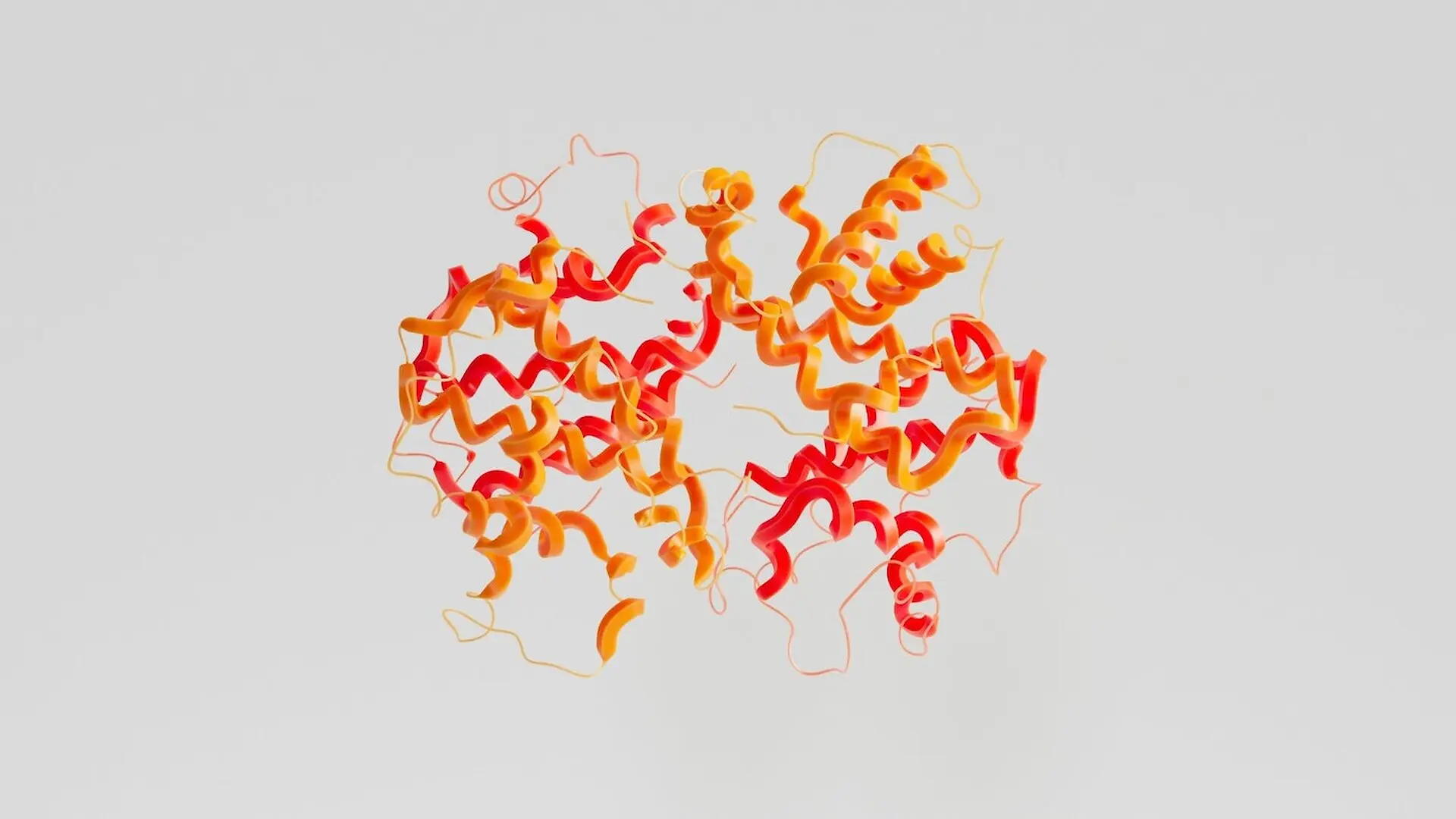
AI Breakthrough Democratizes Protein Engineering With Plain-Language Prompts
For years, the field of protein engineering has been a high-barrier domain, accessible only to experts capable of navigating intricate structural constraints and specialized computational modeling. A new development, however, is shifting that landscape by allowing researchers to design custom proteins using simple, everyday language.
In a study published in Nature, a team of scientists from Westlake University introduced Pinal, an artificial intelligence system that translates functional descriptions into specific amino acid sequences. By removing the need for deep technical expertise in structural biology, this tool promises to broaden the range of researchers capable of conducting complex protein design.
The core of Pinal’s innovation lies in its two-stage architecture. Rather than requiring users to define precise structural parameters, the system first converts a plain-language prompt into a viable structural blueprint. A second module then analyzes both that blueprint and the original request to construct the corresponding amino acid sequence. To improve accuracy, the model generates multiple candidates, scoring each against the functional goal before selecting the most promising configuration.
Training this system required a massive dataset, consisting of roughly 135 million protein sequences and 1.7 billion protein-text pairs. The researchers leveraged AlphaFold to predict structural data, providing a robust foundation for the model to learn the relationship between natural language functions and physical molecular forms.
Testing Functional Capabilities
To evaluate its effectiveness, the research team tasked Pinal with creating four distinct biological components: a fluorescent protein, an enzyme capable of degrading PET plastic, an alcohol-processing enzyme, and a metabolic shuttle protein. The results showed varying levels of success. For the fluorescent protein, the system produced 50,000 candidates, of which 29 were laboratory-tested, with one successfully exhibiting luminescence. Conversely, the shuttle protein showed higher efficiency, with 25 percent of tested candidates proving functional, including one that boosted carbon dioxide fixation by 1.7 times compared to natural counterparts.
While Pinal represents a significant shift in methodology, it is part of a broader trend in generative biology. A separate initiative involving researchers from China, Italy, and Hugging Face recently launched Carbon-X, a 14-billion-parameter model focused on DNA. Designed to predict mutation outcomes and generate new genetic sequences, Carbon-X is notable for its ability to run on consumer hardware like a MacBook, offering a private alternative for researchers hesitant to upload sensitive data to large, commercial cloud-based AI providers.
Limitations and Future Directions
Despite these advancements, the researchers emphasize that these tools are not a replacement for traditional wet-lab validation. Pinal faces challenges regarding the breadth of its search space, while models like Carbon-X can struggle with longer sequences and the risk of generating inaccurate, or “hallucinated,” biological data. Furthermore, bringing these digital designs to life still requires a fully equipped laboratory and skilled practitioners.
Nevertheless, the transition from manual, constraint-heavy design to functional, language-based prompting marks a pivotal moment in biotechnology. By reframing protein engineering as a task of description rather than complex calculation, these tools are set to empower a new generation of scientists to tackle biological challenges that were once considered the exclusive province of computational specialists.
This article has been fact checked for accuracy, with information verified against reputable sources. Learn more about us and our editorial process.
Last reviewed on .
Article history
- Latest version
Reference(s)
- Dai, Fengyuan. “Programmable design of functional proteins from natural language - Nature.”, October 21, 2026, pp. 1-10. Nature, doi: 10.1038/s41586-026-11205-z. <https://www.nature.com/articles/s41586-026-11205-z>.
- “Introducing Carbon-X - a Hugging Face Space by HuggingFaceBio.” <https://huggingface.co/spaces/HuggingFaceBio/Carbon-X-Release>.
Cite this page:
- Posted by Rohan Kumar