Instead of Traditional Air Conditioning, He Buried Pipes in His Yard and Built a “Canadian Well” That Cools His House from Below
A compressor isn’t needed. No refrigerant circulates. Electricity bills won’t suddenly surge. A do-it-yourself enthusiast dedicated four years to reviving a centuries-old cooling technique right beneath his property.
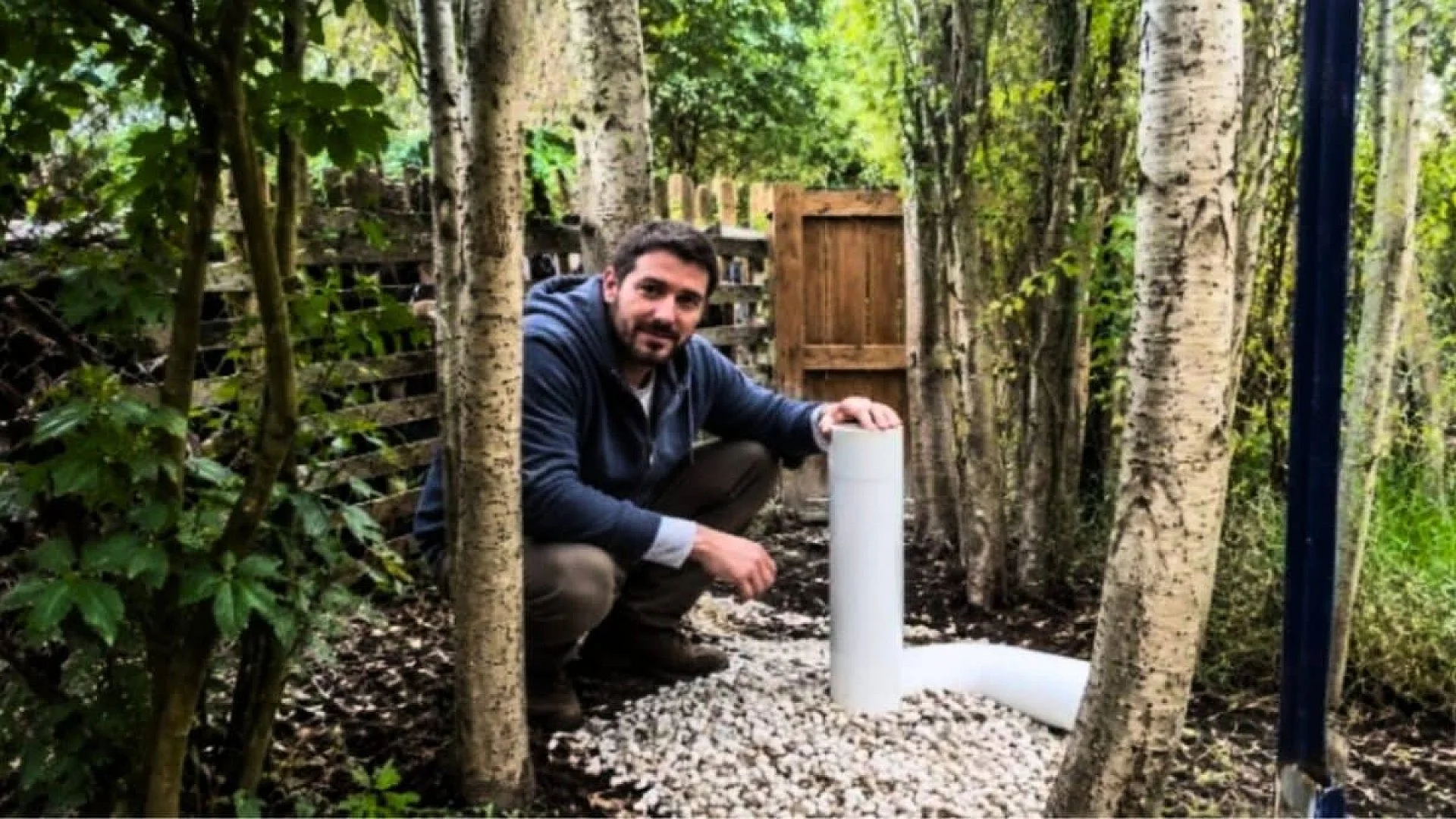
A South American content creator spent four years meticulously excavating and burying pipes beneath a residential courtyard. The ambitious project was not a conventional drainage or utility installation, but rather a groundbreaking room-cooling system that defied the need for a compressor, refrigerant gas, and an outdoor condenser unit.
The ingenious concept hinges on a fundamental physical principle: the stable temperature of the earth at sufficient depths, which remains far more consistent than surface air. As outdoor air soars to scorching temperatures, the soil beneath remains cooler. By drawing outside air through buried pipes before it enters a house, the earth itself effectively strips away the heat.
By 2026, the innovative system was successfully cooling specific rooms within the residence. The design drew inspiration from the Canadian well, also known as the Provençal well, a centuries-old method of harnessing subsoil temperatures to pre-condition ventilation air. The project garnered significant attention on social media for demonstrating the feasibility of a low-energy, compressor-free cooling setup on an ordinary residential lot.
The Science Behind a Canadian Well
A Canadian well is a form of passive geothermal climate control that relies on a single, fundamental principle: the soil several meters down holds a temperature that lags far behind the fluctuations of surface weather. In the sweltering summer months, the underground temperature is lower than the outside air, while in the winter, it is higher. Buried pipes become a heat exchanger, allowing air moving through them to give up heat to the surrounding earth or pull heat from it before entering the building.
According to technical descriptions of Canadian wells, soil at roughly 15 meters deep maintains a consistent temperature between 10°C and 16°C throughout the year. At shallower depths, the temperature fluctuates more, but it still remains well below the peak temperature of a hot summer afternoon. In regions with pronounced seasonal swings, the gap between surface air and subsoil is what makes the system effective.
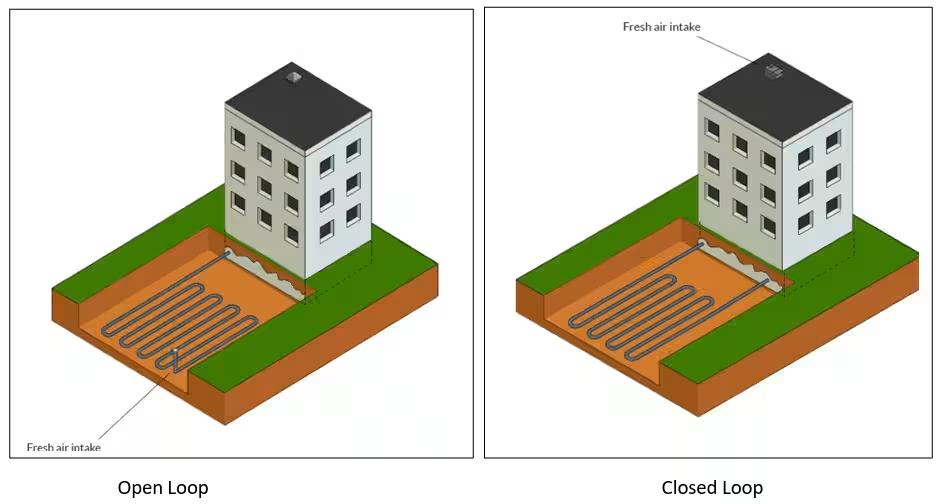
A Canadian government design guide on earth to air thermal exchangers provides valuable insights into how soil temperatures beyond two meters deep remain fairly constant and close to the annual mean air temperature. The guide also highlights the impact of soil type, moisture content, and compaction on thermal conductivity and the system’s ability to move heat between the air and the ground.
The Four-Year Courtyard Installation
The creator began excavation in 2022, and the full pipe network was not completed until 2026, although some rooms were already receiving cooled air before construction wrapped. The system served the children’s rooms, and according to the creator, it effectively eliminated the need for conventional air conditioning in those spaces.
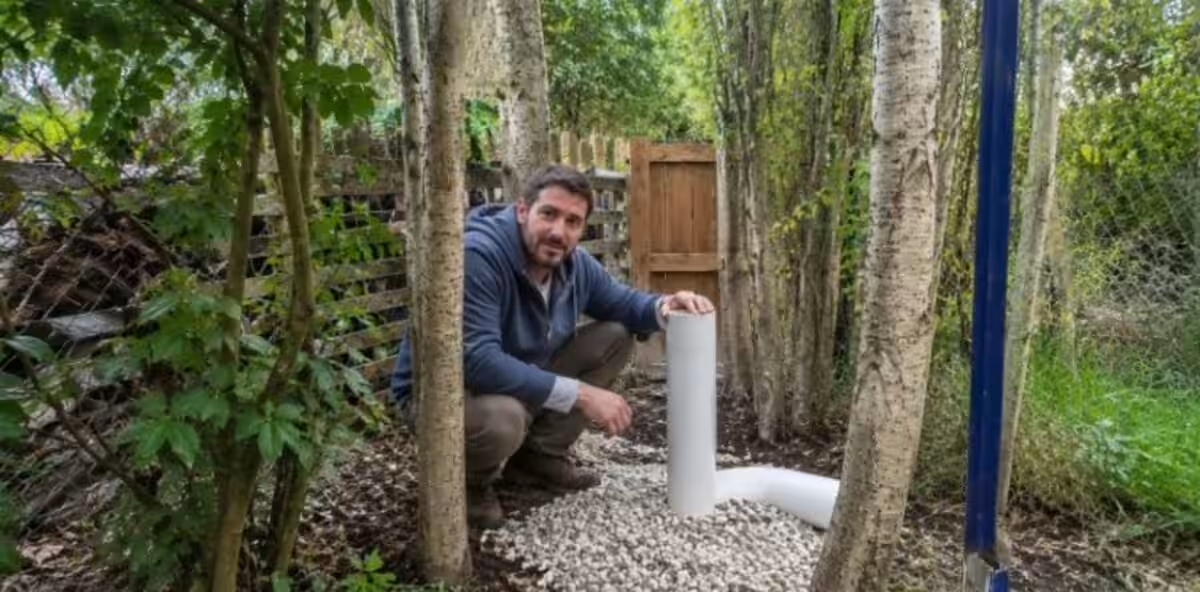
The setup buried pipes across the courtyard and connected them to the home’s interior. Air enters through an intake, travels through the underground array, and arrives cooler than when it left the surface. On extremely hot days, the soil remains several degrees below the outside air, allowing the buried loop to exploit this temperature gap.
The Climate Action Accelerator resource on earth tubes outlines five typical components: an intake with filter and grid, an external duct buried 1.5 to 3 meters deep and running 30 to 50 meters long, a bypass damper, a manhole cover for access, and a ventilation system to distribute the treated air. The resource emphasizes the importance of pipes having a slope of 1 to 3 percent to drain condensation and reduce the risk of mold.
A Compressor-Free Cooling Solution
What sets a Canadian well apart from a mechanical air conditioner is everything it leaves out. A standard cooling unit relies on a vapor-compression cycle, which requires an electric compressor, a refrigerant charge, and a condenser coil to dump heat outside. In contrast, the buried-pipe system needs none of these components.
Most installations utilize a low-wattage fan to push air through the underground loop, while some setups rely solely on natural convection. Either way, the electricity draw is a fraction of what a compressor-based unit would consume, as the thermal work is handled by the ground.
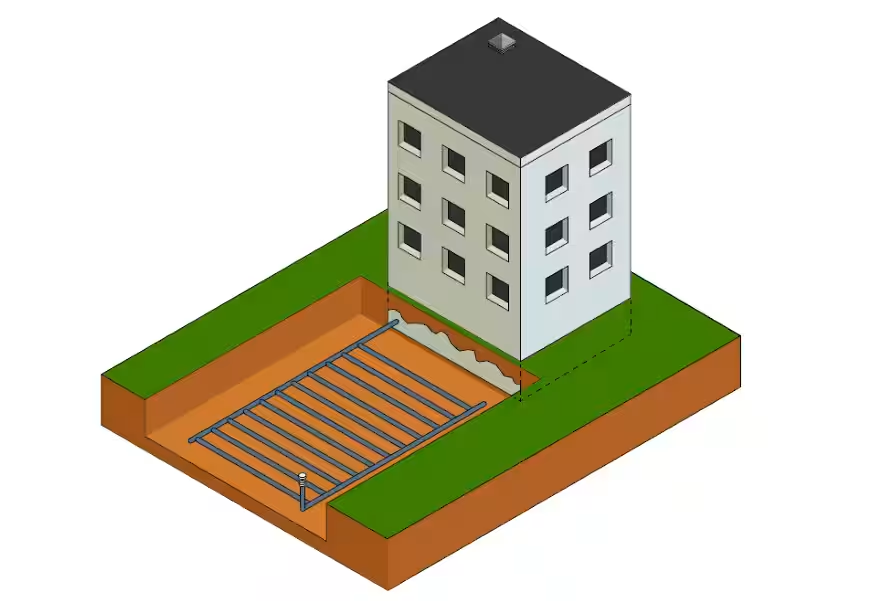
The source material frames the soil as a natural thermal battery that absorbs heat from the air as it moves underground and releases the cooled result into the living space. The Canadian design guide notes that these earth-to-air exchangers can preheat and precool ventilation air, reducing the need for electricity and fossil fuels.
However, the guide also points out that adoption in standard building projects has been slow, with designers often uncertain about performance and unfamiliar with the technology, despite its potential to help buildings achieve net-zero energy use.
Where the System Works and What Limits It
A Canadian well does not perform equally everywhere. The variables that matter are soil makeup, moisture level, pipe depth, pipe length, pipe diameter, and the temperature gap between surface and subsoil. The source material does not provide specific details on the pipe dimensions, spacing, or soil conditions used in the courtyard installation.
The setup works best in regions where summer heat exceeds deeper ground temperatures. In areas where the subsoil is already warm, the cooling potential is reduced. No measured data was provided on the precise temperature drop inside the children’s rooms or the airflow volume the system handled.
Excavation is the most significant challenge. A four-year timeline for a partial residential retrofit highlights the logistical reality of digging trenches, laying pipes on a steady slope to allow condensation to drain, and sealing every connection against groundwater and soil gas. Once in the ground, however, the system operates with almost no ongoing energy cost and uses no chemical refrigerants.
This article has been fact checked for accuracy, with information verified against reputable sources. Learn more about us and our editorial process.
Last reviewed on .
Article history
- Latest version
Reference(s)
- “ENG EATEX Design Principles And Concept Design Tool.” <https://natural-resources.canada.ca/sites/nrcan/files/canmetenergy/pdf/ENG_EATEX_Design_Principles_and_Concept_Design_Tool.pdf>.
- “Earth Tubes - Climate Action Accelerator.” Climate Action Accelerator <https://climateactionaccelerator.org/solutions/earth-tubes/>.
Cite this page:
- Posted by Zara Tariq