Buried for 94 Years, the Missing Half of a Legendary Egyptian Colossus Has Finally Been Found
A 23-foot pharaoh lay divided in burial for about a hundred years. Experts have now reunited the fragments, and the visage remains flawlessly preserved.
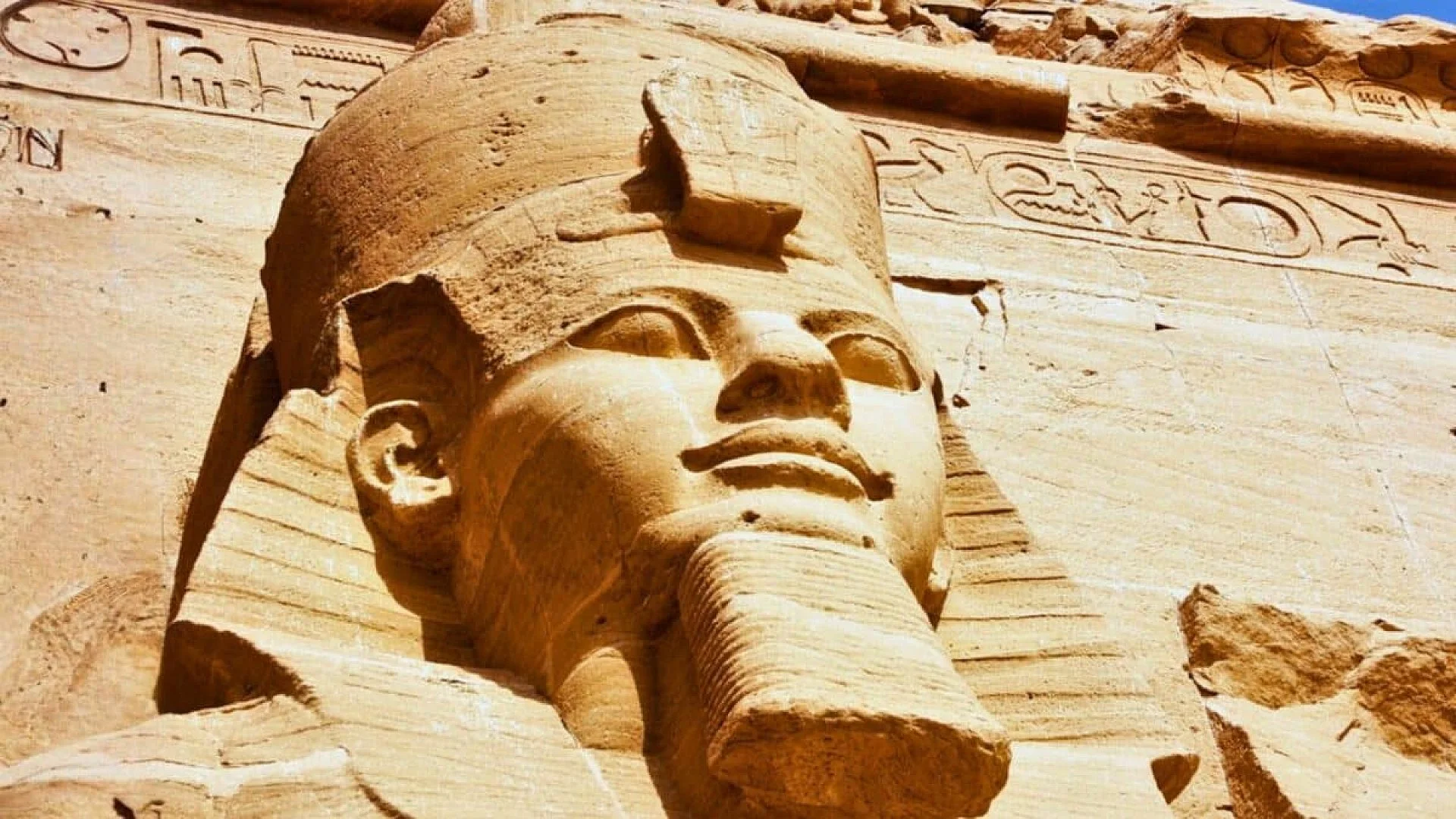
A colossal limestone statue, measuring 12.5 feet in length, was unearthed in January 2024 at El Ashmunein, approximately 150 miles south of Cairo. The stone, which was heavy and porous, had been buried directly above the Nile water table for centuries. Despite the risks of exposure, the team was able to uncover the upper half of the statue, 94 years after the lower half was discovered in the same location.
The excavation was led by an Egyptian-American team, co-headed by Yvona Trnka-Amrhein, a classics professor at the University of Colorado Boulder, and Basem Gehad of the Egyptian Ministry of Tourism and Antiquities. The team used ground-penetrating radar to locate the statue, which was buried beneath several layers of sediment.
“We knew it might be there, but we were not specifically looking for it,” Trnka-Amrhein said. “It was a total surprise.”
The Lower Half Had Waited Since 1930
The lower half of the statue was discovered in 1930 by German archaeologist Günther Roeder. It remained at the site for 94 years, a fragment without a match, until the upper half was uncovered in 2024. A British Museum team had previously worked at the site in the 1980s, but failed to find the upper half.
Once the newly found block was stabilized, it measured roughly 3.8 meters tall, according to the Egyptian Ministry of Tourism and Antiquities. Researchers tied the two halves together through their limestone composition and the hieroglyphic inscriptions on the back pillar, which listed the same royal titles of Ramesses II found on the lower half.
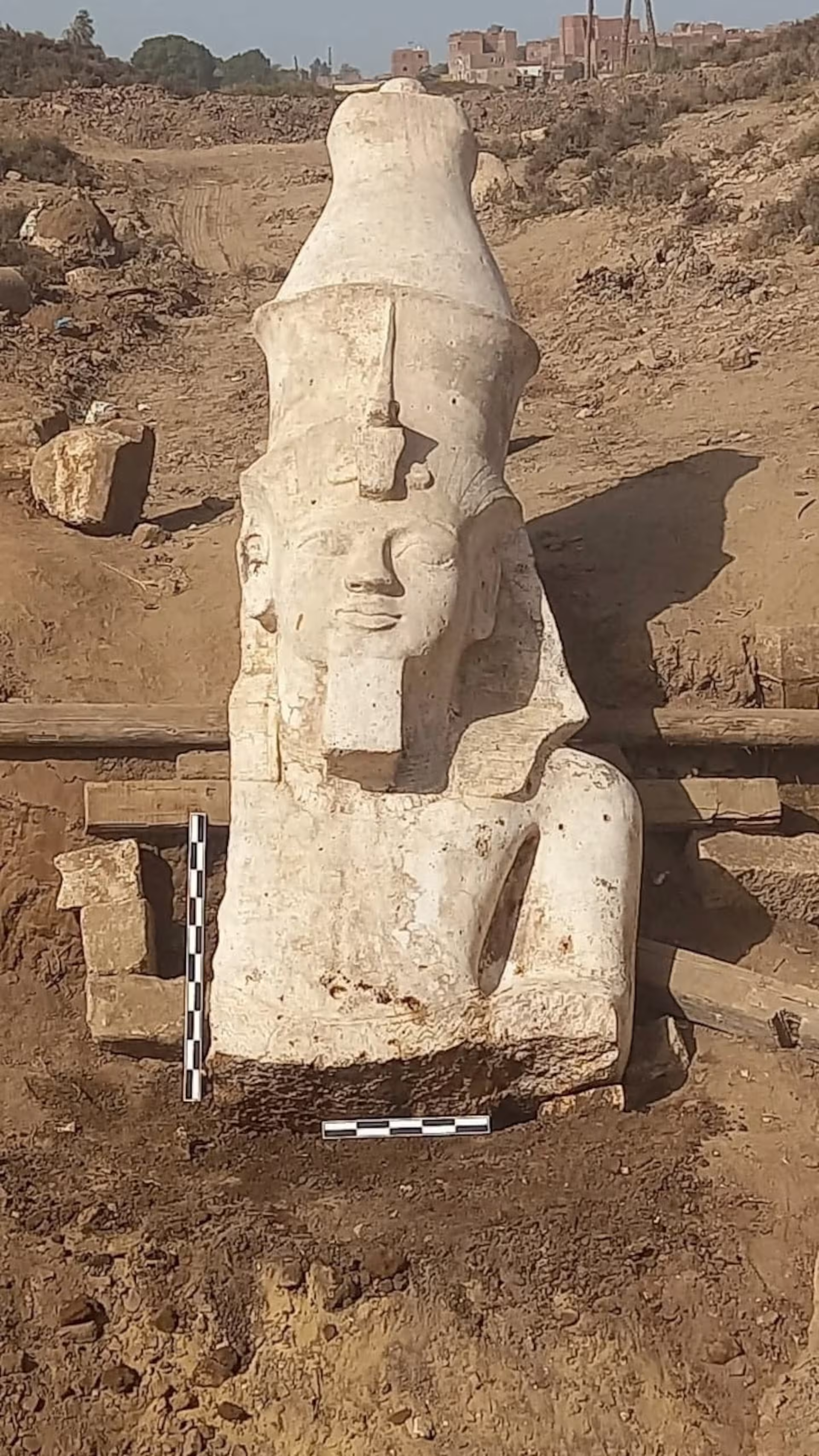
The statue depicts the pharaoh seated, wearing a double crown and headdress with a royal cobra at the brow. The team used ground-penetrating radar to locate the statue, which was buried beneath several layers of sediment.
Why Hermopolis and Why This Statue Mattered
Hermopolis Magna, called Khmunu in antiquity, was a significant religious hub in Upper Egypt, roughly 150 miles south of Cairo. Its central deity was Thoth, god of learning and scribes. A German expedition working the site from 1929 to 1939 uncovered sections of the temple of Thoth and remains from later Hellenistic and Roman occupation.
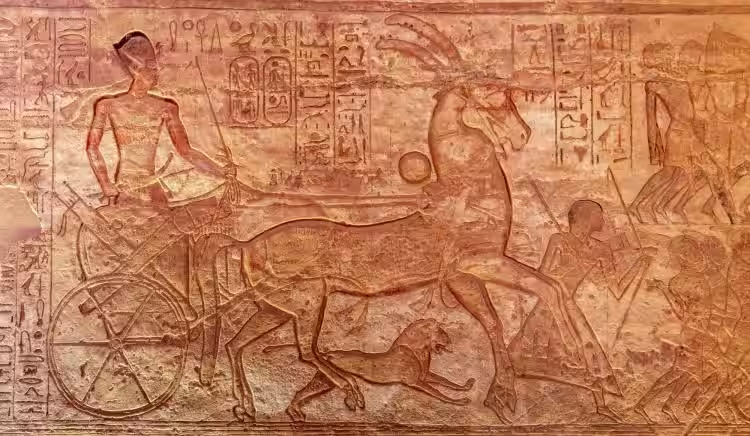
Ramesses II ruled from approximately 1279 to 1213 BCE, the third pharaoh of the 19th Dynasty. He reigned for 66 years and built relentlessly: the temples at Abu Simbel, the complex at Abydos, the great hall at Karnak. Hermopolis sat at a geographic midpoint between Egypt’s northern and southern power centers, and placing a colossus there was consistent with how the pharaoh used architecture to project authority across the empire.
The statue’s eventual collapse is not fully explained by the sources. Researchers have pointed to seismic activity in late antiquity as one possibility. What is clear is that once it fell, the Nile helped conceal it. The construction of the Aswan Low Dam in 1902 pushed the local water table higher, and stone left submerged in those conditions can deteriorate badly.
Trnka-Amrhein described the risk plainly: exposed limestone near the Nile can reduce to something close to sand. The limestone statue fragments needed a full year of conservation work before the two halves could be safely joined.
Pigment, Excavation Plans, and What Remains Unknown
The upper half held more than researchers expected. The blue and yellow pigment on the stone is now being analyzed, with soil trapped inside the paint examined alongside the pigment itself. Gehad, whose specialty is Greco-Roman period painting, is leading that work. What the analysis might confirm about the statue’s original appearance or date of creation has not yet been reported.
By early 2026, the two sections were being physically reunited. The reassembled statue is expected to stand seven meters tall once complete. Rather than moving it to Cairo, the Egyptian Ministry of Tourism and Antiquities has indicated a preference for keeping it on-site, displayed where it was found.

A second archaeological excavation phase is scheduled for late 2026, focused on the northern section of the temple of Thoth, where researchers expect to find the foundations of the pylon the statue once flanked.
Colossi of this kind typically stood in pairs. If that pattern held here, another figure may still be buried nearby. Engineers are assessing drainage options to protect the reassembled statue from groundwater over the long term. Trnka-Amrhein has said a formal paper on the work is forthcoming, with additional University of Colorado Boulder graduate students expected to join the project.
This article has been fact checked for accuracy, with information verified against reputable sources. Learn more about us and our editorial process.
Last reviewed on .
Article history
- Latest version
Reference(s)
- Evans, Clay. “Archaeologists unearth top half of Ramesses II.” Colorado Arts and Sciences Magazine <https://www.colorado.edu/asmagazine/2024/04/17/archaeologists-unearth-top-half-ramesses-ii>.
- Editors, Britannica. “Hermopolis Magna | Egypt, Map, & Facts.”, July 20, 1998 Encyclopedia Britannica <https://www.britannica.com/place/Hermopolis-Magna>.
- Mark, Joshua. “Ramesses II.”, September 2, 2009 https://www.worldhistory.org#organization <https://www.worldhistory.org/Ramesses_II/>.
- <https://www.reuters.com/science/archaeologists-egypt-unearth-section-large-ramses-ii-statue-2024-03-04/>.
Cite this page:
- Posted by Zara Tariq