Climate Change Is Expanding Deadly Aspergillus Zones, Threatening Global Health and Crops
Climate change spreads deadly Aspergillus fungi to new regions, threatening vulnerable patients, crops and global food security.
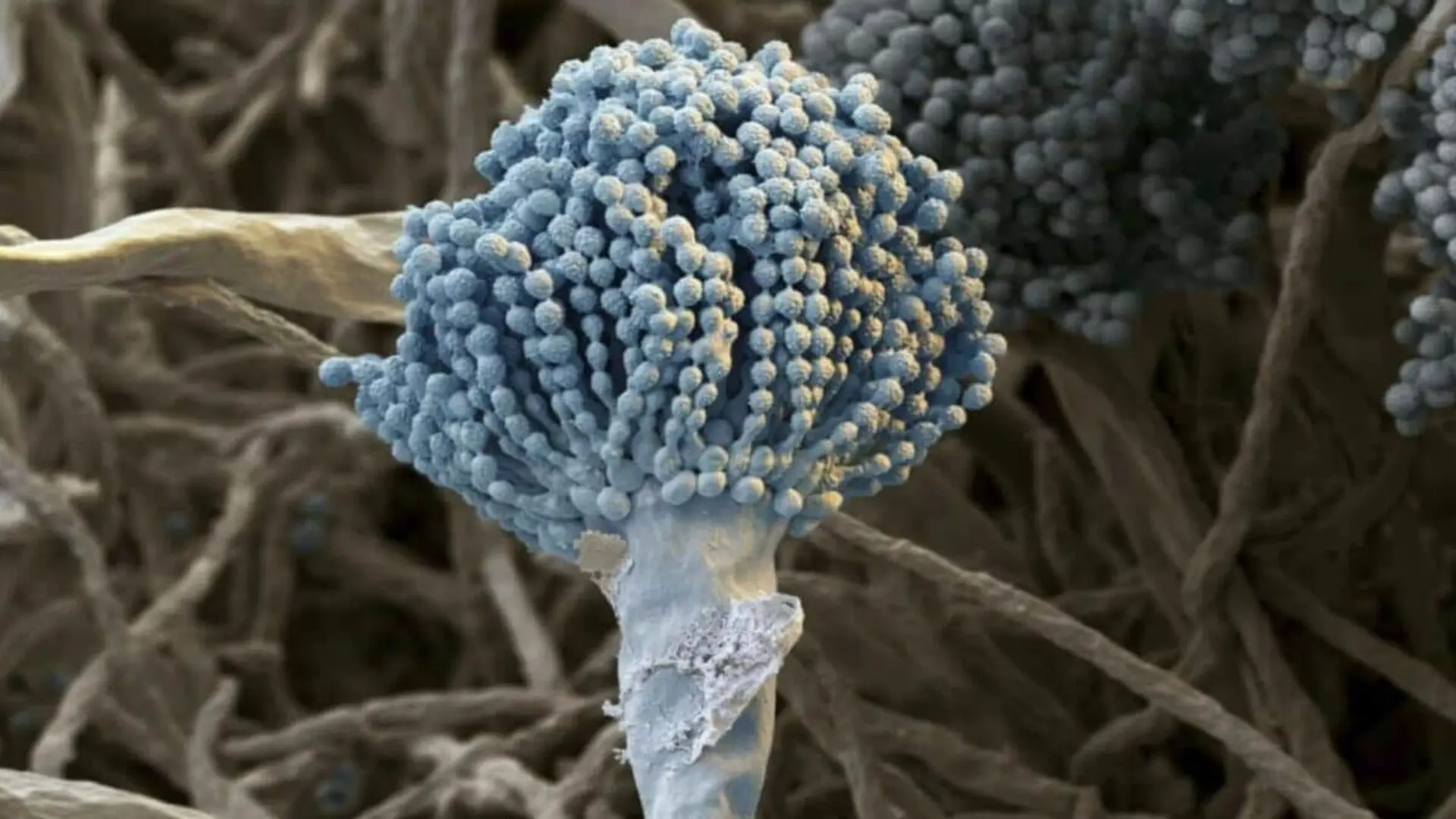
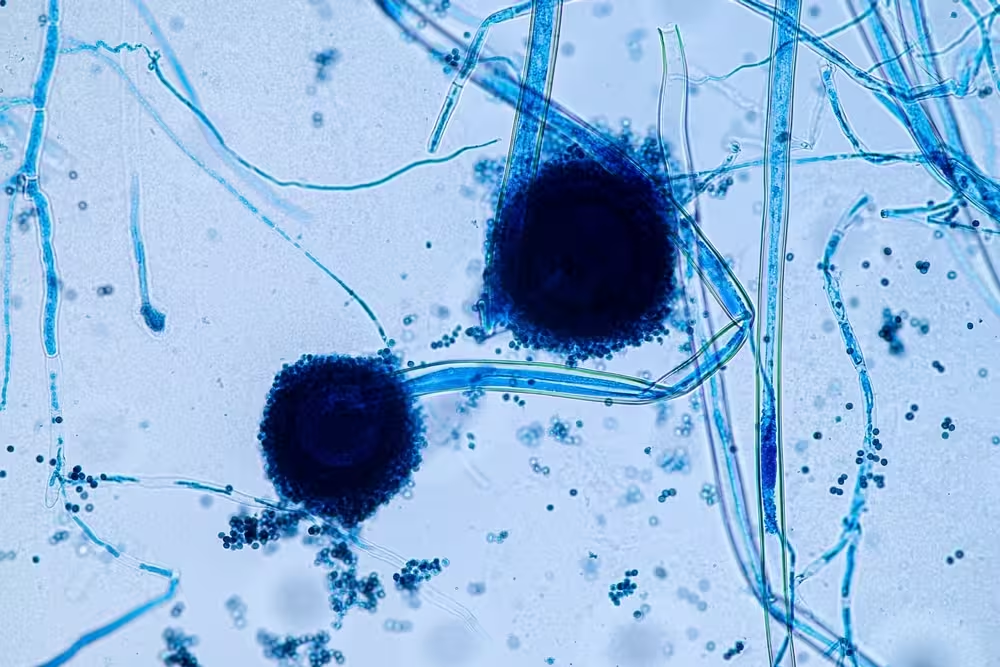
Each day we inhale hundreds of microscopic Aspergillus spores without noticing. While most people clear them effortlessly, individuals recovering from organ transplants, chemotherapy, or severe lung infections can develop invasive disease when the spores settle in their lungs. A new modeling effort indicates that the climatic zones favoring these fungi are moving, with repercussions for public health and worldwide food production.
Scientists from the University of Manchester, in collaboration with the Liverpool School of Tropical Medicine and the UK Centre for Ecology and Hydrology, combined global soil metabarcoding datasets with a Maximum Entropy (MaxEnt) modeling approach to chart the present and future ranges of three pathogenic Aspergillus species.
The analysis, posted as a preprint on Research Square in May 2025, has not yet undergone peer review. It predicts a consistent northward migration of all three species under warming scenarios, exposing populations in regions that were previously unsuitable while easing pressure in parts of the Southern Hemisphere.
Three Species, Shifting Climatic Footprints
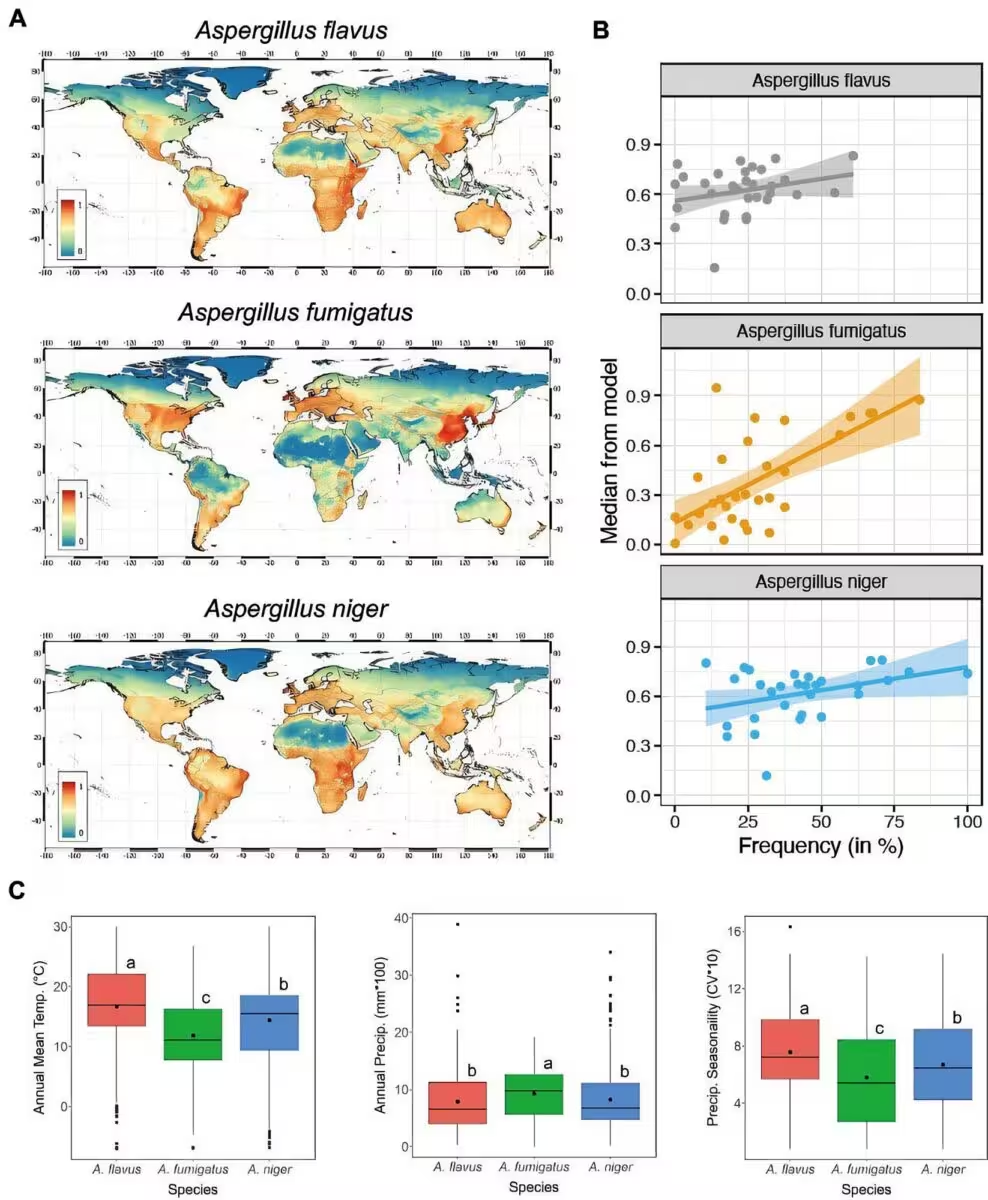
Aspergillus fumigatus presently thrives in temperate zones across Europe, North America and sections of China, favoring an average temperature near 12.3 °C. In contrast, A. flavus and A. niger are more prevalent in tropical and subtropical environments, with optimal mean temperatures of roughly 17.8 °C and 16.5 °C respectively. Across the models, annual mean temperature emerged as the dominant predictor of habitat suitability for each fungus.
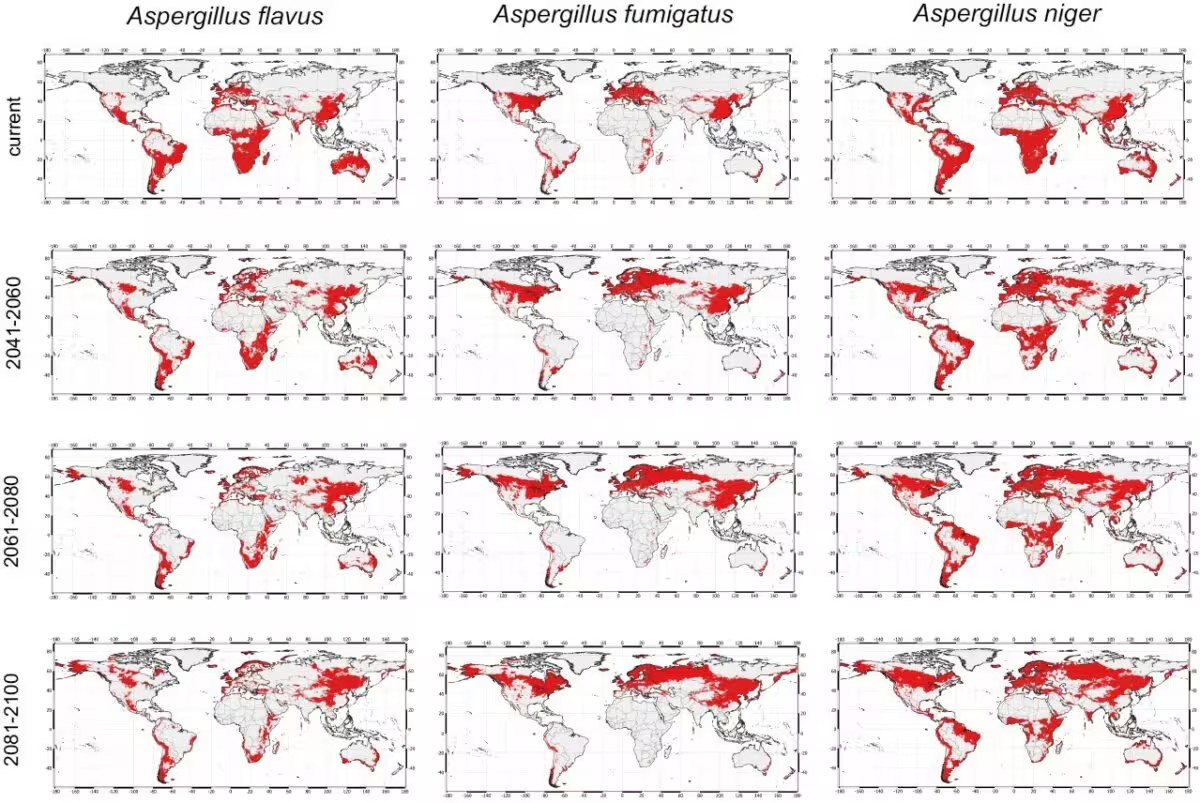
Under the most extreme emissions pathway examined (SSP585, which assumes continued global fossil‑fuel reliance through 2100), suitable terrain for A. fumigatus across Europe could expand by roughly 78 %. Newly favorable zones for A. flavus emerge in Scandinavia and Alaska, while expansive portions of Russia and northern China become more accommodating for fungi that historically occupied warmer latitudes. Conversely, large swaths of Australia, central Africa and Brazil are projected to exceed thermal limits for these species.
At present, about 1.98 billion people reside in areas conducive to A. fumigatus, 846 million for A. flavus, and 905 million for A. niger. The SSP585 scenario suggests an additional nine million Europeans could be exposed to A. fumigatus, even though the global count of people living in suitable habitats shifts more than it simply grows.
Soil‑Born Resistance Before Clinical Encounter
A critical facet of the Aspergillus challenge lies in azole antifungal resistance, which originates in the environment. Azoles serve as the primary therapy for invasive aspergillosis (IA)—a systemic infection responsible for an estimated 1.8 million deaths each year, as cited in the preprint.
Nearly identical azole compounds are also employed in agriculture to protect crops from fungal rot. Repeated exposure of environmental Aspergillus spores to these agricultural chemicals selects for resistant strains that can later be inhaled by immunocompromised patients.
UK surveys referenced in the paper documented elevated concentrations of the fungus and azole‑resistant isolates in compost bags, garden heaps and treated soils. As climate warming expands suitable habitats into new agricultural regions, the geographic scope of environmental azole exposure widens in parallel.
A review of 14 national cohorts revealed a positive link between the environmental density of a particular Aspergillus species and its frequency as the cause of IA in hospitals, underscoring the clinical relevance of soil distribution maps.
Potential Shifts in Crop Losses
Aspergillus fungi also threaten agriculture. A. flavus and A. niger regularly infect staple crops such as maize, rice and wheat, contaminating yields with aflatoxins—a group of potent mycotoxins harmful to humans and livestock. The preprint estimates that aflatoxin contamination could cost the U.S. corn sector anywhere from $52 million to $1.68 billion annually, with the higher figure reflecting extreme years like the 2012 season.
Model projections indicate a pronounced contraction of overlap between A. flavus habitat and global maize‑growing areas. Currently, the fungus intersects roughly 19.1 million km² of maize cultivation; under SSP585 this could shrink to 6.8 million km² by 2090, driven largely by the loss of suitability in South America and Africa. Northern Hemisphere crop zones, however, retain favorable conditions, suggesting heightened fungal pressure on those agricultural systems.
For rice, the overlap with A. flavus is expected to drop sharply—from about 8.8 million km² to roughly 2 million km²—while the decline for A. niger proceeds more gradually.
Expert Commentary on Emerging Risks
Lead author Dr. Norman van Rhijn of the University of Manchester emphasized that “changes in environmental factors, such as humidity and extreme weather events, will reshape habitats and drive fungal adaptation and spread,” noting the relative paucity of research on fungal pathogens compared with viruses and parasites.
Viv Goosens, Research Manager at the Wellcome Trust—the funder of the project—warned that fungal diseases pose a serious threat to both human health and food systems, and that climate change is poised to exacerbate those risks.
Model Constraints and Next Steps
The authors acknowledge several limitations inherent to the MaxEnt approach, which relies on presence‑only data and yields relative rather than absolute suitability scores. The framework does not capture micro‑environmental variability, potential evolution of thermotolerance, or biotic interactions that could modify species spread. Localized phenomena such as dust storms, floods or building renovations can generate temporary spikes in spore concentrations that fall below the model’s resolution.
Additionally, the analysis does not incorporate possible shifts in crop‑growing regions themselves, nor does it account for emerging patient risk factors like COVID‑19‑associated pulmonary aspergillosis. The researchers position their work as a baseline for proactive surveillance rather than a definitive clinical forecast, but the demonstrated correlation between environmental distributions and clinical infection patterns across multiple countries supports the utility of habitat models for guiding diagnostic and treatment planning.
This article has been fact checked for accuracy, with information verified against reputable sources. Learn more about us and our editorial process.
Last reviewed on .
Article history
- Latest version
Reference(s)
- “The University of Manchester.” The University of Manchester <https://www.manchester.ac.uk/>.
- “Climate change-driven geographical shifts in Aspergillus species habitat and the implications for plant and human health.”, May 2, 2025, doi: 10.21203/rs.3.rs-6545782/v1. <https://www.researchsquare.com/article/rs-6545782/v1>.
Cite this page:
- Posted by William Moore