Rocky Exoplanet LHS 1140b Retains Atmosphere for Billions of Years First Such Discovery
Astronomers detect atmosphere on rocky habitable-zone planet for first time, opening new prospects for habitability studies.
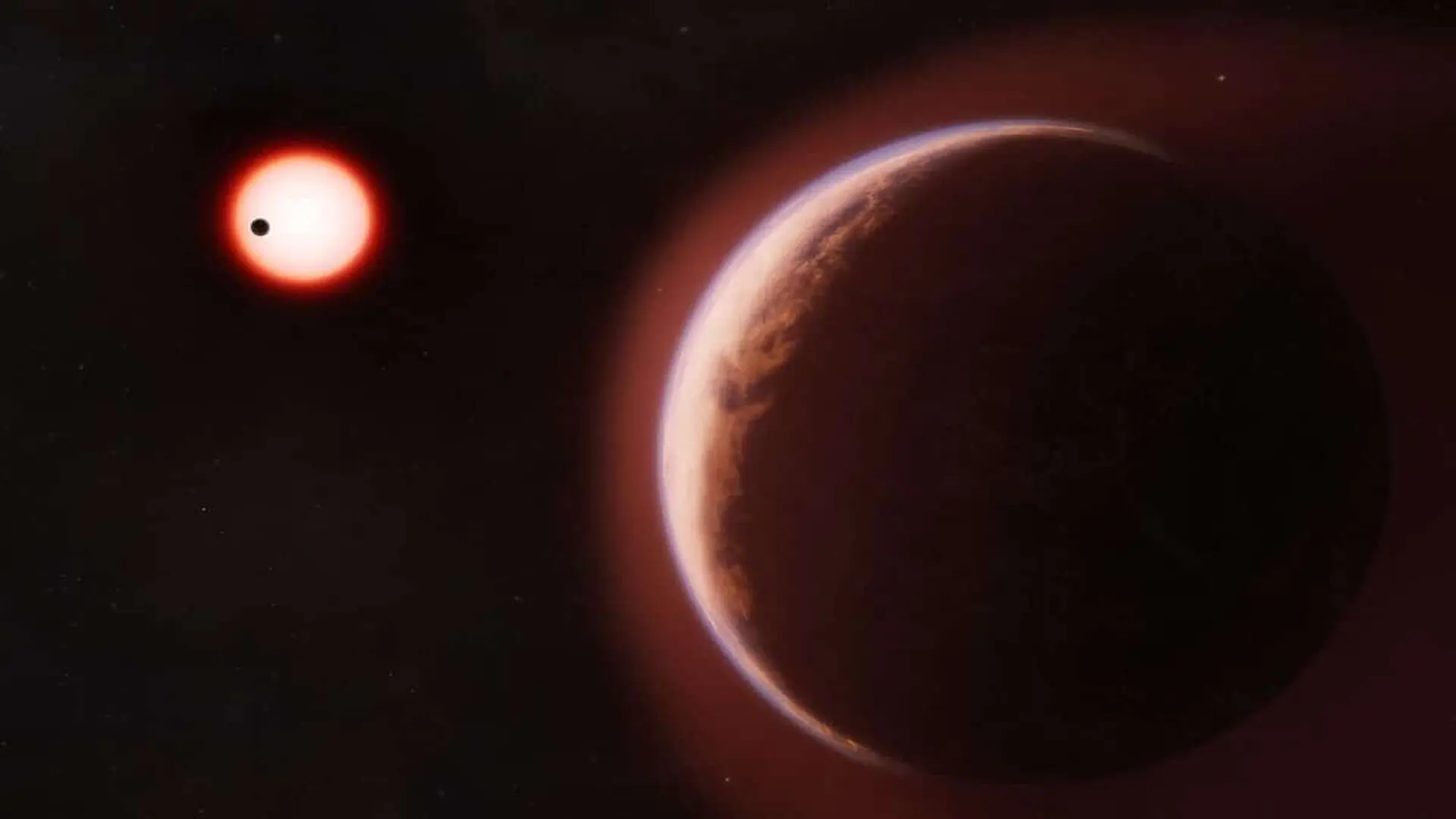
A team of astronomers has identified a persistent atmosphere surrounding the rocky exoplanet LHS 1140 b, located roughly 48 light‑years from Earth. The finding, detailed in Science, marks the first unambiguous detection of an atmosphere on a terrestrial planet that resides within the habitable zone of another star and has survived for billions of years.
Atmospheric Envelope Confirmed on a Habitable‑Zone World
The planet orbits a cool red dwarf and lies in the region where temperatures could allow liquid water to exist on its surface. While thousands of exoplanets have been catalogued, establishing whether any of them retain atmospheres—a key factor for climate regulation and radiation shielding—has remained a major challenge.
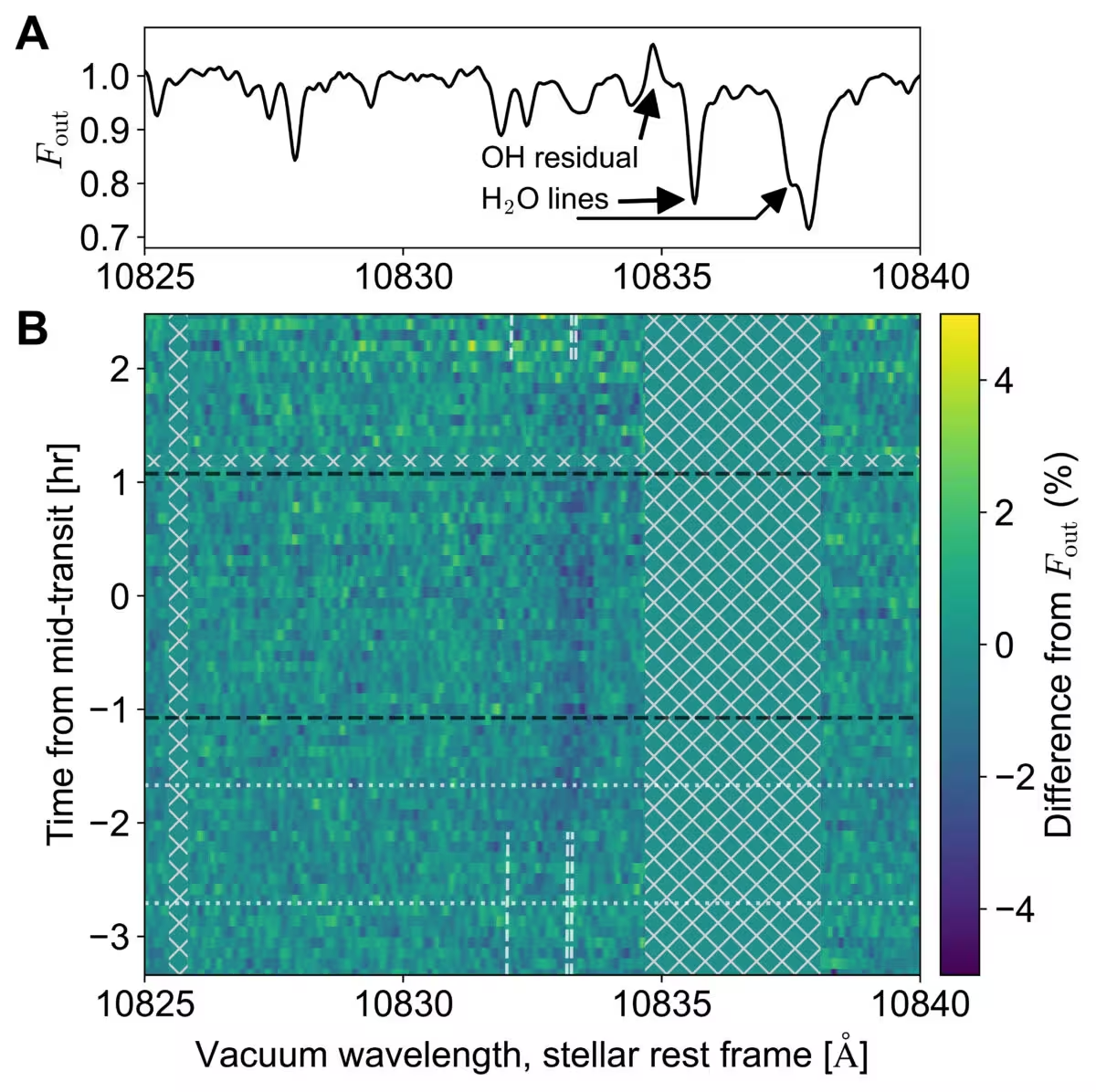
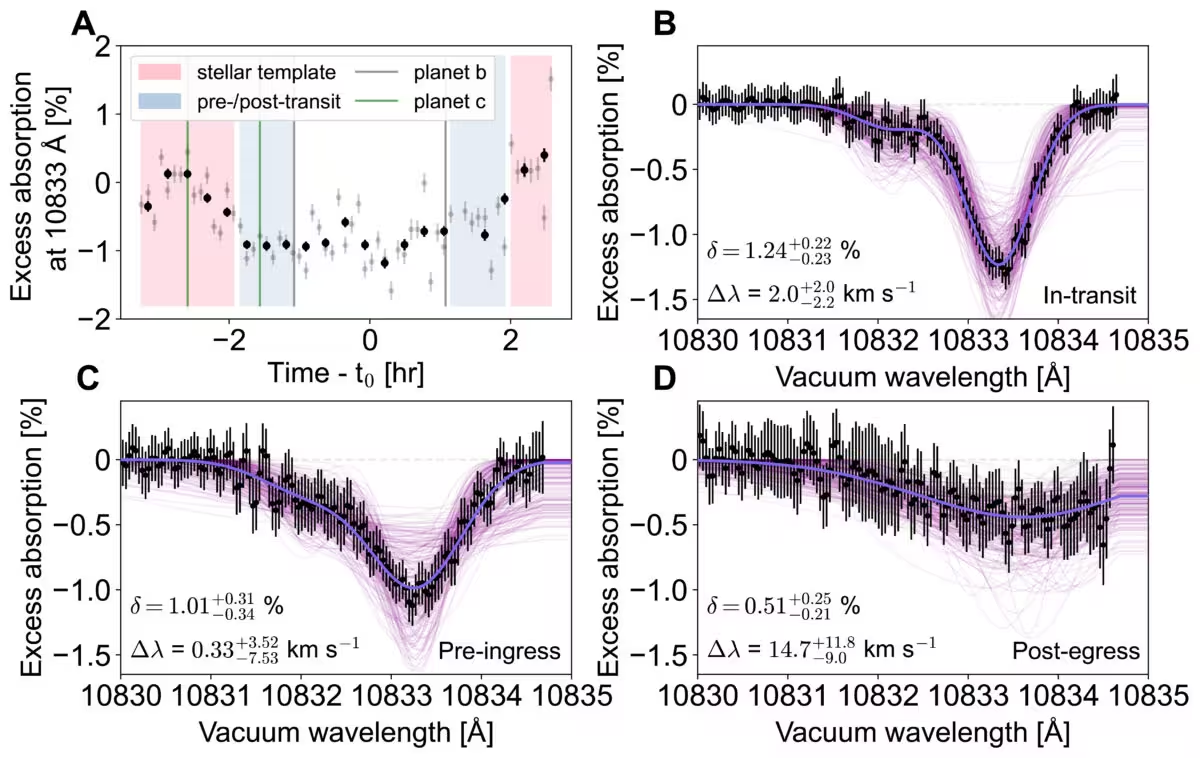
Using the Warm Infrared Echelle (WINERED) Spectrograph at Chile’s Magellan Observatory, researchers captured a rare double‑transit event that allowed a direct comparison between LHS 1140 b and a neighboring planet lacking atmospheric signatures. The contrast revealed a distinct helium absorption feature, indicating that gas is escaping from the upper layers of LHS 1140 b.
Lead author Collin Cherubim, a recent Harvard University Ph.D. graduate in Earth and Planetary Sciences, highlighted the significance of confirming an atmosphere on a distant rocky world.
“An atmosphere is essential for a planet to support life as we know it,” said lead author Collin Cherubim, who recently earned his Ph.D. in Earth and Planetary Sciences from Harvard University.
“This is the first time anyone has found an atmosphere on a rocky planet in the habitable zone of another star.”
Helium Signature Validates Theoretical Forecast
Prior to observations, Cherubim’s team developed a model predicting that the upper atmosphere of LHS 1140 b would be helium‑rich and slowly escaping. The WINERED measurements confirmed this expectation, demonstrating that ground‑based facilities can capture atmospheric signals from terrestrial exoplanets.
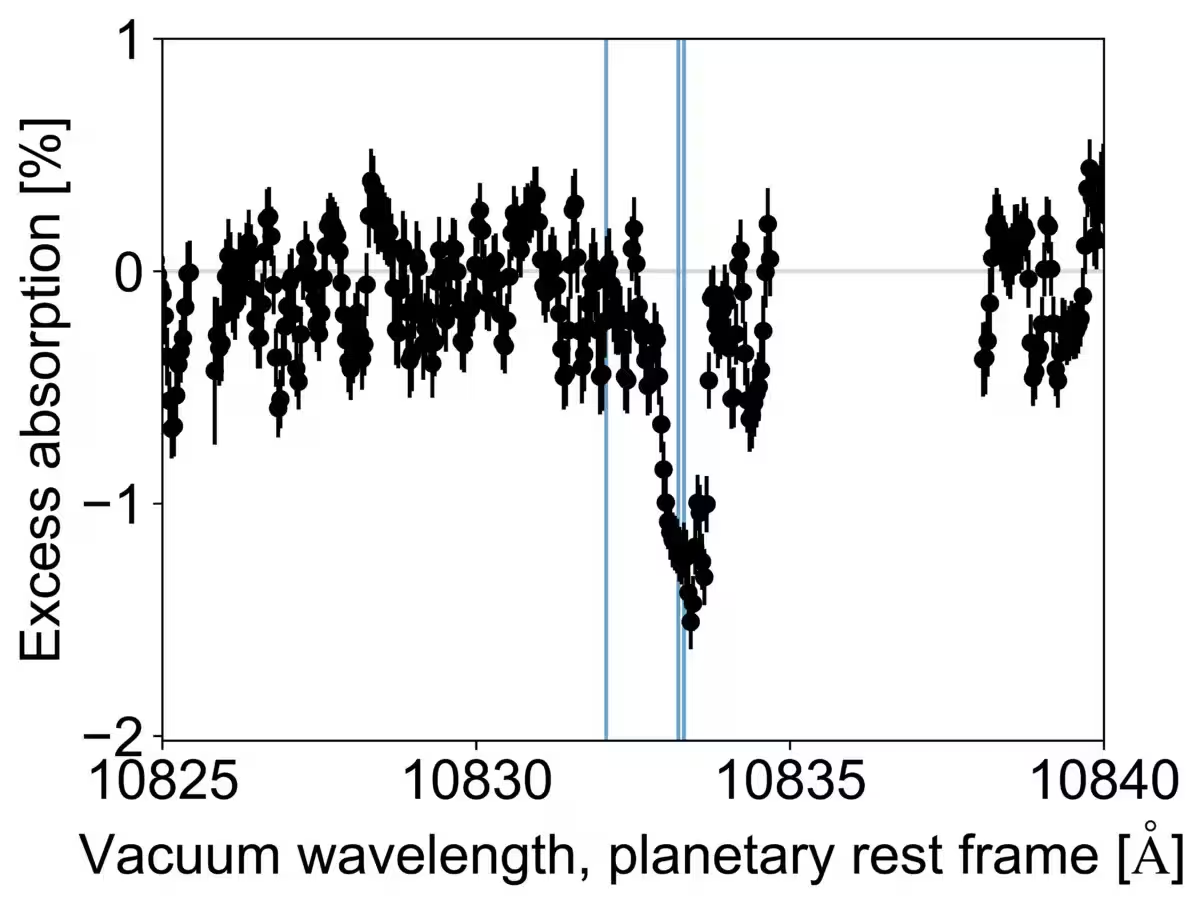
The paper, appearing in Science, underscores that helium detection, while not a complete compositional inventory, proves that LHS 1140 b has maintained an atmospheric envelope for over three billion years.
Model Prediction Confirmed by Observation
Harvard astronomer David Charbonneau, director of the university’s Department of Astronomy and a senior researcher at the Center for Astrophysics | Harvard & Smithsonian, initially questioned whether the theoretical framework could be verified. He noted that the model identified LHS 1140 b as the most promising candidate for a helium‑rich atmosphere.
“Collin analyzed the planets we knew about and predicted that this one would have a helium atmosphere,” Charbonneau said. “Then he organized telescope time, got the data, and the detection was statistically rock‑solid.”
The success illustrates how predictive modeling can streamline the search for habitable worlds, allowing astronomers to prioritize targets with the highest likelihood of retaining atmospheres.
Implications for Future Exoplanet Exploration
While the presence of helium does not alone indicate habitability, the longevity of LHS 1140 b’s atmosphere makes it a prime candidate for deeper spectroscopic studies aimed at uncovering other gases such as water vapor, carbon dioxide, or methane.
Robin Wordsworth, Gordon McKay Professor of Environmental Science and Engineering at Harvard, reflected on the field’s evolution: “Twenty years ago we wondered whether other terrestrial‑type planets even existed. Then we learned they’re common, and found some in the habitable zone. The next question was whether any of them had managed to keep an atmosphere. Now we know at least one has.”
Cherubim sees the detection as a starting point rather than a conclusion. “This has been a model validation, and hopefully it’s just the first of many more observations to come,” he remarked, emphasizing the need for continued surveys of nearby star systems.
As the catalog of nearby exoplanets expands, LHS 1140 b will serve as a benchmark for assessing how often rocky worlds can preserve atmospheres and what that implies for the prevalence of potentially habitable environments beyond Earth.
This article has been fact checked for accuracy, with information verified against reputable sources. Learn more about us and our editorial process.
Last reviewed on .
Article history
- Latest version
Reference(s)
- Cherubim, Collin., et al. “Helium escaping from the atmosphere of a nearby rocky exoplanet orbiting in a habitable zone.” Science, July 16, 2026 American Association for the Advancement of Science (AAAS), doi: 10.1126/science.aea9708. <https://www.science.org/doi/10.1126/science.aea9708>.
Cite this page:
- Posted by William Moore