Global Ocean Heat Record Broken as El Niño Looms, Raising Storm and Reef Risks
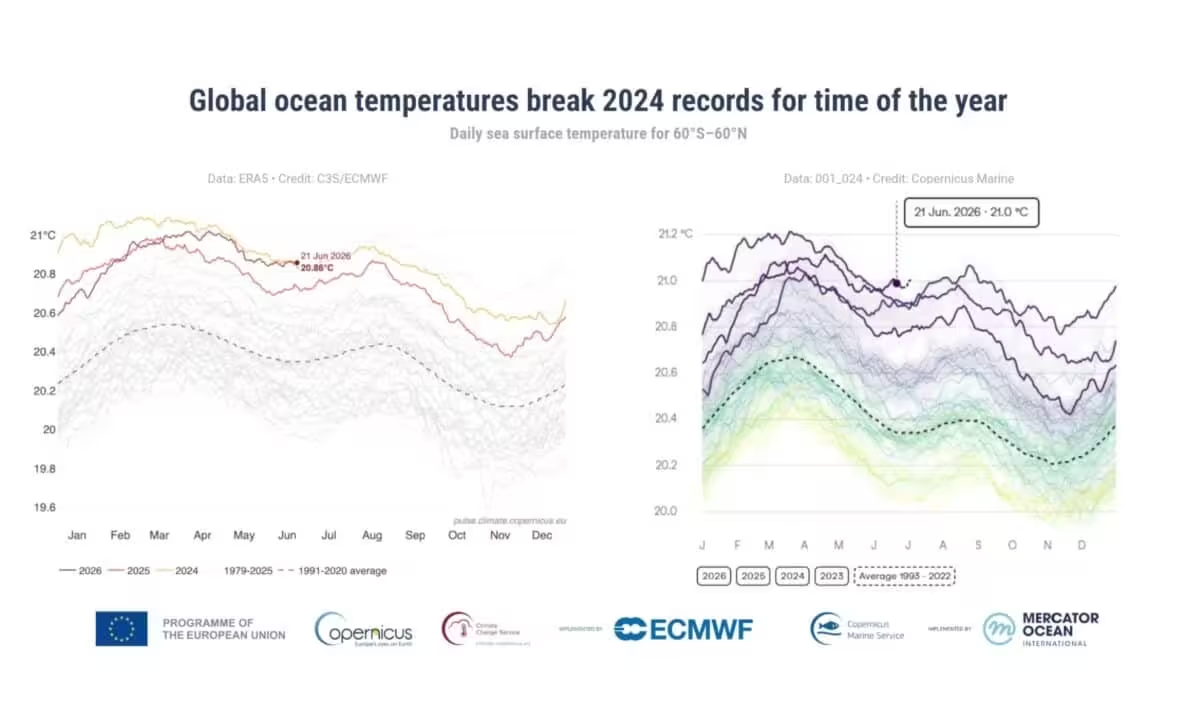
Global sea surface temps hit record highs on June 21 as El Niño intensifies warming in non‑polar oceans.

A rise of only a few hundredths of a degree in the global ocean average may seem tiny, but because it spans such a vast water surface it signals that heat is accumulating across multiple regions simultaneously rather than being confined to a single hotspot.
Elevated sea temperatures boost the energy available to storms, increase atmospheric moisture, accelerate sea‑level rise, hasten ice melt and put pressure on coral reefs, fisheries and other marine life. Recent observations have already noted unusually warm water in the Mediterranean, the Baltic Sea, sections of the Pacific and off northern Canada.
Dual Satellite Systems Verify Unprecedented Sea‑Surface Heat
On 21 June, the Copernicus Climate Change Service recorded a daily global sea‑surface temperature of 20.86 °C (69.55 °F), eclipsing the prior peak of 20.83 °C that was logged in both 2023 and 2024.
A separate assessment by the Copernicus Marine Service arrived at a comparable landmark, reporting sea‑surface temperatures of 21.0 °C (69.8 °F), also higher than the 2023‑2024 benchmarks.
The two agencies employ distinct methodologies: one blends observational data with weather‑model outputs to reconstruct a global picture, while the other leans more heavily on direct ocean measurements and forecasts. Their concordant results reinforce the credibility of the new record.
While the global mean has risen, regional variations remain pronounced. According to Copernicus and related analyses, European seas experienced sharp temperature spikes toward the end of June, with parts of the western Mediterranean climbing roughly 6 °C above long‑term norms.
“Current conditions could indicate the beginning of a new phase, leading, once more, to uncharted territory,” Carlo Buontempo, director of the Copernicus Climate Change Service, said in a statement.
El Niño Takes Shape Over an Already Warm Ocean
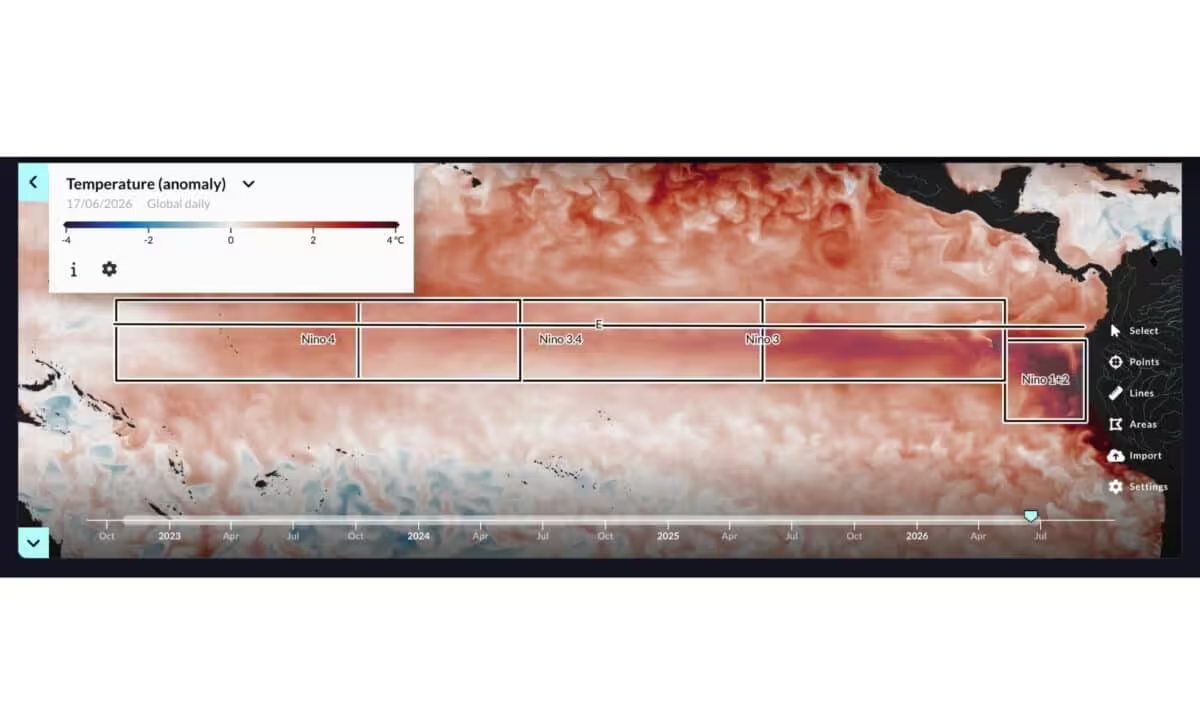
The fresh record arrives as an El Niño episode gains momentum in the Pacific. This natural climate oscillation spreads warm water across the central and eastern tropical Pacific, reshaping wind and precipitation patterns worldwide.
NOAA announced that El Niño conditions were officially declared on 11 June and are expected to intensify through the northern‑hemisphere winter of 2026‑27. The agency also estimates a 63 % probability that the event will become very strong between November and January, potentially ranking among the most powerful El Niño occurrences recorded since 1950.
The developing event is occurring on top of a warmer baseline. NASA reports that oceans have taken up about 90 % of the excess heat generated by global warming over the past century, raising the starting point for natural climate cycles.
“With ocean temperatures at these levels and El Niño on the horizon, we are likely to see more temperature records fall in the coming months,” Buontempo added.
Researchers caution that more time is needed to determine whether the June temperature surge is a fleeting spike or the onset of a longer‑term shift. El Niño can sustain higher temperatures for several months, and sea‑surface heat often peaks later in the northern‑hemisphere summer.
Implications for Coral Reefs, Fisheries and Coastal Populations
Rising ocean heat can cascade through marine ecosystems and affect land‑based communities. Coral colonies may expel the symbiotic algae that sustain them, while fish often migrate away from familiar habitats in search of cooler waters, disrupting local fisheries.
Warmer seas also increase atmospheric moisture, potentially delivering heavier rainfall to coastal areas. The added heat fuels stronger storms, and over longer periods contributes to sea‑level rise and accelerated ice melt.
Particularly concerning are marine heat waves, which can linger for months, damaging kelp forests, harming shellfish, unsettling fisheries and reshaping the distribution of marine species.
Having absorbed decades of excess heat, the oceans are now releasing additional warmth as El Niño unfolds. Scientists are closely monitoring whether the June record marks a brief anomaly or signals a more persistent transformation in global ocean conditions.
This article has been fact checked for accuracy, with information verified against reputable sources. Learn more about us and our editorial process.
Last reviewed on .
Article history
- Latest version
Reference(s)
- “Copernicus Marine and Copernicus Climate Change: Daily global sea surface temperatures break records for the time of year | CMEMS.” <https://marine.copernicus.eu/press/press-releases/copernicus-marine-et-copernicus-changement-climatique-les-temperatures>.
Cite this page:
- Posted by William Moore