New Models Suggest Earth May Escape the Sun’s Red Giant Phase: Uncertainty Remains
New calculations show Earth could avoid being swallowed by the Sun’s red‑giant phase, possibly moving to a wider orbit around the resulting white dwarf.
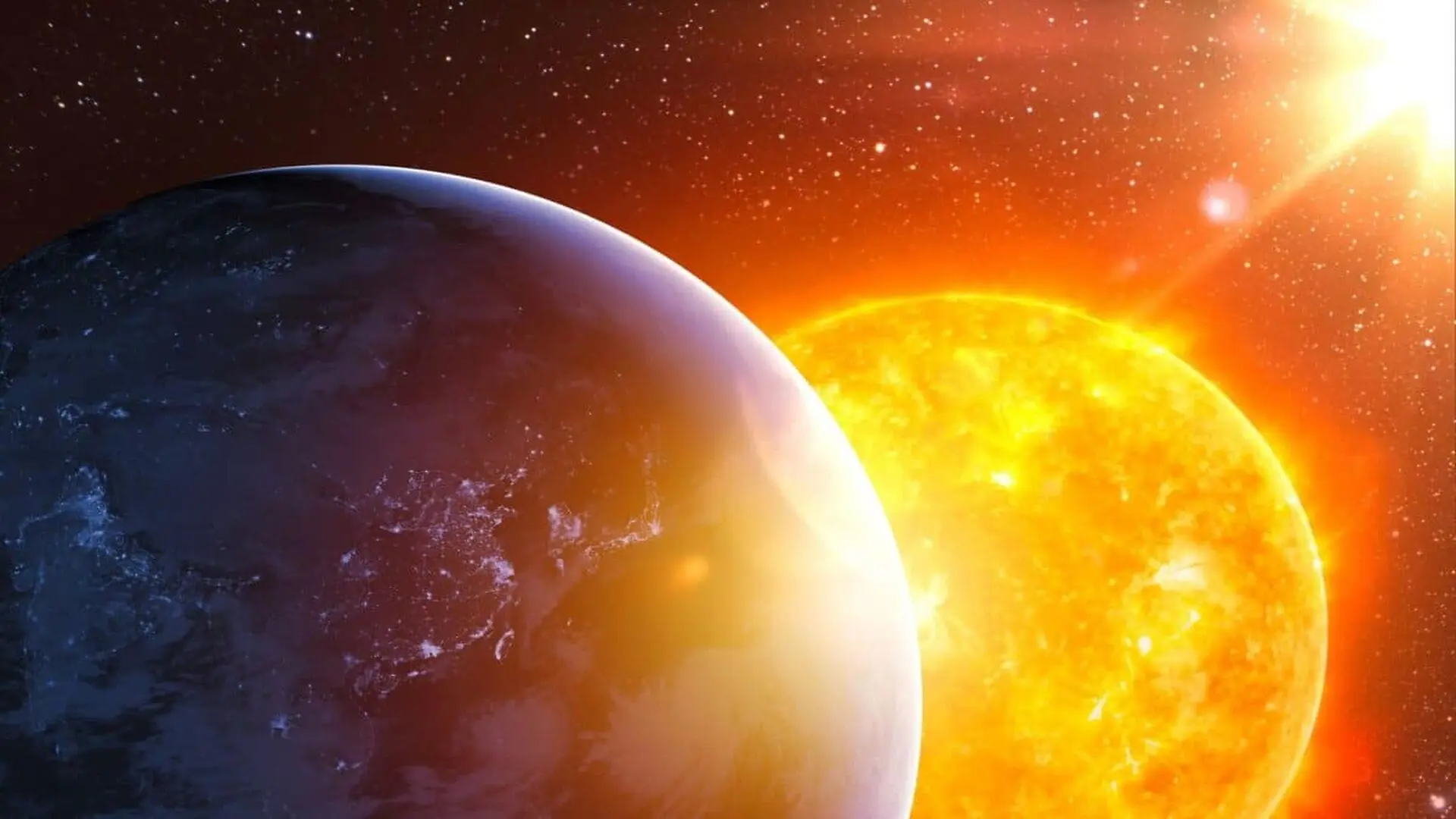
In roughly five billion years the Sun will deplete the hydrogen at its core, swell into a red giant and later an asymptotic giant, and finally shed its outer layers to become a white dwarf. While Mercury and Venus are virtually certain to be consumed, the destiny of Earth has remained contested. A June 2026 paper in Astronomy & Astrophysics reevaluates the planet’s odds by applying modern tidal‑dissipation models to the Sun’s late‑stage evolution.
The researchers’ calculations indicate that tidal forces acting on Earth are weaker than those assumed in older frameworks, allowing the planet a better chance to drift outward as the Sun loses mass through its stellar wind. This does not alter the expectation that rising solar luminosity will render Earth uninhabitable within about a billion years, but it does address whether the solid planet itself will be swallowed when the Sun expands.
Balancing Tidal Drag and Solar Mass Ejection
Two opposing mechanisms shape Earth’s orbital fate as the Sun ages. On one hand, tidal interactions between an expanding star and its planet drain orbital energy, pulling the world inward. On the other, the Sun’s wind removes mass, weakening its gravitational hold and permitting surviving planets to migrate to wider orbits. “The fate of Earth hinges on a delicate equilibrium between these two effects,” said lead author Mats Esseldeurs of KU Leuven’s Institute of Astronomy. “If tides dominate, Earth is engulfed; if mass loss dominates, Earth escapes to a broader orbit.”
Previous investigations reached divergent conclusions because they either omitted tidal forces or relied on simplified prescriptions dating back several decades. The new study incorporates updated tidal‑dissipation formulas that evolve with the Sun’s internal structure, producing a more realistic picture of the forces at play.
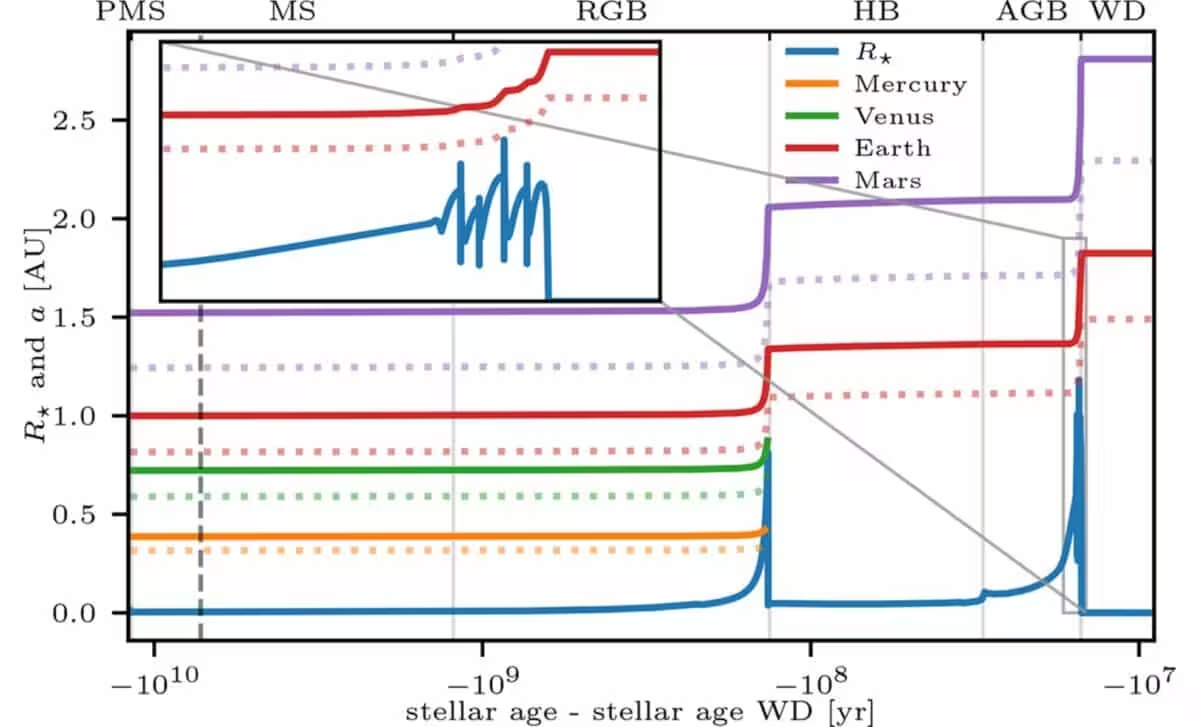
Simulations tracked the inner Solar System from the Sun’s youth through its white‑dwarf stage. Mercury and Venus failed to outrun the expanding stellar envelope and were engulfed during the red‑giant branch. By contrast, Earth and Mars migrated outward enough to avoid both giant phases under the reference model. The contrast between older and newer tidal prescriptions is most pronounced at Earth’s orbital distance; earlier models predict stronger dissipation that would keep Earth too close when the asymptotic giant branch begins, leading to engulfment. The revised calculations suggest weaker dissipation and survival, assuming the Sun’s mass‑loss rate follows the reference scenario.
Mass‑Loss Rate Remains the Dominant Unknown
The study highlights that the principal source of uncertainty is the Sun’s mass‑loss rate during its asymptotic giant branch phase. Existing prescriptions for this loss differ by more than an order of magnitude, making precise predictions challenging. “The largest uncertainty no longer comes from the tidal calculations, but from how much mass the future Sun will lose,” Esseldeurs explained. “Observations of Sun‑like giant stars currently point toward Earth’s survival, but we need better data before we can be certain.”
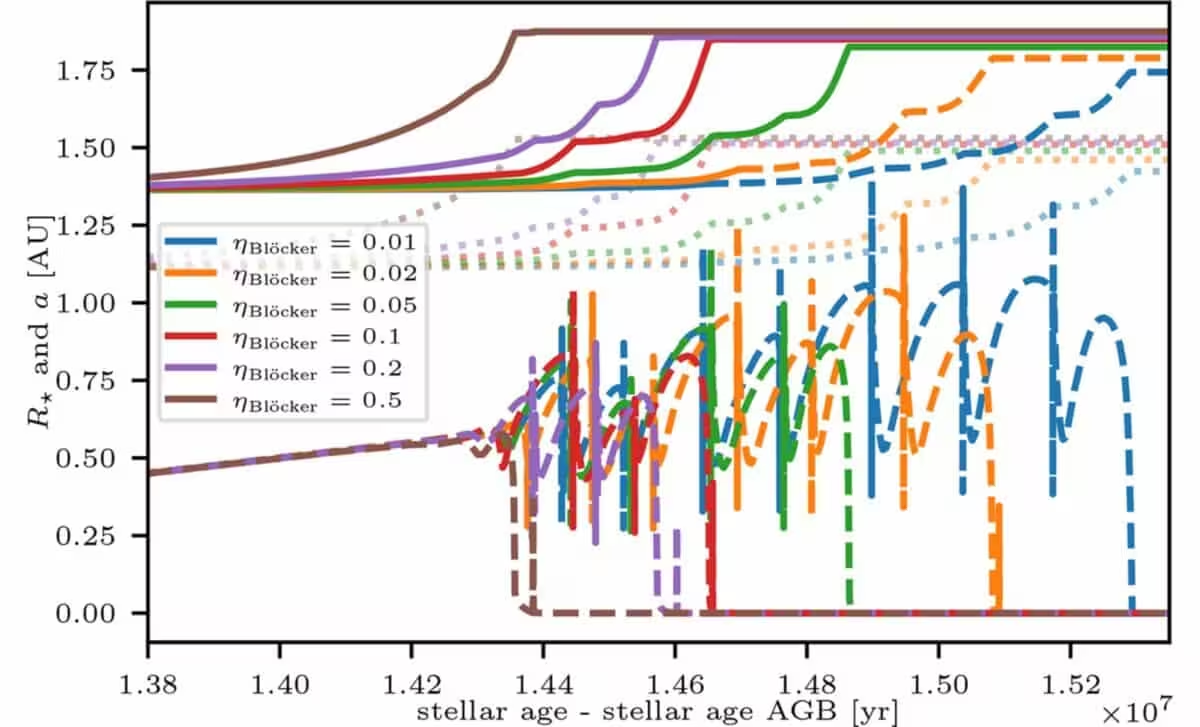
Low values for the Blöcker mass‑loss parameter allow the Sun’s radius to exceed Earth’s Roche lobe during brief thermal pulses, raising the possibility of engulfment. Higher mass‑loss rates, however, keep Earth at a safe distance. To benchmark these scenarios, the team examined L2 Pup, an asymptotic giant branch star roughly 183 light‑years away with an initial mass comparable to the Sun’s. Estimates of L2 Pup’s mass‑loss rate vary widely depending on whether dust emission or carbon‑monoxide emission is used, underscoring the observational gap.
When the observed mass‑loss rates for L2 Pup are combined with the updated tidal model, Earth is likely to drift outward quickly enough to avoid being swallowed. Nevertheless, the authors caution that the ultimate fate of Earth and the inner Solar System is not yet robustly fixed; more precise measurements of mass loss from evolved, Sun‑like stars are required to determine whether Earth will settle into a wider orbit or disappear inside the expanding star.
This article has been fact checked for accuracy, with information verified against reputable sources. Learn more about us and our editorial process.
Last reviewed on .
Article history
- Latest version
Cite this page:
- Posted by Aisha Ahmed