Real‑World Data Shows Atlantic Current Could Lose Up to Half Its Strength By 2100
New models suggest a key Atlantic current is much weaker than thought, exposing a hidden signal that could reshape climate predictions.

A fresh assessment of climate simulations indicates that the Atlantic Meridional Overturning Circulation (AMOC) could lose between 42 % and 58 % of its present strength by 2100, a drop that outpaces the slowdown shown by many standard model ensembles.
The conclusion comes from a study in Science Advances that cross‑checked a large suite of climate models against real‑world measurements of ocean temperature and salinity. Researchers found that the simulations which most closely reproduced the observed oceanic state also forecast a markedly steeper weakening of the circulation.
Observations Tighten the Forecast
By separating models that align with actual ocean data from those that do not, the authors highlighted a hidden signal that averages of all models tend to obscure. According to The Guardian, the new range of 42‑58 % decline is substantially larger than the typical weakening projected by the broader climate‑model community.
Climate projections for the Atlantic conveyor have spanned a wide spectrum, from modest deceleration to reductions approaching 65 %, as reported by The Guardian. Averaging these divergent outcomes can give a misleading impression of a gradual, less alarming trend.
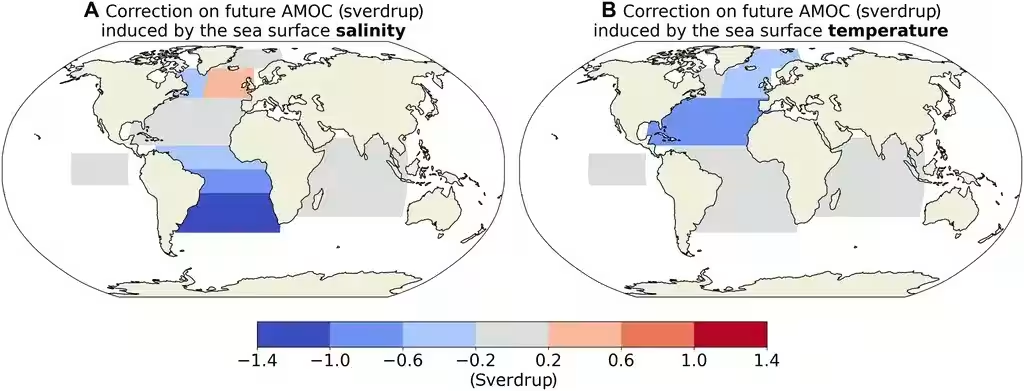
The analysis focused on how salinity influences the system’s sinking arm. Saltier water is denser and more prone to descend, while freshening from rainfall or meltwater can inhibit that process. In particular, the South Atlantic’s surface salinity provides a diagnostic clue for how the overturning may evolve under warming conditions.
Using ridge regression—a statistical technique that isolates meaningful patterns amid many interrelated variables—the team identified which models best matched the observed ocean before projecting their future trajectories. Those “best‑fit” models consistently pointed to a pronounced weakening of the AMOC by the century’s end.
Implications of a Slowing Atlantic Conveyor
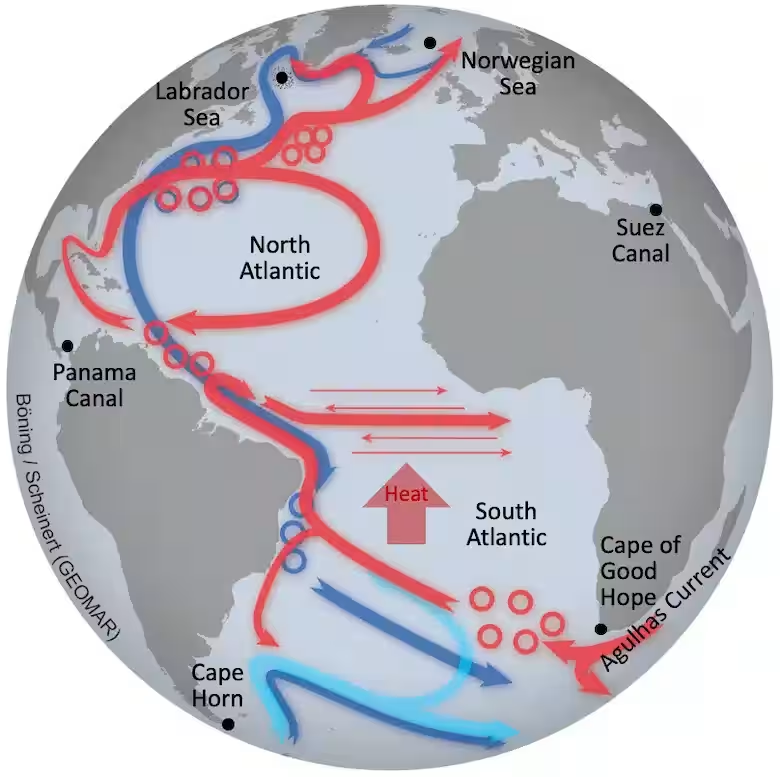
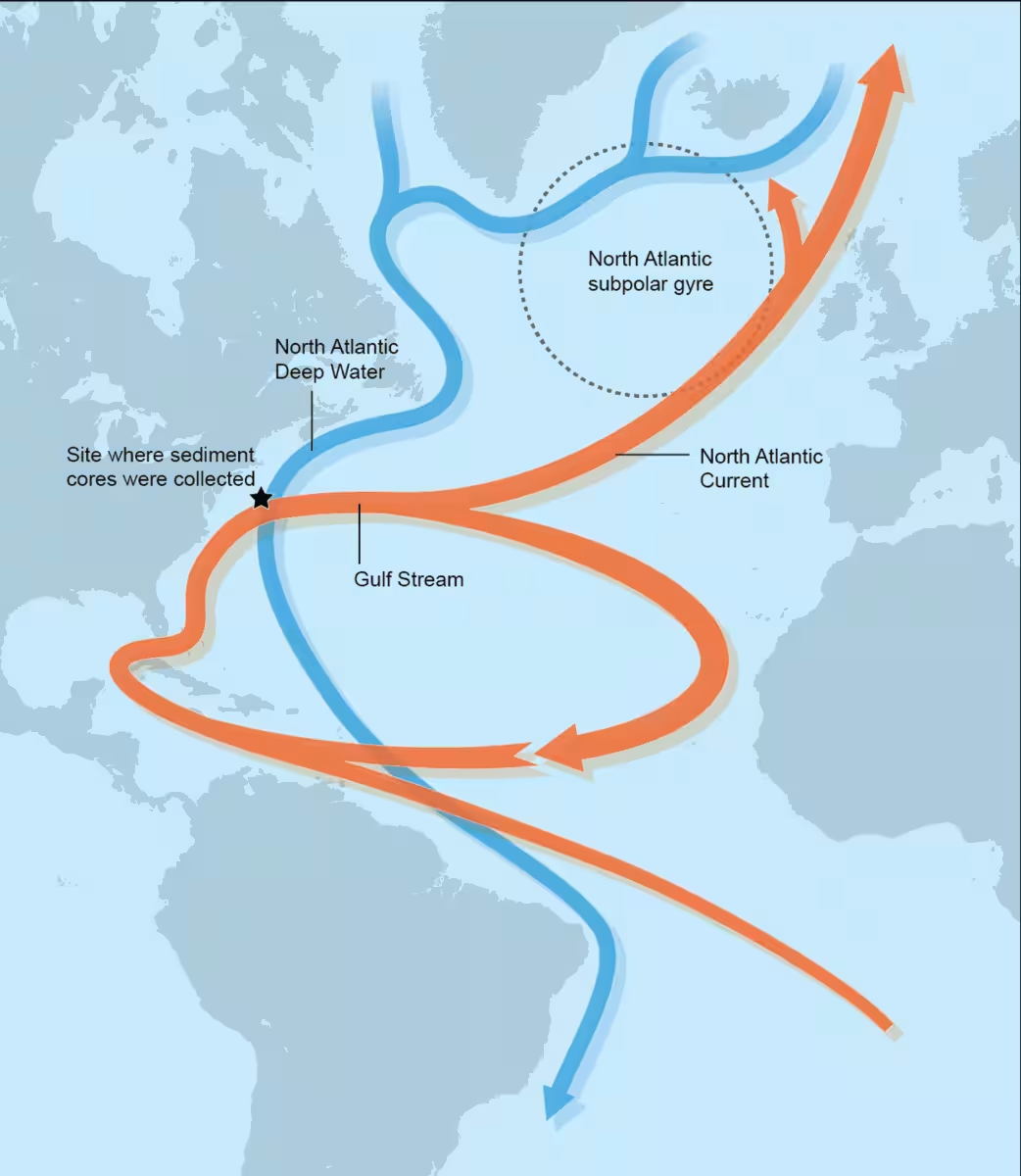
The AMOC does more than shuffle water; it transports heat from the tropics toward Europe and the Arctic. Its operation relies on warm surface waters cooling enough to become dense and sink, thereby driving a deep southward return flow. Any reduction in this sinking mechanism weakens the overall circulation.
Two climate‑driven forces can undermine the sinking: rising atmospheric temperatures that keep surface waters from cooling sufficiently, and an influx of fresh water that lowers surface salinity. Both effects diminish the water’s density, making it harder for the ocean to complete its overturning cycle.
If the conveyor were to slow dramatically, the repercussions could extend far beyond the Atlantic basin. Scientists cited by The Guardian warn that a severe weakening could alter tropical rain belts, usher colder winters and drier summers into western Europe, and contribute an additional 0.5‑1 meter to sea‑level rise along vulnerable Atlantic coastlines.
The study does not assign a precise timetable for a complete collapse; rather, it signals that the system may be edging nearer to a climate tipping point than the ensemble‑average forecasts suggest.
Experts Caution Against Relying on Model Averages
“Our results indicate that the AMOC is projected to decline more sharply than the median of all climate simulations, bringing it closer to a critical threshold,” said Dr. Valentin Portmann of the Inria Centre de recherche Bordeaux Sud‑Ouest, the study’s lead author.
Prof. Stefan Rahmstorf of the Potsdam Institute for Climate Impact Research described the finding as “both important and deeply concerning.” He emphasized that the models showing the strongest weakening also happen to align best with observed oceanic conditions. “The ‘pessimistic’ simulations, which forecast a marked drop in AMOC strength by 2100, are unfortunately the ones that match reality most closely,” he told The Guardian.
Rahmstorf added that many models may still underestimate the impact of Greenland’s ice melt, which pours fresh water into the North Atlantic and further hampers sinking. “That additional factor suggests the actual outcome could be even more severe,” he noted.
The key takeaway is not simply that the Atlantic conveyor will slow—but that the subset of models most faithful to today’s oceanic measurements predicts a considerably larger decline than the average across all models. This nuance reshapes the risk landscape without turning a slowdown into an inevitable collapse.
Other scholars urge a measured interpretation of the projections. David Thornalley, a professor of ocean and climate science at University College London, points out that the AMOC’s response intertwines long‑term warming trends with natural ocean variability, underscoring the need for cautious communication of these results.
This article has been fact checked for accuracy, with information verified against reputable sources. Learn more about us and our editorial process.
Last reviewed on .
Article history
- Latest version
Reference(s)
- Portmann, Valentin., et al. “Observational constraints project a ~50% AMOC weakening by the end of this century.” Science Advances, vol. 12, no. 16, April 17, 2026 American Association for the Advancement of Science (AAAS), doi: 10.1126/sciadv.adx4298. <https://www.science.org/doi/10.1126/sciadv.adx4298>.
- Carrington, Damian. “Critical Atlantic current significantly more likely to collapse than thought.”, April 15, 2026 The Guardian <https://www.theguardian.com/environment/2026/apr/15/critical-atlantic-current-significantly-more-likely-to-collapse-than-thought>.
Cite this page:
- Posted by William Moore