Hidden Inside an Australian Cave, Scientists Uncovered Fossil Fragments From A Lost Koala Species Extinct For 28,000 Years
A long-forgotten koala fossil, tucked away in a cave’s storage for many years, has unexpectedly drawn researchers’ interest—not for the reasons one might expect. A small yet significant detail on the skull proved to be the key that unlocked a groundbreaking revelation.
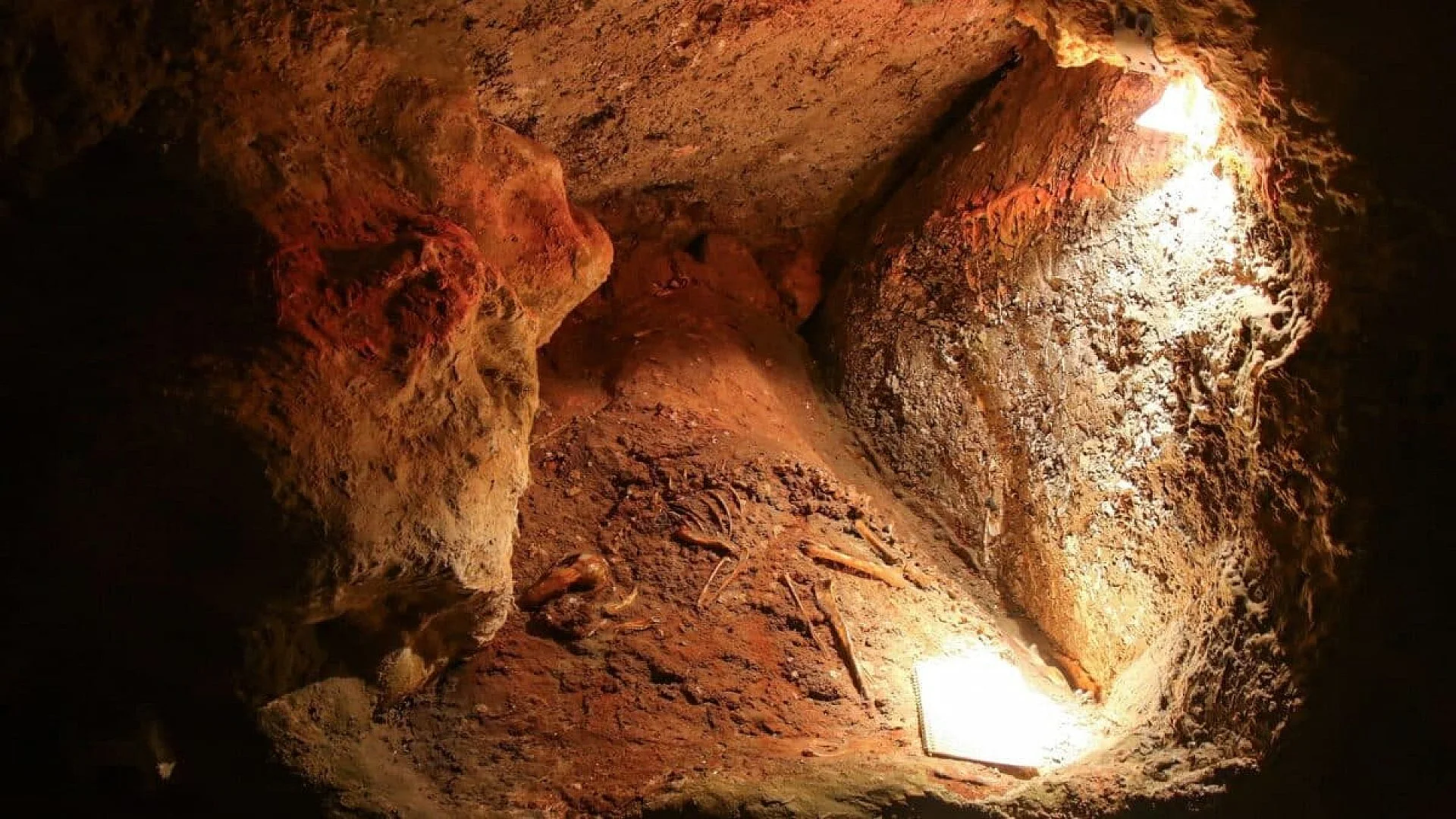
A remarkable fossil discovery in a cave in western Australia has shed new light on a previously unknown koala species that vanished thousands of years ago. The remarkable find, which has been hidden in museum collections for over a century, has helped scientists identify a completely unknown koala species that once roamed the region.
The newly identified species, named Phascolarctos sulcomaxilliaris, lived across parts of western Australia before disappearing around 28,000 years ago. Research published in Royal Society Open Science revealed that the animal stood out due to unusual grooves in its skull that no living koala has today.
The story began in 2024, when the Western Australian Museum received a donated koala skull collected years earlier from Moondyne Cave near Margaret River by caver Lindsay Hatcher. Researchers immediately noticed something peculiar about it. The cheek area beneath the eye socket had deep dimples.
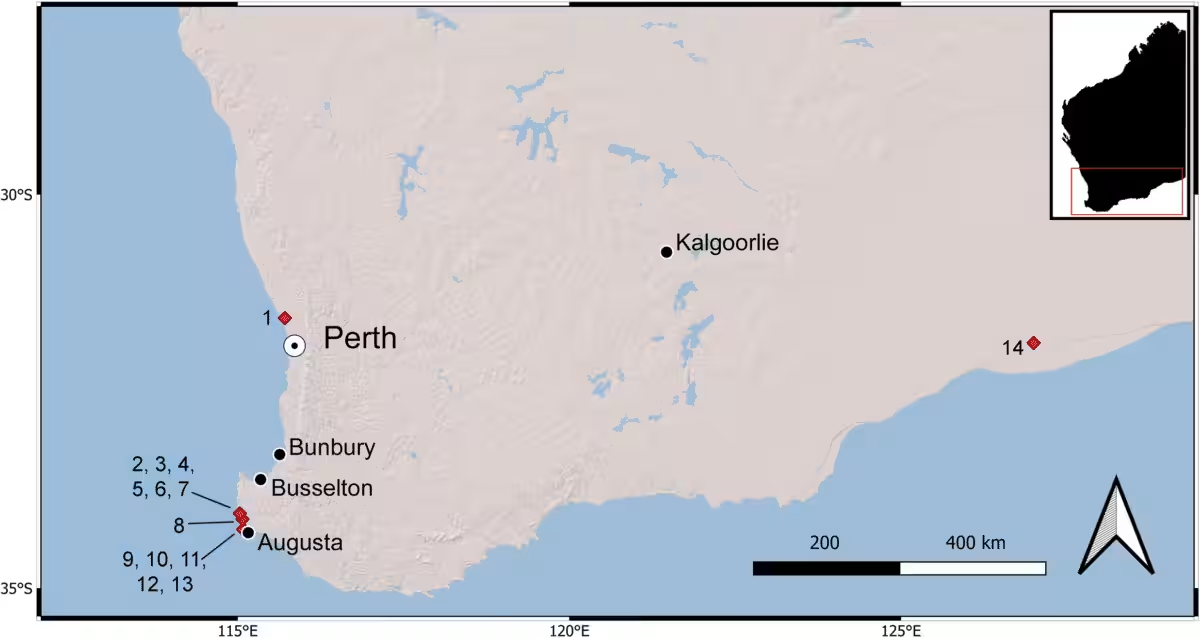
That detail prompted scientists to take another look at fossil koalas found in western Australia over the last hundred years. Koalas are extinct in the region today, though fossils show they once lived from Margaret River to Yanchep and even farther east near Madura.
Scientists Reevaluated Fossils from Western Australia
For decades, researchers assumed the Western Australia (WA) fossils belonged to the same species as the koalas living on Australia’s east coast today, Phascolarctos cinereus. One reason was simple: most fossil discoveries were incomplete, often just isolated teeth or jaw fragments. However, with more complete skulls discovered in caves over the past 25 years, the study compared those fossils with living koalas using skull measurements, tooth structure, and evolutionary analysis.
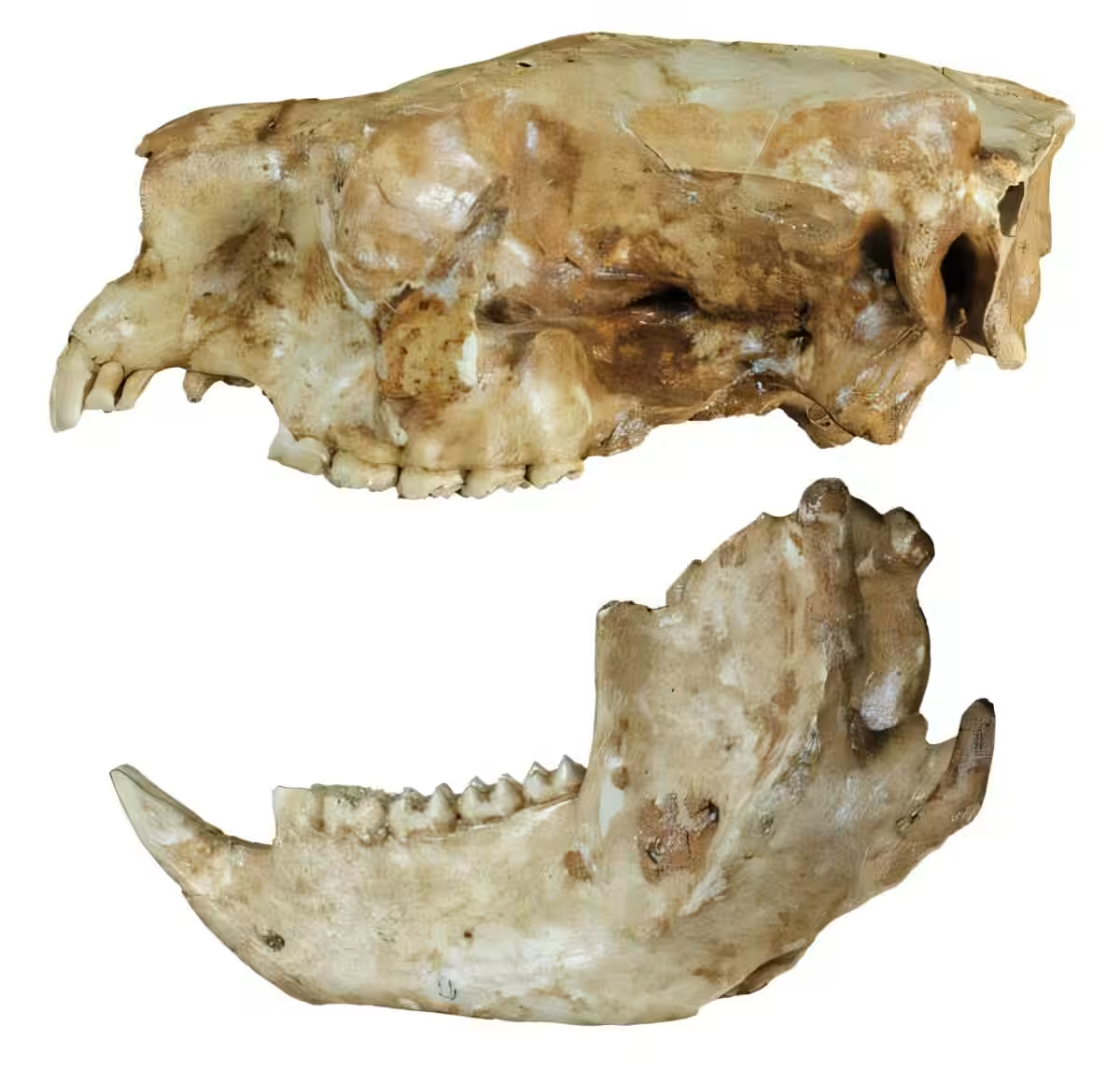
“These skulls, interpreted to belong to a male and female koala, are similar in body size to koalas from Victoria but differ markedly in being relatively much shorter in length and having obvious deeper concavities on the maxilla, below the zygomatic arch,” the authors wrote.
The results revealed clear differences. The extinct species had a shorter, heavier skull, broad teeth and changes around the ear-bone region. Researchers also described its limb bones as longer and thinner, suggesting the animal may have looked slightly more slender than today’s koalas.
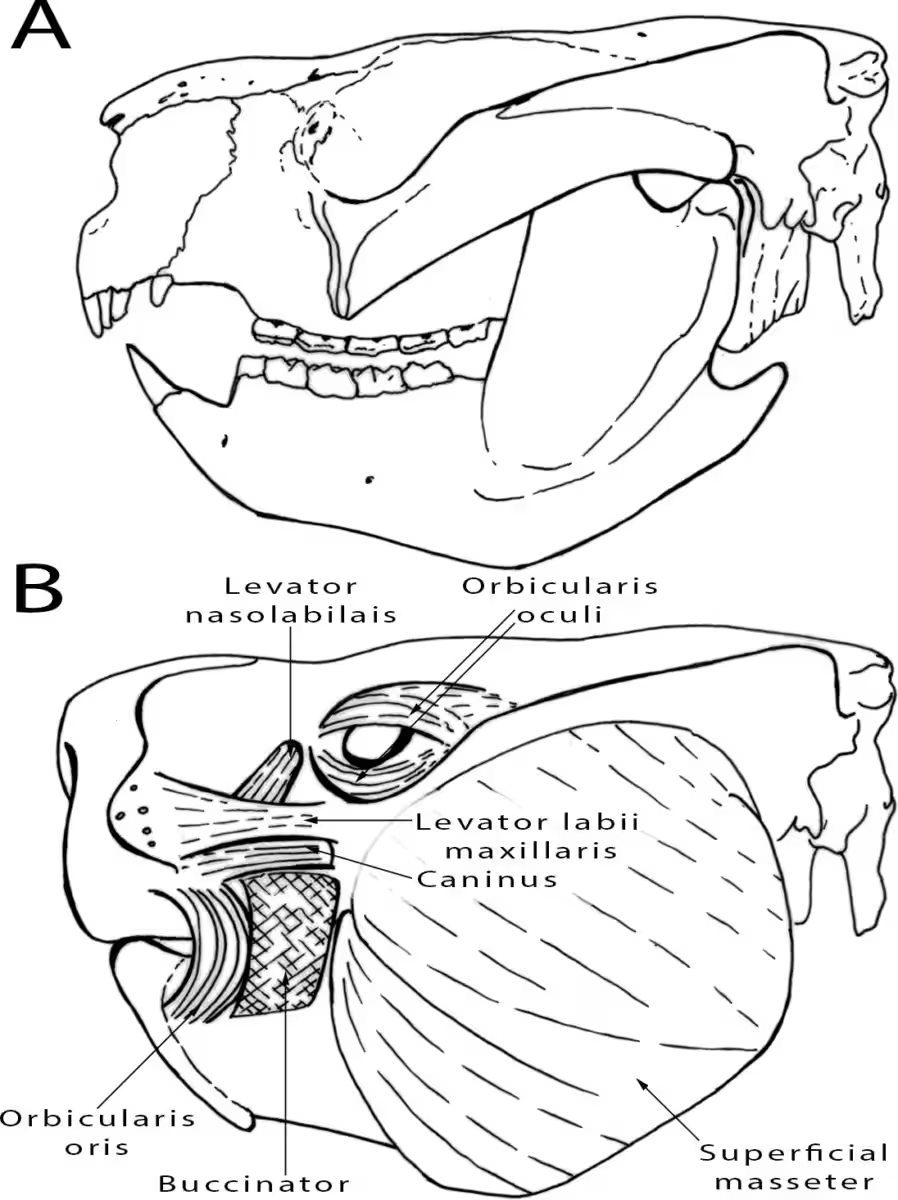
The groove beneath the eye socket became the defining feature. That’s where the species got its name, sulcomaxilliaris, meaning “grooved maxilla,” a reference to the upper jawbone. Scientists believe the groove may have allowed space for larger lip or nose muscles. The researchers suggested that adaptation could have helped the animal feed on tougher vegetation or improve its sense of smell while searching for food.
Scientists Revisited the Caves for Answers
Part of the project involved revisiting the caves where the fossils had originally been found. Researchers traveled to Koala Cave in Yanchep and to Moondyne and Foundation Caves near Margaret River with help from the Western Australian Speleological Group. The goal was to determine exactly how old the fossils were.
The paper published in Royal Society Open Science explained that scientists used uranium-thorium dating on some fossils and radiocarbon dating on others. The results suggested the species disappeared roughly 28,000 years ago.
At the same time, pollen records pointed to major environmental changes in southwestern Australia. The climate became colder and drier, while eucalyptus forests shrank dramatically for thousands of years. Koalas rely heavily on eucalyptus forests for food and shelter. The study team explained that these species went extinct as those forests disappeared, and the Western Australian species likely struggled to survive, adding that:
“It probably went extinct in WA as a result of climate change during the late Pleistocene, which reduced eucalyptus forests to around 5% of their current cover, greatly limiting resources for food and shelter.”
It’s actually a little surprising they lasted as long as they did given how dependent koalas are on stable habitats.
The Fossils Reveal a Hidden Side of Koala Evolution
The discovery means Australia once had more koala species than many people realized. Researchers now recognize that there are four species from the last few million years, including the modern koala and the giant Phascolarctos stirtoni, which was nearly twice the size of living koalas. The western Australian species also shows that koalas once evolved separately in different parts of the country.
Fossils first uncovered in Mammoth Cave back in 1910 were part of that hidden story all along. The study, led by Kenny Travouillonand colleagues, gives researchers a clearer picture of how ancient Australian animals responded to environmental change, and how much information can still be sitting unnoticed inside museum collections and cave deposits.
This article has been fact checked for accuracy, with information verified against reputable sources. Learn more about us and our editorial process.
Last reviewed on .
Article history
- Latest version
Reference(s)
- “Yanchep National Park.” <http://exploreparks.dbca.wa.gov.au/park/yanchep-national-park>.
- <https://royalsocietypublishing.org/rsos/article/13/5/251572/481580/New-fossil-koala-Marsupialia-Phascolarctidae-from>.
- “Mammoth Cave National Park (U.S. National Park Service).” <https://www.nps.gov/maca/>.
- “Dr Kenny Travouillon | Western Australian Museum.” Western Australian Museum <https://visit.museum.wa.gov.au/dr-kenny-travouillon>.
Cite this page:
- Posted by William Moore