Earth’s True Population Limit May Be Far Lower Than We Thought
A global analysis of population data suggests humanity has surpassed Earth’s long-term carrying capacity and may peak near 12 billion by the 2070s without major societal change.
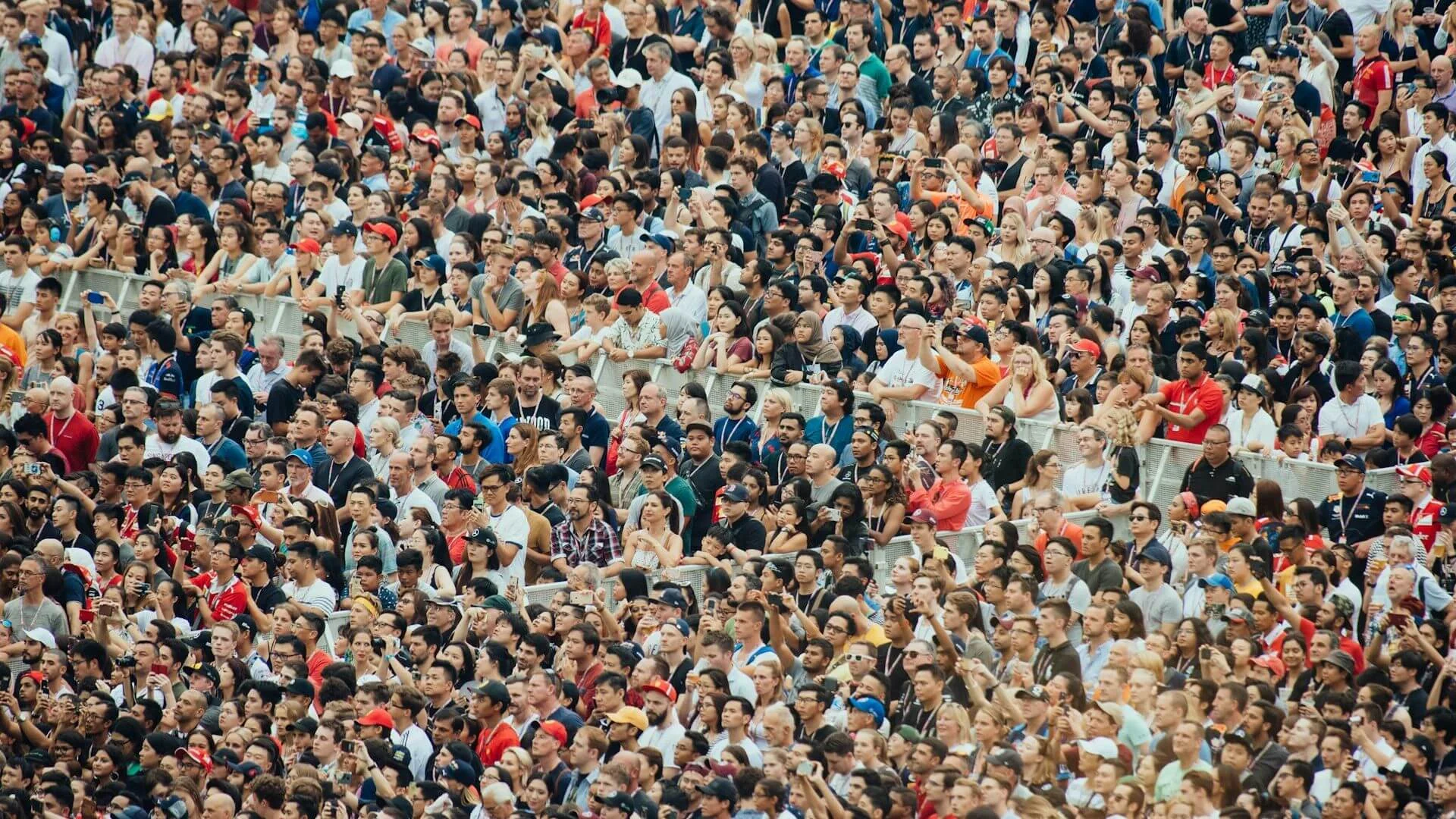
The question humanity rarely asks out loud: How many people can Earth truly support?
It is a deceptively simple question that has haunted scientists, economists, and policymakers for decades. The world population recently surpassed eight billion people, a milestone celebrated as a triumph of medicine and development. Yet behind that achievement lies a growing unease. Can the planet continue to sustain humanity at this scale without severe environmental and social consequences?
A new study suggests the uncomfortable possibility that we may already have crossed a critical threshold.
Drawing on more than two centuries of global population data, researchers conclude that humanity has likely exceeded Earth’s sustainable carrying capacity, the long-term population size that can be supported without degrading the systems that keep civilization running.
The findings do not predict an imminent catastrophe. Instead, they describe a slow but profound shift in how humanity’s growth interacts with the planet’s limits.
What “carrying capacity” really means for humans
In ecology, the concept of carrying capacity describes the number of individuals an environment can sustain indefinitely. For most species, this limit is governed by food, water, habitat, and other resources that regenerate naturally.
Humans are different.
Over the past two centuries, technological innovation and fossil fuels have allowed humanity to sidestep many natural limits. Industrial agriculture boosted food production. Modern medicine reduced mortality. Global trade redistributed resources across continents.
These advances created the impression that human population growth could continue indefinitely.
But the new research argues that this apparent freedom from limits may be temporary.
The scientists note that fossil fuels have effectively acted as a massive subsidy, allowing humanity to extract and consume resources far faster than natural systems can replenish them. In doing so, they have masked the feedback loops that normally regulate population growth in other species.
In ecological terms, humanity may have delayed the consequences of exceeding Earth’s regenerative capacity rather than eliminated them.
Tracking population growth like an ecological system
To explore humanity’s long-term trajectory, the researchers analyzed global population data stretching back to the early 1800s.
Instead of focusing on economic or social variables, they used a classic ecological approach. They examined the relationship between population size and the rate at which the population grows. This relationship is central to understanding how populations behave as they approach environmental limits.
Historically, the human population followed a pattern known as facilitation. As the population grew, the growth rate increased as well. More people meant more innovation, more agriculture, and more technological progress.
But something changed around the 1960s.
Since then, global population growth has continued, but the rate of growth has steadily declined. In ecological terms, humanity appears to have entered a “negative phase,” in which adding more people no longer accelerates growth.
This shift is a key signal that a population is approaching or surpassing its environmental limits.
A projected peak near 12 billion people
Using population time-series data and ecological growth models, the researchers estimated both the maximum and sustainable population levels for humanity.
Their results suggest global population could peak between about 11.7 and 12.4 billion people in the late 2060s or early 2070s if current trends continue.
This estimate aligns with high-end projections from major demographic models. However, the study draws an important distinction between maximum population and sustainable population.
The maximum represents the upper limit the planet could support under extreme strain, potentially accompanied by famine, disease, or conflict.
The sustainable level is far lower.
According to the researchers’ modeling, the population size that could maintain long-term stability and a minimum standard of living may be closer to 2.5 billion people under current consumption patterns.
That stark difference highlights a central message of the study. The question is not just how many people Earth can support, but how we live.
Population vs consumption, which matters more?
Debates about environmental impact often focus on consumption. Wealthier countries use far more energy and resources per person than poorer ones, leading many to argue that consumption is the primary driver of environmental damage.
The study offers a more nuanced picture.
The researchers examined how global temperature changes, ecological footprint, and carbon emissions relate to both population size and per-capita energy use.
They found that global population size was a stronger predictor of these environmental indicators than per-person consumption alone.
This does not mean consumption is unimportant. Instead, the findings suggest population and consumption work together as a combined force shaping environmental pressure.
In simple terms, more people using more resources amplifies the strain on Earth’s systems.
Why population growth slowed after the 1960s
The decline in global population growth rates may seem surprising given that the total population is still rising.
The study identifies fertility as the key driver behind this shift.
Across many regions, fertility rates began falling in the mid-20th century due to education, urbanization, access to contraception, and changing social norms. At the same time, life expectancy continued to increase.
This combination created a unique demographic pattern. The number of people kept rising, but the pace of growth slowed.
Interestingly, the timing of this shift varied across regions. Higher-income regions entered the negative growth phase earlier, while lower-income regions followed later as development expanded.
This pattern suggests the same forces that enabled rapid growth may now be pushing humanity toward stabilization.
Fossil fuels, the hidden engine of population growth
One of the study’s central arguments is that fossil fuels fundamentally reshaped human population dynamics.
For most species, environmental limits impose immediate feedback. If resources decline, populations shrink.
Fossil fuels disrupted this relationship for humans.
Cheap energy enabled massive increases in food production, transportation, and infrastructure. This allowed population growth to continue even as environmental pressures mounted.
But fossil fuels are finite and contribute to climate change, which in turn reduces the planet’s ability to regenerate resources.
The researchers warn that modern economies are built on the assumption of continuous growth, yet they often fail to account for the declining regenerative capacity of Earth’s systems.
Why This Matters
The study does not claim that population collapse is inevitable. Instead, it highlights the growing mismatch between humanity’s demands and the planet’s capacity.
The scientists argue that long-term sustainability will require major changes in how societies use land, water, energy, and biodiversity.
Smaller populations with lower consumption levels tend to produce better outcomes for both people and the environment. However, the researchers emphasize that discussions about population must be handled carefully, given the ethical and social complexities involved.
Ultimately, the findings point to a broader challenge. Sustainability is not just about technology or efficiency. It is about aligning human systems with the ecological realities of a finite planet.
The limits of predicting the future
Like all global models, the study comes with uncertainties.
Earth’s systems are complex, and countless variables influence population trends. Technological innovation, policy changes, and cultural shifts could all alter the trajectory.
The researchers acknowledge that their estimates should be seen as informed projections rather than precise forecasts.
Still, the overall message is clear. Humanity has likely entered a new demographic era in which environmental limits are becoming increasingly important.
A narrowing window for change
Despite the sobering conclusions, the study ends on a cautious note of optimism.
The scientists argue that meaningful change is still possible if nations work together to transform how resources are used and shared.
Humanity has repeatedly demonstrated its capacity for innovation and adaptation. The question now is whether that ingenuity can be directed toward living within the planet’s limits rather than pushing beyond them.
The answer may shape the future of civilization for centuries to come.
The research was published in Environmental Research Letters on March 27, 2026.
This content has been reviewed by subject-matter experts to ensure scientific accuracy. Learn more about us and our editorial process.
Last reviewed on .
Article history
- Latest version
Reference(s)
- Bradshaw, Corey J A., et al. “Global human population has surpassed Earth’s sustainable carrying capacity.” Environmental Research Letters, vol. 21, no. 6, 27 March 2026, doi: 10.1088/1748-9326/ae51aa. <https://doi.org/10.1088/1748-9326/ae51aa>.
Cite this page:
- Posted by Zara Tariq