Backyard Cleanup Uncovers 2,000-Year-Old Roman Tombstone That Traveled From WWII Italy
A mysterious New Orleans backyard tombstone sparks an international probe, linking Louisiana to Italy in a startling archaeological mystery.
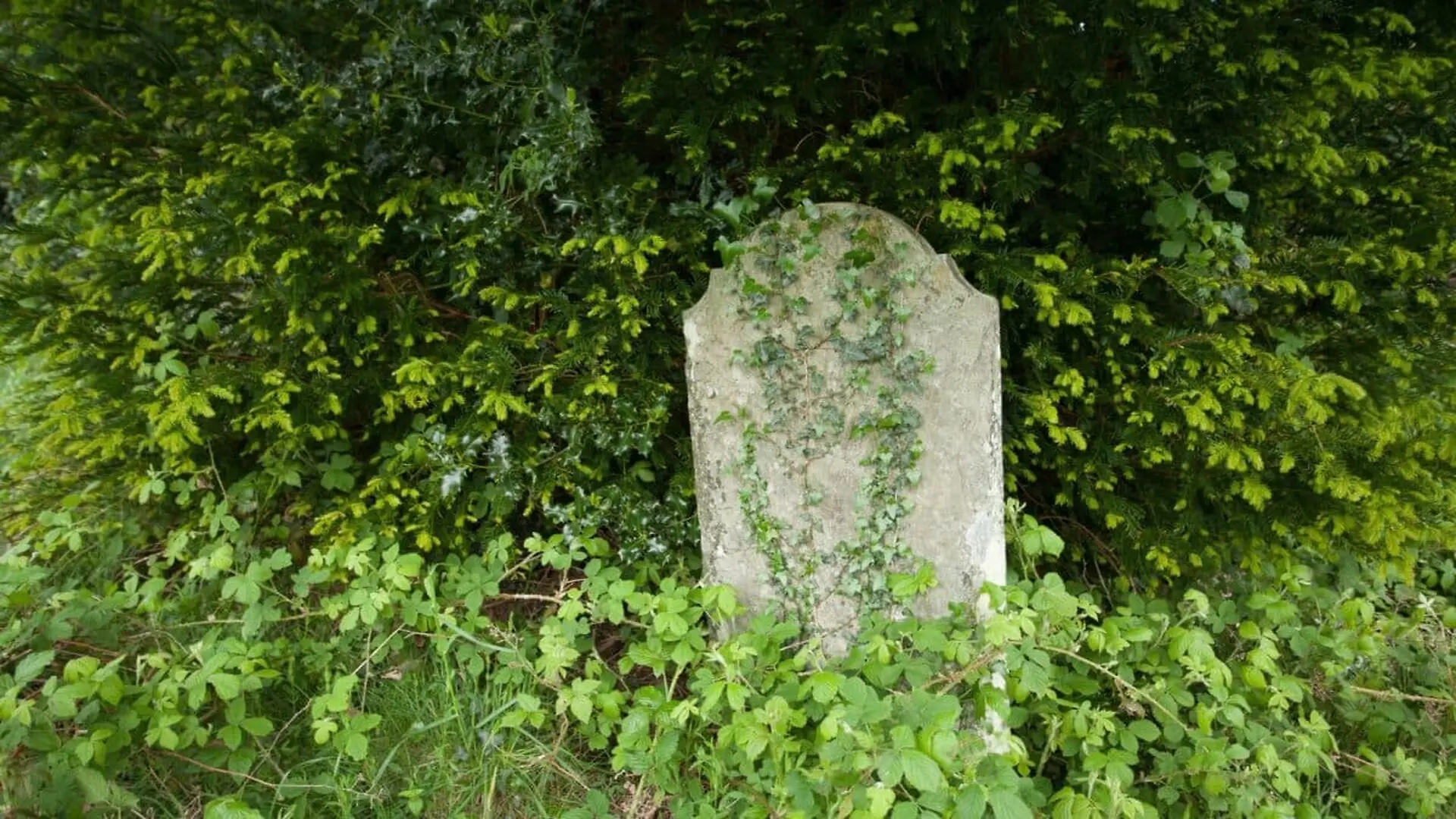
A routine yard cleanup in New Orleans turned into an archaeological surprise when a couple uncovered a marble slab that turned out to be a Roman tombstone nearly two millennia old. The stone was later linked to a museum in Italy, where it had vanished decades earlier, and has now been repatriated.
Anthropologist Daniella Santoro of Tulane University and her husband Aaron Lorenz were trimming overgrown plants behind their historic Carrollton home when they noticed the marble panel bearing a Latin epitaph. Suspecting a connection to one of the city’s old cemeteries, Santoro reached out to D. Ryan Gray, an anthropology professor at the University of New Orleans, for assistance.
The find quickly attracted scholars from the University of Innsbruck and Tulane, both of whom translated the inscription and arrived at an identical conclusion.
Ancient Sailor Named on the Stone
According to the Preservation Resource Center of New Orleans, the text identifies the deceased as Sextus Congenius Verus, a member of the Thracian Bessi tribe. He lived to 42, spent 22 years serving aboard the trireme Asclepius, and was commemorated by his heirs Atilius Carus and Vettius Longinus.
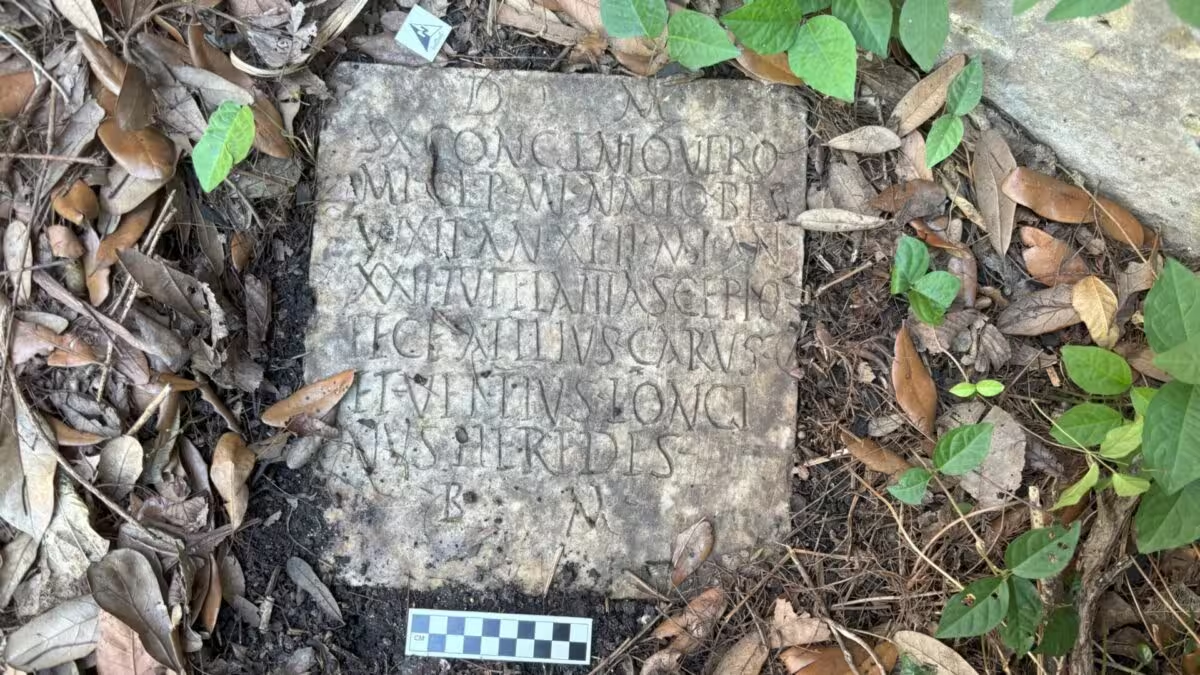
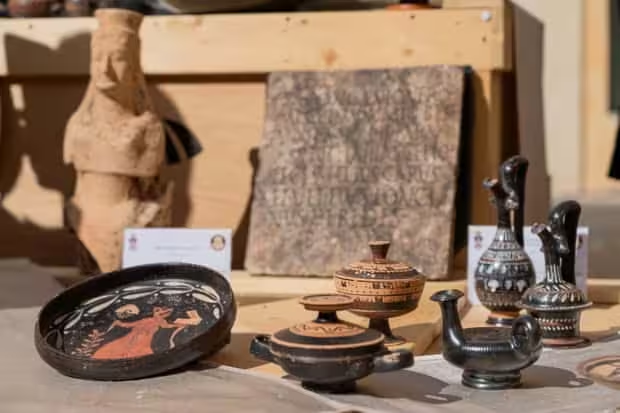
The inscription matched a record from the civic museum in Civitavecchia, a port town northwest of Rome, where a stone with identical wording had been cataloged before disappearing from the collection.
“I never feel like I’ve seen it all. There are always surprises and new mysteries to solve.”
World War II Aftermath Provides a Clue
Tulane associate professor of classical studies Susann Lusnia traveled to Italy to investigate the stone’s disappearance. Museum officials explained that Allied bombings in 1943–44 devastated Civitavecchia, destroying the local museum and scattering countless artifacts.
Lusnia also confirmed that the U.S. Fifth Army’s 34th Division moved through Civitavecchia after Rome’s liberation, with some units remaining in the area. This post‑liberation presence offers a plausible route for the marble piece to travel across the Atlantic, though the exact carrier remains unknown.
Family Memories Fill the Gaps
Media coverage of the discovery prompted former homeowner Erin Scott O’Brien to come forward. She recalled placing the slab in the yard while planting a tree about twenty years ago, assuming it was merely decorative.
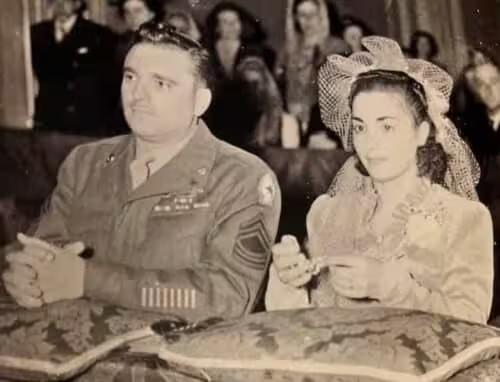
Preservation in Print reported O’Brien’s recollection that the stone had originally belonged to her grandfather, Charles Paddock Jr., a U.S. Army veteran who served in Italy during World II. After the war, he returned to New Orleans with his wife Adele, and the marble tablet stayed in the family home for decades before O’Brien inherited it following her grandparents’ deaths in the 1980s.
“I just thought it was a piece of art,” O’Brien said. “I had no idea it was a 2,000-year-old relic.”
With the collaborative effort of scholars, museum staff, and the Paddock family, the tombstone has been returned to its rightful home in Italy. Researchers continue to investigate how Charles Paddock Jr. obtained the ancient monument before bringing it to the United States.
This article has been fact checked for accuracy, with information verified against reputable sources. Learn more about us and our editorial process.
Last reviewed on .
Article history
- Latest version
Reference(s)
- Monteverde, Danny. “The mystery of how a 2,000-year-old Roman headstone wound up in a New Orleans backyard is solved .”, October 9, 2025 Preservation Resource Center of New Orleans <https://prcno.org/the-mystery-of-how-a-2000-year-old-roman-headstone-wound-up-in-a-new-orleans-backyard-is-solved/>.
- “Susann S. Lusnia.” Tulane University School of Liberal Arts <https://liberalarts.tulane.edu/classical-studies/people/susann-s-lusnia>.
- Gray, D.. “How did a 2nd Century Roman headstone wind up in a New Orleans backyard?.”, October 6, 2025 Preservation Resource Center of New Orleans <https://prcno.org/how-did-a-2nd-century-roman-headstone-wind-up-in-a-new-orleans-backyard/>.
Cite this page:
- Posted by Zara Tariq