Scientists Discover Egyptian Amulet in Tomb in Spain, 2,000 Miles from Egypt, And Wonder How It Got There
Discover the mystery behind a 2,000-year-old Egyptian amulet found in Spain and how it ended up thousands of miles from its origin
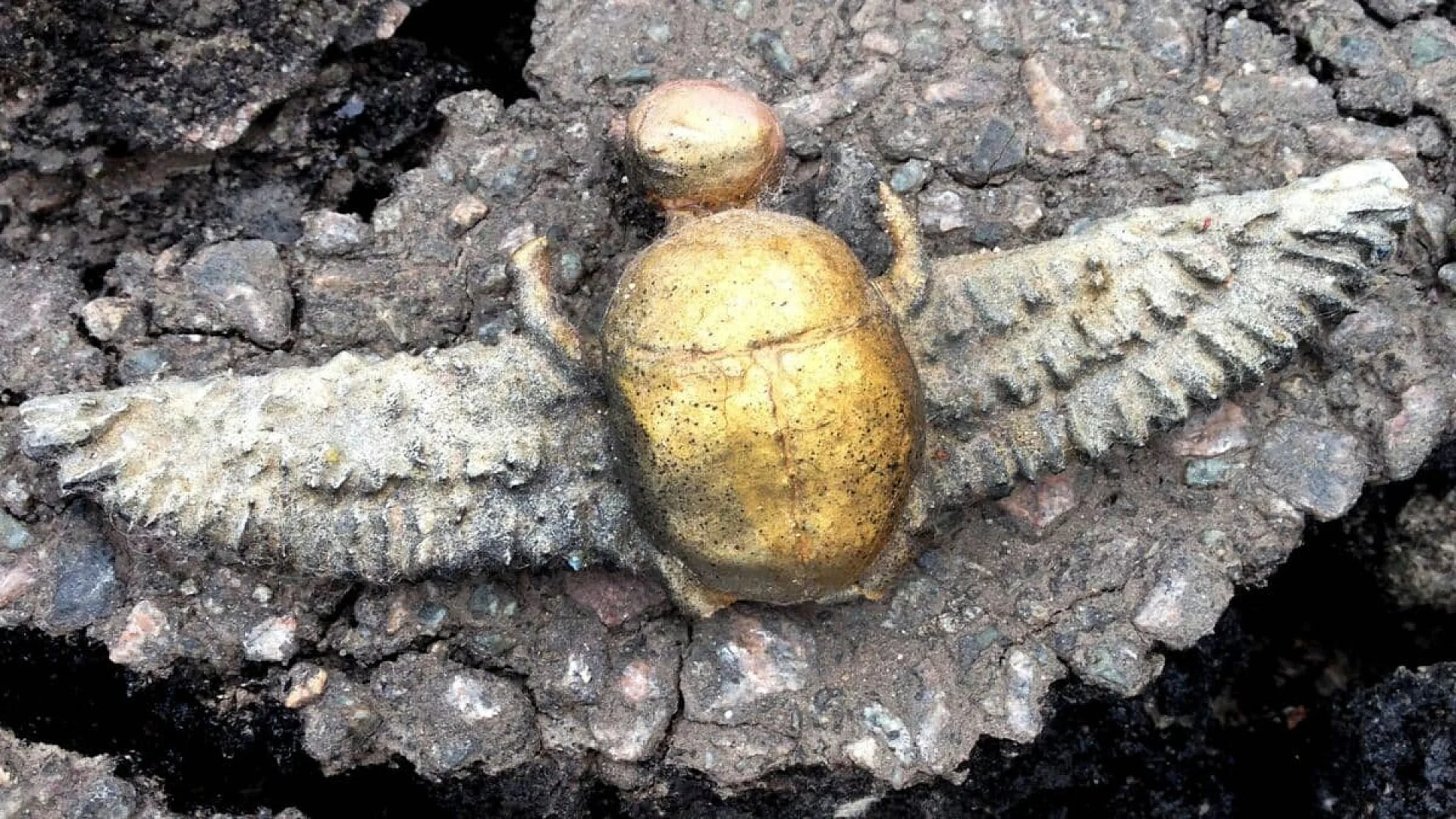
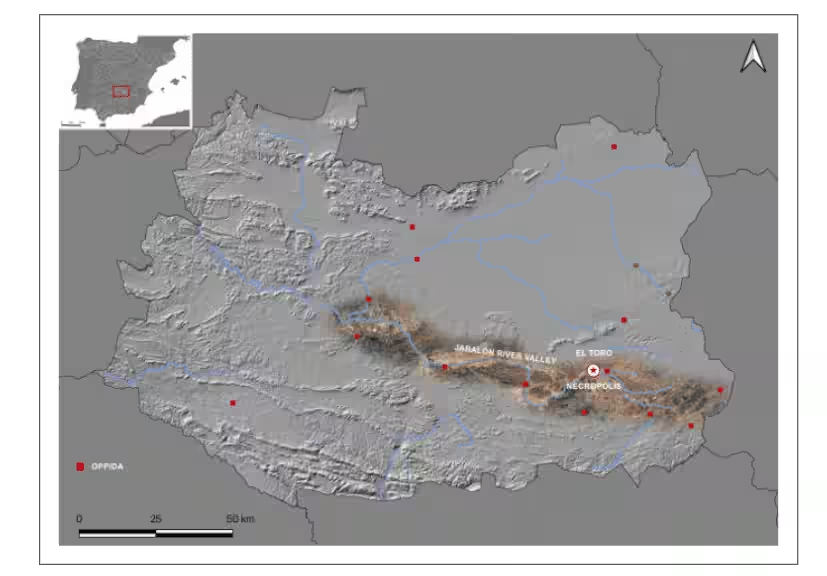
Archaeologists working in the Jabalón River valley have uncovered an Egyptian scarab amulet inside a burial chamber of the Oretani, an Iberian tribe that inhabited the region before Roman domination. The find, recovered from the Necropolis of El Toro, is prompting scholars to reassess the reach of early Mediterranean commerce.
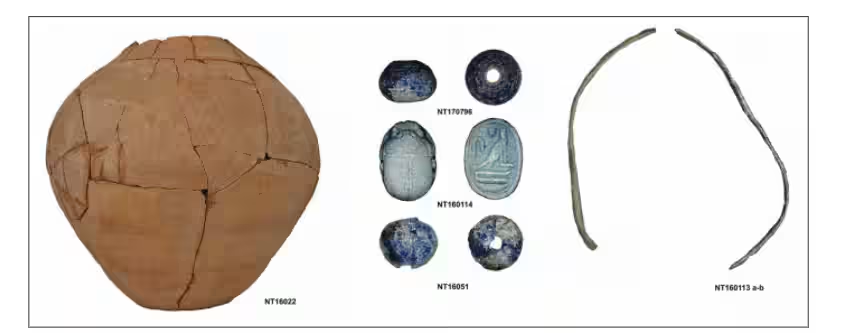
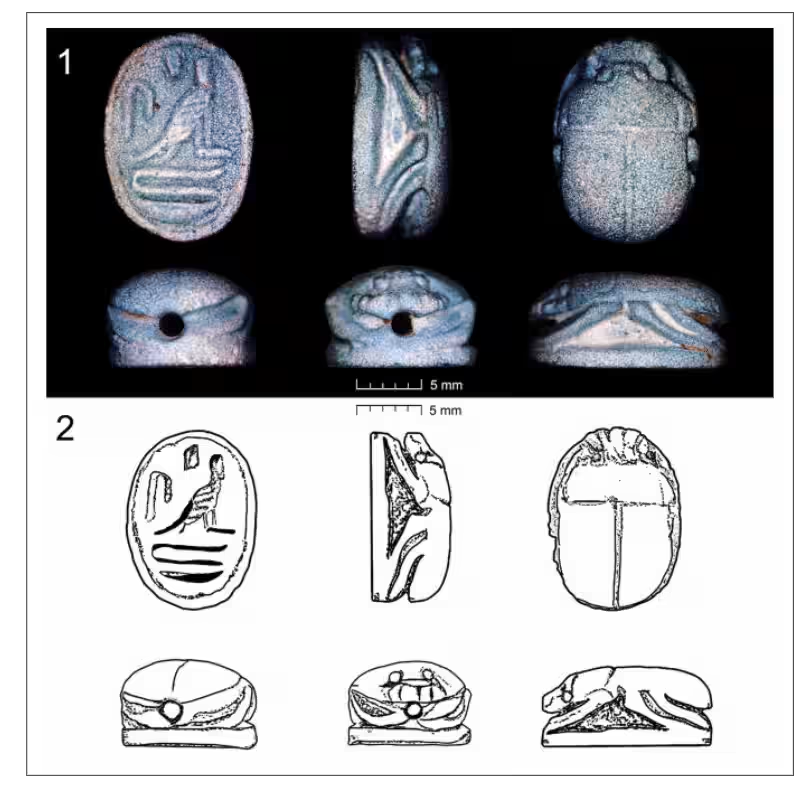
The small object, crafted from glazed faience and engraved with Egyptian hieroglyphic and Demotic script, was found alongside cremated human remains placed in ceramic urns. Its preservation suggests it was manufactured during Egypt’s 26th Dynasty, a period associated with several high‑ranking pharaohs, indicating that the amulet may once have belonged to a person of considerable standing, perhaps a merchant or elite.
Why the Scarab Held Sacred Meaning in Ancient Egypt
In ancient Egypt, the beetle was more than a creature; it symbolised the sun god Ra and embodied the cycle of birth, death and renewal. Scarabs were frequently incorporated into jewelry and protective charms intended to accompany the deceased into the afterlife. The El Toro specimen, made of faience, displays a clear inscription that links it to official titles from the 26th Dynasty.
“The scarab could have been traded or exchanged between residents of the Phoenician-Punic peninsular settlements and the native population,” he added that, “although we cannot document how much time elapsed until its deposition in the grave goods of [its tomb].”
Tracing the Journey of the Egyptian Amulet to Iberia
Scholars propose that the amulet travelled along the maritime routes that linked Egyptian ports with Phoenician and Punic outposts on the western Mediterranean. By the 6th century BCE, these traders had established extensive networks that reached the Iberian Peninsula, and the nearby Jabalón River may have served as a conduit for such exchanges. The presence of the scarab among typical Oretani funerary items suggests a deeper level of cultural interaction than previously recognized.
The discovery was reported in a study published in Sage Journals, which outlines how Egyptian, Phoenician and Iberian societies could have intersected through trade, thereby transporting objects like the scarab far from their place of origin.
Future Plans for the El Toro Site
Although the scarab provides a tantalising glimpse into ancient exchange networks, the exact timing and mechanism of its arrival at the necropolis remain uncertain. Ongoing excavation work at El Toro may yet reveal additional Egyptian items, offering further insight into the breadth of cross‑Mediterranean contact.
Continued research is expected to clarify the scale of trade routes that linked Egypt with western Iberia and to illustrate how Egyptian iconography spread across distant cultures.
This article has been fact checked for accuracy, with information verified against reputable sources. Learn more about us and our editorial process.
Last reviewed on .
Article history
- Latest version
Reference(s)
- Benítez de Lugo Enrich, Luis., et al. “Mediterranean Parallels of a Psamtek Egyptian Scarab from El Toro Necropolis (Alcubillas, Ciudad Real, Spain).” The Journal of Egyptian Archaeology, April 16, 2026 SAGE Publications, doi: 10.1177/03075133261434596. <https://journals.sagepub.com/doi/10.1177/03075133261434596>.
Cite this page:
- Posted by Zara Tariq