Archaeologists Opened a 2,300-Year-Old Qin Tomb Near the Great Wall and Found a Bronze Bottle Hiding Ancient Beer Inside
Ancient Qin Dynasty brew harbored thriving yeast cells surviving against odds
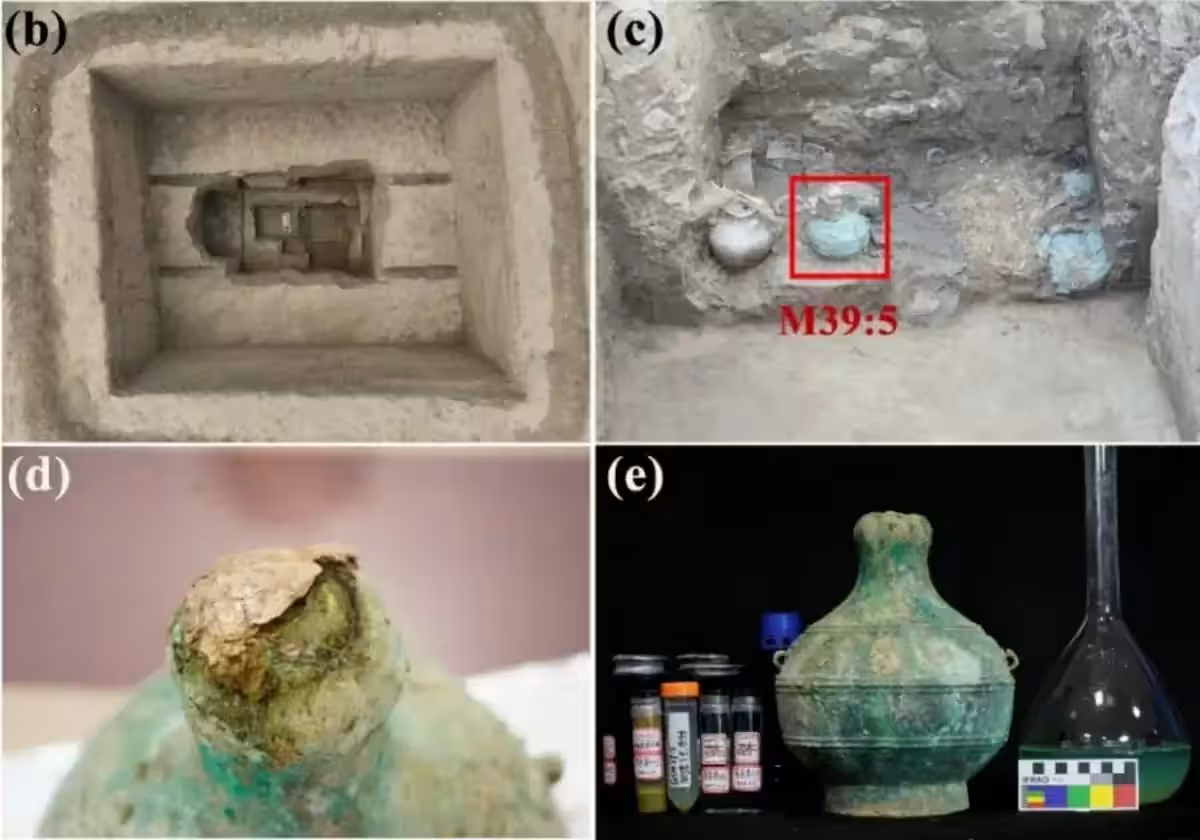
A bronze jar with a mouth shaped like a garlic head was recovered from a tomb situated close to the Great Wall of Qin, where it had remained sealed for more than 2,300 years. When the vessel, catalogued as M39:5, was finally opened at the Shanjiabao cemetery in Ningxia, China, researchers measured roughly 3,740 milliliters of liquid inside—enough to fill fifteen contemporary cups. The pale blue‑green fluid was odorless and had survived without evaporating or leaking through the surrounding soil throughout the entire Warring States period (547–221 BC).
The preservation was due to a two‑layer seal: a textile plug inserted into the bottle’s mouth and an outer coating of organic‑tempered mud. This combination blocked both air and groundwater for two millennia, keeping an ancient fermented cereal‑based drink intact.
Bronze Vessel Unearthed Near Qin Frontier
A collaborative team of Chinese scholars reported their findings in the Journal of Archaeological Science: Reports. Tomb M39 lies about 1.5 kilometers south of the Qin Great Wall, within a cemetery that contains 183 burial pits, 179 of which are attributed to the Qin state. The site is interpreted as a communal burial ground for soldiers and civilians stationed along the frontier defenses.

The jar’s distinctive garlic‑head mouth is a hallmark of Qin pottery, a form traditionally associated with containers for alcoholic drinks. Researchers sampled both the liquid and a small amount of sediment from the interior and applied a suite of analytical techniques.
Analytical Tests Confirm Ancient Alcoholic Content
Initial Fourier‑transform infrared spectroscopy identified organic functional groups, and a rapid discriminant model compared the ancient residue with modern aged samples, classifying it as a probable alcoholic beverage. Subsequent ultrahigh performance liquid chromatography‑triple quadrupole‑time of flight tandem mass spectrometry (UPLC‑Q‑TOF‑MS) and high‑resolution orbitrap mass spectrometry were employed for non‑targeted metabolomic profiling.
More than 2,400 unique compounds were detected, while the control soil sample yielded far fewer, eliminating the possibility that the liquid was simply groundwater that had seeped in over centuries. The authors emphasized that “the liquid preserved in vessel M39:5 was not simply infiltrated groundwater, but an authentic ancient organic residue.”

The identified compounds fell into 24 chemical classes, including amino acids, fatty acids and carbohydrates. Lactic acid dominated the profile, while tartaric acid appeared only in low concentrations, indicating a cereal‑based brew rather than a fruit wine. The researchers stated unequivocally: “The liquid was a cereal‑based alcoholic beverage and not fruit wine.”
Microfossil Evidence Reveals Grain Mix and Fermentation Starter
Microscopic analysis of starch grains and phytoliths extracted from the sediment matched broomcorn millet and members of the Triticeae tribe, which encompasses wheat and barley. The same sediment contained 8,571 yeast cells, a density suggesting intentional use of a fermentation starter rather than accidental contamination.
The combination of millet, wheat or barley, and abundant yeast points to the use of qu, a traditional Chinese starter made from moldy grains or herbs. The team noted that “the discovery of thousands of yeast cells in the ancient Shanjiabao cereal‑based alcoholic beverage may indicate the superior performance of the starter used by the Qin people.”
No contemporary historical records describe this precise brewing formula, which blends broomcorn millet with wheat or barley and a qu starter. The plant microfossils align with the agricultural pattern of northern China, where millet dominated as the primary domesticated grain, contrasting with the rice‑based brewing traditions of the southern regions.
Reconstructed Appearance Suggests Thick, Sour Brew
The beverage likely resembled a dense, cloudy porridge rather than a clear, carbonated beer. High lactic acid levels imply a markedly sour flavor, and the overall composition suggests a nutritious, fermented drink. The authors described it as thicker, cloudier, and more nourishing, akin to a fermented grain mash.
Within Tomb M39, the jar functioned as a funerary offering, reflecting a belief that the deceased would require food and drink in the afterlife. The presence of a substantial amount of beer in a standard burial, carefully sealed and preserved, indicates that Qin brewing techniques and container technologies extended beyond elite circles.
This article has been fact checked for accuracy, with information verified against reputable sources. Learn more about us and our editorial process.
Last reviewed on .
Article history
- Latest version
Cite this page:
- Posted by Zara Tariq