Scientists Drilled Just 200 Meters Into Antarctica and Recovered Earth’s Oldest Ice, Containing Air Sealed Away for 6 Million Years
Antarctica’s ancient ice reveals the oldest, best-preserved air ever discovered beneath the frozen surface
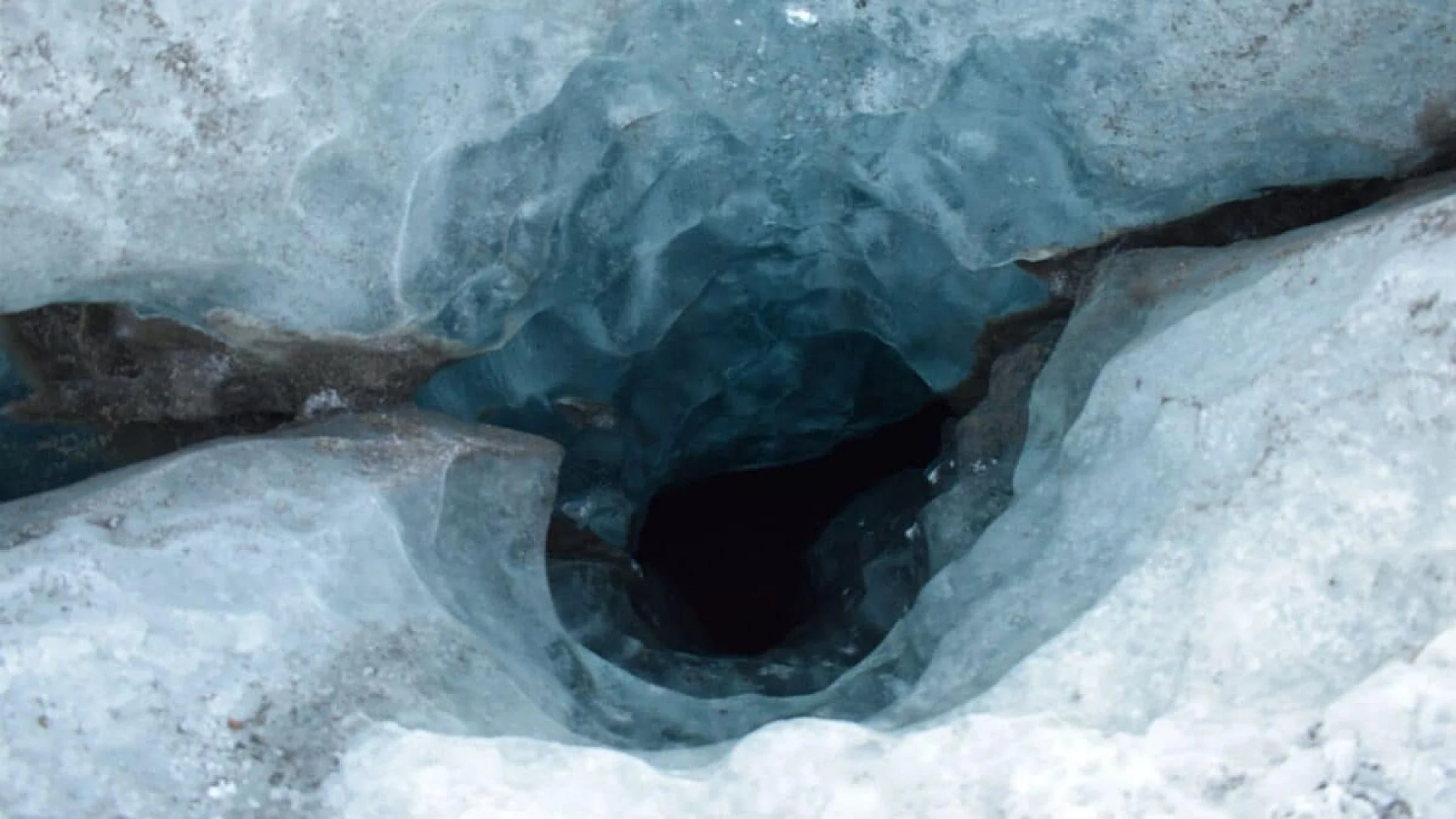
A team of international researchers has retrieved ice from East Antarctica that encloses air bubbles dating back roughly six million years. The samples set a new benchmark for directly dated ice and provide an unprecedented window into the planet’s ancient atmosphere.
The cores were recovered from the Allan Hills region and the analysis was published in 2025 in Proceedings of the National Academy of Sciences. The study reveals a climate record that stretches far beyond the limits of previously dated Antarctic ice.
By examining the isotopic composition of gases trapped inside the microscopic bubbles, scientists were able to reconstruct environmental conditions from a time period that is otherwise difficult to access.
Microscopic Air Inclusions Reveal Past Atmosphere
The ice is not merely frozen water; it contains tiny pockets of ancient air that have remained sealed for millions of years. Researchers detailed their methodology in Proceedings of the National Academy of Sciences, where they describe how isotopic signatures in the trapped gases were used to infer ancient climate parameters.
“Ice cores are like time machines that let scientists take a look at what our planet was like in the past. The Allan Hills cores help us travel much further back than we imagined possible.”

Laboratory analyses of the trapped gases indicate a cooling of about 12 °C (22 °F) over the six‑million‑year span, supporting earlier evidence that Earth was considerably warmer during that epoch.
Shallow Drilling Unearths Six‑Million‑Year‑Old Ice at Allan Hills
Obtaining ancient Antarctic ice typically demands drilling through kilometers of compacted snow. In much of East Antarctica, researchers must reach depths exceeding 2,000 meters (6,561 feet) to access continuous records. At Allan Hills, however, the team retrieved long cylindrical cores from just 100 to 200 meters (328 to 656 feet) beneath the surface.
The unusual exposure of such old ice is attributed to local topography: mountainous terrain combined with slow‑moving ice appears to have pushed older strata upward, bringing them close to the surface. The precise mechanisms that allowed these ancient layers to survive remain under investigation.
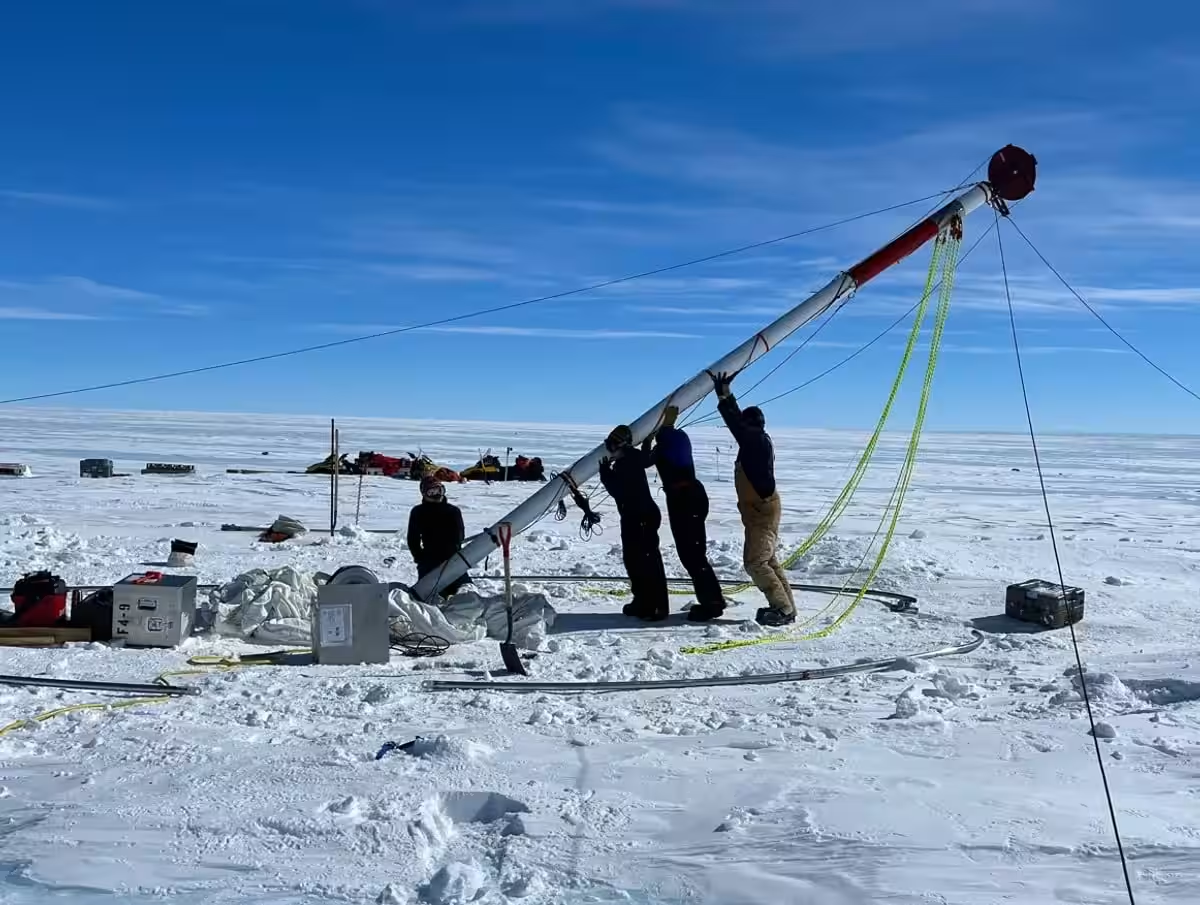
Shackleton suggested that a combination of strong winds and persistently low temperatures helped preserve the shallow ice deposits:
“Along with the topography, it’s likely a mix of strong winds and bitter cold. The wind blows away fresh snow, and the cold slows the ice to almost a standstill.”
She added that Allan Hills is both one of the most promising sites for locating shallow ancient ice and one of the toughest environments in which to conduct fieldwork.
Findings Surpass Original Age Estimates
When the project began, the scientists anticipated uncovering ice up to three million years old, perhaps a little older. Ed Brook, director of COLDEX and a paleoclimatologist at Oregon State University, explained the original goal and the surprise outcome:
“We knew the ice was old in this region. Initially, we had hoped to find ice up to 3 million years old, or maybe a little older, but this discovery has far exceeded our expectations,” he said in a statement published by Oregon State University Newsroom.
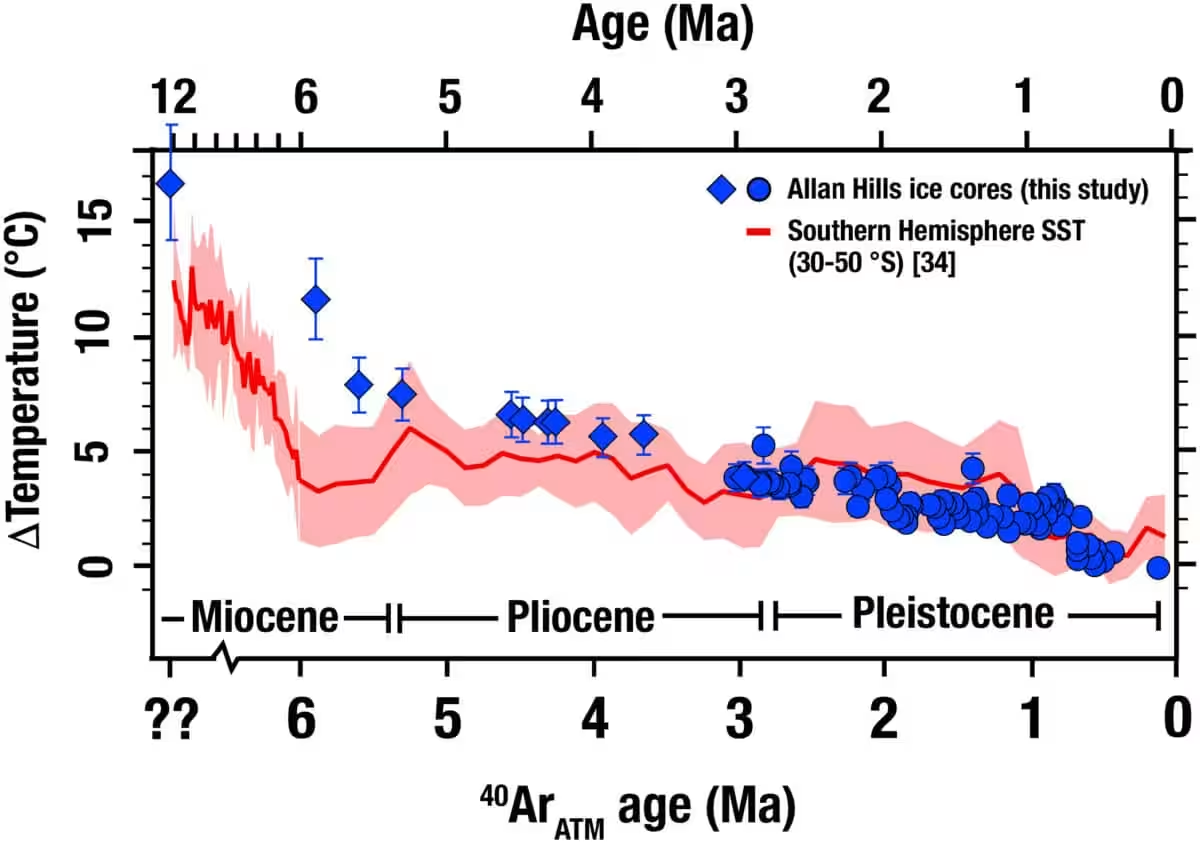
John Higgins of Princeton University noted that the cores provide a series of “climate snapshots” extending roughly six times farther back than earlier Antarctic ice‑core records, while still complementing younger datasets.
Brook also indicated that the team is already planning a broader investigation of the Allan Hills area, aiming to push the climatic timeline even further between 2026 and 2031.
“Given the spectacularly old ice we have discovered at Allan Hills, we also have designed a comprehensive longer‑term new study of this region to try to extend the records even further in time, which we hope to conduct between 2026 and 2031.”
This article has been fact checked for accuracy, with information verified against reputable sources. Learn more about us and our editorial process.
Last reviewed on .
Article history
- Latest version
Reference(s)
- Shackleton, S.., et al. “Miocene and Pliocene ice and air from the Allan Hills blue ice area, East Antarctica.” Proceedings of the National Academy of Sciences, vol. 122, no. 44, October 28, 2025 Proceedings of the National Academy of Sciences, doi: 10.1073/pnas.2502681122. <https://www.pnas.org/doi/10.1073/pnas.2502681122>.
- “Ed Brook | College of Earth, Ocean, and Atmospheric Sciences.”, February 7, 2024 College of Earth, Ocean, and Atmospheric Sciences <https://ceoas.oregonstate.edu/directory/ed-brook>.
- “Six-million-year-old ice discovered in Antarctica offers unprecedented window into a warmer Earth.”, October 28, 2025 Oregon State University Newsroom <https://news.oregonstate.edu/news/six-million-year-old-ice-discovered-antarctica-offers-unprecedented-window-warmer-earth>.
- “John A. Higgins.” Geosciences <https://geosciences.princeton.edu/people/john-higgins>.
Cite this page:
- Posted by Zara Tariq