Japan’s Skies Turn Red As Unexpected Auroras Reach Heights Usually Reserved For Polar Regions
Japan’s sighting of red auroras signals that even moderate space storms can climb to surprising altitudes, challenging prior assumptions about geomagnetic disturbances.
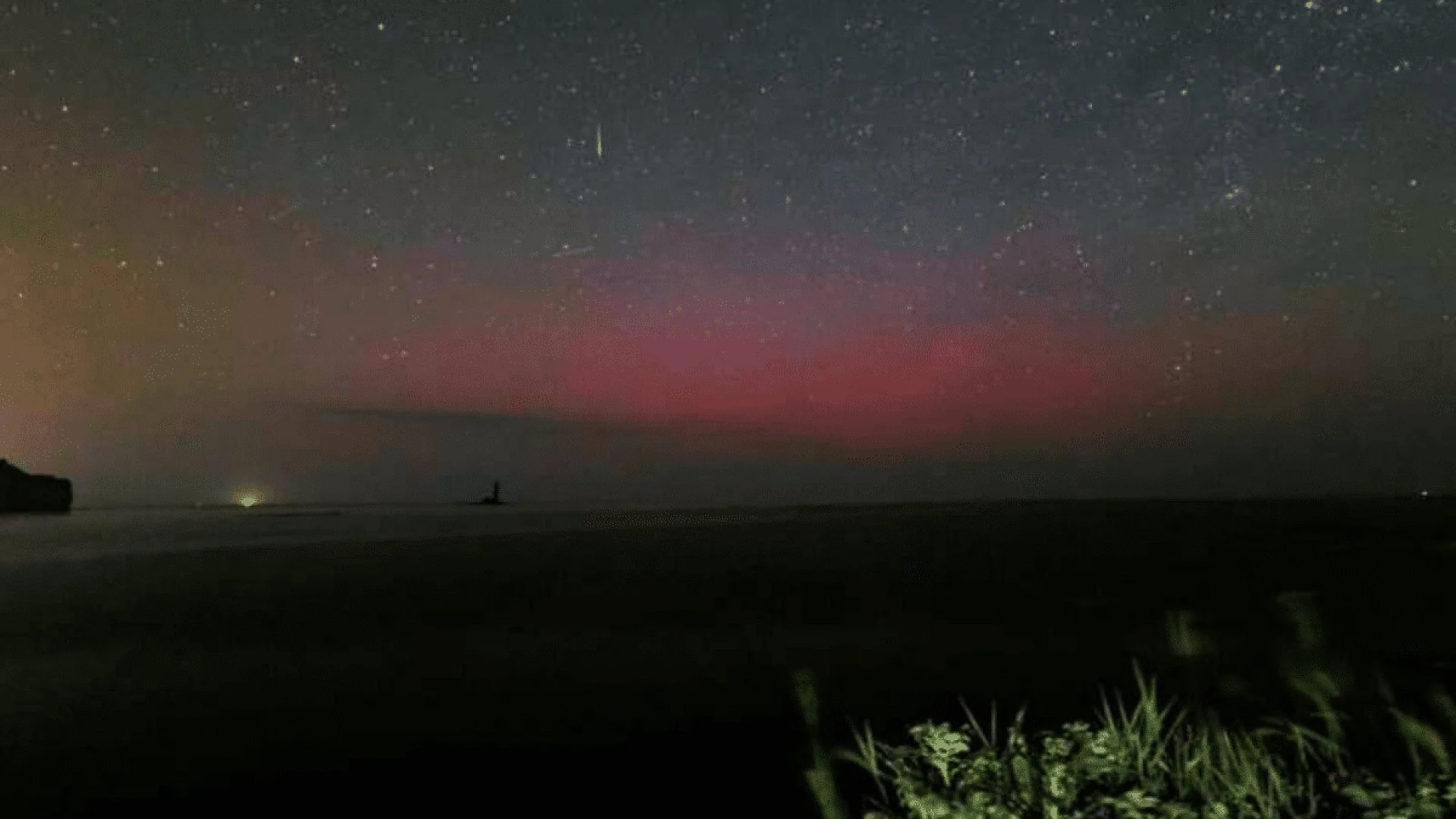
A spectacular series of unusually tall red auroras illuminated Japan’s skies between June 2024 and March 2025, revealing that space storms may have hidden strength far beyond what conventional measurements suggest, according to a recent study published in the Journal of Space Weather. These rare celestial displays, captured by both satellites and citizen scientists, not only offer a breathtaking spectacle but also provide crucial insights into the dynamics of Earth’s upper atmosphere and its interaction with solar activity.
Auroras Stretch Higher Than Expected
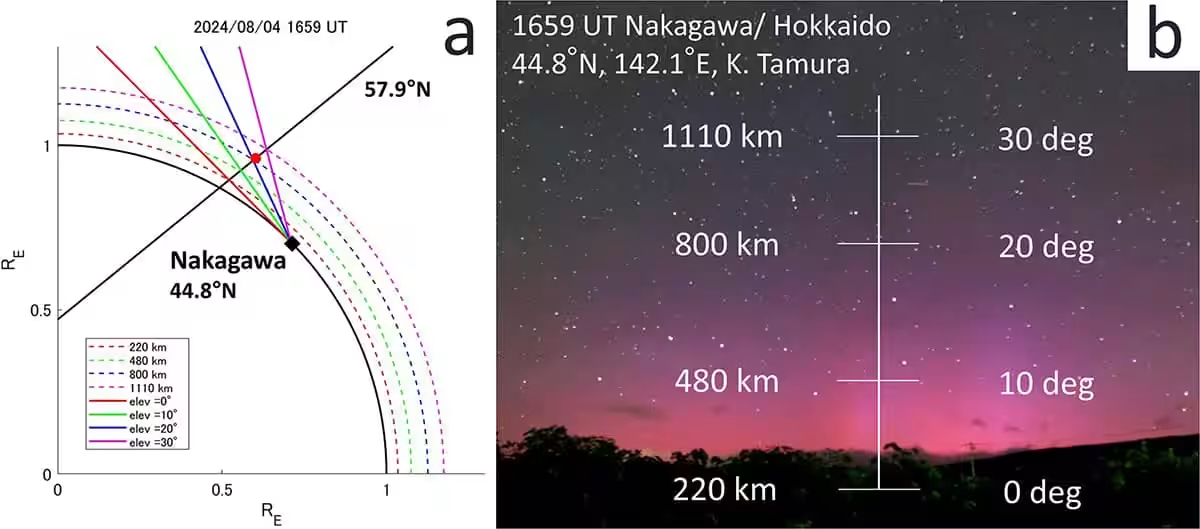
Auroras, typically seen near the polar regions, occur when charged particles from the sun collide with Earth’s magnetic field and upper atmosphere. In Japan, located at lower latitudes, these auroras are usually faint, red-tinted, and restricted to altitudes of 200 to 400 kilometers. However, researchers from Hokkaido University and the Okinawa Institute of Science and Technology observed red auroras rising as high as 500 to 800 kilometers.
“We found that red auroras can extend to extremely high altitudes even during those storms that are measured as moderately intense. I was really surprised because I didn’t expect such tall auroras to appear even during moderately intense storms,” says Tomohiro M. Nakayama, lead author of the study. “This suggests that these storms may actually be stronger than conventional indices indicate.”
This revelation challenges long-standing assumptions about the relationship between geomagnetic storm intensity and auroral altitude. It appears that even storms deemed moderate by conventional indices can produce auroras at extreme heights, hinting at more complex interactions within Earth’s magnetosphere than previously understood.
Credit: Journal of Space Weather
How Solar Winds Shape the Upper Atmosphere
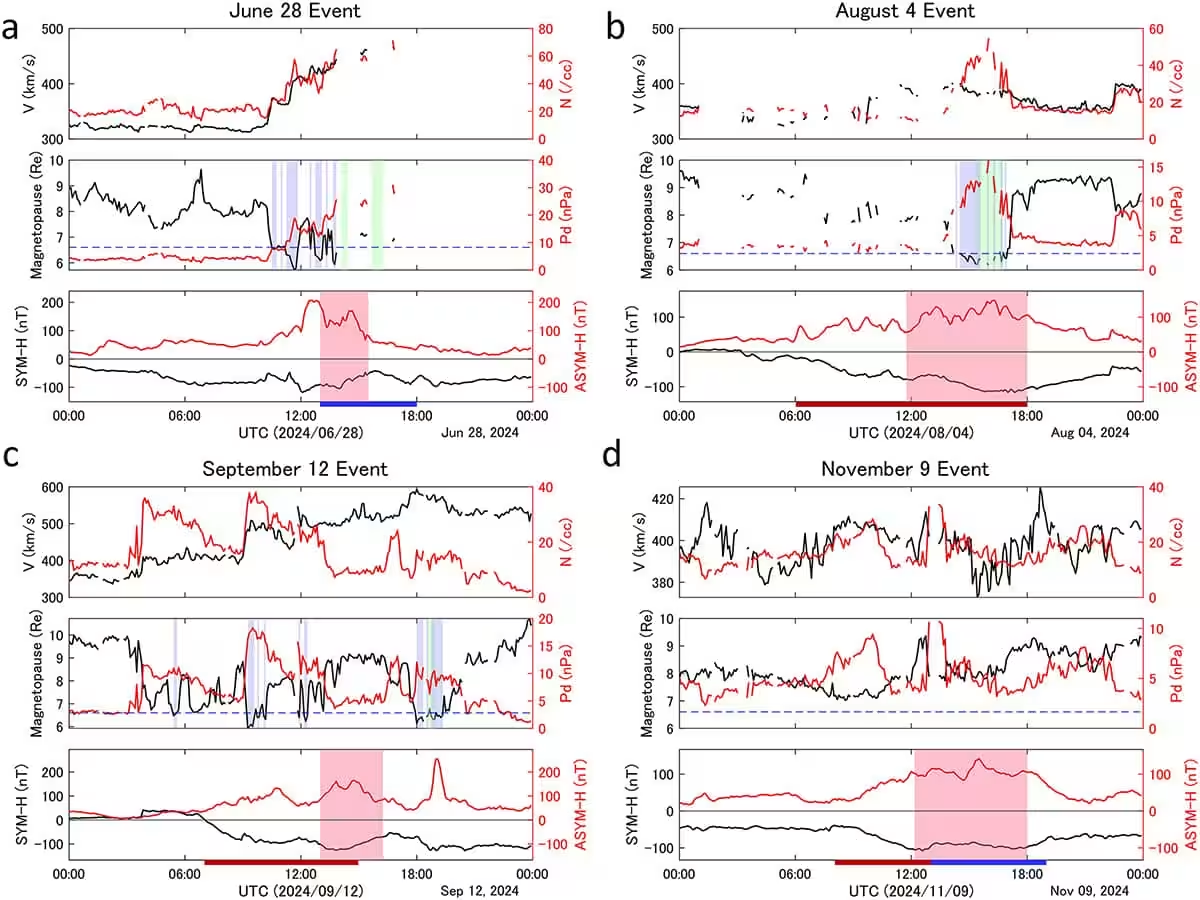
The team analyzed five auroral events over Hokkaido, revealing that dense streams of solar wind compressed Earth’s magnetosphere more than anticipated. This compression heated the upper atmosphere, lifting the region where red auroras form to altitudes rarely observed at low latitudes.
The study suggests that while traditional indices capture storm intensity at lower altitudes, they may underestimate the effect on higher layers of the atmosphere. “The outflow of charged particles could have masked the true strength of the storms, making them appear weaker than they actually were,” researchers note. These findings highlight the need for revised models to account for vertical variations in storm intensity.
Credit: Journal of Space Weather
Citizen Scientists Illuminate Rare Events
The research relied heavily on widespread participation from observers across Japan. By combining satellite data with photographs taken by citizen scientists, the team could calculate elevation angles and trace auroras along Earth’s magnetic field lines. This collaborative approach reconstructed the towering heights of the glowing structures with unprecedented accuracy.
Such large-scale observation networks allow scientists to detect rare auroral occurrences that traditional monitoring systems might miss. The study underscores the growing value of public engagement in space weather research, demonstrating how ordinary enthusiasts can contribute to groundbreaking scientific discoveries.
Implications For Satellites And Space Operations
These auroras are not just a visual marvel, they also have practical consequences. Heating and expansion of the upper atmosphere increase atmospheric drag on satellites, potentially altering their orbits and accelerating altitude loss.
“As the number of satellites in low Earth orbit continues to grow, understanding these effects is increasingly important,” says Nakayama. “Our results could help improve space weather forecasting and support safer satellite operations.” The findings emphasize that even moderate storms can have tangible impacts on satellite navigation, communications, and long-term orbital planning.
Advancing Space Weather Research
Published in the Journal of Space Weather, this study adds critical nuance to our understanding of geomagnetic storms. By showing that auroras can rise far higher than expected during moderate events, it challenges the reliability of existing storm indices and encourages the development of improved monitoring systems.
As solar activity continues to influence Earth’s magnetic environment, researchers hope these insights will aid in predicting auroral events, mitigating risks to satellites, and deepening our knowledge of the dynamic interplay between the sun and our planet.
This article has been fact checked for accuracy, with information verified against reputable sources. Learn more about us and our editorial process.
Last reviewed on .
Article history
- Latest version
Reference(s)
- Nakayama, Tomohiro. “Faint red auroras as seen from Japan associated with intense magnetospheric compression.”, vol. 16, January 1, 2026, pp. 19, doi: 10.1051/swsc/2026004. <https://www.swsc-journal.org/articles/swsc/full_html/2026/01/swsc250047/swsc250047.html>.
Cite this page:
- Posted by Zara Tariq